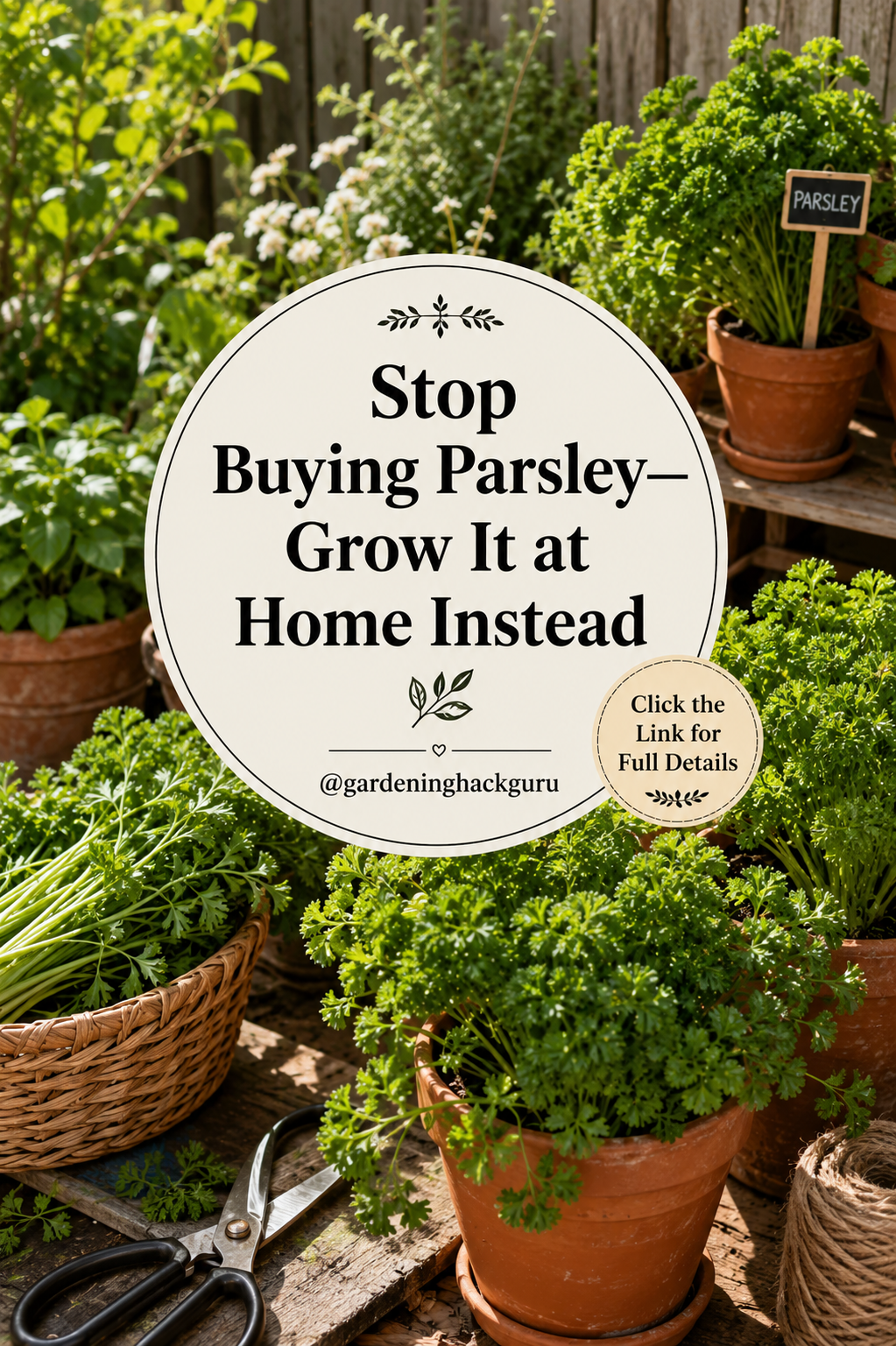
Fresh parsley is one of the most versatile herbs you can have in your kitchen. It adds bright flavor to soups, salads, pasta, sauces, roasted vegetables, and countless other dishes. Unfortunately, store-bought parsley often wilts within a few days, leaving you to throw away unused bunches and buy more. The good news is that parsley is one of the easiest herbs to grow at home, whether you have a backyard, balcony, or sunny kitchen windowsill.
Growing your own parsley means you’ll always have fresh leaves ready to harvest, you’ll save money, and you’ll enjoy the satisfaction of cooking with herbs you’ve grown yourself. With a little sunlight and simple care, one parsley plant can provide fresh harvests for months.
Why Grow Parsley at Home?
Homegrown parsley offers many benefits beyond convenience. Freshly picked leaves have a stronger flavor and aroma than store-bought herbs, and you can harvest only what you need, reducing food waste.
Benefits include:
- Fresh parsley whenever you cook
- Lower grocery bills
- Less food waste
- Beautiful kitchen greenery
- Easy for beginner gardeners
- Grows well in pots and containers
Once you start growing parsley, you’ll wonder why you ever bought it from the grocery store.
Choose the Right Type of Parsley
There are two popular varieties of parsley.
Curly Parsley
Curly parsley has tightly curled leaves and is often used as a garnish. It has a mild, fresh flavor and grows into compact, decorative plants.
Flat-Leaf (Italian) Parsley
Italian parsley has broad, flat leaves with a richer flavor. Most chefs prefer this variety because it works well in cooking and is easy to chop.
Both varieties grow well indoors and outdoors.
Start with Seeds or Seedlings
You can grow parsley from either seeds or young nursery plants.
Growing from seed is affordable but requires patience because parsley seeds germinate slowly, often taking two to four weeks.
If you want faster results, buy healthy parsley seedlings from a local garden center.
Choose the Right Pot
Parsley develops a long taproot, so choose a container that is at least 8–10 inches deep.
Good options include:
- Terracotta pots
- Ceramic planters
- Plastic containers with drainage holes
- Wooden planter boxes
Always use containers with drainage holes to prevent root rot.
Use Quality Potting Mix
Regular garden soil becomes compact in containers and doesn’t drain well.
Instead, use a light, well-draining potting mix enriched with compost. Healthy soil helps parsley develop strong roots and lush green leaves.
Give Parsley Plenty of Light
Parsley grows best with six to eight hours of bright sunlight every day.
Perfect locations include:
- South-facing windows
- West-facing windows
- Sunny balconies
- Patios
If natural light is limited, supplement with an LED grow light for healthy growth year-round.
Water Consistently
Parsley likes evenly moist soil but dislikes sitting in water.
Water whenever the top inch of soil feels dry.
Avoid overwatering, as constantly wet soil can lead to root problems.
Feed Your Plants
Feed parsley every four to six weeks with a balanced liquid fertilizer during the growing season.
Avoid excessive fertilizer, which can produce lots of leaves with weaker flavor.
Harvest the Right Way
Once the plant reaches about six inches tall, you can begin harvesting.
Always cut the outer stems near the base rather than picking individual leaves. This encourages new growth from the center and keeps the plant producing for months.
Never remove more than one-third of the plant at a time.
Grow Parsley Indoors All Year
Parsley adapts well to indoor growing when given enough light and water.
Place pots near a sunny kitchen window so fresh herbs are always within reach while cooking.
Rotate pots every few days so plants grow evenly.
Companion Herbs
Parsley grows beautifully alongside other herbs like:
- Basil
- Chives
- Dill
- Thyme
- Oregano
Grouping herbs together creates a beautiful mini kitchen garden.
Common Problems
If your parsley struggles, look for these common issues:
- Yellow leaves: Often caused by overwatering.
- Slow growth: Usually due to insufficient sunlight.
- Leggy stems: Plants need more light.
- Pests: Aphids and spider mites can be removed with a gentle spray of water or insecticidal soap.
Regular observation helps solve problems before they become serious.
Ways to Use Fresh Parsley
Fresh parsley is incredibly versatile.
Use it in:
- Pasta dishes
- Soups
- Salads
- Chimichurri sauce
- Garlic butter
- Roasted vegetables
- Rice dishes
- Smoothies
- Omelets
- Homemade herb blends
Its bright, fresh flavor enhances almost any savory meal.
Tips for Success
- Use deep pots with drainage holes.
- Give parsley six to eight hours of sunlight daily.
- Water when the top inch of soil feels dry.
- Harvest outer stems regularly.
- Feed lightly every month.
- Remove yellow leaves promptly.
- Rotate indoor pots weekly.
- Avoid overwatering.
Final Thoughts
Growing parsley at home is one of the simplest and most rewarding gardening projects for beginners and experienced gardeners alike. A single healthy plant can provide months of fresh, flavorful leaves while saving money and reducing trips to the grocery store.
Whether you grow parsley on a sunny windowsill, a balcony, or in your backyard, you’ll enjoy the convenience of harvesting exactly what you need whenever you cook. With just a little care, your parsley will stay lush, productive, and ready to add fresh flavor to your favorite recipes all year long.