Washing dishes is one of those household chores that never seems completely finished. You clean the breakfast plates, and suddenly there are lunch bowls in the sink. By dinner, pots, pans, glasses, utensils, and cutting boards have joined the pile.
The good news is that dishwashing doesn’t have to take over your kitchen routine. A few small changes can help you deal with dirty dishes faster, reduce scrubbing, and keep the sink from becoming overwhelming.
Here are 15 easy dishwashing hacks that can make everyday kitchen cleanup much simpler.
 1
1
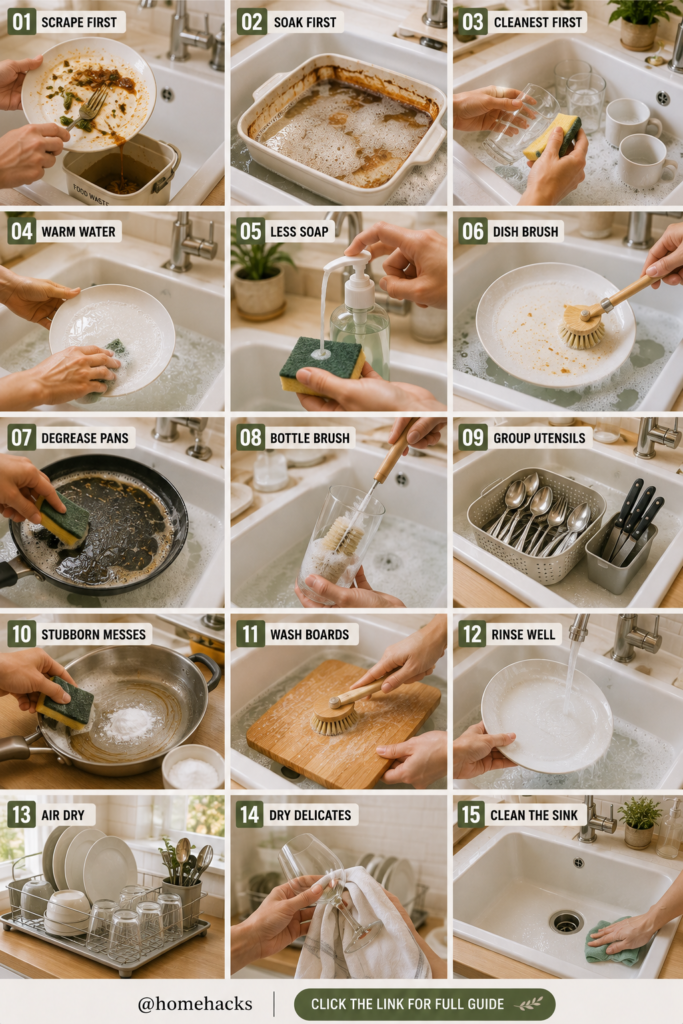
1. Scrape Plates Before They Reach the Sink
One of the easiest ways to make dishwashing faster is to remove leftover food immediately.
Before putting plates and bowls near the sink, scrape food scraps into the appropriate waste or compost container.
This prevents chunks of food from floating around in your wash water and makes dishes much easier to clean.
It’s also better than trying to wash large food scraps down the drain.
2. Soak Stuck-On Food Instead of Scrubbing Immediately
When food has dried onto a casserole dish or pan, aggressive scrubbing isn’t always the best first move.
Add warm water and an appropriate amount of dish soap and allow the cookware to soak for a while.
The water can soften dried residue so that much of it comes away with considerably less effort.
For cookware with special finishes, always follow the manufacturer’s cleaning recommendations.
3. Wash the Cleanest Items First
If you’re washing dishes by hand, order matters.
Start with items that have very little grease or food residue, such as:
- Drinking glasses
- Cups
- Lightly used bowls
- Plates
Leave greasy pans and heavily soiled cookware until later.
This helps keep your wash water and cleaning tools cleaner for longer.
4. Use Comfortably Warm Water
Warm water can help loosen grease and food residue while making everyday dishwashing easier.
You don’t need water that’s painfully hot. Use a comfortable temperature that’s appropriate for hand washing and follow the care requirements of the items you’re cleaning.
For particularly greasy cookware, soaking it first can reduce the amount of scrubbing required.
5. Don’t Automatically Use More Dish Soap
More soap doesn’t necessarily mean cleaner dishes.
Using excessive detergent can create unnecessary foam and make dishes take longer to rinse.
Start with the amount recommended by the dish-soap manufacturer and add more only when necessary.
A small amount is often enough for an ordinary batch of dishes.
6. Keep a Good Dish Brush Beside the Sink
A handled dish brush can make everyday cleaning surprisingly convenient.
It’s particularly useful for quickly cleaning plates, bowls, and cookware without constantly putting your hands into greasy water.
Rinse the brush thoroughly after use and allow it to dry between cleaning sessions.
Replace brushes and sponges when they become worn, damaged, or difficult to keep clean.
7. Handle Greasy Pans Separately
One extremely greasy frying pan can make everything else in the sink feel oily.
Instead of immediately placing it with lightly soiled dishes, scrape or wipe away excess food and grease first.
Then wash the pan separately using an appropriate dishwashing product and a cleaning tool that’s safe for its surface.
Never pour large quantities of cooking grease down the drain. Allow it to cool and dispose of it appropriately for your area.
8. Use a Bottle Brush for Narrow Glassware
Tall glasses, reusable bottles, jars, and narrow containers can be frustrating to clean with an ordinary sponge.
A long-handled bottle brush can reach areas your hand can’t.
Choose a soft brush appropriate for the material and clean all the way around the bottom and sides.
Keeping one bottle brush near the sink can save a surprising amount of time.
9. Group Utensils Together
Instead of searching through a sink full of dishes for individual forks and spoons, organize similar utensils together before washing.
This makes the process more systematic.
Keep sharp knives separate rather than hiding them under soapy water where they’re difficult to see.
Wash knives carefully one at a time and store them safely afterward.
10. Tackle Stubborn Residue Gently
Some stuck-on residue needs more than ordinary wiping, but aggressive scrubbing can damage certain surfaces.
For appropriate durable cookware, a gentle cleaning paste or manufacturer-approved cleaning method may help loosen stubborn residue.
Baking soda is commonly used on some surfaces, but it isn’t suitable for everything.
Always consider the material you’re cleaning—particularly when dealing with nonstick coatings, natural stone, aluminum, cast iron, decorative finishes, or delicate dishes.
11. Wash Cutting Boards Promptly
Don’t leave a dirty cutting board sitting on the counter for hours.
Clean it promptly after use with the method appropriate for its material and what was prepared on it.
Pay particular attention after preparing raw meat, poultry, seafood, or other foods that require careful handling.
Wood and plastic cutting boards can have different care requirements, so follow the manufacturer’s guidance and allow boards to dry thoroughly.
12. Rinse Dishes Thoroughly
After washing, rinse away remaining food residue and dish soap using clean water.
Pay attention to the rims and undersides of plates, the bottoms of glasses, and the handles of utensils.
A systematic wash-and-rinse routine is usually faster than repeatedly returning items to the sink because you notice soap afterward.
13. Let the Dish Rack Do the Drying
You don’t need to hand-dry every plate and bowl.
A well-designed drying rack allows water to drain away while air circulates around the dishes.
Arrange items with enough space between them for airflow rather than stacking wet dishes tightly together.
Remember to clean the drying rack itself periodically because water and residue can accumulate underneath it.
14. Hand-Dry Delicate Items
While ordinary dishes can often air-dry, some items are better handled separately.
Delicate glassware, certain knives, wooden utensils, or items prone to water spots may benefit from being carefully dried with a clean, lint-free towel.
Check the item’s care instructions if you’re unsure.
Once dry, put it away immediately instead of leaving it on an already crowded counter.
15. Finish by Cleaning the Sink
Once the final dish is finished, spend another minute on the sink.
Remove food debris, rinse the basin, clean it using a method appropriate for the sink material, and wipe the surrounding countertop.
Don’t forget the faucet and handles, which are frequently touched during cooking and cleaning.
Finishing with an empty, clean sink makes the entire kitchen immediately feel more organized.
How to Make Dishwashing Feel Less Overwhelming
The biggest trick isn’t necessarily washing dishes faster—it’s preventing an enormous pile from developing.
Try dealing with a few dishes while you’re already waiting in the kitchen. Wash preparation tools while dinner cooks, put away dry dishes before beginning another meal, and soak difficult cookware before residue has time to harden.
If you have a dishwasher, load dishwasher-safe items as you cook rather than leaving everything beside the sink.
Small resets throughout the day can prevent a 30-minute evening cleanup.
Create a Simple Dishwashing Station
Keeping frequently used supplies together can also speed things up.
You don’t need a countertop covered in cleaning products. A simple setup with dish soap, a sponge or brush, a bottle brush, clean towels, and an efficient drying rack is usually enough.
Keep the area uncluttered so you have space to actually work.
A small tray can contain your soap and brushes while making the sink area look more intentional.
Dishwashing Mistakes That Create More Work
A few habits can make dishwashing unnecessarily difficult.
Avoid letting food dry onto plates when you could quickly scrape them, placing sharp knives underneath other dishes, using abrasive scrubbers on delicate surfaces, pouring cooking grease into the drain, or overcrowding the drying rack.
Also avoid mixing household cleaning chemicals. If ordinary dish soap isn’t appropriate for a particular cleaning problem, follow the item’s manufacturer instructions rather than experimenting with chemical combinations.
Make It a Daily Kitchen Reset
Instead of viewing dishes as one huge chore, make them part of a short kitchen reset.
After dinner, clear the table, scrape plates, wash or load dishes, wipe the countertops, rinse the sink, and put cleaning supplies back where they belong.
Even if your kitchen isn’t perfectly spotless, waking up to an empty sink and clear countertop can make the next day feel much easier.
Final Thoughts
Dishwashing may never become your favorite household chore, but it doesn’t need to consume your evening.
The biggest time-savers are often incredibly simple: scrape food early, soak stubborn messes, wash in a sensible order, use the right cleaning tools, let ordinary dishes air-dry, and clean the sink when you’re finished.
Turn these 15 easy dishwashing hacks into everyday habits and kitchen cleanup can become faster, more organized, and much less frustrating.