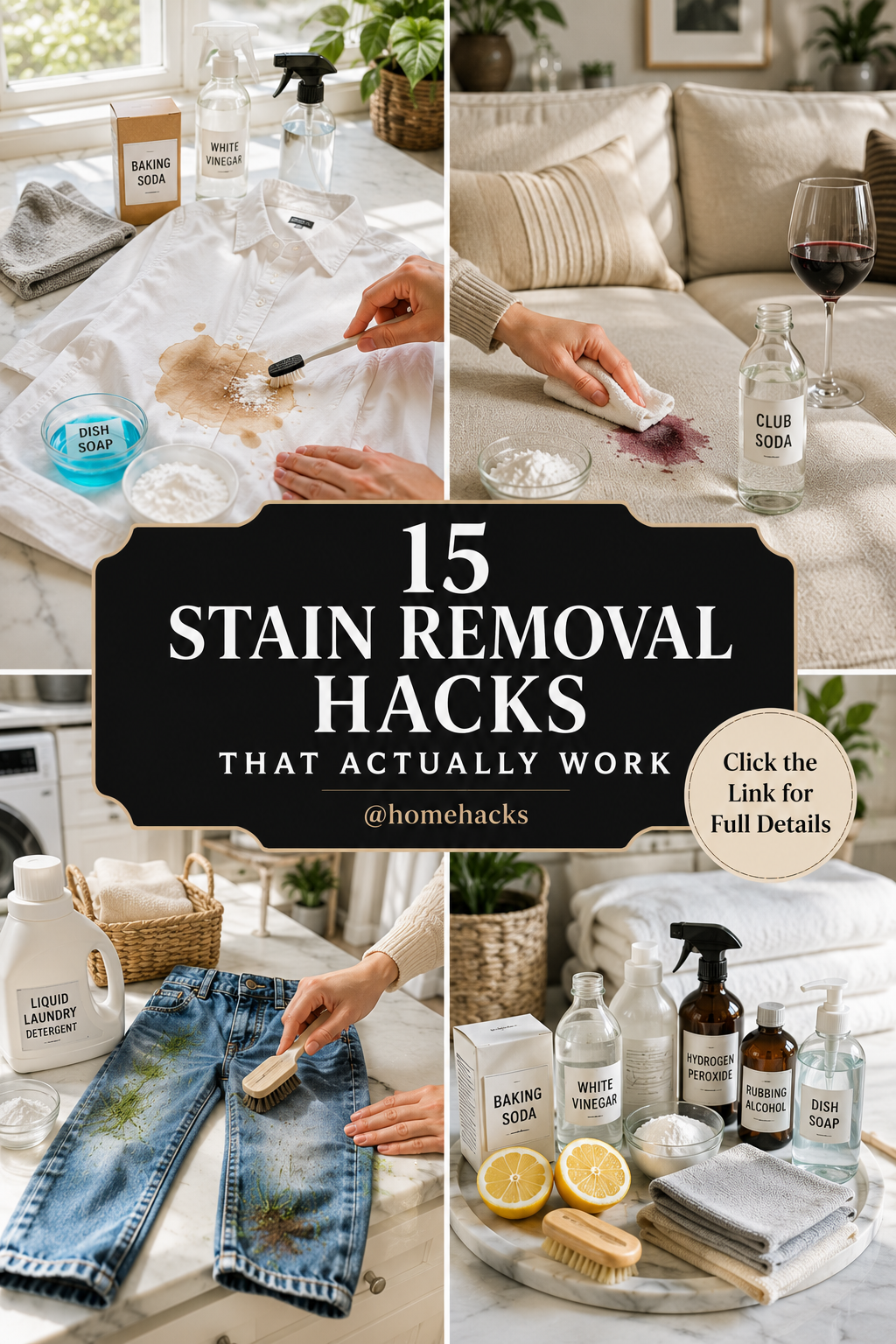
Accidents happen in every home. Whether it’s a spilled cup of coffee, muddy footprints, red wine on the carpet, or a grease stain on your favorite shirt, stains can quickly turn a clean home into a frustrating mess. The good news is that many common stains can be removed using simple household products and the right cleaning techniques.
Professional cleaners know that the key to successful stain removal isn’t expensive products—it’s acting quickly, using the correct method for each type of stain, and avoiding common mistakes that make stains permanent.
Here are 15 stain removal hacks that actually work to help you keep your clothes, furniture, carpets, and home looking spotless.
1. Remove Coffee Stains With Baking Soda and Dish Soap
Coffee stains don’t have to ruin your favorite shirt.
Blot the spill immediately with a clean cloth. Mix a little baking soda with a few drops of dish soap to form a gentle paste. Apply it to the stain, let it sit for several minutes, then rinse with cool water before washing.
The sooner you treat coffee stains, the easier they are to remove.
2. Lift Red Wine Stains Using Salt
Red wine can be intimidating, but quick action makes a huge difference.
Blot the spill gently—never rub it. Sprinkle a generous layer of salt over the stain to absorb the liquid. Once the salt has done its job, rinse with cool water and wash according to the fabric’s care instructions.
3. Absorb Grease Stains With Cornstarch
Grease stains spread quickly through fabric.
Cover the stain with cornstarch or baking soda and allow it to sit for 15–30 minutes to absorb the oil. Brush away the powder, then apply a small amount of dish soap before laundering.
4. Remove Ink With Rubbing Alcohol
Ink stains often look permanent, but rubbing alcohol can help lift many types of ink.
Place a paper towel beneath the stained fabric and dab the stain gently with rubbing alcohol using a cotton ball or clean cloth. Avoid rubbing aggressively, as this can spread the ink.
5. Treat Blood Stains With Cold Water
Always use cold water for blood stains.
Hot water can cause blood proteins to set into fabric, making the stain harder to remove. Rinse with cold water as soon as possible, then wash using a suitable laundry detergent.
6. Remove Sweat Stains With White Vinegar
Yellow underarm stains are common on white clothing.
Apply a mixture of equal parts white vinegar and water to the stained area. Let it sit for about 30 minutes before washing as usual.
7. Clean Grass Stains With Liquid Laundry Detergent
Grass stains are common on children’s clothing and sports uniforms.
Rub a small amount of liquid laundry detergent directly into the stain using a soft brush. Let it sit for several minutes before washing according to the garment’s care label.
8. Remove Makeup Stains With Micellar Water
Foundation, lipstick, and other makeup products can leave stubborn marks.
Apply a small amount of micellar water to a cotton pad and gently blot the stain before laundering. Always test on an inconspicuous area first.
9. Clean Chocolate Stains With Dish Soap
Chocolate stains contain both grease and food coloring.
Remove any excess chocolate first, then rinse with cool water. Apply a small amount of dish soap to help break down oily residue before washing.
10. Remove Tomato Sauce Before It Sets
Tomato-based stains become more difficult to remove as they dry.
Rinse the fabric from the back of the stain using cool water, then apply liquid detergent and gently work it into the fabric before washing.
11. Brighten Yellow Stains With Lemon Juice
Lemon juice is a natural brightener for many white fabrics.
Apply fresh lemon juice to yellowed areas and allow the garment to sit in sunlight for a short period before laundering according to the care instructions.
12. Remove Candle Wax Easily
Wax spills don’t have to ruin fabrics.
Allow the wax to harden completely or speed up the process with an ice pack. Carefully scrape away the excess wax using a dull edge, then place paper towels above and below the remaining wax and gently warm it with an iron on a low setting to help transfer the wax to the paper.
13. Eliminate Pet Stains Properly
Pet accidents should be treated as quickly as possible.
Blot up excess moisture first. Use an enzyme-based cleaner designed for pet stains to help break down odor-causing residue, then allow the area to dry completely.
14. Remove Permanent Marker From Hard Surfaces
Permanent marker isn’t always permanent.
For many non-porous surfaces, apply a small amount of rubbing alcohol to a microfiber cloth and gently wipe away the marks. Test the cleaner on a hidden spot first to ensure it won’t damage the finish.
15. Let Mud Dry Before Cleaning
One of the biggest mistakes people make is cleaning wet mud.
Allow the mud to dry completely first. Once dry, brush away as much dirt as possible before treating any remaining stain with mild soapy water.
Bonus Stain Removal Tips
Act Quickly
Fresh stains are always easier to remove than old ones. The sooner you begin cleaning, the better your chances of complete removal.
Blot—Don’t Rub
Rubbing pushes stains deeper into fabric fibers and can spread the mess. Gently blot instead.
Read Care Labels
Different fabrics require different cleaning methods. Always follow the manufacturer’s care instructions before using any cleaning solution.
Test Cleaning Products First
Whether you’re using a homemade cleaner or a commercial product, test it on a hidden area before treating the visible stain.
Keep a Stain Kit at Home
A simple stain-removal kit can include:
- Baking soda
- White vinegar
- Dish soap
- Rubbing alcohol
- Hydrogen peroxide
- Microfiber cloths
- Soft cleaning brush
- Spray bottle
Having these supplies ready makes stain removal much easier.
Common Stain Removal Mistakes
Avoid these common errors:
- Waiting too long before treating a stain.
- Using hot water on blood stains.
- Scrubbing aggressively.
- Mixing cleaning products without checking compatibility.
- Using too much cleaning solution.
- Ignoring fabric care labels.
- Drying stained clothing before confirming the stain is gone.
Many stains become much harder to remove after heat from a dryer sets them into the fabric.
Final Thoughts
Stains are a normal part of everyday life, but they don’t have to be permanent. With quick action, the right cleaning methods, and a few common household products, you can tackle everything from coffee and grease to grass, wine, mud, and makeup.
Keeping a few basic cleaning supplies on hand and treating stains as soon as they happen can save your favorite clothes, protect your furniture, and keep your home looking fresh and well cared for. These 15 stain removal hacks are simple, affordable, and effective, making them valuable additions to every household cleaning routine.