You know that feeling when you walk into a home and it just smells clean?
Not heavily perfumed. Not like someone sprayed air freshener five seconds before you arrived. Just fresh, airy, and comfortable.
The funny thing is, homes that smell good all day usually aren’t using more fragrance than everyone else. They’re simply dealing with the little sources of odor before those smells have a chance to spread.
Trash cans, damp towels, yesterday’s cooking, carpets, pet bedding, shoes, drains—each one may seem minor, but together they can make a perfectly tidy home smell stale.
The good news is that keeping your house smelling fresh doesn’t require an expensive diffuser in every room or hours of cleaning every morning.
A few small habits make a much bigger difference.
Here are 15 easy ways to make your house smell fresh and clean all day without making it smell like you’ve emptied an entire bottle of room spray.
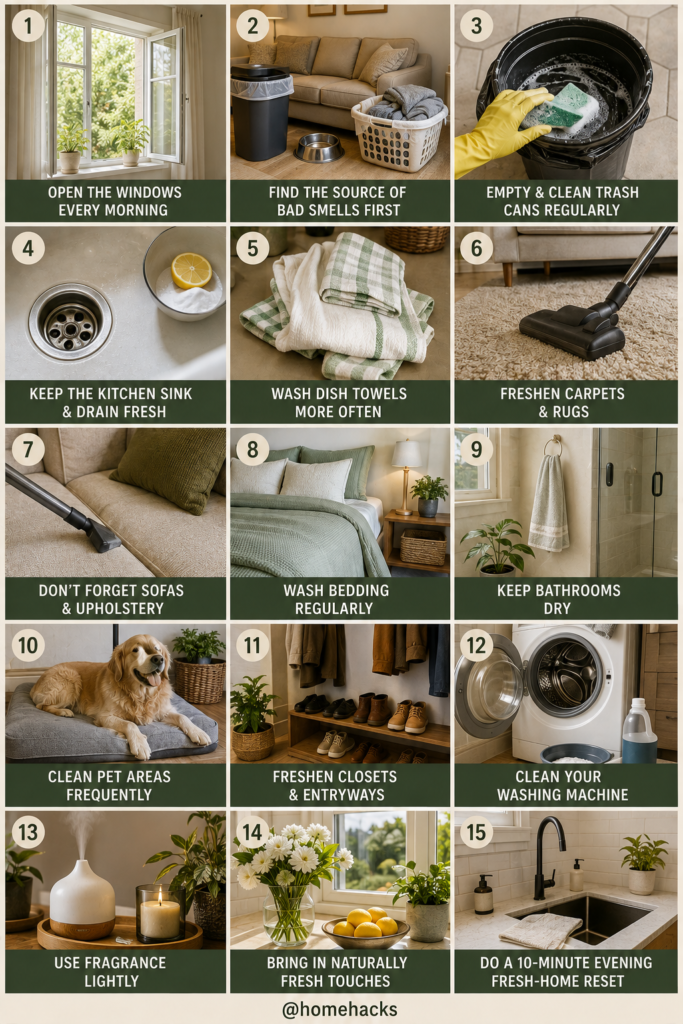
1. Open the Windows Every Morning
This is probably the simplest thing on the entire list, and it’s one of my favorites.
When weather, outdoor air quality, and safety allow, open a few windows for 10–15 minutes in the morning.
Even a short burst of ventilation can help move out stale overnight air, lingering cooking smells, and that slightly stuffy feeling bedrooms sometimes have first thing in the morning.
For better airflow, open windows in different parts of the house if you can.
You don’t necessarily need to leave them open for hours. Sometimes a quick morning air-out is enough to make the whole house feel different.
And best of all, it costs absolutely nothing.
2. Find the Smell Instead of Covering It
When a room smells strange, our first instinct is often to spray something.
But fragrance on top of a bad smell usually gives you two smells.
Instead, become a little detective.
Check the trash.
Look for damp towels.
Check the kitchen sink.
Look inside the refrigerator.
Check shoes near the entryway.
Inspect pet areas.
See whether laundry has been sitting wet in the washing machine.
Once you’ve removed the source, then you can think about adding a pleasant fragrance if you want one.
A genuinely clean-smelling home starts with odor removal, not odor masking.
3. Don’t Forget to Clean the Trash Can
Taking out the trash isn’t always enough.
Leaks and tiny food spills can collect underneath the bag and around the inside of the bin. Eventually, you replace the bag and wonder why the kitchen still doesn’t smell right.
Every so often, empty the trash can completely and clean it according to the bin material and your chosen cleaning product’s directions.
Don’t forget the lid and rim.
Let everything dry before putting in a fresh bag.
This one little job can make a surprisingly big difference in the kitchen.
4. Keep Your Kitchen Sink Fresh
Your sink handles dirty plates, food scraps, greasy pans, coffee, and practically everything else that comes through the kitchen.
So it’s hardly surprising that it can become an odor source.
Remove food debris from the sink and strainer regularly and clean the sink itself.
If you have a garbage disposal, follow the manufacturer’s cleaning and maintenance instructions.
Avoid casually pouring random cleaning chemicals together down the drain. Mixing household cleaners can be dangerous.
If you notice a persistent or sewage-like drain odor that ordinary cleaning doesn’t solve, there may be a plumbing issue worth investigating rather than simply trying to perfume it away.
5. Wash Dish Towels More Often Than You Think
A kitchen can look spotless and still smell stale because of one damp dishcloth.
Kitchen towels and cleaning cloths get wet repeatedly and come into contact with food, counters, hands, and dishes.
Don’t wait until they visibly look dirty.
Swap damp or heavily used cloths for clean ones regularly, wash them according to their care instructions, and allow them to dry properly between uses.
The same goes for sponges and other reusable cleaning tools.
If something you’re using to clean smells bad, it’s probably not helping the room smell fresh.
6. Pay Attention to Carpets and Rugs
Soft surfaces hold onto more than we realize.
Dust, pet hair, crumbs, outdoor dirt, and accidental spills can all settle into carpet and rug fibers.
Vacuum regularly, especially in high-traffic areas and anywhere pets spend time.
When something spills, deal with it promptly using a cleaning method appropriate for the material. Always check the rug or carpet manufacturer’s instructions before trying a new product or method.
And don’t forget underneath smaller rugs occasionally.
A room can look clean from standing height while hiding plenty underneath.
7. Freshen Sofas and Upholstered Furniture
Your sofa gets a lot of use.
People sit on it. Pets nap on it. Snacks get eaten there. Blankets pile up. Crumbs somehow make their way beneath every cushion.
Vacuum upholstered furniture regularly, including between and underneath removable cushions where appropriate.
Wash removable covers according to their care labels.
If your couch has developed a noticeable odor that basic maintenance isn’t fixing, consider a cleaning method specifically recommended for that upholstery.
The important thing is not to soak furniture with fragrance sprays just to make it smell clean.
Actually cleaning the fabric is far more effective.
8. Wash Your Bedding Regularly
Few things make a bedroom feel fresher than clean sheets.
Bedding collects sweat, skin oils, dust, hair, and other everyday debris, so even a tidy bedroom can eventually develop that closed-up smell.
Wash sheets and pillowcases regularly according to their care labels.
Don’t forget duvet covers, blankets, mattress protectors, and washable pillow protectors when they need attention.
In the morning, giving bedding a little time to air before completely making the bed can also help moisture dissipate.
Fresh bedding doesn’t only smell good.
It makes climbing into bed at night much nicer too.
9. Keep the Bathroom as Dry as Possible
Bathrooms naturally deal with a lot of moisture.
The problem starts when that moisture hangs around.
Use an exhaust fan during and after showers if you have one, or ventilate appropriately another way. Hang towels so they can dry properly rather than leaving them crumpled on the floor.
Don’t forget bath mats either.
A constantly damp bath mat can develop an unpleasant smell surprisingly quickly.
Keep an eye out for persistent dampness, mildew, or mold as well. Those aren’t problems to hide with fragrance—they’re signs that moisture needs to be addressed.
A dry bathroom generally smells much fresher than a perpetually damp one.
10. Stay on Top of Pet Areas
We love our pets.
Their smells? Maybe not quite as much.
Pet bedding, litter areas, blankets, toys, and favorite sleeping spots can quietly become some of the strongest odor sources in the house.
Wash washable pet bedding according to its care instructions and vacuum pet hair regularly.
Clean litter areas frequently and deal with accidents promptly using an appropriate cleaner for the affected surface.
If you’re using scented products around animals, check whether they’re appropriate for your specific pets. Some fragrances and essential oils can be problematic for animals.
A fresh home shouldn’t come at your pet’s expense.
11. Don’t Let Shoes Take Over the Entryway
Sometimes the smell you notice when you first walk into the house isn’t coming from the house at all.
It’s the shoes.
Instead of throwing frequently worn shoes into a closed pile, give them somewhere they can dry and air appropriately.
If shoes are wet, let them dry before putting them into enclosed storage.
Wash washable footwear according to its instructions, and periodically clean the shoe rack or basket itself.
Also watch damp coats, umbrellas, gym bags, and backpacks.
The entryway collects everything from the outside world, so a quick weekly reset can make a noticeable difference.
12. Clean Your Washing Machine
This is one people often miss.
If freshly washed clothes are coming out smelling less fresh than expected, the washing machine itself may need attention.
Moisture, detergent residue, and debris can accumulate in washers over time.
Follow your machine manufacturer’s instructions for cleaning cycles and maintenance.
Pay attention to detergent dispensers, accessible seals, and other areas specifically mentioned in the manual.
After washing, allow the machine to dry appropriately when the manufacturer’s guidance permits it.
Also avoid leaving wet clothes sitting in the drum for hours.
There’s nothing more frustrating than washing a load twice because you forgot it overnight.
13. Use Home Fragrance as the Finishing Touch
Once your home is actually clean, fragrance can be lovely.
The key is restraint.
You don’t need a different powerful scent in every room.
A subtle candle, diffuser, or other appropriately used home fragrance can create a gentle background scent without becoming overwhelming.
You might choose one scent family for most of the house—perhaps fresh linen, light citrus, soft woods, or something botanical.
Always follow product safety instructions, especially around flames, children, and pets.
Think of fragrance like perfume.
A little can be beautiful.
Too much becomes the only thing anyone notices.
14. Bring in Naturally Fresh Details
Sometimes the nicest “home fragrance” isn’t really home fragrance at all.
Fresh flowers can make a kitchen or living room feel instantly brighter.
A small pot of herbs near a suitable sunny window brings greenery into the kitchen.
Fresh eucalyptus branches or simple garden greenery can add visual freshness, although they shouldn’t be treated as a substitute for cleaning.
Even a bowl of fresh citrus on the kitchen counter can make the room feel fresher.
Just remember that natural materials eventually need replacing too.
Old flower water definitely won’t help your fresh-home mission.
15. Do a 10-Minute Evening Fresh-Home Reset
This is the habit that ties everything together.
Before you settle down for the evening, spend about ten minutes resetting the areas most likely to smell by morning.
You don’t have to clean the whole house.
Deal with food scraps.
Clear the kitchen sink.
Take out particularly smelly trash when needed.
Hang damp towels.
Put wet cleaning cloths somewhere they can dry.
Check pet areas.
Move wet laundry.
Straighten the living room.
When you wake up the next morning, you’re starting with a relatively fresh house instead of yesterday’s mess.
And that makes the morning window-opening routine even better.
The Secret Isn’t Making Your House Smell Like Something
This is probably the biggest change in the way I think about home fragrance.
A truly fresh home doesn’t necessarily smell strongly of vanilla, lavender, lemon, or expensive candles.
Sometimes it barely smells of anything.
It simply smells clean.
That’s why eliminating odor sources is so much more effective than constantly adding fragrance.
If your kitchen trash smells, clean the trash can.
If your bathroom smells damp, address the moisture.
If your bedroom smells stale, air it out and wash the bedding.
If the sofa smells like the dog, clean the sofa and the dog’s bedding.
Solve the problem first.
Add fragrance second.
A Simple Fresh-Home Routine
You don’t need to do all 15 things every single day.
A realistic routine could be much simpler.
Every morning: air out the house when conditions allow, make sure damp towels are hanging properly, and deal with anything left from breakfast.
During the day: wipe spills promptly, keep food waste under control, and don’t leave wet laundry sitting around.
Every evening: reset the kitchen, check trash and pet areas, hang wet items, and tidy the main living spaces.
Every week: wash bedding and towels as needed, vacuum rugs and upholstery, clean bathrooms, check the refrigerator, and reset entryway clutter.
Occasionally: clean trash cans, maintain the washing machine, deep-clean upholstery or carpets when needed, and investigate any persistent odor rather than covering it.
That’s far more manageable than trying to deep-clean your entire house every day.
Common Mistakes That Can Make a Home Smell Worse
One mistake is using too many scented products at once.
Laundry fragrance, room spray, candles, plug-ins, diffusers, heavily scented cleaners, and perfume can quickly start competing with each other.
Another is spraying fragrance onto fabrics without checking whether the product is suitable for that material.
And be careful with DIY cleaning recipes.
Never mix household cleaning chemicals unless the product directions specifically say it’s safe to do so. In particular, bleach should not be mixed with ammonia, acids, or other cleaners.
“Natural” doesn’t automatically mean safe either. Essential oils and other concentrated products can present risks depending on how they’re used and who—or what pets—lives in the home.
Simple cleaning and ventilation are often all you need.
What If Your House Still Smells Bad After Cleaning?
A persistent odor deserves attention.
Look beyond surface cleaning.
Check for hidden food, damp carpets, water leaks, mold or mildew, plumbing problems, pest issues, dirty HVAC components where applicable, and moisture in places that shouldn’t be wet.
If you can’t identify the source or suspect something like a significant moisture, mold, sewer, gas, or electrical problem, don’t try to cover it with fragrance. Get the underlying issue properly investigated.
Sometimes a strange smell is your home’s way of telling you something needs fixing.
Final Thoughts
Making your house smell fresh all day isn’t about constantly spraying something into the air.
It’s mostly about small, boring habits that work.
Open the windows when conditions allow.
Take care of trash before it smells.
Keep sinks and drains clean.
Wash damp towels.
Vacuum soft furnishings.
Keep bathrooms dry.
Clean pet areas.
Don’t leave wet laundry sitting around.
Then, once your home is genuinely fresh, add a little fragrance if you enjoy it.
The best-smelling homes usually aren’t the ones with the strongest perfume.
They’re the ones where fresh air, clean fabrics, dry towels, tidy kitchens, and simple daily habits do most of the work.
And once those habits become part of your routine, keeping the house smelling clean becomes much easier than trying to rescue it with room spray five minutes before someone knocks on the door.