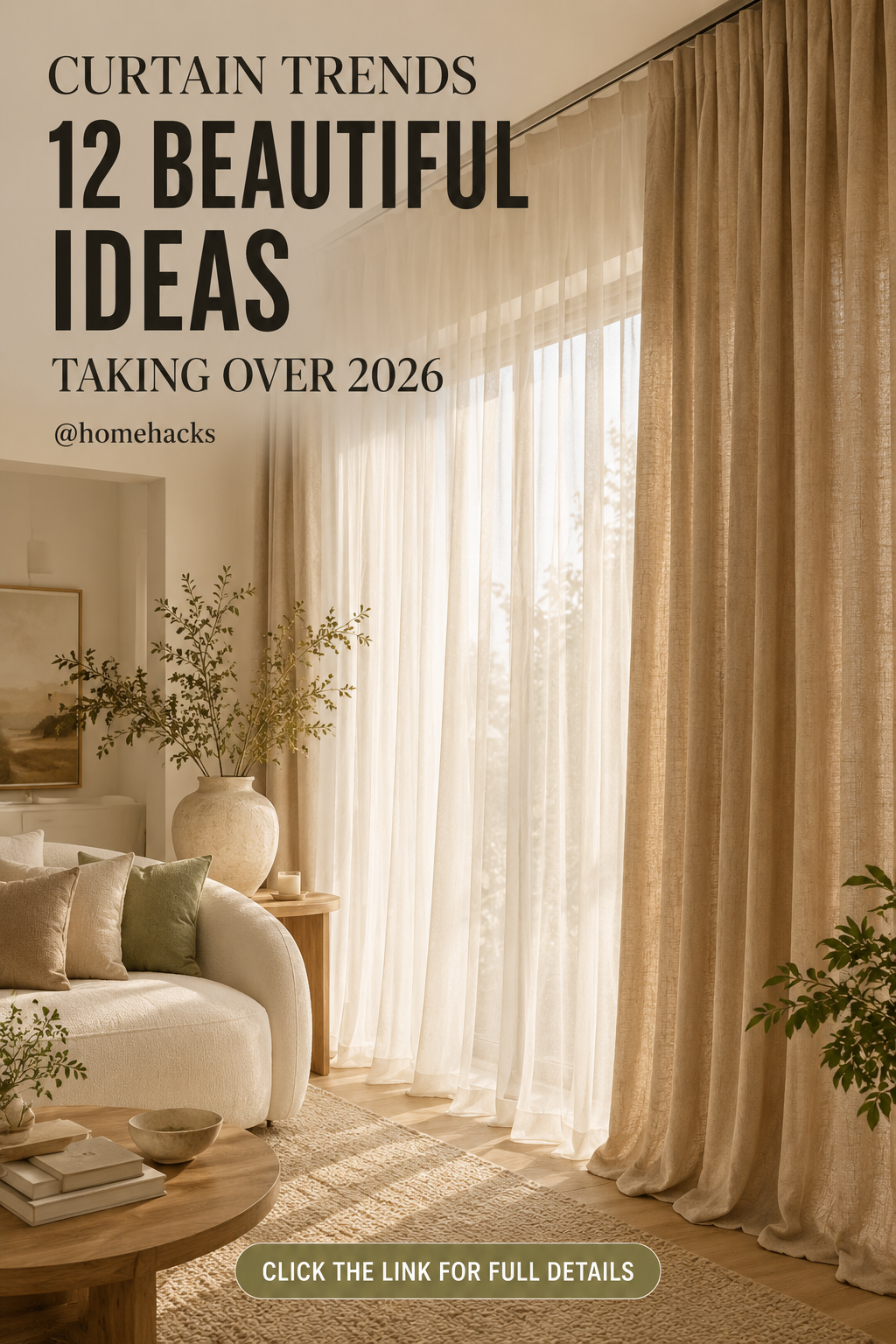
Curtains are no longer just a practical way to add privacy or block sunlight. In 2026, window treatments are becoming an important part of the overall interior design, helping rooms feel warmer, taller, softer, and more luxurious.
The biggest curtain trends are moving toward natural textures, warm neutrals, generous floor-to-ceiling lengths, soft layering, and understated luxury. Instead of overly complicated window treatments, many of the most beautiful looks rely on simple fabrics styled exceptionally well.
Whether you’re refreshing a living room, bedroom, dining area, or home office, these 12 curtain ideas can completely change how your space feels.
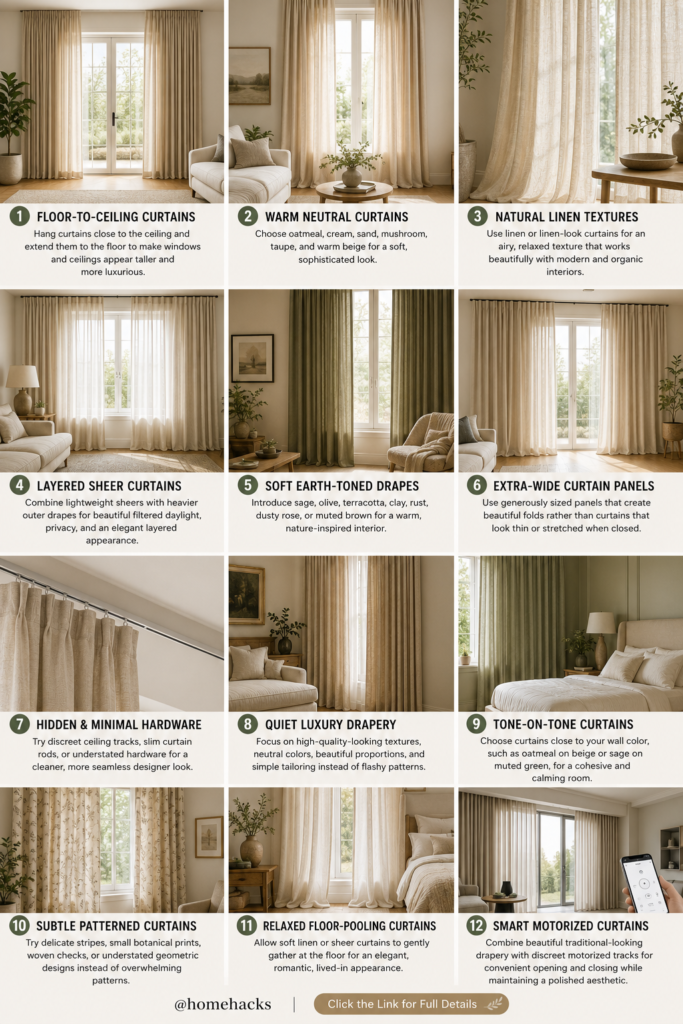
1. Floor-to-Ceiling Curtains
One of the easiest ways to make a room feel more expensive is to take curtains all the way from near the ceiling to the floor.
Rather than positioning the curtain rod directly above the window frame, mounting it higher draws the eye upward and can make the ceiling appear taller.
Choose generous panels that lightly touch or hover just above the floor for a polished look.
2. Warm Neutral Curtains
Cool gray is giving way to warmer, more inviting neutrals.
Think:
- Oatmeal
- Warm ivory
- Mushroom
- Sand
- Taupe
- Soft beige
- Cream
These shades work especially well with wood, stone, warm whites, and organic-modern interiors.
The beauty of warm neutral curtains is their versatility. They add softness without becoming the dominant feature of the room.
3. Natural Linen Textures
Linen and linen-look fabrics continue to suit the relaxed, elevated interiors that are popular in 2026.
Their slightly imperfect texture gives windows character without making them feel overly formal.
Natural linen curtains pair beautifully with oak furniture, woven rugs, plaster-style walls, stone accessories, and greenery.
4. Layered Sheer Curtains
Layering is one of the most practical curtain trends because it combines beauty with flexibility.
A popular setup pairs lightweight sheers with heavier outer drapes.
During the day, the sheer layer allows soft natural light into the room while providing some visual screening. In the evening, the heavier curtains can provide greater privacy and light control.
The layered effect also makes windows appear fuller and more luxurious.
5. Soft Earth-Toned Drapes
For homeowners ready to move beyond beige, earthy colors offer a sophisticated alternative.
Popular choices include:
- Terracotta
- Clay
- Olive
- Sage
- Rust
- Muted brown
- Dusty rose
These colors work particularly well in cozy bedrooms and living rooms where you want warmth without using extremely bright shades.
6. Extra-Wide Curtain Panels
Sparse curtains can make even beautiful fabric look inexpensive.
A fuller treatment creates soft folds when the curtains are closed instead of stretching the fabric completely flat across the window.
Generous fabric also makes large windows feel more intentional and gives an ordinary room a more finished, designer-inspired appearance.
7. Hidden and Minimal Curtain Hardware
Curtain rods don’t always need to be the star.
In minimalist interiors, discreet tracks and understated hardware allow the fabric itself to become the main feature.
Ceiling-mounted tracks are particularly effective for creating a seamless floor-to-ceiling appearance.
For visible hardware, slim black, antique brass, or warm metallic finishes can provide subtle contrast.
8. Quiet Luxury Drapery
The quiet-luxury aesthetic translates beautifully to window treatments.
Instead of bold prints and elaborate embellishments, the emphasis is on:
- Beautiful fabric
- Excellent proportions
- Soft colors
- Full panels
- Clean tailoring
The result feels expensive without appearing flashy.
A simple cream curtain in a substantial textured fabric can sometimes look more luxurious than an elaborate patterned treatment.
9. Tone-on-Tone Curtains
Matching curtains closely to the wall color creates a calm, seamless effect.
For example, pair warm beige walls with slightly lighter oatmeal curtains or soft green walls with muted sage drapes.
Because there isn’t a strong visual break between the wall and fabric, the room can feel larger and more cohesive.
This technique works especially well in bedrooms and smaller living rooms.
10. Subtle Patterns Instead of Bold Prints
Pattern isn’t disappearing, but it’s becoming softer.
Instead of extremely bold prints, consider:
- Fine stripes
- Small botanical motifs
- Woven checks
- Subtle geometric patterns
- Tonal designs
These patterns provide personality while remaining easy to coordinate with the rest of the room.
A delicate stripe can be especially effective in cottage, coastal, farmhouse, and transitional interiors.
11. Relaxed Curtains That Gently Pool
Perfectly tailored curtains aren’t the only option.
Slightly longer panels that gently gather at the floor can create a romantic, relaxed appearance.
This works particularly well with soft linen and sheer fabrics.
Keep the pooling subtle, though. Too much excess fabric can quickly look messy and collect dust, particularly in high-traffic rooms.
12. Smart Curtains With a Designer Look
Technology is becoming easier to integrate without sacrificing aesthetics.
Motorized curtain tracks allow curtains to open and close automatically, while the visible fabric can still look soft and traditional.
Depending on the system, curtains may be controlled through a remote, wall switch, app, or compatible smart-home setup.
They’re particularly useful for very tall windows and hard-to-reach curtain panels.
How to Make Curtains Look More Expensive
You don’t necessarily need expensive custom drapes to achieve a high-end effect. Placement and proportion can make an enormous difference.
Hang curtains high and, where appropriate, extend the rod or track beyond the sides of the window. This lets the fabric frame the window instead of covering too much glass when open.
Choose enough fabric to create attractive folds, pay attention to the finished length, and coordinate the curtain color with the larger palette of the room.
Even affordable curtains can look much more luxurious when they’re properly sized and styled.
Best Curtain Colors for 2026
Warm, nature-inspired colors fit especially well with current interiors.
Cream, oatmeal, warm beige, mushroom, taupe, sage, olive, terracotta, chocolate brown, and muted clay can all create a sophisticated foundation.
That doesn’t mean every home should use neutral curtains. Deeper colors can be beautiful when they complement the architecture, furniture, and amount of natural light in the room.
The goal is cohesion rather than simply following a trend.
Curtain Mistakes That Can Make a Room Look Less Polished
Even beautiful curtains can feel awkward when their proportions are wrong.
Watch out for curtains that are noticeably too short, rods mounted unnecessarily low, panels that aren’t wide enough to create fullness, or fabrics that compete heavily with everything else in the room.
Also consider practicality. Delicate floor-pooling fabric may not make sense in a room with pets, small children, or heavy foot traffic.
A successful window treatment should look beautiful and work for the way you live.
Final Thoughts
The most appealing curtain trends for 2026 aren’t about making windows overly elaborate. They’re about using fabric, scale, texture, and color to make the entire room feel more intentional.
Floor-to-ceiling drapes can create height. Natural linen brings softness. Warm neutrals and earthy colors add depth. Layered sheers provide flexibility, while fuller panels can instantly give windows a more luxurious appearance.
Choose the ideas that complement your home’s existing style rather than trying to incorporate every trend at once. Sometimes changing nothing more than the curtains is enough to make an entire room feel refreshed.