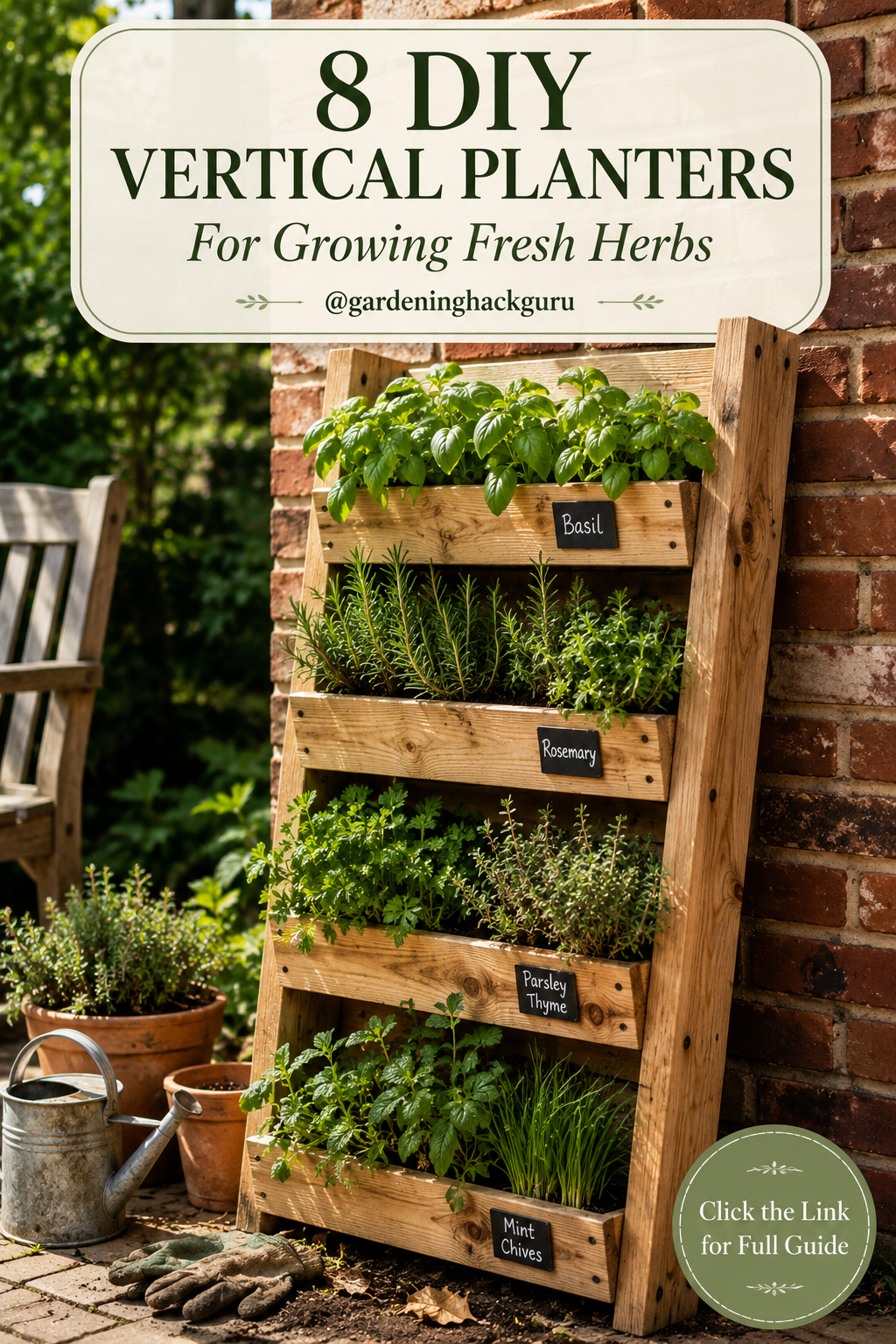
Growing fresh herbs at home doesn’t require a huge vegetable garden or acres of backyard space. With a vertical planter, you can grow basil, rosemary, parsley, mint, thyme, chives, and other kitchen favorites while using surprisingly little room.
Vertical herb gardens are particularly useful for patios, porches, balconies, fences, and small backyards. They also bring greenery upward, turning an ordinary wall or unused corner into an attractive garden feature.
Better yet, many vertical herb planters can be built with affordable materials and basic DIY skills.
Here are 8 DIY vertical planters for growing fresh herbs that combine practicality with beautiful garden style.
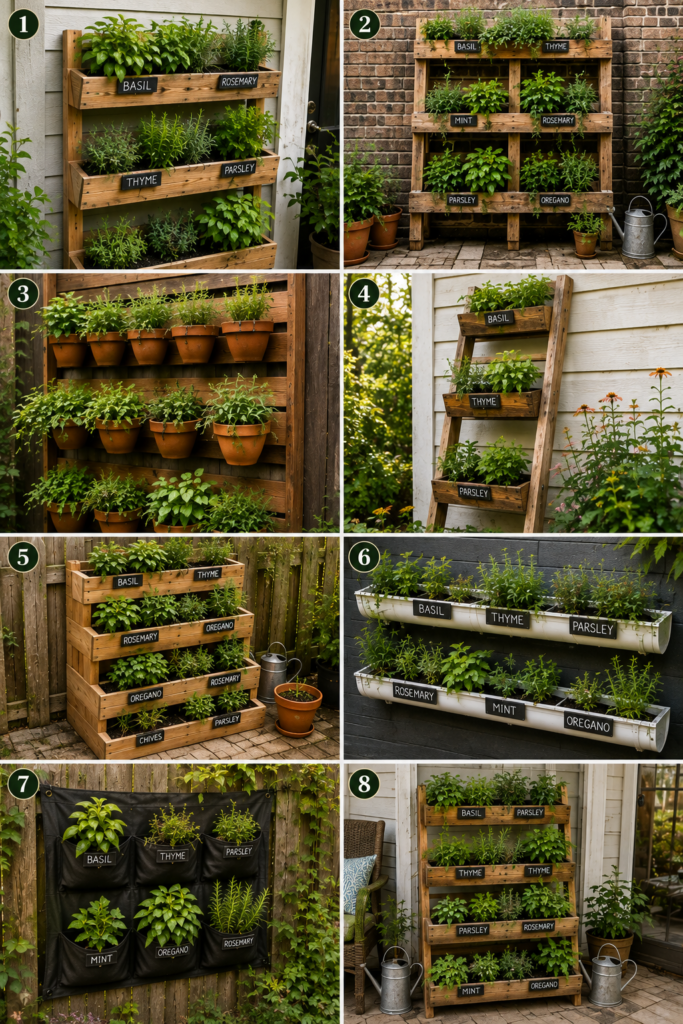
1. Wooden Wall Herb Planter
A tiered wooden planter is one of the easiest ways to create a beautiful vertical herb garden.
Build three or four narrow planting boxes from cedar and attach them securely to a sturdy wooden backing. Leave enough space between each tier so herbs can grow without being crowded by the planter above.
Try planting basil in the upper boxes, rosemary and parsley in the middle, and trailing thyme near the lower sections.
Cedar is particularly attractive because its warm natural appearance works beautifully against brick, siding, or a wooden fence.
Add simple chalkboard labels to give the planter a charming kitchen-garden look.
2. DIY Pallet Herb Garden
An old wooden pallet can become an inexpensive vertical growing system.
Before using one, make sure the pallet is clean, structurally sound, and suitable for gardening. Avoid questionable reclaimed wood that may have been exposed to harmful chemicals.
Stand the pallet vertically and create planting pockets between the boards. Landscape fabric or additional untreated boards can help contain the potting mix.
Plant compact herbs such as:
- Parsley
- Cilantro
- Thyme
- Oregano
- Chives
Position the finished pallet against a sunny wall or secure it properly so it cannot tip.
The naturally rustic appearance works especially well in farmhouse and cottage-style gardens.
3. Hanging Terracotta Pot Herb Wall
If you don’t want large planting boxes, create a vertical display using individual pots.
Mount a sturdy wooden or metal frame against a wall or fence and attach several small terracotta pots at different heights.
Give each herb its own container.
You might grow basil in one, parsley in another, rosemary in a deeper pot, and thyme in another.
Individual containers make it easier to adjust watering because herbs don’t all have identical moisture requirements.
Terracotta also develops natural weathering over time, giving the garden a relaxed, established appearance.
4. Vertical Ladder Herb Garden
An old wooden ladder can become a surprisingly attractive herb planter.
Lean a sturdy ladder securely against a sunny wall or use a freestanding A-frame design. Attach narrow planter boxes or place containers across the steps.
Arrange plants according to their eventual size so taller herbs don’t completely shade smaller ones.
A combination of rosemary, sage, basil, thyme, parsley, and chives can create a beautiful edible display.
Allow a little trailing thyme or oregano to spill over the edges for a softer appearance.
This is also a useful solution for renters because it can be designed without permanently attaching anything to a wall.
5. Stacked Cedar Herb Planter
For a cleaner and more contemporary look, build several cedar planter boxes and arrange them vertically.
Rather than positioning every box directly above the one below, slightly stagger the levels. This gives plants more room to receive sunlight and creates a more interesting shape.
A stacked planter can fit neatly against a patio wall while providing several separate growing zones.
You can organize the herbs by how you use them:
Italian herbs: basil, oregano and parsley
Hardy herbs: rosemary, thyme and sage
Quick kitchen herbs: chives, cilantro and parsley
Label each section so you can quickly find what you need while cooking.
6. Hanging Gutter Herb Garden
Rain gutters can be repurposed into long, narrow herb planters when they’re prepared for gardening and provided with adequate drainage.
Cut several sections and mount them horizontally on a sturdy frame with generous vertical spacing.
Because gutters are relatively shallow, they’re better suited to smaller herbs rather than plants that require deep root systems.
Consider growing:
- Thyme
- Chives
- Cilantro
- Parsley
- Small oregano plants
Ensure excess water can drain freely. Constantly saturated soil can quickly cause problems for many culinary herbs.
A gutter garden can be particularly effective along a fence where horizontal space would otherwise go unused.
7. Pocket Herb Garden
Fabric planting pockets offer one of the most compact vertical gardening options.
Attach a purpose-made outdoor planting-pocket system to a sturdy fence or wall and fill individual pockets with lightweight, well-draining potting mix.
Plant one or two compact herbs in each pocket rather than overcrowding them.
This approach works particularly well for leafy herbs such as parsley and cilantro, along with compact thyme, oregano, and chives.
Keep an eye on moisture. Small pockets contain relatively little soil and can dry out faster than traditional containers during warm weather.
8. Freestanding Tiered Herb Planter
If you don’t want to drill into a wall or fence, build a freestanding tiered planter.
Create three or four cedar boxes positioned like steps, with the tallest section at the back.
This arrangement allows sunlight to reach each level while keeping all your herbs within easy reach.
Place taller rosemary toward the back, medium-sized basil and parsley in the center, and trailing thyme or oregano toward the front.
A freestanding design can also be moved if seasonal sunlight changes or you decide to rearrange your patio.
🌱 Best Herbs for a Vertical Garden
Not every herb grows exactly the same way, but many common culinary herbs perform beautifully in containers.
Some excellent choices include:
| Herb | Light | Water Preference | Vertical Garden Use |
|---|---|---|---|
| Basil | Full sun to bright light | Regular moisture | Medium/deeper boxes |
| Rosemary | Plenty of sun | Allow soil to dry somewhat | Separate container |
| Thyme | Plenty of sun | Drier conditions | Edges/trailing |
| Parsley | Sun/partial sun | Consistent moisture | Individual pockets |
| Mint | Sun/partial sun | Regular moisture | Best contained separately |
| Chives | Plenty of sun | Moderate moisture | Small containers |
| Oregano | Plenty of sun | Drier conditions | Trailing edges |
| Cilantro | Sun/partial sun | Regular moisture | Cooler-season sections |
One particularly important tip is to keep mint contained. Mint spreads aggressively and can quickly compete with other herbs when planted in the same box.
☀️ Choose the Right Location
Most popular culinary herbs grow best with plenty of sunlight.
Aim for a location receiving around six hours of direct sun when growing sun-loving herbs such as basil, rosemary, thyme, and oregano. In extremely hot climates, some afternoon protection can help certain herbs avoid excessive heat stress.
Watch the planter throughout the day before permanently installing it.
Vertical gardens can create their own shade, so make sure upper containers aren’t blocking all the light from lower plants.
💧 Don’t Forget Drainage
Good drainage is essential.
Every planting box, pot, gutter, or pocket should allow excess water to escape. Without drainage, roots can remain constantly wet and eventually rot.
Use a quality container potting mix rather than heavy garden soil. Potting mixes are generally lighter and better suited to containers.
Vertical planters can also dry out faster than traditional garden beds, particularly during hot summer weather.
Check the soil with your finger instead of automatically watering on a rigid schedule.
✂️ Harvest Herbs Regularly
Frequent harvesting doesn’t just provide ingredients for your kitchen—it can also encourage many herbs to produce fresh growth.
For basil, regularly pinch stems above a pair of leaves to encourage branching.
Harvest parsley from the outer stems and trim chives as needed.
Rosemary and thyme can be harvested gradually without removing too much of the plant at once.
Regular trimming also helps prevent a vertical planter from becoming overcrowded.
🪴 How to Make Your DIY Planter Look Better
A functional herb garden can also become part of your outdoor décor.
Use the same wood throughout the structure for a cohesive appearance. Cedar looks especially beautiful when allowed to weather naturally.
Add small handwritten plant labels, use a few weathered terracotta pots nearby, and allow some trailing herbs to spill naturally over the edges.
Avoid making everything perfectly symmetrical. Slight variations in plant height and foliage often make a DIY garden look more natural and established.
Common Vertical Herb Garden Mistakes
One common mistake is packing too many plants into each container. Small herbs eventually become much larger, so leave enough room for mature growth.
Also avoid combining plants with very different watering needs whenever possible. Rosemary and thyme generally prefer conditions on the drier side, while basil and parsley appreciate more consistent moisture.
Other mistakes include inadequate drainage, insufficient sunlight, shallow containers for larger herbs, and allowing aggressive plants such as mint to take over shared boxes.
Planning these details before planting will make maintaining your vertical garden much easier.
Final Thoughts
A vertical herb garden is one of the simplest ways to turn an unused outdoor wall, patio corner, or fence into something both beautiful and productive.
You can build an elegant cedar planter, transform an old ladder, create a rustic pallet garden, hang individual terracotta pots, or start with a simple freestanding tiered design.
The most important things are adequate sunlight, good drainage, appropriate container depth, and choosing herbs with compatible growing requirements.
Start small with a few herbs you regularly use in the kitchen. Before long, your vertical planter can become a living pantry filled with fresh basil, rosemary, thyme, parsley, chives, and more—all just a few steps from your door.