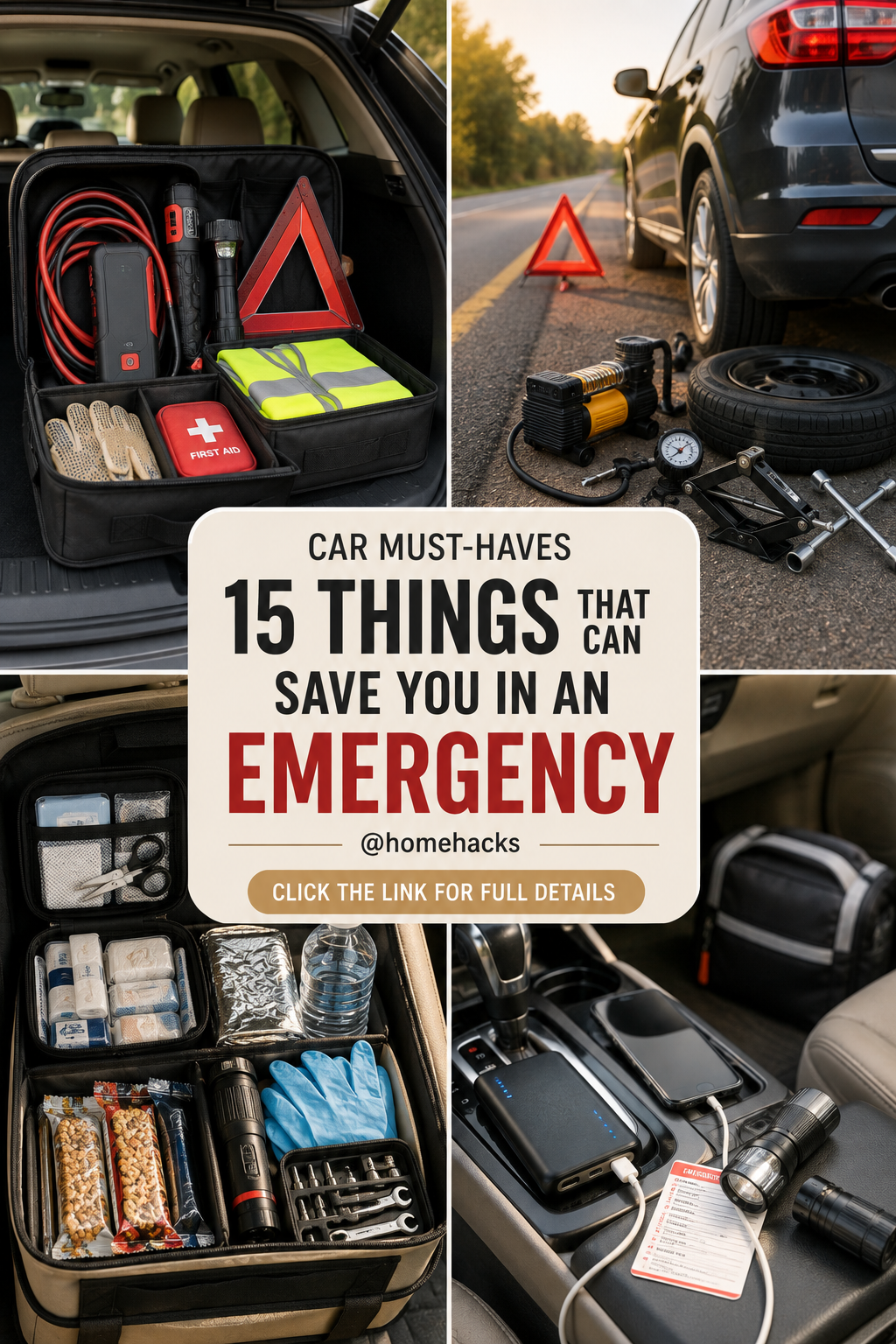
You never know when a normal drive might turn into an unexpected roadside problem. A dead battery, flat tire, sudden breakdown, bad weather, or long delay can happen even when your vehicle is well maintained.
Keeping a few carefully chosen emergency supplies in your car can make these situations easier and safer to manage while you wait for professional help. You don’t need to fill your entire trunk, either. Most essentials can fit inside one organized emergency bag or storage bin.
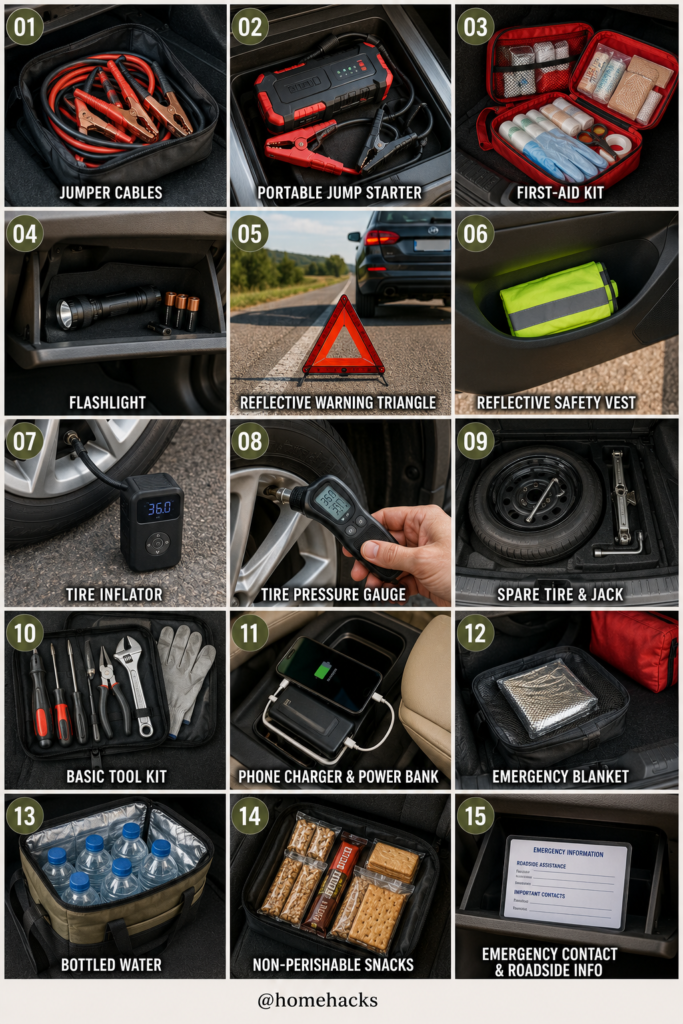
Here are 15 car must-haves worth keeping in your vehicle for emergencies.
1. Jumper Cables
A dead battery is one of the most common reasons drivers unexpectedly get stuck.
Keep a good set of jumper cables in your trunk so they’re available when another suitable vehicle can provide a jump. Store them neatly inside a zippered bag so the clamps and cables don’t become tangled with other supplies.
Before using them, follow your vehicle manufacturer’s instructions because jump-starting procedures can differ between vehicles.
2. Portable Jump Starter
A portable battery jump starter provides another option when another vehicle isn’t available.
Many modern units are compact enough to fit inside a glove compartment or emergency kit. Some also provide USB charging and an emergency light.
Keep yours charged and periodically check its battery level so it isn’t empty when you actually need it.
3. First-Aid Kit
A compact first-aid kit belongs in almost every vehicle.
A basic kit can contain supplies such as:
- Adhesive bandages
- Sterile gauze
- Medical tape
- Disposable gloves
- Antiseptic wipes
- Basic first-aid instructions
Periodically check the kit and replace expired or damaged supplies.
4. LED Flashlight
Car problems don’t always happen during daylight.
A bright flashlight can help you see around your vehicle, locate something inside the trunk, or make yourself more visible after dark.
Store spare batteries if your flashlight uses replaceable ones, or regularly recharge a rechargeable model.
5. Reflective Warning Triangle
Visibility is extremely important during a roadside breakdown.
A reflective warning triangle can help alert approaching drivers that there’s a stopped vehicle ahead.
Keep it somewhere you can reach easily. If you need to use roadside warning equipment, follow local traffic laws and prioritize getting yourself and your passengers to a safe location.
6. Reflective Safety Vest
A high-visibility vest takes up almost no room but can be extremely useful.
If you must exit the vehicle during low-light conditions, reflective material can make you more noticeable to other road users.
Store the vest somewhere accessible rather than burying it underneath luggage.
7. Portable Tire Inflator
A portable tire inflator can be useful when tire pressure is low or for certain minor tire-related situations.
Many compact models connect to a vehicle power outlet or use rechargeable batteries and include a digital pressure display.
An inflator isn’t a substitute for professional repair when a tire is significantly damaged, but it can be a valuable addition to your roadside kit.
8. Tire Pressure Gauge
A small tire-pressure gauge is inexpensive and takes up almost no space.
Checking tire pressure regularly can help you notice a problem before it becomes a roadside emergency.
Use the tire-pressure specifications provided for your vehicle rather than relying on the maximum pressure printed on the tire itself.
9. Spare Tire, Jack & Lug Wrench
If your vehicle comes with a spare tire, make sure you know where it is and periodically check its condition and pressure.
Also confirm that the necessary jack and lug wrench are present.
Some newer vehicles don’t include a traditional spare, so check what your particular car provides before assuming you’re prepared.
If changing a tire would put you in an unsafe position near moving traffic, call roadside assistance instead.
10. Basic Tool Kit
A small automotive tool kit can be useful for minor situations.
Consider keeping items such as:
- Screwdrivers
- Pliers
- Adjustable wrench
- Work gloves
- Utility cloth
- A few commonly needed basic tools
The goal isn’t to perform complicated roadside repairs. It’s simply to have basic tools available when they’re useful.
11. Phone Charger & Power Bank
Your phone may become one of your most important tools during an emergency.
It can help you contact roadside assistance, emergency services, family members, or navigate to a safer location.
Keep a compatible charging cable in the car and consider carrying a charged power bank as a backup.
12. Emergency Blanket
Emergency thermal blankets fold into extremely small packages, making them easy to keep inside a glove compartment or emergency bag.
They can provide additional warmth if you’re stranded during cold weather or have to wait for assistance for an extended period.
Drivers in colder climates may also want to keep additional seasonal supplies in the vehicle.
13. Bottled Water
Unexpected roadside delays can last much longer than expected.
Keeping some drinking water in the vehicle can be helpful, particularly during longer journeys. Rotate your emergency water periodically and avoid leaving containers in conditions that exceed their storage recommendations.
For road trips through remote areas, consider carrying more water than you normally would.
14. Non-Perishable Snacks
A few shelf-stable snacks can make a long roadside wait considerably easier.
Good options include packaged crackers, shelf-stable snack bars, or other foods that tolerate storage conditions appropriate for your climate.
Check them periodically and replace anything that’s expired or damaged.
15. Emergency Contact & Roadside Assistance Information
Don’t rely entirely on your phone to store important information.
Keep a small card containing essential roadside-assistance details, insurance contact information, and other numbers you may need.
Avoid unnecessarily displaying sensitive personal information. Store the card securely inside the glove compartment or emergency kit.
How to Organize Your Car Emergency Kit
Rather than scattering emergency supplies throughout your vehicle, keep most of them together inside a durable trunk organizer or zippered emergency bag.
Frequently needed items such as a flashlight or reflective vest should remain easy to reach. Secure heavier equipment so it can’t move around the passenger compartment during sudden braking.
Check the entire kit every few months. Recharge batteries and power banks, inspect the spare tire, replace expired first-aid supplies and snacks, and confirm that everything is still in good condition.
Extra Items for Long Road Trips
Your emergency kit should reflect where and when you drive.
For winter travel, you might need additional warm clothing and other cold-weather supplies. Hot or remote environments may require extra drinking water. Long-distance trips can justify carrying additional food, charging options, and vehicle-specific supplies.
Before traveling through isolated areas, checking your fuel level, tires, battery condition, weather, and planned route can be just as important as what’s inside your emergency kit.
What to Do During a Roadside Emergency
If something goes wrong while driving, prioritize getting yourself and your passengers out of immediate danger rather than trying to save the vehicle.
Move to a safe location when possible, activate your hazard lights, and follow local roadside-safety guidance. Be extremely cautious about standing near moving traffic.
If the situation involves a crash, fire, serious injury, dangerous traffic conditions, or another immediate threat, contact the appropriate emergency services.
Final Thoughts
A good car emergency kit isn’t about preparing for every imaginable disaster. It’s about having practical essentials available for the situations drivers are most likely to encounter.
Jumper cables, a jump starter, first-aid supplies, warning equipment, tire tools, a flashlight, phone power, water, and a few basic comfort items can make an unexpected breakdown much easier to handle.
Put these 15 essentials together once, store them securely in your vehicle, and remember to check the kit periodically. Hopefully you’ll rarely need it—but when something goes wrong, you’ll be glad it’s there.