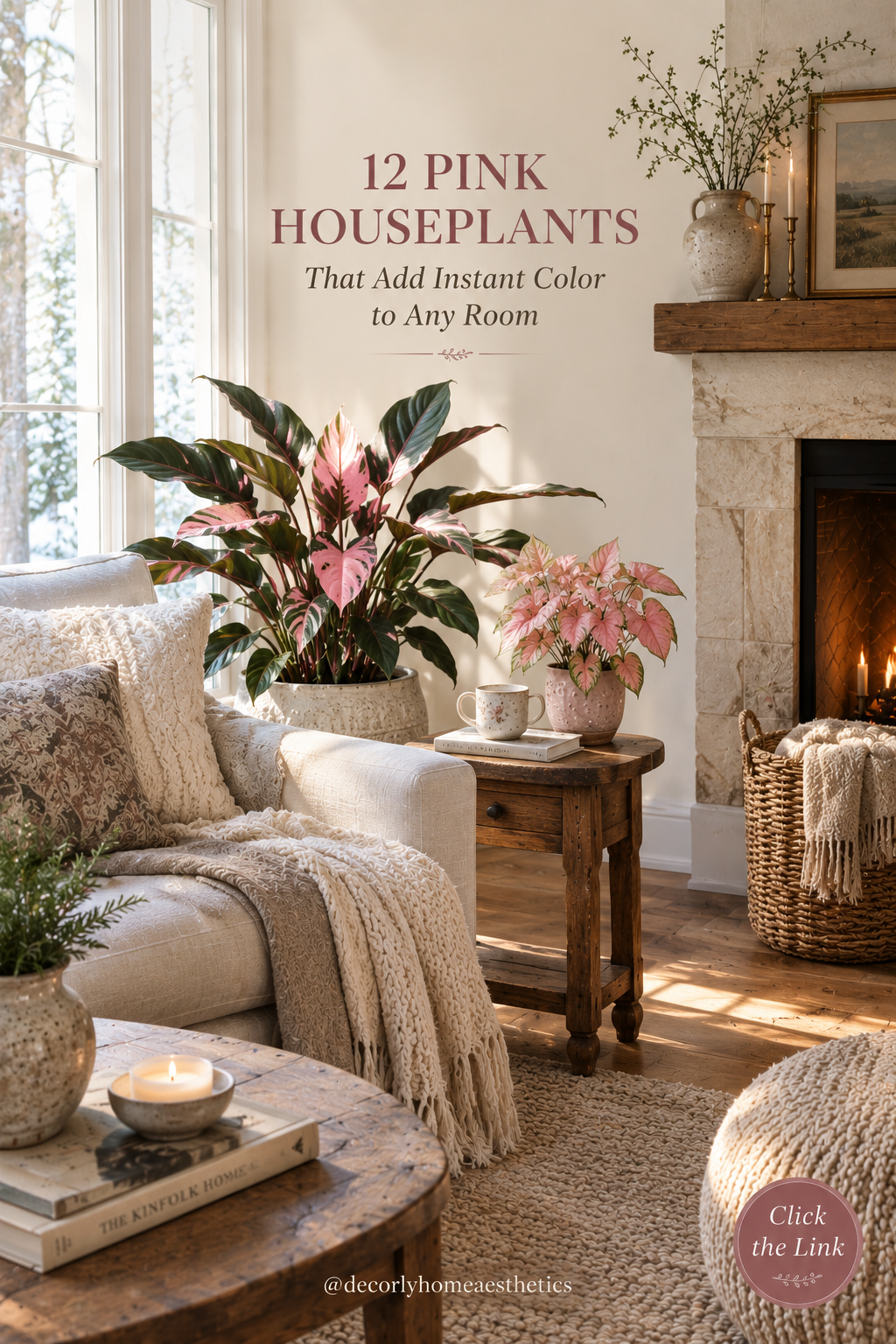
For a long time, I thought houseplants had one job in a room: add some green.
Then I started noticing plants with blush leaves, pink veins, cream-and-rose stripes, and little splashes of hot pink, and suddenly the usual all-green plant corner felt a little less exciting.
Pink houseplants are different because they almost behave like decor.
A Pink Princess Philodendron beside a neutral armchair can give you the same little hit of color as a patterned cushion. A soft pink Syngonium looks beautiful against warm wood. And something like Stromanthe ‘Triostar’ brings several colors into a room without needing flowers at all.
The best part is that you don’t need to turn your house into a pink wonderland to use them. In fact, I think these plants look their best in fairly simple rooms where their unusual foliage gets to be the interesting part.
If you want to bring more color into your home naturally, here are 12 beautiful pink houseplants worth knowing about, along with a few tips for keeping their color looking its best.
1. Pink Princess Philodendron
If you’re going to start a list about pink houseplants, this one almost has to come first.
Philodendron ‘Pink Princess’ is famous for its dark green, sometimes nearly burgundy leaves marked with unpredictable areas of pink variegation.
And unpredictable really is the word.
One leaf might have a small pink streak while the next has a much larger patch. That’s part of what makes the plant so interesting.
From a decorating point of view, I love Pink Princess in a room with warm neutrals. Put it in a cream ceramic planter beside a linen sofa or wooden cabinet and those dark leaves immediately stand out.
It generally appreciates bright, indirect light, a well-draining potting mix, and watering after the upper portion of the soil has begun to dry.
More light can help support attractive growth and variegation, but strong direct sun can scorch the foliage. And don’t expect every new leaf to be half pink—the variation is naturally inconsistent.
2. Caladium ‘Pink Beauty’
Caladiums almost don’t look real.
Their thin, heart-shaped leaves can have incredible combinations of pink, green, white, and contrasting veins.
‘Pink Beauty’ is especially pretty if you want pink to be the main event rather than just a small accent.
I’d put one somewhere it can be viewed fairly close—on a plant stand, console, or near a bright window—because the leaf detail is what makes it special.
Caladiums generally enjoy warmth and humidity, with bright filtered light rather than harsh afternoon sun.
One thing to know before buying them is that many caladiums have a natural dormant period. The foliage can die back as the plant rests, so don’t automatically assume you’ve killed it when that happens.
3. Aglaonema ‘Pink Dalmatian’
If you’re drawn to pink foliage but don’t necessarily want an entire pink leaf, Aglaonema ‘Pink Dalmatian’ gives you a more speckled look.
Its green leaves are scattered with pink spots and splashes.
That makes it surprisingly easy to decorate with because the plant still reads mostly green from across the room.
Try it on a sideboard, desk, or open shelf where you want a little color without creating a huge focal point.
Aglaonemas are popular indoor plants partly because they’re relatively adaptable. They can tolerate lower light than some colorful plants, although brighter indirect light generally helps colorful varieties show their best coloration.
Let the soil dry somewhat between waterings rather than keeping the roots constantly wet.
4. Syngonium ‘Neon Robusta’
Not every pink houseplant has to be dramatic.
Sometimes soft blush is even prettier.
Syngonium ‘Neon Robusta’ has delicate arrow-shaped leaves with warm pink or dusty rose coloring. Younger plants tend to remain fairly compact, while older Syngoniums can develop more of a climbing or trailing habit.
This is one I’d use in a calm neutral bedroom or living room.
It looks particularly beautiful in a simple stoneware pot where the foliage can provide the color.
Give it bright indirect light for good coloration, although avoid intense direct sun. Water when the upper layer of soil starts drying rather than following a rigid calendar.
5. Hypoestes ‘Pink Splash’
The polka dot plant is for anyone who thinks subtle pink isn’t enough.
Hypoestes ‘Pink Splash’ has small leaves covered in contrasting pink and green patterns, giving the plant a playful, almost painted appearance.
Because the foliage is relatively small, I prefer using Hypoestes as a tabletop plant rather than placing it on the floor.
Put it on a kitchen shelf, bedside table, desk, or plant stand.
It likes bright indirect light and reasonably consistent moisture. If it becomes leggy, pinching the growing tips can help encourage a bushier shape.
It’s a small plant, but it can bring a surprising amount of color to a room.
6. Stromanthe ‘Triostar’
If Pink Princess is dramatic, Stromanthe ‘Triostar’ is elegant.
Its foliage combines green, cream, and pale pink, often with deeper rosy or burgundy coloring underneath.
Because the leaves are long and beautifully patterned, a mature plant can become a real statement piece.
I love Triostar in a woven basket or simple ceramic planter beside an armchair or console.
The only catch is that it can be fussier than some plants on this list.
It generally prefers bright filtered light, higher humidity, warmth, and evenly moist—but not waterlogged—soil.
If your home is extremely dry, particularly during winter, you may notice crispy leaf edges.
It’s not necessarily the easiest pink plant here, but when it’s happy, it’s gorgeous.
7. Fittonia ‘Pink Angel’
Fittonia is proof that a plant doesn’t have to be large to be interesting.
Fittonia ‘Pink Angel’ has small green leaves covered in delicate pink veins.
Because it naturally stays fairly compact, it’s perfect for small spaces.
Use it on a bookshelf, desk, bathroom shelf, or little side table.
Fittonia appreciates humidity and doesn’t enjoy being left completely dry for long periods. Anyone who has owned one may also be familiar with its rather theatrical habit of dramatically wilting when thirsty.
Thankfully, it can often perk back up after watering if it hasn’t been allowed to remain dry for too long.
8. Tradescantia ‘Nanouk’
This is one of my favorites if you want something that can trail.
Tradescantia ‘Nanouk’ produces striped foliage in combinations of green, cream, pink, and purple.
Instead of placing every plant upright on a shelf, let this one spill over the edge.
It looks beautiful on a high shelf, plant stand, or in a hanging planter where the stems have room to cascade.
Bright indirect light helps maintain attractive coloration. If it doesn’t receive enough light, growth can become less compact.
Allow the soil to dry somewhat between waterings and avoid leaving the plant sitting in soggy soil.
Regular trimming can also help keep it looking fuller.
9. Cryptanthus ‘Pink Star’
Cryptanthus is a completely different shape from most of the plants on this list.
Often called earth stars, these bromeliads grow in low, spreading rosettes rather than producing tall stems.
A pink Cryptanthus can look almost like a living sculpture.
That’s why I wouldn’t hide one among several larger plants.
Give it its own moment.
Place it in a shallow ceramic planter on a coffee table, console, or shelf where you can see the star-like shape from above.
Bright filtered light generally helps support good coloration, while overly harsh direct sunlight can damage foliage.
10. Peperomia ‘Pink Lady’
For smaller shelves and desks, a pink-variegated Peperomia is a lovely option.
Peperomia ‘Pink Lady’ is valued for its mix of green, cream, and rosy pink coloration.
It has a softer look than the intense contrast of a Pink Princess or Hypoestes, making it particularly easy to use in calm interiors.
Try it in a small terracotta or cream ceramic pot beside books or other everyday objects.
Peperomias generally appreciate bright indirect light and a well-draining potting mix. Allowing the soil to partially dry between waterings is usually safer than keeping it constantly wet.
Because they’re compact, they’re also a good choice when you want houseplants but don’t have much floor space.
11. Begonia ‘Pink Minx’
Begonias are a rabbit hole for anyone who loves unusual foliage.
There are countless varieties with silver, burgundy, green, red, and pink patterns, and ‘Pink Minx’ is one of the decorative foliage options worth looking for.
Begonias work especially well as close-up plants because their leaves have so much detail.
Place one on a small table where you’ll actually notice the patterns rather than hiding it behind larger foliage.
Many foliage begonias prefer bright indirect light, moderate-to-high humidity, and a growing medium that drains well.
Good airflow is helpful too. Keeping leaves and soil constantly wet isn’t the goal.
12. Cordyline ‘Pink Passion’
If most of the plants on this list feel a little too small for the space you’re decorating, consider a Cordyline.
Cordyline ‘Pink Passion’ has long, narrow foliage with striking pink coloring, creating a completely different silhouette from broad-leaved tropical plants.
It’s particularly useful when you need height.
A larger Cordyline in a simple floor planter can fill an empty corner without requiring several smaller plants.
Its upright shape also works beautifully in more contemporary rooms.
Give it plenty of bright light and be careful not to keep the potting mix permanently saturated.
One important note: depending on your climate and exact variety, some Cordylines are grown more commonly outdoors or as seasonal patio plants than permanent indoor houseplants. If you’re keeping one indoors, make sure you can provide enough light.
How to Decorate With Pink Houseplants
The easiest mistake to make is thinking that because the plants are pink, the rest of the room needs to be pink too.
It doesn’t.
Actually, I think the opposite works better.
Pink foliage looks especially beautiful against:
warm ivory + oatmeal + natural oak + walnut + terracotta + muted green + aged brass
Let the plant provide the pink.
A Pink Princess in a cream pot beside a wooden table feels sophisticated. Put the same plant in a bright pink pot beside pink cushions and pink artwork, and suddenly you’re competing with the foliage.
Neutral planters are usually your friend here.
Cream pottery, aged terracotta, stoneware, woven baskets, and warm brown ceramics all let the leaves stand out.
Don’t Put All Your Pink Plants Together
It can be tempting to create one enormous pink plant corner.
You can, of course, but spreading them throughout the room often looks more natural.
Put a larger plant beside the sofa.
A small Fittonia can sit on a shelf.
Let Tradescantia trail from somewhere higher.
Place a soft pink Syngonium on a side table.
Now the color moves around the room rather than becoming one giant pink focal point.
It feels more like decorating with plants and less like displaying a collection.
How to Keep Pink Leaves Looking Pink
This is probably the question that matters most once you bring one of these plants home.
Colorful foliage needs the right growing conditions.
For many pink-variegated houseplants, bright indirect light is a good starting point. Too little light can lead to weaker growth or less impressive coloration in some varieties, while intense direct sun may burn delicate leaves.
But don’t assume more sunlight always means more pink.
Every species is different.
Temperature, maturity, genetics, nutrition, and growing conditions can all influence how a plant looks.
And with variegated plants like Pink Princess Philodendron, every leaf simply won’t look the same.
That’s normal.
Water According to the Plant, Not the Color
It’s easy to mentally group these as “pink plants,” but botanically they’re very different.
A Fittonia and a Peperomia do not necessarily want the same watering routine.
Neither does a Stromanthe and a Philodendron.
Before watering, learn what your particular plant prefers.
Check the soil.
Check the pot.
Consider the amount of light the plant is receiving and how quickly the growing medium is drying.
Watering every houseplant every Saturday because Saturday is “plant day” is convenient, but the plants haven’t agreed to that schedule.
Use Pots With Drainage
Beautiful planters are part of the fun, but drainage still matters.
If your decorative ceramic pot doesn’t have a drainage hole, keep the plant in a nursery pot inside it.
Then remove the inner pot when watering and allow excess water to drain before putting it back.
It’s a simple habit that can prevent a lot of root problems.
The prettiest planter in the world won’t help a plant that’s sitting in water.
Which Pink Houseplant Is Best for Beginners?
If you’re fairly new to houseplants, I’d start with one of the more forgiving options rather than choosing entirely based on which plant has the pinkest photograph online.
A colorful Aglaonema can be a good starting point in many homes.
Peperomias are another compact option if you have suitable light and avoid overwatering.
Fittonia can be easy enough once you understand that it prefers more consistent moisture, although it will definitely tell you when you’ve forgotten.
Stromanthe, on the other hand, can require more attention to humidity and water quality.
Buy plants that fit your home’s actual conditions.
That’s far easier than trying to turn your home into the environment a difficult plant wants.
A Note About Pets and Children
Pretty foliage doesn’t automatically mean pet-safe foliage.
Several popular houseplants—including Philodendron, Syngonium, Aglaonema and others—can be problematic if chewed or ingested by pets.
If you have curious cats, dogs, or young children, check the safety of the exact plant species before bringing it home and place potentially harmful plants where they cannot be accessed.
Don’t rely on appearance or a generic “houseplant” label.
Final Thoughts
Pink houseplants are one of the easiest ways to bring color into a room without committing to a pink wall, sofa, or rug.
And there’s a surprising amount of variety.
You can go dramatic with a Pink Princess Philodendron, soft and romantic with Syngonium ‘Neon Robusta’, patterned with Stromanthe ‘Triostar’, tiny and detailed with Fittonia, or trailing and colorful with Tradescantia ‘Nanouk’.
You don’t need all twelve.
Sometimes one really beautiful plant in the right corner is enough.
Choose something suited to the light and conditions in your home, put it in a planter that lets the foliage shine, and give it enough space to become part of the room.
Because the nicest pink houseplants don’t feel like another decorative accessory.
They make the room feel alive.