There are noodle dishes you eat because you need a quick dinner, and then there are noodle dishes you start craving before you’ve even finished the bowl.
Mie goreng definitely belongs in the second category.
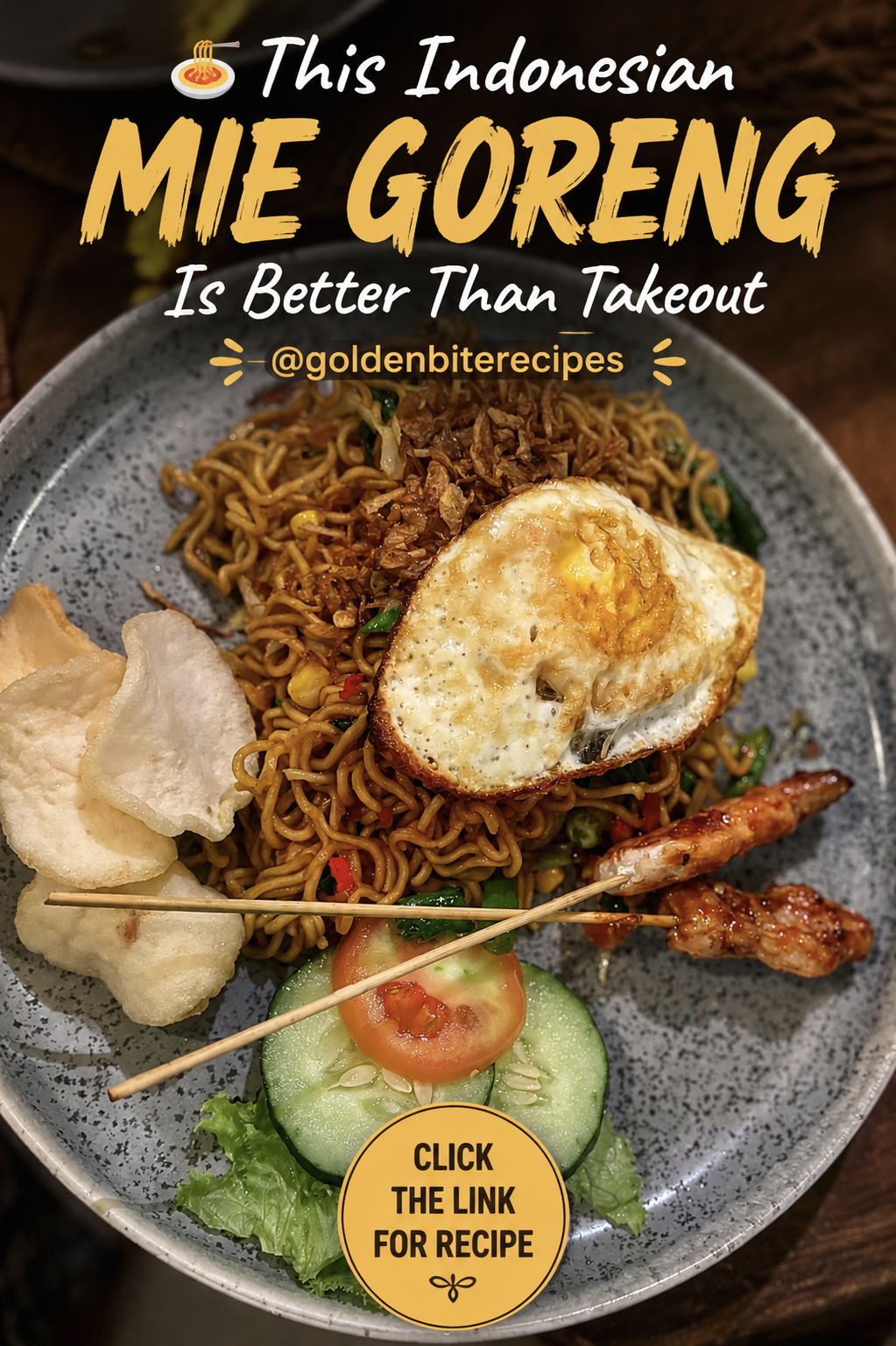
These Indonesian-style fried noodles are sweet, savory, garlicky, a little smoky, and packed with texture. The noodles are tossed in a deeply flavorful sauce, stir-fried with vegetables, and finished with crispy fried shallots. Then comes my favorite part: a fried egg with beautifully crisp edges sitting right on top.
Serve it with chicken satay, crunchy crackers, fresh cucumber, and tomato, and suddenly you have the kind of meal that feels far more exciting than an ordinary plate of noodles.
The best part is that homemade mie goreng is surprisingly approachable. Once everything is chopped and your sauce is mixed, the actual cooking happens very quickly.
What Is Mie Goreng?
Mie goreng—also commonly written mee goreng—literally refers to fried noodles and appears in different forms across Indonesia and neighboring Southeast Asian cuisines.
There isn’t just one universal recipe.
Different homes, restaurants, street vendors, and regions prepare their own versions with different noodles, vegetables, proteins, and seasonings.
One ingredient you’ll often find in Indonesian-style mie goreng is kecap manis, a thick, sweet Indonesian soy sauce. It gives the noodles their characteristic dark color and wonderful sweet-savory flavor.
For this homemade version, we’re combining that sweetness with regular soy sauce, garlic, chili, vegetables, and a little sesame oil.
The result is a glossy plate of noodles that’s incredibly satisfying.
Why You’ll Love This Mie Goreng Recipe
This is exactly the kind of recipe I keep around for nights when regular noodles sound boring.
You’ll love it because it’s:
- Sweet, savory, spicy, and garlicky
- Easy enough for a weeknight dinner
- Packed with vegetables
- Simple to customize
- Delicious with chicken, shrimp, or tofu
- Perfect topped with a crispy fried egg
- Great for using leftover vegetables
- Much easier than it looks
And once you have a bottle of kecap manis in your pantry, you’ll probably start looking for other things to put it on.
Ingredients You’ll Need
For the Noodles
- 8 oz egg noodles or wheat noodles
- 1 tablespoon neutral cooking oil
- 3 garlic cloves, minced
- 1 small shallot, thinly sliced
- ½ cup shredded cabbage
- ½ cup sliced green beans
- ½ small carrot, thinly sliced
- ½ red bell pepper, sliced
- 2 green onions, chopped
- ½ cup bean sprouts, optional
For the Mie Goreng Sauce
- 3 tablespoons kecap manis
- 1 tablespoon regular soy sauce
- 1 tablespoon oyster sauce
- 1 teaspoon sambal oelek or chili garlic sauce
- 1 teaspoon sesame oil
- 1 teaspoon rice vinegar
- ½ teaspoon ground white pepper
For Serving
- 2 fried eggs
- Crispy fried shallots
- Fresh cucumber slices
- Tomato slices
- Lettuce, optional
- Prawn crackers or other Indonesian-style crackers
- Lime wedges
- Chicken satay, optional
The Secret Ingredient: Kecap Manis
If there’s one ingredient I wouldn’t skip, it’s kecap manis.
Regular soy sauce is salty and thin. Kecap manis is much thicker and noticeably sweeter, with a dark, almost syrupy consistency.
It coats the noodles beautifully and creates that glossy caramelized appearance that makes mie goreng so tempting.
If you’re planning to make Indonesian recipes more than once, it’s worth keeping a bottle in your pantry.
Prepare the Sauce First
Mie goreng cooks quickly, so don’t wait until your noodles are already in the pan to start measuring sauces.
Combine the kecap manis, soy sauce, oyster sauce, sambal, sesame oil, rice vinegar, and white pepper in a small bowl.
Stir and set aside.
That’s your flavor base ready to go.
Cook the Noodles
Cook your noodles according to their package directions, stopping when they’re just al dente.
You don’t want extremely soft noodles because they’ll continue cooking when they’re stir-fried.
Drain thoroughly.
If they need to sit for a few minutes, toss them with a tiny amount of oil to prevent sticking.
Prepare Everything Before Heating the Wok
This is one of the biggest secrets to making stir-fried noodles at home.
Get everything ready first.
Chop your vegetables.
Slice your green onions.
Mix your sauce.
Have your cooked noodles nearby.
Once the pan gets hot, you won’t have much time to stop and chop a carrot.
How to Make Indonesian Mie Goreng
Heat a large wok or skillet over medium-high to high heat.
Add the cooking oil.
Once the oil is hot, add the shallot and stir-fry for about a minute.
Add the garlic and cook for another 20–30 seconds.
As soon as the garlic becomes fragrant, add your vegetables.
Start with the firmer vegetables such as carrots and green beans, followed by cabbage and bell pepper.
Stir-fry everything for approximately 2–3 minutes.
The vegetables should soften slightly but still have some bite.
Add the Noodles
Turn the heat up if necessary.
Add the cooked noodles to the pan.
Pour the prepared mie goreng sauce over everything.
Now toss.
And toss some more.
You want every noodle coated with that dark, glossy sweet soy sauce.
Keep everything moving over relatively high heat for about 2–3 minutes.
Some noodles may develop slightly caramelized edges where they touch the hot pan.
That’s a good thing.
Those little browned bits add a lot of flavor.
Add the green onions and bean sprouts near the end so they stay fresh.
Taste and adjust.
Want more sweetness? Add a little kecap manis.
More salt? A splash of soy sauce.
More heat? Add sambal.
Don’t Skip the Fried Egg
You technically could serve your mie goreng without an egg.
But would I?
Absolutely not.
Heat a little oil in a frying pan and crack in an egg.
Cook until the white is set and the edges become golden and crispy.
You can leave the yolk runny if that’s how you like it, or cook it through.
Place the egg directly on top of the hot noodles.
When the yolk mixes into that sweet-savory noodle sauce, things get even better.
Add Crispy Fried Shallots
Crispy fried shallots add another layer of texture that really makes this dish.
Sprinkle them generously over the finished noodles just before serving.
You get chewy noodles, crisp vegetables, crunchy shallots, and that fried egg all in the same bite.
It’s such a simple finishing touch, but it makes a noticeable difference.
Serve It With Chicken Satay
If you want to turn your mie goreng into a larger meal like the plate in the photo, add a couple of chicken satay skewers.
For an easy version, marinate bite-sized chicken pieces with:
- Kecap manis
- Soy sauce
- Garlic
- Lime juice
- A little oil
Thread them onto skewers and grill or pan-sear until cooked through and lightly caramelized.
You don’t need a huge serving.
One or two small skewers beside the noodles are enough to make the meal feel complete.
Why Are Crackers Served With Mie Goreng?
You’ll often see Indonesian noodle and rice dishes accompanied by kerupuk, or crackers.
They add something the noodles don’t have: a big, airy crunch.
You take a bite of saucy noodles, then something crispy, then maybe a little fresh cucumber.
It’s all about contrast.
If you can find Indonesian crackers, they’re perfect here.
Fresh Cucumber Makes a Difference
Cucumber and tomato might look like decoration on the side of the plate, but they’re actually useful.
Mie goreng is rich, sweet, salty, and often spicy.
Fresh cucumber gives your palate a cool, refreshing break between bites.
A squeeze of fresh lime does something similar by cutting through the richness.
That’s why I wouldn’t overload the plate with complicated side dishes.
Sometimes cucumber, tomato, crackers, and lime are exactly enough.
Add Chicken Directly to the Noodles
Don’t want to make separate satay?
No problem.
Slice boneless chicken thighs into small pieces.
Cook the chicken in your wok before adding the vegetables.
Once cooked, transfer it temporarily to a plate.
Prepare the vegetables and noodles, then add the chicken back when you add the sauce.
Chicken thighs work especially well because they stay juicy during high-heat cooking.
Shrimp Mie Goreng
Shrimp is another excellent option.
Cook peeled and deveined shrimp for approximately 1–2 minutes per side, remove them from the pan, and return them toward the end.
Be careful not to overcook them.
Vegetarian Mie Goreng
You can also skip the meat completely.
Add extra vegetables and crispy tofu.
Mushrooms are particularly good because they bring plenty of savory flavor.
Just check the sauces you’re using if you need the dish to be strictly vegetarian, since oyster sauce traditionally contains oyster extract. A vegetarian mushroom-based stir-fry sauce makes an easy substitute.
What Vegetables Can I Add?
Mie goreng is very forgiving, which makes it ideal for cleaning out the vegetable drawer.
Try:
- Cabbage
- Carrots
- Bok choy
- Green beans
- Bell peppers
- Bean sprouts
- Mushrooms
- Snow peas
- Broccoli
- Corn
- Spinach
- Green onions
Don’t add everything at once.
Two or three vegetables are usually enough to keep the noodles interesting without turning the dish into a vegetable stir-fry with a few noodles hiding underneath.
How to Get Restaurant-Style Fried Noodles at Home
Use a Large Pan
Your noodles need room.
If the skillet is overcrowded, the ingredients release moisture and steam instead of frying.
Keep the Heat High
High heat encourages slight caramelization.
Drain Your Noodles Well
Water clinging to the noodles lowers the temperature of your pan.
Don’t Overcook Them First
Slightly firm noodles become perfect during stir-frying.
Already-soft noodles become mushy.
Prepare the Sauce Beforehand
You don’t want to be measuring soy sauce while your garlic burns.
Work Quickly
Once everything hits the hot wok, mie goreng comes together fast.
Make It Spicier
If you like your noodles fiery, this recipe is easy to adjust.
Increase the sambal or serve additional chili sauce at the table.
You can also add sliced fresh red chili when stir-frying the garlic and shallots.
I prefer keeping the base moderately spicy and letting everyone add more heat individually.
What to Serve With Mie Goreng
Mie goreng can easily stand alone as dinner, particularly when you add egg and protein.
For a larger spread, you could serve it with:
- Chicken satay
- Cucumber salad
- Fresh cucumber and tomato
- Prawn crackers
- Fried tofu
- Spring rolls
- Steamed vegetables
- Sambal
- Lime wedges
A cold drink alongside doesn’t hurt either—the sweet, spicy noodles can have quite a kick.
Can You Make Mie Goreng Ahead?
You can prepare the ingredients ahead, but mie goreng is best stir-fried shortly before eating.
Earlier in the day, you can:
Cook the noodles.
Mix the sauce.
Chop the vegetables.
Prepare your protein.
Then dinner takes only a few minutes to bring together.
That’s especially useful on busy weeknights.
How to Store Leftover Mie Goreng
Allow leftovers to cool before placing them in an airtight container.
Refrigerate for up to 3 days.
Keep fresh garnishes and crackers separate so they don’t become soggy.
The Best Way to Reheat It
A hot skillet is my favorite method.
Add a tiny splash of water or oil to loosen the noodles and stir-fry until heated through.
You can also microwave them, but pan reheating does a better job of bringing back some of that freshly fried texture.
If possible, make a fresh fried egg for the top rather than reheating yesterday’s egg.
Frequently Asked Questions
Is mie goreng spicy?
It can be, but it doesn’t have to be. The amount of sambal or chili determines the heat level.
What noodles should I use?
Indonesian-style egg noodles are ideal, but other wheat or egg noodles can work too. Even instant noodles can be used for a quick version.
Is kecap manis the same as soy sauce?
No. Kecap manis is much sweeter and thicker than regular soy sauce and gives mie goreng much of its characteristic flavor and color.
Can I make it without meat?
Absolutely. Use tofu, mushrooms, or additional vegetables.
Why are my noodles mushy?
They were probably overcooked before stir-frying or spent too long in the wok. Cook them only until al dente before adding them to the pan.
Can I add an egg directly into the noodles?
Yes. You can scramble an egg in the wok before adding the noodles. I still love serving a crispy fried egg on top, though.
Better Than Ordering Takeout
What I love most about Indonesian Mie Goreng is how much is happening on one plate without the recipe becoming unnecessarily complicated.
You’ve got glossy sweet-savory noodles.
Crunchy vegetables.
Garlic and chili.
Crispy shallots.
A golden fried egg.
Fresh cucumber.
Crunchy crackers.
And, if you’re hungry, a couple of smoky chicken satay skewers on the side.
Every bite can be slightly different from the last.
It’s colorful, comforting, full of texture, and exactly the kind of dinner that makes an ordinary weeknight feel a little more exciting.
So the next time you’re about to order noodles, try making this instead.
You may discover that the best mie goreng of the week comes from your own kitchen.