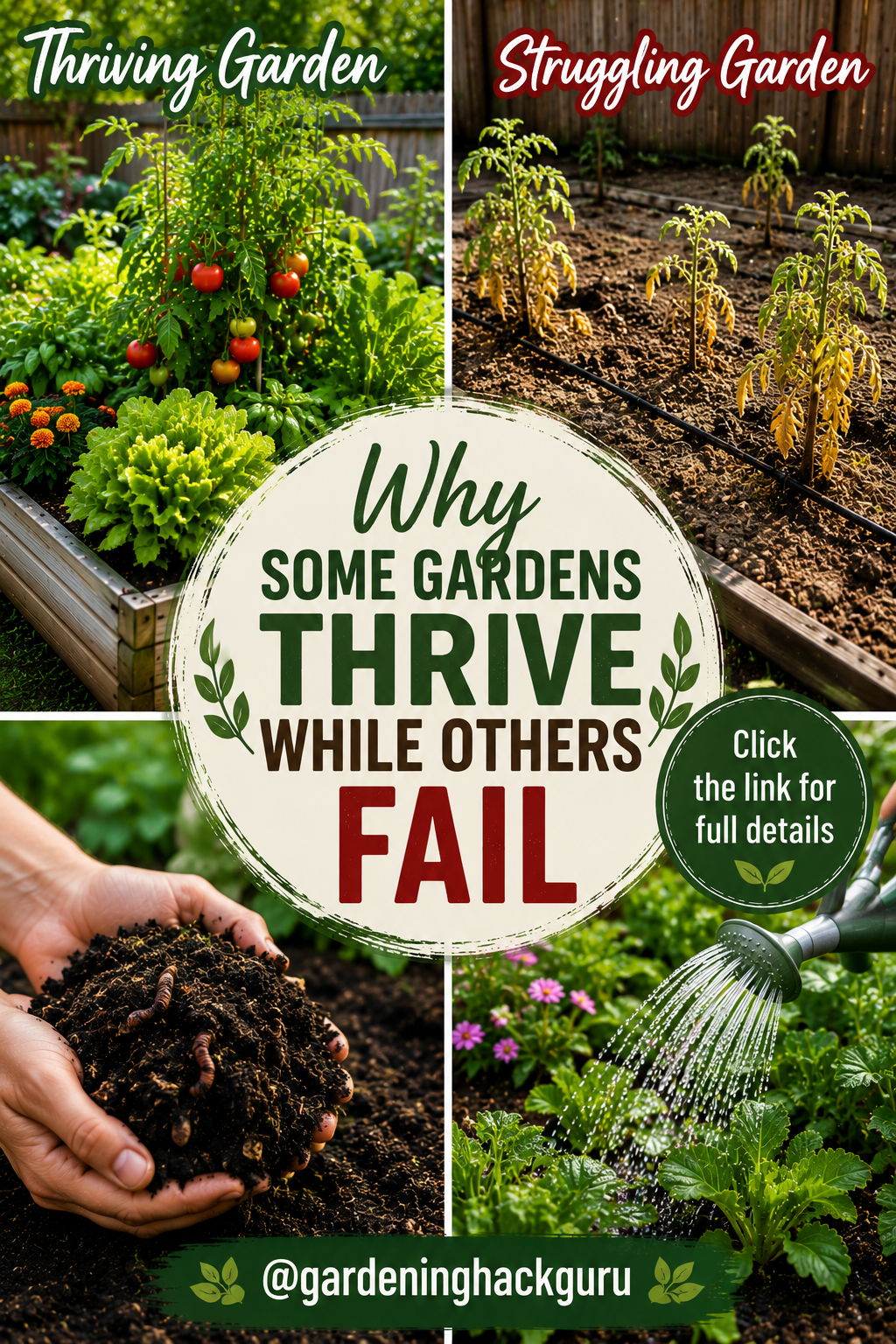
Have you ever walked through a neighborhood and noticed that one garden is bursting with healthy vegetables and colorful flowers while another struggles with yellow leaves, stunted growth, and disappointing harvests?
The difference isn’t luck.
Successful gardens are usually built on a few key principles that many gardeners overlook. Understanding these factors can dramatically improve your garden and help you enjoy healthier plants, bigger harvests, and fewer frustrations.
Let’s explore why some gardens thrive while others fail.
The Secret Starts Below the Surface
Many gardeners focus on plants, but successful gardeners focus on soil.
Healthy soil provides:
🌱 Nutrients
🌱 Moisture retention
🌱 Good drainage
🌱 Strong root development
Poor soil often leads to:
- Slow growth
- Yellow leaves
- Small harvests
- Weak plants
One of the best things you can do is add compost regularly to improve soil health.
Thriving Gardens Have Consistent Watering
Plants need water, but consistency is the real secret.
Successful gardeners:
✔ Water deeply
✔ Water consistently
✔ Avoid overwatering
Failing gardens often suffer from:
❌ Too much water
❌ Too little water
❌ Irregular watering schedules
A simple watering routine can make a huge difference.
Sunlight Matters More Than Most People Think
Most vegetables need:
☀️ 6–8 hours of direct sunlight daily
Thriving gardens are usually planted where sunlight is abundant.
Gardens that fail are often located in:
- Too much shade
- Poor growing locations
- Areas blocked by buildings or trees
Before planting, always evaluate how much sunlight your garden receives.
Healthy Soil Creates Healthy Plants
Successful gardens rarely depend on fertilizer alone.
Instead, they focus on building healthy soil through:
- Compost
- Organic matter
- Mulch
- Soil amendments
Healthy soil supports strong root systems, and strong roots create stronger plants.
Successful Gardeners Feed the Soil
One common mistake is feeding only the plants.
Experienced gardeners focus on feeding the soil itself.
They use:
🌿 Compost
🌿 Organic fertilizers
🌿 Worm castings
🌿 Aged manure
Over time, this creates a thriving growing environment.
Thriving Gardens Use Mulch
Mulch is one of the most underrated gardening tools.
Benefits include:
- Reduced weeds
- Better moisture retention
- Healthier soil
- Less maintenance
A layer of mulch can dramatically improve garden performance.
Plant Spacing Makes a Difference
Many new gardeners plant too closely together.
Crowded plants often struggle because they compete for:
- Sunlight
- Water
- Nutrients
- Air circulation
Proper spacing leads to healthier growth and larger harvests.
Successful Gardeners Watch for Problems Early
Thriving gardens don’t become successful by accident.
Experienced gardeners regularly inspect plants for:
- Pests
- Diseases
- Nutrient deficiencies
- Watering issues
Catching problems early prevents small issues from becoming major setbacks.
The Importance of Compost
Compost is often called “black gold” for a reason.
Benefits include:
✔ Improved soil structure
✔ Better moisture retention
✔ More nutrients
✔ Increased microbial activity
Many thriving gardens use compost every season.
Why Consistency Wins
One of the biggest differences between successful and struggling gardens is consistency.
Thriving gardeners:
🌱 Water regularly
🌱 Feed plants consistently
🌱 Harvest often
🌱 Monitor plant health
Small actions performed consistently create impressive results over time.
Products That Help Gardens Thrive
These gardening products can make success easier:
Compost Bin
Creates nutrient-rich compost from kitchen scraps.
Raised Garden Beds
Improve drainage and organization.
Drip Irrigation System
Provides consistent watering.
Moisture Meter
Prevents watering mistakes.
Organic Fertilizer
Supports healthy growth naturally.
Mulch
Helps retain moisture and suppress weeds.
These products are widely available online and can help improve garden performance.
Common Reasons Gardens Fail
Many struggling gardens suffer from one or more of these issues:
❌ Poor soil quality
❌ Inconsistent watering
❌ Insufficient sunlight
❌ Lack of nutrients
❌ Overcrowded plants
❌ Ignoring pests and diseases
Fortunately, most of these problems are easy to correct.
Final Thoughts
The difference between a thriving garden and a failing one often comes down to a few simple habits. Healthy soil, consistent watering, proper sunlight, regular maintenance, and patience can transform almost any garden.
Remember, successful gardening isn’t about having a green thumb. It’s about creating the right conditions and staying consistent throughout the growing season.
Focus on the fundamentals, and you’ll be amazed at how much your garden improves.
🌱 Happy Gardening!
@gardeninghackguru