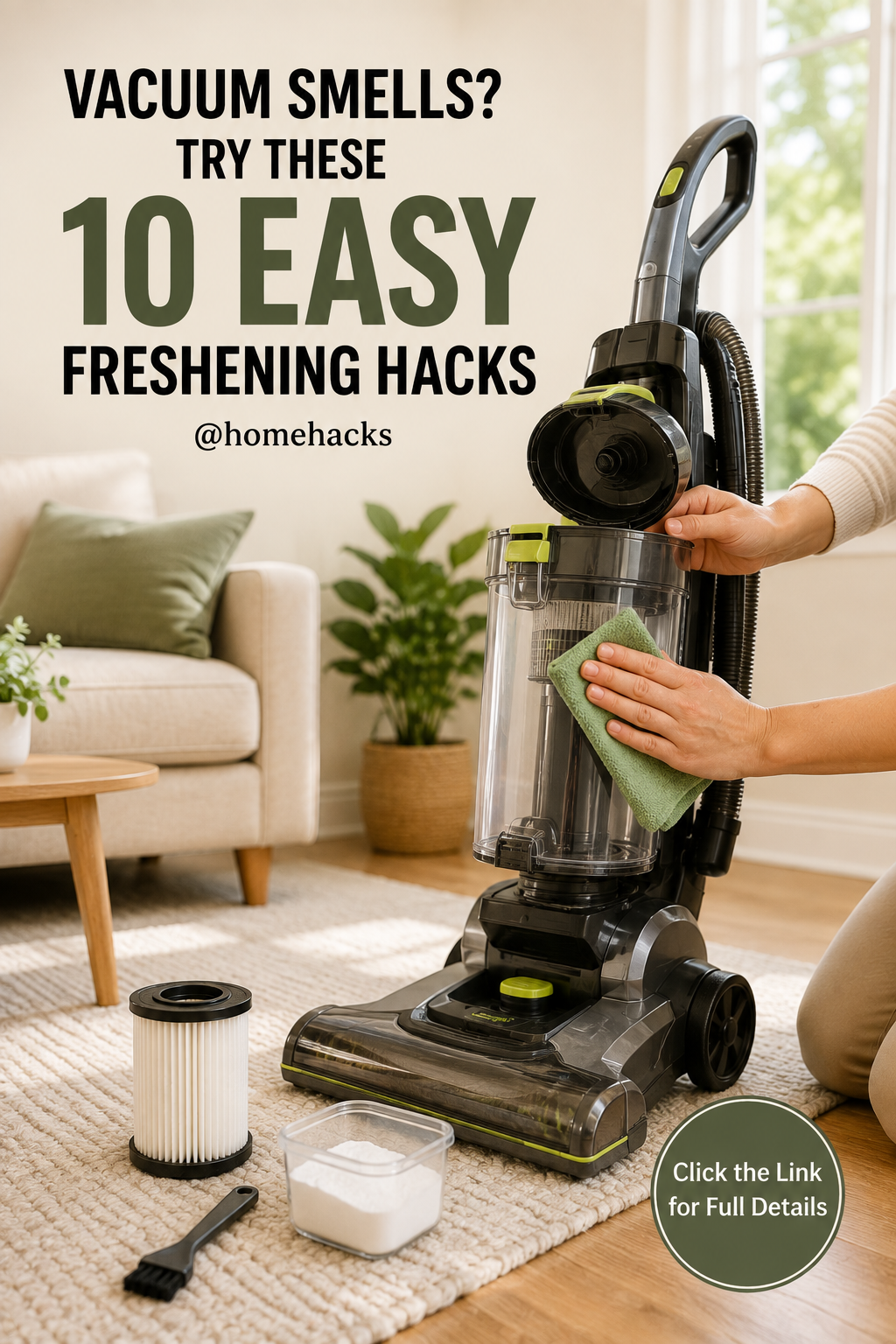
There’s nothing more frustrating than vacuuming your home only to notice an unpleasant smell coming from the machine. Instead of making the room feel cleaner, a smelly vacuum can spread stale, dusty, or pet-related odors throughout your home.
Vacuum odors are usually caused by accumulated dust, pet hair, dirty filters, debris trapped in the brush roll, or a canister or bag that needs attention. Fortunately, regular maintenance can solve many of these problems.
Here are 10 easy vacuum freshening hacks to help keep your vacuum—and your home—smelling cleaner.
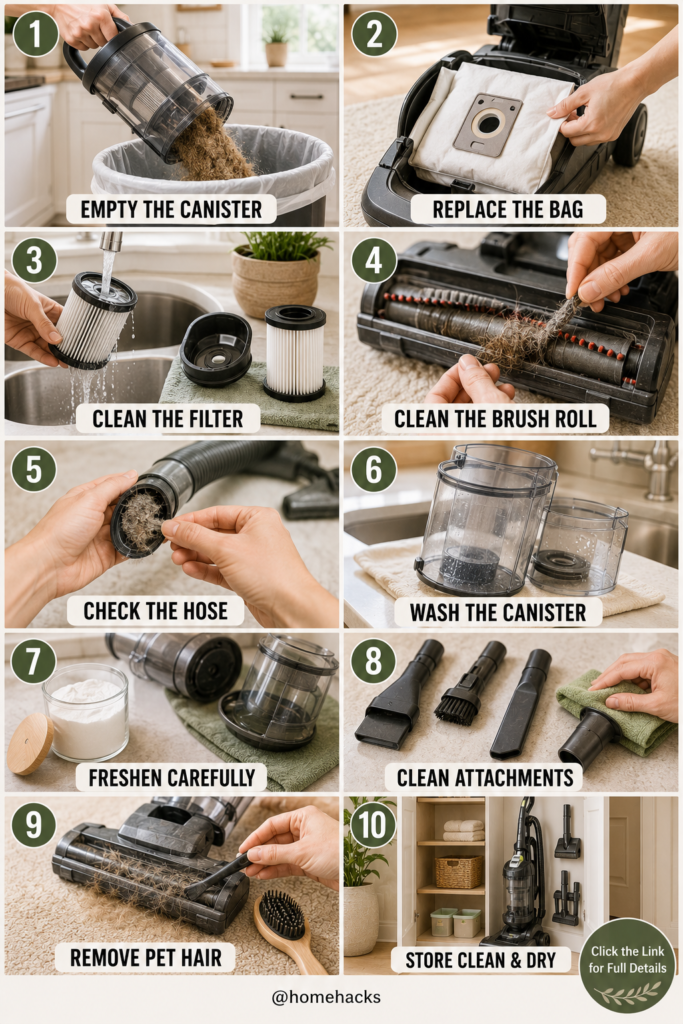
1. Empty the Dust Canister Regularly
One of the simplest ways to prevent vacuum odors is to empty the dust container frequently.
Dust, crumbs, hair, pet dander, and other debris can sit inside the canister and eventually develop an unpleasant smell.
For a bagless vacuum, try emptying the container after each major cleaning session, especially if you have pets.
Once emptied, wipe the inside of the canister according to the manufacturer’s cleaning instructions and allow washable parts to dry completely before reinstalling them.
2. Replace Vacuum Bags Before They’re Completely Full
If you use a bagged vacuum, don’t always wait until the bag is packed tightly before replacing it.
Old debris sitting inside the bag can contribute to unpleasant odors, while an overfilled bag can also reduce airflow and cleaning performance.
Check the manufacturer’s recommendations for when to change the bag.
3. Clean or Replace the Filters
A dirty filter is one of the most common sources of vacuum smells.
Filters trap fine dust and particles, which means they gradually become dirty themselves.
Check whether your vacuum has:
- A washable filter
- A replaceable filter
- A pre-motor filter
- An exhaust or HEPA-style filter
If the filter is washable, clean it only according to the manufacturer’s instructions and allow it to dry completely before putting it back into the vacuum.
Never reinstall a damp filter.
4. Clean the Brush Roll
Turn your vacuum over and inspect the rotating brush.
Hair, carpet fibers, threads, and pet fur can wrap tightly around the roller. Over time, this buildup can create odors and interfere with the brush’s movement.
With the vacuum unplugged or powered off according to its safety instructions, carefully remove tangled debris using the method recommended for your model.
Cleaning the brush roll regularly can also help your vacuum perform more efficiently.
5. Check the Hose for Hidden Debris
Sometimes the vacuum itself isn’t the problem—the smell may be coming from something stuck inside the hose.
Small pieces of food, pet hair, damp debris, and other material can become trapped.
Disconnect the hose if your vacuum allows it and inspect it for blockages. Follow your manufacturer’s instructions for clearing or washing the hose, since not every vacuum hose should be rinsed with water.
6. Clean the Dust Canister
Emptying the canister is helpful, but occasionally it needs a more thorough cleaning.
If the manufacturer’s instructions say the canister is washable, remove it and clean it appropriately. Pay attention to corners where fine dust tends to collect.
Allow every component to become completely dry before reassembling the vacuum.
Trapped moisture combined with dust can create an even worse smell.
7. Use Baking Soda Carefully
Baking soda is well known for absorbing household odors, but it should be used cautiously around vacuum cleaners.
Rather than automatically vacuuming large amounts of baking soda from carpets, check your vacuum manufacturer’s instructions first. Fine powders can be unsuitable for some machines and filters.
A safer approach may be using baking soda separately to deodorize washable removable components where appropriate, followed by thorough cleaning and drying.
8. Wash or Wipe Vacuum Attachments
Your vacuum’s accessories need cleaning too.
Dusting brushes, upholstery tools, crevice attachments, and pet-hair tools can collect plenty of dirt.
Remove loose debris and wipe or wash attachments according to the manufacturer’s directions. Make sure washable attachments are completely dry before storing or reconnecting them.
Clean tools mean you’re less likely to transfer stale odors back onto freshly cleaned surfaces.
9. Remove Pet Hair Frequently
Homes with dogs or cats may need more frequent vacuum maintenance.
Pet hair and dander can accumulate inside:
- Brush rolls
- Filters
- Canisters
- Hoses
- Upholstery attachments
Instead of waiting until the vacuum begins smelling, make pet-hair removal part of your regular cleaning routine.
If your vacuum has a dedicated pet attachment, clean that accessory regularly as well.
10. Store Your Vacuum Clean and Dry
Where you keep your vacuum matters.
Avoid storing it while components are damp or placing it in an excessively humid area. A dry, ventilated storage location can help prevent musty odors.
Before putting the vacuum away:
- Empty the canister when necessary.
- Check for obvious debris.
- Remove hair from the brush roll.
- Make sure washed parts are completely dry.
- Coil the cord and hose properly.
A clean vacuum is much easier to keep fresh than one that’s neglected for months.
Why Does My Vacuum Smell?
Different odors can sometimes provide clues about what’s happening.
A dusty or stale smell may indicate an overdue filter or dirty canister. A pet-like odor may come from accumulated fur and dander. A musty smell can be associated with moisture or damp debris.
A burning or electrical smell is different. Stop using the vacuum and unplug or power it down safely. Check the manufacturer’s troubleshooting instructions or have the machine inspected rather than attempting to cover the smell with fragrance.
How Often Should You Clean Your Vacuum?
There’s no single schedule that works for every household. A home with several pets and carpeted floors will usually require more frequent maintenance than a low-traffic home without pets.
A useful habit is to inspect the canister or bag, filter, brush roll, and attachments regularly rather than waiting until there’s a noticeable odor or loss of suction.
Always prioritize the maintenance schedule provided for your specific vacuum model.
What Not to Put Inside Your Vacuum
Trying to make a vacuum smell good by adding fragrances directly to the machine isn’t always a good idea.
Avoid putting essential oils, perfumes, liquids, or homemade mixtures into filters, motors, or other components unless the vacuum manufacturer specifically says they’re safe. Oils and liquids can damage certain materials or leave residue that traps more dirt.
Removing the source of the odor is usually much more effective than masking it.
Final Thoughts
A bad-smelling vacuum usually needs cleaning rather than perfume. Emptying the canister, replacing bags, maintaining filters, removing tangled hair, checking the hose, and cleaning attachments can make a noticeable difference.
Make these 10 easy vacuum freshening hacks part of your regular cleaning routine, and your vacuum will be better prepared to leave your floors—and your home—feeling genuinely fresh.