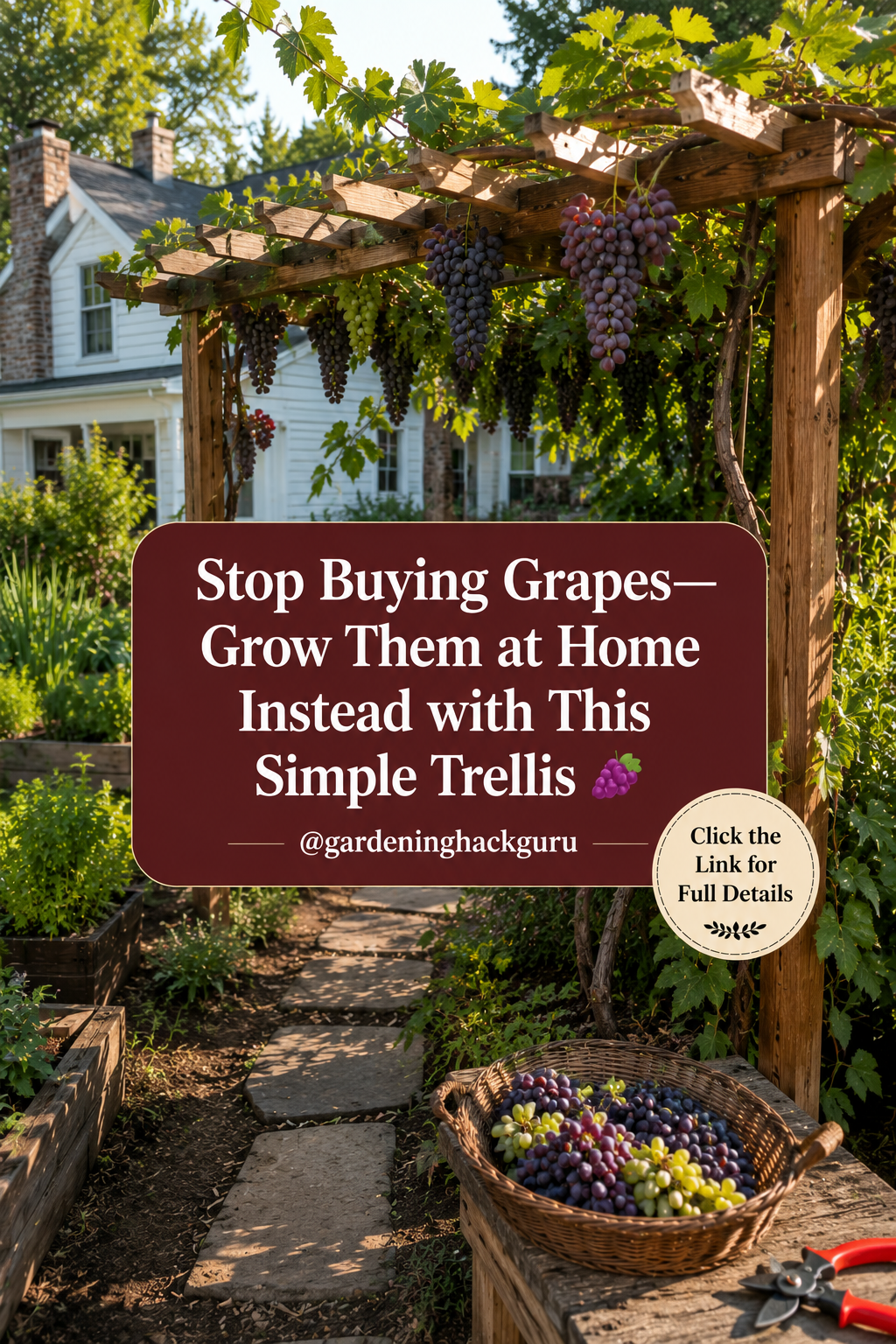
Imagine stepping into your backyard and picking sweet, juicy grapes straight from the vine whenever you want. Growing grapes at home is easier than many people think, and with a simple trellis, even a small backyard can produce an impressive harvest year after year.
A sturdy trellis not only supports healthy vine growth but also improves airflow, increases sunlight exposure, and makes harvesting much easier. Whether you’re a beginner gardener or looking to expand your edible garden, growing grapes on a trellis is one of the most rewarding projects you can start.
Here’s everything you need to know to grow delicious grapes at home.
Why Grow Grapes at Home?
Store-bought grapes can be expensive and often lose freshness quickly. Homegrown grapes taste sweeter because they’re picked at peak ripeness.
Benefits of growing grapes include:
- Fresh grapes throughout the harvest season
- Save money on grocery bills
- Beautiful backyard landscaping
- Natural shade from lush vines
- Perfect for fresh eating, juice, jelly, and raisins
- Productive plants that can live for decades
With proper care, one healthy grapevine can produce pounds of fruit every season.
1. Choose the Right Grape Variety
The first step is selecting a grape variety that grows well in your climate.
Popular choices include:
- Concord grapes
- Thompson Seedless
- Flame Seedless
- Crimson Seedless
- Niagara grapes
Visit your local nursery to choose varieties suited to your growing region.
2. Pick a Sunny Location
Grapes love sunshine.
Choose a location that receives at least 6–8 hours of direct sunlight every day.
Good sunlight helps produce:
- Sweeter grapes
- Larger fruit clusters
- Healthier vines
- Better disease resistance
Avoid heavily shaded areas.
3. Build a Strong Wooden Trellis
A sturdy trellis is the secret to healthy grape production.
Cedar wood is an excellent choice because it naturally resists rot and lasts for many years.
A good trellis should:
- Support heavy vines
- Allow vines to spread
- Improve air circulation
- Make harvesting easier
An overhead arbor also creates a beautiful shaded garden feature.
4. Prepare Well-Drained Soil
Healthy soil leads to healthy vines.
Grapes grow best in loose, well-draining soil rich in organic matter.
Before planting:
- Add compost
- Remove weeds
- Improve drainage if needed
- Test soil pH if possible
Good drainage prevents root diseases.
5. Plant at the Right Time
Early spring is usually the best time to plant grapevines.
Space plants about 6–8 feet apart to give them plenty of room to grow.
After planting:
- Water deeply
- Apply mulch
- Tie young vines loosely to the trellis
6. Train Vines as They Grow
Young grapevines need guidance.
Tie the strongest shoots to the trellis using soft garden ties.
Remove weak shoots so the plant focuses its energy on healthy growth.
Within a few seasons, the trellis will become covered with lush green vines.
7. Water Consistently
Young vines require regular watering while they establish their roots.
Water deeply once or twice each week during dry weather.
Mature grapevines become more drought tolerant but still benefit from deep watering during hot summers.
Avoid constantly soggy soil.
8. Feed the Plants Properly
Grapevines don’t require heavy feeding.
Apply compost each spring or use a balanced fertilizer according to package directions.
Too much nitrogen encourages leaves instead of fruit.
Moderate feeding produces better harvests.
9. Prune Every Winter
Pruning is one of the most important parts of grape growing.
Without pruning:
- Vines become overcrowded.
- Air circulation decreases.
- Fruit production drops.
Each winter, remove older growth and keep healthy fruiting canes for the next season.
Regular pruning keeps vines productive for many years.
10. Protect Your Grapes
Birds love ripe grapes almost as much as people do.
Protect your harvest by using:
- Bird netting
- Garden mesh
- Reflective tape
- Lightweight fruit bags
These simple solutions help preserve your crop.
11. Watch for Pests and Diseases
Healthy vines usually experience fewer problems.
Inspect plants regularly for:
- Powdery mildew
- Aphids
- Japanese beetles
- Leaf spots
Remove damaged leaves and maintain good airflow through proper pruning.
Healthy gardens naturally experience fewer pest problems.
12. Harvest at Peak Ripeness
Unlike some fruits, grapes stop ripening after they’re picked.
Taste a few grapes before harvesting the entire cluster.
Ripe grapes should be:
- Sweet
- Firm
- Fully colored
- Easy to remove from the stem
Use clean pruning shears to harvest entire bunches.
Tips for Bigger, Sweeter Grapes
- Plant in full sun.
- Build a strong trellis.
- Water deeply instead of lightly.
- Prune every winter.
- Feed lightly each spring.
- Remove weeds around the base.
- Harvest only when fully ripe.
- Keep vines well ventilated.
These simple habits lead to healthier vines and larger harvests.
Why a Trellis Makes Such a Difference
Growing grapes on a trellis offers several advantages:
- Keeps fruit off the ground
- Reduces disease
- Improves sunlight exposure
- Makes harvesting easier
- Saves garden space
- Creates beautiful backyard shade
- Increases airflow around vines
- Supports heavier fruit production
A simple trellis can dramatically improve both the appearance of your garden and the quality of your grapes.
Best Companion Plants
Plant these near grapevines for a productive garden:
- Lavender
- Chives
- Marigolds
- Basil
- Oregano
- Thyme
- Nasturtiums
These plants attract beneficial insects and help create a diverse, healthy garden.
Final Thoughts
Growing grapes at home is one of the most rewarding gardening projects you can undertake. With plenty of sunshine, healthy soil, regular pruning, and a sturdy trellis, your grapevine can reward you with delicious harvests for many years.
A simple wooden trellis transforms an ordinary vine into a beautiful backyard feature while making maintenance and harvesting much easier. Whether you’re growing grapes for fresh snacking, homemade juice, jams, or simply to create a lush garden retreat, you’ll quickly discover that nothing compares to the taste of grapes picked fresh from your own backyard. Once your vines begin producing, you’ll wonder why you ever bought grapes from the grocery store.