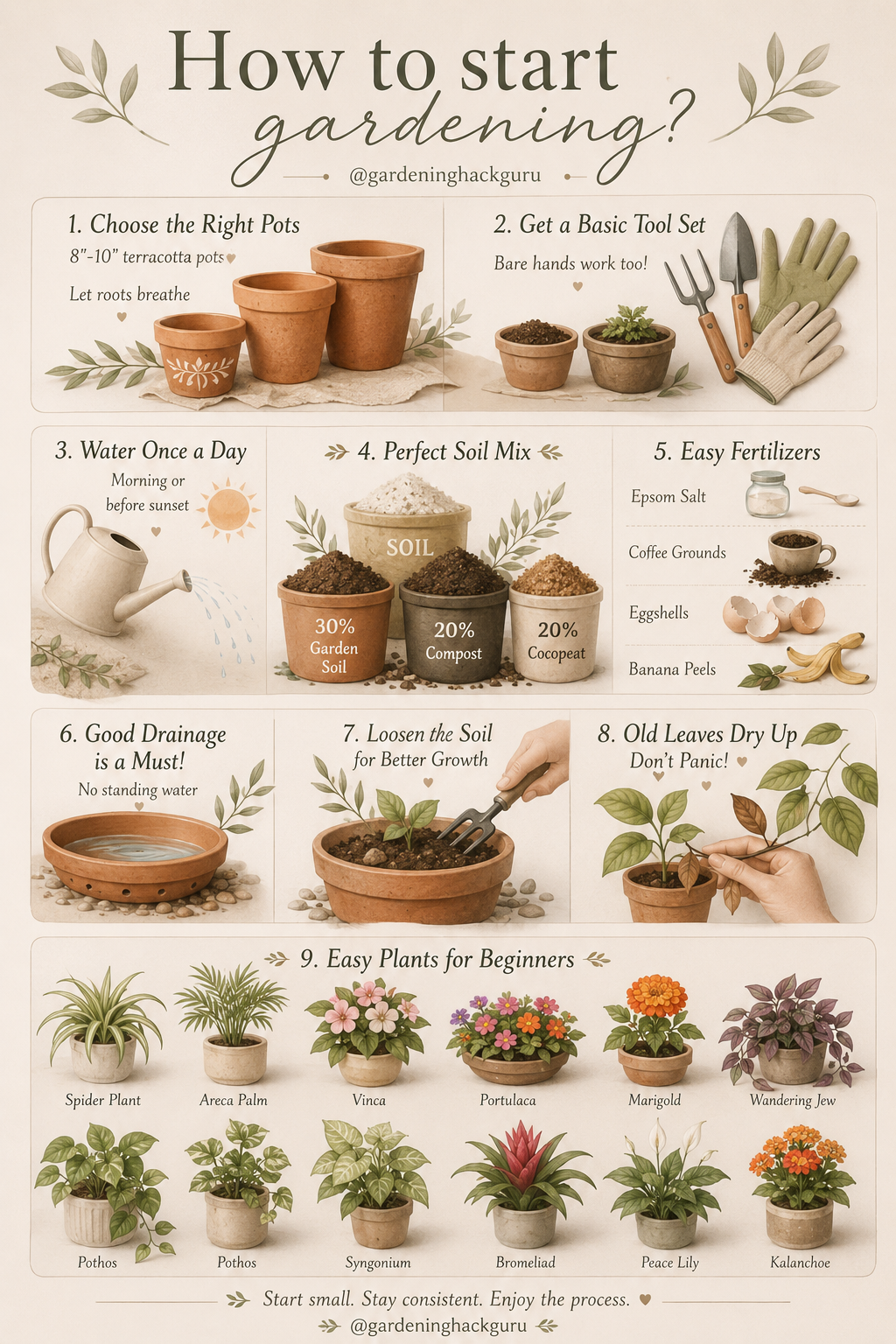
Gardening is one of the most relaxing and rewarding hobbies you can start. Whether you have a tiny balcony, a sunny window, or a backyard garden, growing plants can bring beauty, fresh air, and happiness into your daily life. The best part? You don’t need to be an expert to begin. With a few simple tools and easy-care plants, anyone can create a thriving little green space at home.
1. Choose the Right Pots
One of the first steps in gardening is selecting good pots for your plants. Terracotta pots are perfect for beginners because they allow air to flow through the soil and help prevent overwatering. Pots that are 8–10 inches wide work well for many herbs, flowers, and houseplants.
Make sure every pot has drainage holes at the bottom. Proper drainage keeps roots healthy and prevents root rot.
2. Get a Basic Gardening Tool Set
You don’t need expensive equipment to start gardening. A few simple tools can make the process much easier:
Small shovel or trowel
Gardening gloves
Hand rake
Watering can
Pruning scissors
Even using your hands works fine for small indoor gardens. Start simple and upgrade your tools over time.
3. Water Plants the Right Way
Watering is one of the most important parts of plant care. Most beginner plants prefer watering once a day or when the top layer of soil feels dry.
Morning or evening is the best time to water because strong afternoon sunlight can cause water to evaporate too quickly. Avoid leaving standing water in trays or pots, as it may damage the roots.
4. Make a Healthy Soil Mix
Healthy soil helps plants grow faster and stronger. A simple beginner-friendly soil mix can include:
30% garden soil
20% compost
20% cocopeat or sand
Compost adds nutrients, while cocopeat helps keep the soil soft and airy. Good soil allows roots to grow comfortably and absorb water properly.
5. Use Easy Natural Fertilizers
You don’t always need chemical fertilizers for healthy plants. Many kitchen scraps can help nourish your garden naturally.
Easy homemade fertilizers include:
Coffee grounds
Crushed eggshells
Banana peels
Epsom salt
These natural ingredients provide nutrients that encourage stronger leaves, flowers, and roots.
6. Don’t Panic Over Dry Leaves
Sometimes older leaves turn yellow or dry up — and that’s completely normal. Remove dead leaves regularly so your plant can focus energy on healthy new growth.
Pruning also encourages fuller and healthier plants over time.
7. Start With Easy Plants
If you’re new to gardening, choose plants that are low-maintenance and hard to kill. Beginner-friendly plants include:
Spider Plant
Pothos
Areca Palm
Peace Lily
Marigold
Syngonium
Bromeliad
Vinca
These plants adapt well to indoor environments and don’t require complicated care routines.
8. Create a Relaxing Green Space
Gardening is not only about plants — it’s also about creating a peaceful atmosphere. Add decorative pots, cozy corners, shelves, or hanging plants to make your space feel calming and beautiful.
Even a small collection of plants can make your home feel fresh and inviting.
Growing Happiness, One Plant at a Time 🌱
Starting a garden may feel overwhelming at first, but the key is to begin small and stay consistent. Plants teach patience, care, and mindfulness. With the right pots, healthy soil, and beginner-friendly plants, you can slowly build your own beautiful green oasis at home.
Remember: every expert gardener started with just one plant.