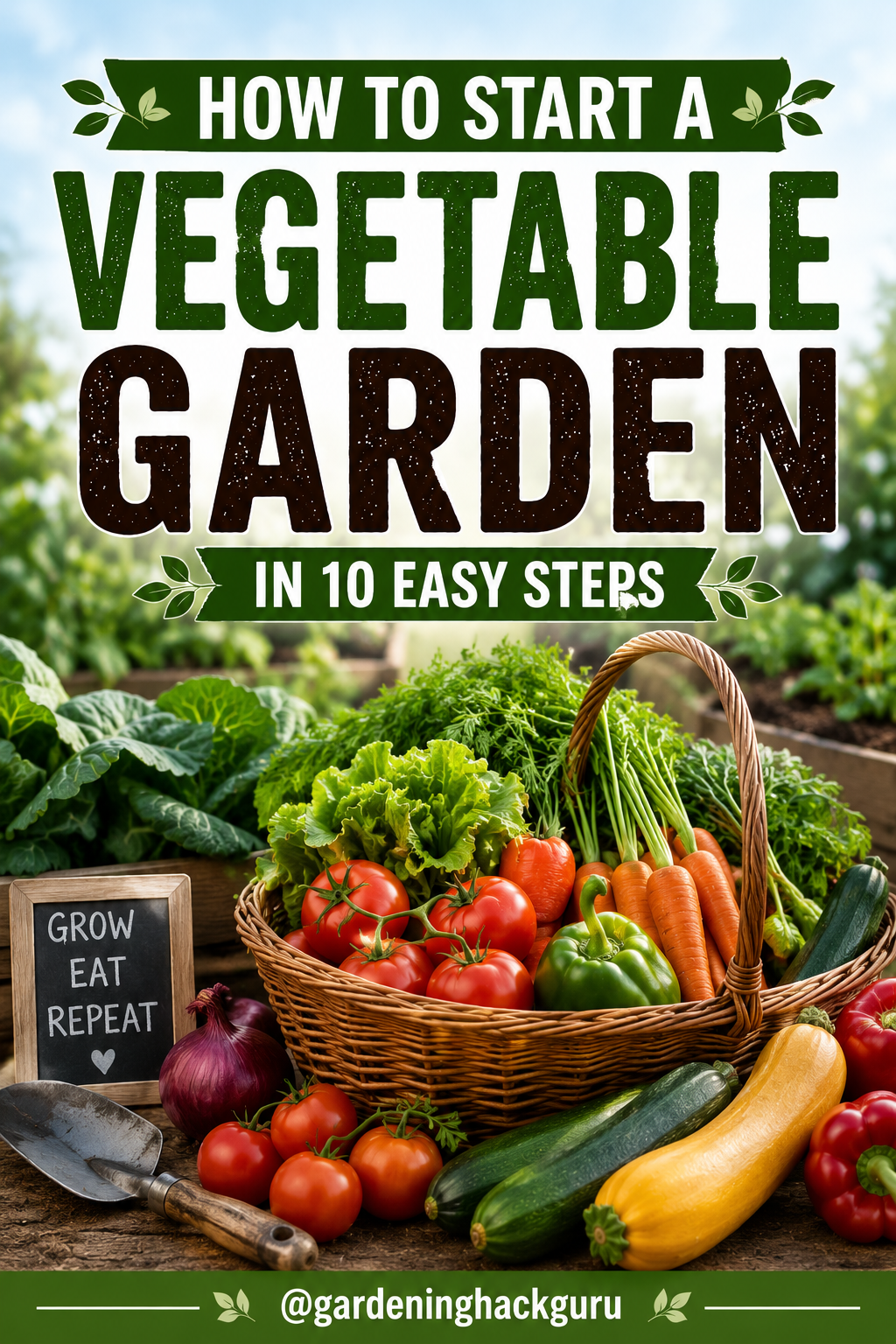
Growing your own vegetables is one of the most rewarding hobbies you can start. A vegetable garden provides fresh produce, saves money on groceries, and gives you the satisfaction of harvesting food right from your backyard. The good news is that you don’t need a large space or years of experience to get started.
Follow these 10 simple steps to build a successful vegetable garden.
Step 1: Choose the Right Location
The location of your garden is one of the most important decisions you’ll make.
Look for a spot that:
- Receives 6–8 hours of sunlight daily
- Has good drainage
- Is close to a water source
- Is easy to access
Most vegetables thrive in full sun.
Step 2: Decide What to Grow
Start with vegetables that are easy for beginners.
Popular choices include:
- Tomatoes
- Lettuce
- Cucumbers
- Carrots
- Peppers
- Green beans
- Spinach
Choose vegetables your family enjoys eating.
Step 3: Prepare the Soil
Healthy soil is the foundation of a productive garden.
Improve your soil by adding:
- Compost
- Organic matter
- A quality garden soil mix
Rich soil helps plants grow stronger and produce better harvests.
Step 4: Choose Your Garden Type
There are several ways to grow vegetables:
Raised Beds
Great for:
- Better drainage
- Easier maintenance
- Higher yields
Containers
Perfect for:
- Small spaces
- Balconies
- Patios
In-Ground Gardens
Ideal for larger growing areas.
Step 5: Buy Quality Seeds or Seedlings
Starting with healthy plants improves your chances of success.
You can grow vegetables from:
- Seed packets
- Seed starter kits
- Nursery seedlings
Many beginner gardeners find seedlings easier to manage.
Step 6: Plant Correctly
Follow spacing recommendations on plant labels or seed packets.
Remember:
- Avoid overcrowding
- Plant at the proper depth
- Water immediately after planting
Proper spacing improves airflow and plant health.
Step 7: Water Consistently
Vegetables need regular moisture to grow properly.
Tips:
- Water early in the morning
- Keep soil evenly moist
- Avoid overwatering
A garden hose, watering can, or drip irrigation system can make watering easier.
Step 8: Add Mulch
Mulch is one of the best gardening investments.
Benefits include:
- Reduced weeds
- Better moisture retention
- Healthier soil
- Less maintenance
Organic mulch works especially well around vegetables.
Step 9: Feed Your Plants
Vegetables need nutrients throughout the growing season.
Common options include:
- Organic fertilizer
- Compost
- Plant food
- Worm castings
Healthy plants produce larger harvests.
Step 10: Monitor and Enjoy Your Garden
Check your garden regularly for:
- Pests
- Diseases
- Weeds
- Water needs
Harvest vegetables when ripe and enjoy the fruits of your hard work.
Must-Have Gardening Tools
These beginner-friendly tools can make gardening much easier:
Garden Tool Set
Recommended Product : https://amzn.to/4or0n6D
Useful for planting, digging, and maintenance.
Garden Gloves
Recommended Product : https://amzn.to/4v7qjXv
Protect hands while working.
Hand Trowel
Recommended Product 👉 : https://amzn.to/4xpf3qM
Perfect for planting and transplanting.
Watering Can
Recommended Product 👉 : https://amzn.to/3Qxbuyi
Ideal for seedlings and containers.
Pruning Shears
Recommended Product 👉 : https://amzn.to/3QxbHl4
Keeps plants healthy and productive.
Raised Garden Bed
Recommended Product 👉 : https://amzn.to/4geXX90
Provides excellent growing conditions.
Grow Bags
Recommended Product 👉 : https://amzn.to/4vD8peT
Perfect for tomatoes, peppers, and potatoes.
Potting Soil
Recommended Product 👉 : https://amzn.to/4xpdA3I
Essential for container gardening.
Organic Fertilizer
Recommended Product 👉 : https://amzn.to/43unofo
Supports healthy plant growth.
Garden Hose
Recommended Product 👉 : https://amzn.to/444QbXW
Makes watering quick and easy.
All of these gardening supplies are widely available online and can help beginners start successfully.
Benefits of Growing Your Own Vegetables
💰 Save Money
🥗 Eat Healthier
🌿 Enjoy Fresh Produce
😌 Reduce Stress
🌱 Spend More Time Outdoors
Even a small vegetable garden can provide an impressive harvest throughout the season.
Final Thoughts
Starting a vegetable garden doesn’t have to be complicated. By choosing the right location, preparing healthy soil, planting quality vegetables, and using a few essential tools, you’ll be well on your way to enjoying fresh, homegrown produce.
Start small, learn as you go, and enjoy every step of the gardening journey.
Happy Gardening!
@gardeninghackguru :::