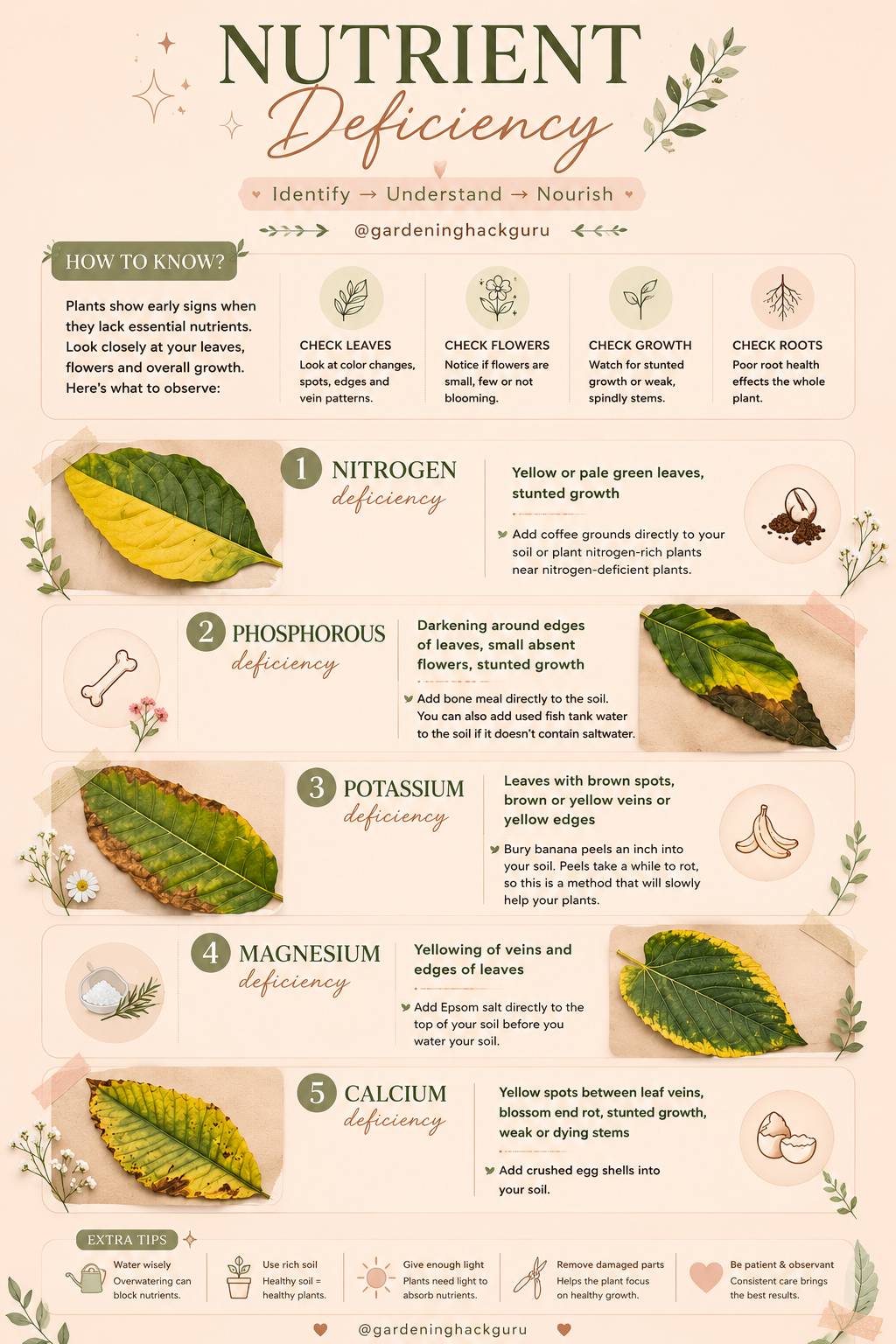
Healthy plants need the right balance of nutrients to grow strong, green, and vibrant. When plants lack important nutrients, they often show warning signs through yellowing leaves, brown spots, weak stems, or slow growth. Learning how to recognize these symptoms early can help you save your plants before the damage becomes severe.
This guide explains common plant nutrient deficiencies, how to identify them, and simple natural ways to restore your plants back to health.
Why Nutrients Matter for Plants
Plants rely on nutrients from the soil to:
Produce healthy green leaves
Grow strong roots and stems
Create flowers and fruits
Fight diseases and stress
Maintain vibrant growth
When nutrients are missing, plants struggle to survive and begin showing visible symptoms.
How to Know If Your Plant Has a Nutrient Deficiency
Plants often give early warning signs before serious damage happens.
Look Closely at the Leaves
Leaves are usually the first place nutrient problems appear.
Common Signs:
Yellow leaves
Brown spots
Crispy edges
Pale green color
Curled or weak leaves
Check Flower Growth
Nutrient-deficient plants may:
Produce fewer flowers
Have tiny blooms
Stop flowering completely
This is especially common with phosphorus deficiencies.
Watch Overall Plant Growth
Slow or stunted growth can indicate that your plant isn’t getting enough nutrients to grow properly.
Signs Include:
Thin stems
Weak branches
Small leaves
Lack of new growth
Examine the Roots
Unhealthy roots often lead to unhealthy plants.
Root Problems:
Weak root systems
Root rot
Mushy or dry roots
Poor nutrient absorption
Healthy roots are essential for overall plant health.
1. Nitrogen Deficiency
Nitrogen is one of the most important nutrients for leafy growth.
How to Identify It:
Yellow or pale green leaves
Slow growth
Weak stems
Older leaves usually turn yellow first.
Natural Fixes:
Add coffee grounds to soil
Use compost
Apply nitrogen-rich fertilizer
Plant companion plants that improve soil nitrogen
2. Phosphorous Deficiency
Phosphorous helps plants develop strong roots and healthy flowers.
How to Identify It:
Darkening or browning around leaf edges
Small flowers
Weak blooming
Stunted growth
Natural Fixes:
Add bone meal
Use compost tea
Add fish tank water (without salt)
Improve soil drainage
3. Potassium Deficiency
Potassium helps plants regulate water and strengthen overall health.
How to Identify It:
Brown spots on leaves
Yellow or brown edges
Weak stems
Dry-looking foliage
Natural Fixes:
Bury banana peels in soil
Use wood ash carefully
Add potassium-rich fertilizer
Improve watering consistency
4. Magnesium Deficiency
Magnesium helps plants produce chlorophyll and maintain green leaves.
How to Identify It:
Yellowing between leaf veins
Yellow leaf edges
Pale older leaves
Natural Fixes:
Add Epsom salt to soil
Use magnesium supplements
Improve soil quality with compost
5. Calcium Deficiency
Calcium helps plants build strong cell walls and healthy new growth.
How to Identify It:
Yellow spots between veins
Weak stems
Blossom end rot
Dying leaf tips
Natural Fixes:
Add crushed eggshells
Use calcium fertilizer
Keep soil evenly moist
Avoid overwatering
Extra Tips for Healthy Plants 🌱
Water Properly
Overwatering can block nutrients from reaching plant roots.
Best Practice:
Water deeply but allow soil to dry slightly between watering sessions.
Use Rich Organic Soil
Healthy soil naturally provides nutrients plants need to thrive.
Add:
Compost
Worm castings
Organic fertilizers
Mulch
Give Plants Enough Light
Plants cannot properly absorb nutrients without enough sunlight.
Remember:
Different plants require different light conditions, so always check your plant’s needs.
Remove Damaged Leaves
Pruning yellow or damaged leaves helps plants focus energy on healthy growth.
Healthy Plants Start with Observation
One of the best gardening habits is simply paying attention to your plants regularly. Small changes in leaf color, texture, or growth can reveal nutrient problems early. By learning how to identify these signs and using natural solutions, you can create healthier soil, stronger plants, and a thriving garden filled with lush green growth.
Gardening becomes much easier when you understand what your plants are trying to tell you. 🌿