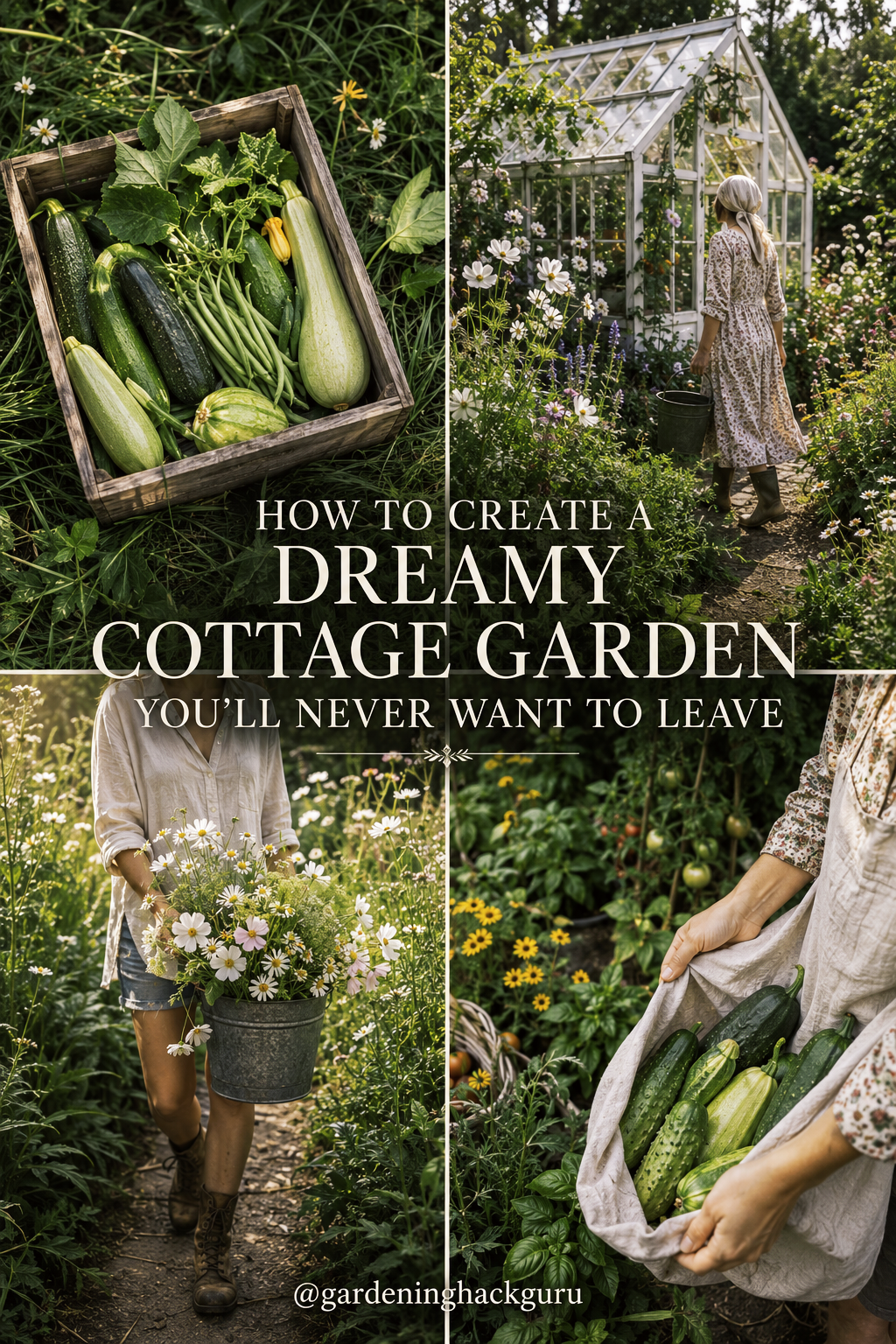
There’s something about a cottage garden that makes you want to stay outside just a little longer.
Maybe it’s the flowers spilling over the edge of a pathway, vegetables growing beside lavender, or the old terracotta pots that look better with every passing year. Cottage gardens aren’t supposed to feel perfectly landscaped. Their charm comes from looking as though they’ve slowly grown into themselves.
And that’s good news, because you don’t need a huge backyard, an expensive greenhouse, or professional landscaping to create one.
Whether you have a generous garden or just a small patch beside your house, these ideas can help you create that relaxed, romantic cottage-garden feeling at home.
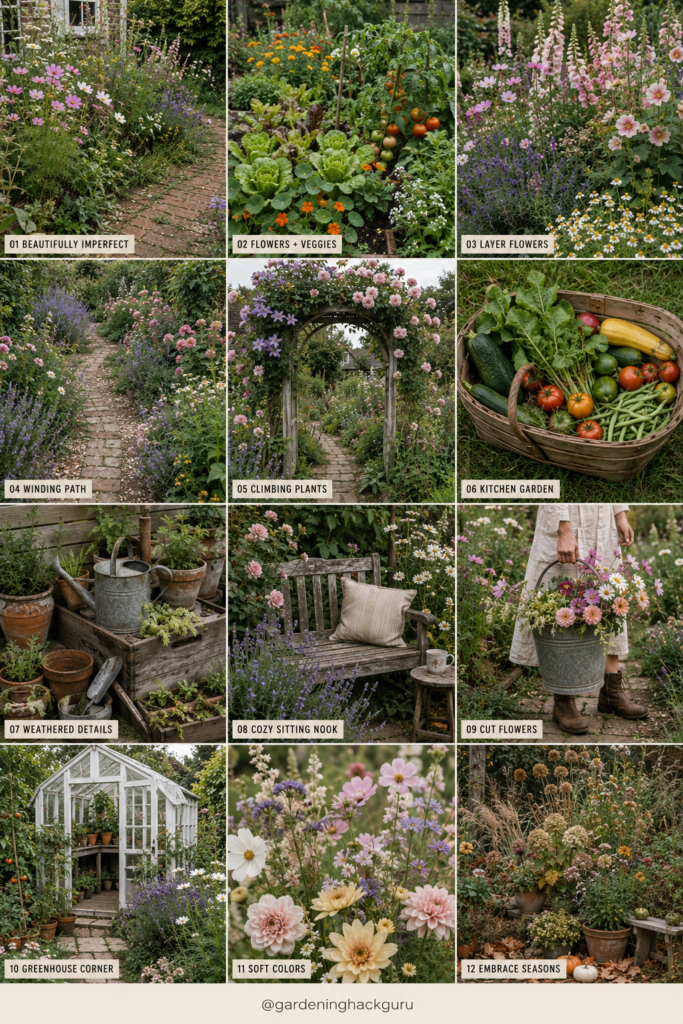
1. Let Your Garden Be a Little Imperfect
The easiest way to lose the cottage-garden feeling is to make everything too perfect.
Perfectly straight flower beds, identical shrubs, evenly spaced plants, and spotless pathways can make a garden feel formal rather than cozy.
Instead, allow plants to overlap a little. Let thyme creep between paving stones. Allow cosmos to lean over the pathway and lavender to spread beyond its original spot.
You still want to maintain your garden, of course. The goal isn’t neglect. It’s controlled looseness—a garden that feels cared for without looking overly designed.
2. Mix Flowers, Herbs, and Vegetables
One of my favorite things about cottage gardens is that pretty and practical plants don’t have to live in separate areas.
Try growing tomatoes beside marigolds, lettuce underneath taller flowers, or zucchini near nasturtiums.
Herbs are especially useful for this style of garden. Rosemary, thyme, sage, mint, chives, and parsley bring different textures and shades of green while also giving you something to harvest for the kitchen.
Suddenly, your vegetable garden doesn’t look like a vegetable garden at all. It becomes part of the landscape.
3. Plant Flowers in Layers
Instead of planting one variety in a perfectly straight row, think in layers.
Start with taller plants toward the back, add medium-height flowers through the middle, and allow smaller flowers and ground covers to soften the edges.
For that classic cottage look, consider plants such as:
- Cosmos
- Foxgloves
- Hollyhocks
- Lavender
- Delphiniums
- Daisies
- Salvia
- Hydrangeas
- Roses
- Chamomile
You don’t need all of them. In fact, repeating four or five favorites throughout the garden often looks more natural than trying to grow everything at once.
4. Create a Path That Disappears Into the Garden
A pathway instantly makes a garden feel more inviting.
Rather than seeing the entire backyard at once, a winding path creates a little mystery. You naturally want to follow it and discover what’s around the corner.
Gravel, old bricks, stepping stones, and weathered pavers all work beautifully.
Don’t worry if flowers eventually lean over the edges. That’s part of the charm.
A path that’s slightly swallowed by plants often looks much prettier than one with perfectly defined borders.
5. Add Something for Plants to Climb
Vertical plants make a cottage garden feel lush without requiring much additional ground space.
Place a simple wooden trellis against a wall, add an arch over the garden entrance, or let climbing plants soften a fence.
Climbing roses are the obvious cottage-garden favorite, but clematis, honeysuckle, jasmine, sweet peas, and other climbers can create a similar effect.
Even a basic vegetable trellis covered with beans can become surprisingly beautiful.
6. Make Room for a Small Kitchen Garden
There’s something incredibly satisfying about walking outside and returning with dinner ingredients.
You don’t need rows and rows of vegetables.
A few zucchini plants, tomatoes, cucumbers, lettuce, beans, strawberries, and herbs can provide plenty of seasonal harvests.
Keep a basket near the back door so you can wander outside in the morning and collect whatever is ready.
Those slightly crooked cucumbers and imperfect tomatoes are part of what makes homegrown food special.
7. Use Natural, Weathered Materials
Brand-new garden accessories can sometimes feel too polished for a cottage garden.
Wood, terracotta, galvanized metal, stone, wicker, and aged iron tend to blend much more naturally with plants.
Look for simple pieces such as old wooden crates, terracotta pots, galvanized watering cans, woven harvest baskets, wooden benches, stone birdbaths, or weathered plant supports.
And don’t worry when things begin to age.
A little moss on a pot or faded paint on a garden chair often makes it look even better.
8. Create One Cozy Place to Sit
Every beautiful garden needs somewhere you can actually enjoy it.
It doesn’t need to be an elaborate outdoor living room.
Sometimes one wooden bench tucked beneath a tree is enough.
You could also use a small café table with two mismatched chairs, an old garden chair beside the flowers, or a simple bench near your vegetable beds.
Position it somewhere that catches pleasant morning or evening light.
Then actually use it.
Take your coffee outside. Read a book there. Sit for ten minutes after watering the plants.
A garden becomes much more meaningful when it isn’t only something you maintain.
9. Grow Flowers You Can Cut
A cottage garden should occasionally make its way indoors.
Planting flowers specifically for cutting means you can gather loose bouquets throughout summer without feeling guilty about removing blooms from your main displays.
Cosmos, zinnias, dahlias, sweet peas, snapdragons, daisies, and sunflowers are wonderful choices.
Don’t worry about creating perfect florist-style arrangements either.
A handful of flowers in an old jar or ceramic pitcher often looks more charming.
10. Add a Greenhouse Feel—Even Without a Greenhouse
A little glass greenhouse surrounded by flowers might be the cottage-garden dream, but you certainly don’t need one.
If you have space and budget for a small greenhouse, it can become a gorgeous focal point while providing somewhere to start seedlings and grow tender plants.
For smaller gardens, create the same feeling with a simple potting bench.
Surround it with terracotta pots, seedlings, herbs, an old watering can, gardening tools, and baskets.
It’s the working-garden feeling that creates the charm.
11. Choose a Soft, Natural Color Palette
Cottage gardens can be colorful without becoming chaotic.
Creamy white, blush pink, dusty rose, lavender, pale blue, buttery yellow, and plenty of green create a wonderfully relaxed combination.
You can still introduce stronger colors here and there, but repeating softer shades throughout the garden helps everything feel connected.
White flowers are particularly lovely because they brighten shady areas and almost glow during summer evenings.
12. Let Your Garden Change With the Seasons
Perhaps the nicest thing about a cottage garden is that it never looks exactly the same.
Spring might bring bulbs and fresh green growth. Summer becomes overflowing with flowers, herbs, tomatoes, zucchini, and cucumbers. Autumn introduces seed heads, pumpkins, ornamental grasses, and warmer colors.
Even winter has its own beauty when dried stems, evergreen plants, old pots, and bare climbing vines remain.
You don’t need to constantly replace plants to keep your garden looking perfect.
Let the seasons show.
The Real Secret to a Dreamy Cottage Garden
Creating a cottage garden isn’t really about buying the right furniture or finding the perfect flowers.
It’s about allowing your outdoor space to become personal.
Plant things you genuinely enjoy. Grow vegetables you’ll actually eat. Save seeds from flowers you loved this year. Let a favorite rose climb somewhere unexpected. Put your old gardening tools to work instead of hiding them away.
And don’t rush it.
Some of the most beautiful cottage gardens have been growing and changing for years. Plants spread, materials weather, and empty corners slowly find their purpose.
Start with a few flowers, a handful of vegetables, a comfortable place to sit, and perhaps a winding little pathway.
Before long, you may find yourself stepping outside for five minutes and somehow still wandering around the garden an hour later.
And really, that’s when you know you’ve created the kind of garden you never want to leave.