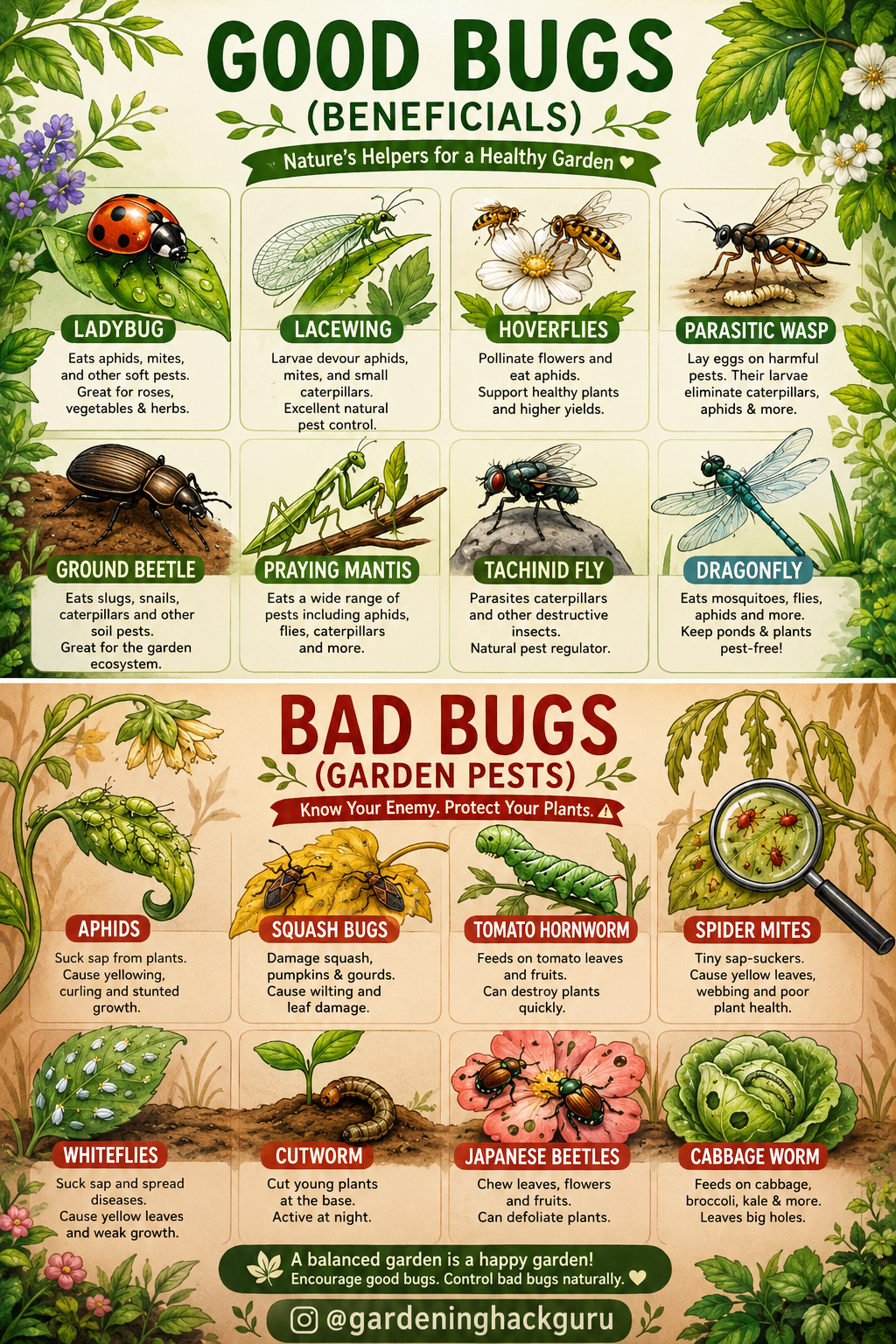
Not all bugs in the garden are bad. In fact, many insects play an important role in keeping plants healthy, controlling pests naturally, and supporting pollination. Understanding the difference between beneficial garden insects and harmful pests can completely change the way you care for your plants.
A healthy garden is all about balance. Some bugs protect your plants, while others damage leaves, roots, flowers, and vegetables. Learning to recognize them helps you grow a stronger, healthier, and more natural garden ecosystem.
Why Beneficial Bugs Matter
Helpful insects act like nature’s own pest control team.
They can:
eat harmful pests
pollinate flowers
improve garden balance
reduce the need for chemicals
protect vegetables and flowers naturally
Encouraging good bugs creates a healthier environment for your plants to thrive.
GOOD BUGS (Beneficial Insects) 🐞✨
1. Ladybugs 🐞
Ladybugs are one of the best insects you can have in your garden.
Why They’re Helpful
They feed on:
aphids
mites
soft-bodied pests
A single ladybug can eat dozens of harmful insects every day.
2. Lacewings 🌱
Lacewing larvae are excellent natural predators.
They Help Control
aphids
caterpillars
spider mites
These delicate green insects are incredibly useful for pest management.
3. Hoverflies 🌼
Hoverflies are both pollinators and pest controllers.
Benefits
pollinate flowers
eat aphids
support healthy plant growth
Their larvae are especially effective against soft pests.
4. Parasitic Wasps 🐝
Although tiny, parasitic wasps help control destructive garden insects naturally.
They target:
caterpillars
aphids
harmful larvae
They’re harmless to humans but powerful against pests.
5. Ground Beetles 🪲
Ground beetles live near the soil and feed on many damaging pests.
They Eat
slugs
snails
caterpillars
soil pests
These insects help maintain healthy soil ecosystems.
6. Praying Mantis 🌿
Praying mantises are natural hunters that eat many harmful insects.
Common Prey
flies
aphids
beetles
caterpillars
They help reduce pest populations naturally.
7. Tachinid Flies 🪰
These beneficial flies attack destructive caterpillars and harmful insects.
They act as natural pest regulators in vegetable gardens.
8. Dragonflies 💙
Dragonflies are excellent for controlling flying pests.
They Feed On
mosquitoes
flies
small insects
Gardens near water especially benefit from dragonflies.
BAD BUGS (Garden Pests) 🚫🐛
1. Aphids 🐛
Aphids are tiny sap-sucking insects that weaken plants quickly.
Signs of Aphids
curled leaves
yellowing plants
sticky residue
They multiply rapidly if left untreated.
2. Squash Bugs 🍂
Squash bugs attack pumpkin, zucchini, and squash plants.
Damage They Cause
wilting leaves
yellow spots
plant decline
3. Tomato Hornworms 🍅
These large green caterpillars can destroy tomato plants surprisingly fast.
They feed heavily on:
tomato leaves
stems
fruits
4. Spider Mites 🕷️
Spider mites are tiny but very damaging.
Common Symptoms
yellow speckled leaves
webbing
dry plant appearance
Hot dry weather often increases infestations.
5. Whiteflies 🤍
Whiteflies weaken plants by feeding on sap.
They also spread plant diseases and reduce healthy growth.
6. Cutworms 🌱
Cutworms attack young seedlings by cutting stems near the soil line.
They are especially dangerous for new vegetable gardens.
7. Japanese Beetles 🌸
Japanese beetles chew flowers and leaves aggressively.
Plants They Damage
roses
vegetables
fruit plants
8. Cabbage Worms 🥬
These pests love leafy vegetables.
Common Targets
cabbage
broccoli
kale
cauliflower
They create holes and damage edible leaves.
How to Attract Good Bugs Naturally 🌼
Plant Pollinator-Friendly Flowers
Flowers like:
marigolds
lavender
dill
yarrow
help attract beneficial insects.
Avoid Harsh Chemicals
Strong pesticides can kill helpful insects along with harmful ones.
Create a Diverse Garden
Different plants support healthier insect ecosystems.
Natural Ways to Control Bad Bugs 🌿
Use Neem Oil
Neem oil helps reduce pests naturally.
Remove Pests by Hand
For larger insects like hornworms, manual removal works well.
Encourage Beneficial Insects
Ladybugs and lacewings naturally reduce pest populations.
Lastly
A thriving garden isn’t about removing every insect — it’s about understanding which bugs help your plants and which ones harm them. Beneficial insects like ladybugs, dragonflies, and praying mantises work with nature to keep gardens balanced and healthy.
By encouraging good bugs and controlling harmful pests naturally, you can grow a greener, healthier, and more sustainable garden without relying heavily on chemicals. 🌿🐞✨