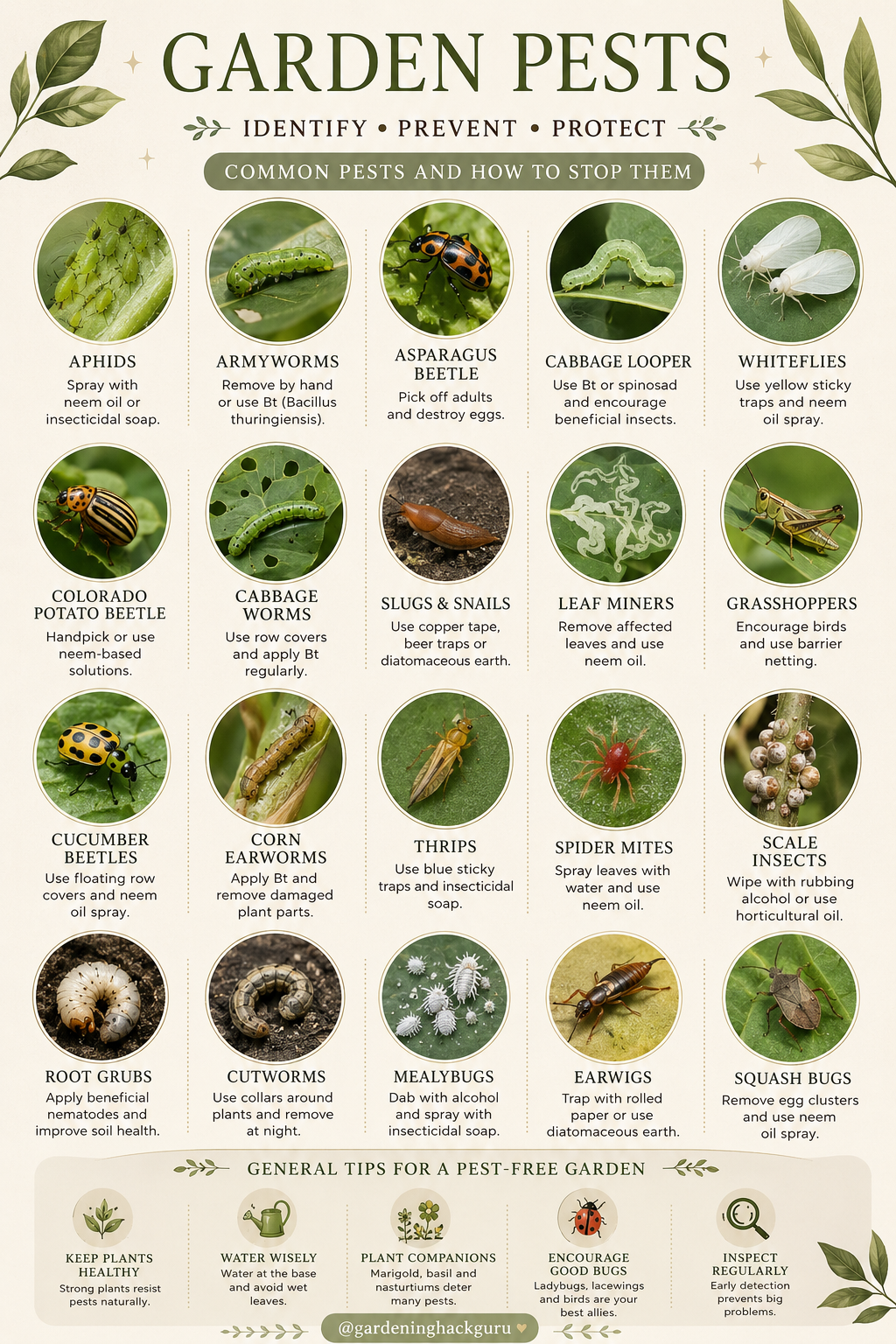
Every beautiful garden eventually faces unwanted visitors. From tiny aphids and caterpillars to slugs and spider mites, garden pests can quickly damage flowers, vegetables, herbs, and fruit plants if left untreated.
The good news is that most garden pests can be controlled naturally with the right prevention methods, healthy gardening habits, and early detection.
Why Garden Pests Appear 🌱
Pests are usually attracted to:
weak or stressed plants
overcrowded gardens
excess moisture
poor airflow
unhealthy soil conditions
Healthy plants are naturally more resistant to pest problems.
1. Aphids 🐛
Aphids are tiny soft-bodied insects that gather on stems and leaves.
Signs of Aphids
curled leaves
sticky residue
weak plant growth
clusters of tiny bugs
How to Stop Them
spray neem oil
use insecticidal soap
introduce ladybugs
spray water to remove them
2. Armyworms 🐛
Armyworms are destructive caterpillars that chew leaves rapidly.
Damage They Cause
holes in leaves
stripped foliage
damaged vegetables
Natural Solutions
remove by hand
apply Bt (Bacillus thuringiensis)
encourage birds in the garden
3. Whiteflies 🤍
Whiteflies are tiny flying insects commonly found under leaves.
Signs
yellowing leaves
sticky honeydew
weak plant health
Prevention Tips
use yellow sticky traps
spray neem oil
improve airflow around plants
4. Slugs & Snails 🐌
Slugs and snails love moist environments and chew soft leaves.
Common Damage
holes in leaves
slimy trails
damaged seedlings
How to Control Them
use beer traps
sprinkle diatomaceous earth
water plants in the morning instead of night
5. Spider Mites 🕷️
Spider mites are tiny pests that thrive in hot, dry conditions.
Signs of Spider Mites
tiny webbing
speckled leaves
dry foliage
Solutions
spray leaves with water
increase humidity
apply neem oil
6. Grasshoppers 🦗
Grasshoppers can quickly eat leaves and flowers.
Natural Prevention
encourage birds
use garden netting
plant pest-repelling companion plants
7. Cutworms 🌿
Cutworms attack young seedlings near the soil line.
Damage
seedlings suddenly collapse
stems cut at ground level
How to Protect Plants
use plant collars
inspect gardens at night
keep weeds controlled
8. Mealybugs 🤍
Mealybugs appear as small white cotton-like clusters.
How to Remove Them
dab with rubbing alcohol
spray insecticidal soap
isolate infected plants
9. Earwigs 🪲
Earwigs hide in damp areas and feed on leaves and flowers.
Prevention Tips
reduce excess moisture
use rolled newspaper traps
apply diatomaceous earth
10. Squash Bugs 🍂
Squash bugs attack pumpkins, squash, and cucumbers.
Signs
wilting leaves
bronze spots
clusters of eggs under leaves
Solutions
remove egg clusters
use neem oil spray
rotate crops yearly
Natural Ways to Prevent Garden Pests 🌿✨
Keep Plants Healthy
Healthy plants naturally resist pests better.
Avoid Overwatering
Too much moisture attracts insects and fungal problems.
Improve Airflow
Spacing plants properly reduces pest-friendly environments.
Use Companion Planting
Certain plants naturally repel pests.
Helpful Companion Plants
marigolds
basil
lavender
nasturtiums
mint
Encourage Beneficial Insects 🐞
Not all insects are harmful.
Helpful Garden Insects
ladybugs
lacewings
bees
praying mantises
These insects naturally help control pest populations.
Why Organic Pest Control Is Popular 🌱
Many gardeners prefer natural methods because they:
protect pollinators
avoid harsh chemicals
support healthier ecosystems
make gardens safer for pets and children
Organic gardening focuses on balance rather than completely eliminating insects.
Early Detection Is Important 🔍
The sooner pests are noticed, the easier they are to control.
Check Plants Regularly For:
damaged leaves
tiny insects
discoloration
sticky residue
unusual holes
Small inspections can prevent major infestations.
How to Create a Stronger Garden 🌸
Healthy gardens usually include:
nutrient-rich soil
regular watering
sunlight balance
biodiversity
pollinator-friendly flowers
A balanced garden naturally becomes more resilient.
Final Thoughts
Garden pests are a normal part of gardening, but with the right care and prevention methods, they can be managed naturally and effectively. By keeping plants healthy, encouraging beneficial insects, and checking your garden regularly, you can protect your flowers, vegetables, and herbs while maintaining a thriving outdoor space.
A beautiful garden isn’t about perfection — it’s about creating a healthy ecosystem where plants can grow strong and vibrant throughout the season. 🌿🐛✨
@gardeninghackguru