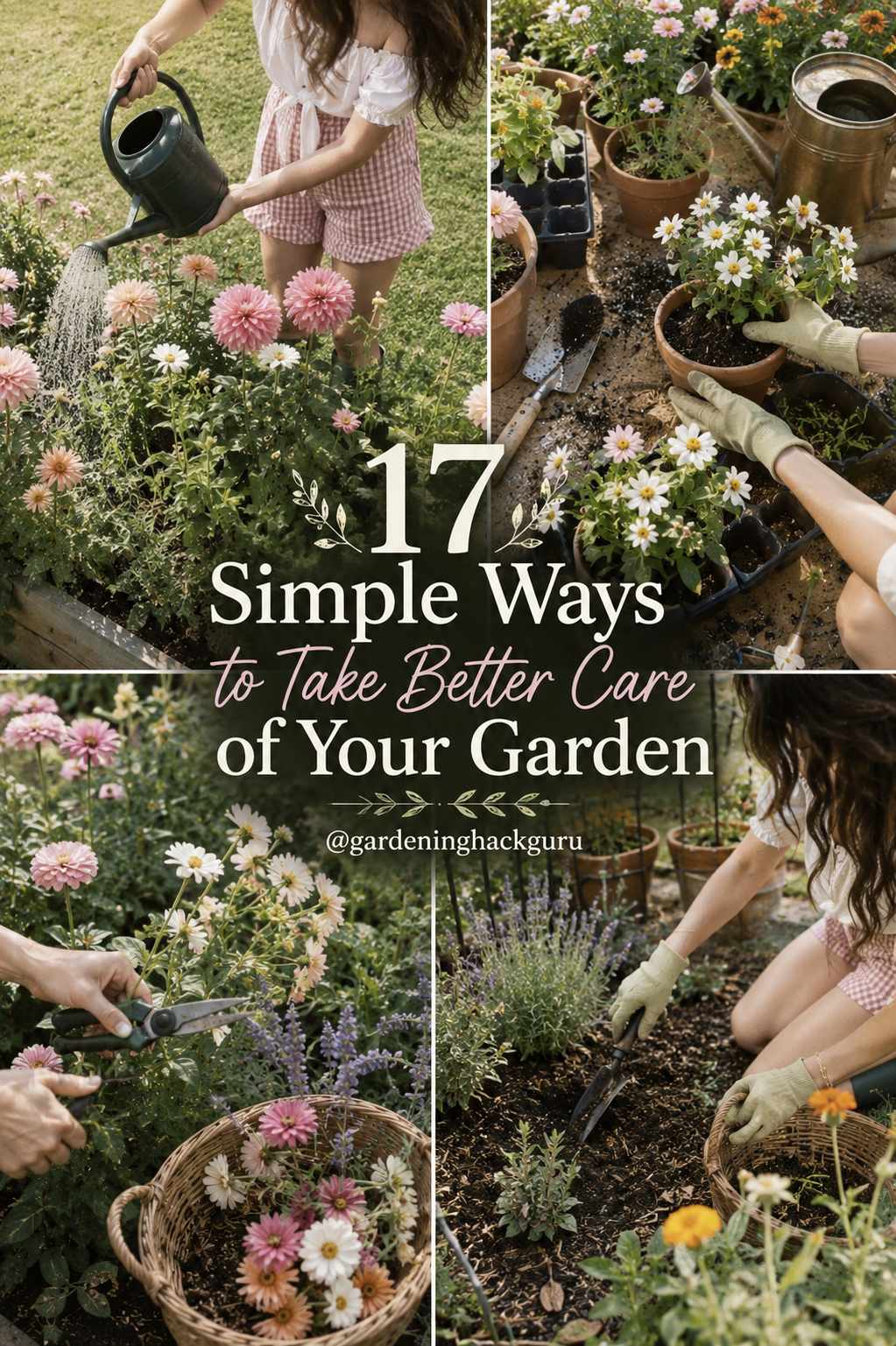
A beautiful garden rarely comes from doing one big thing perfectly. Most of the time, it comes from small jobs done regularly—watering when the soil actually needs it, pulling a few weeds before they take over, removing faded flowers, checking leaves, and improving the soil little by little.
That’s good news if you’re new to gardening.
You don’t need to spend every weekend working outside or own a shed full of expensive tools. Once you understand what your plants need, garden care becomes much simpler.
Whether you’re looking after a small flower bed, a vegetable garden, raised beds, or an entire backyard, these 17 simple gardening habits can help you grow healthier plants while making everyday maintenance much easier.
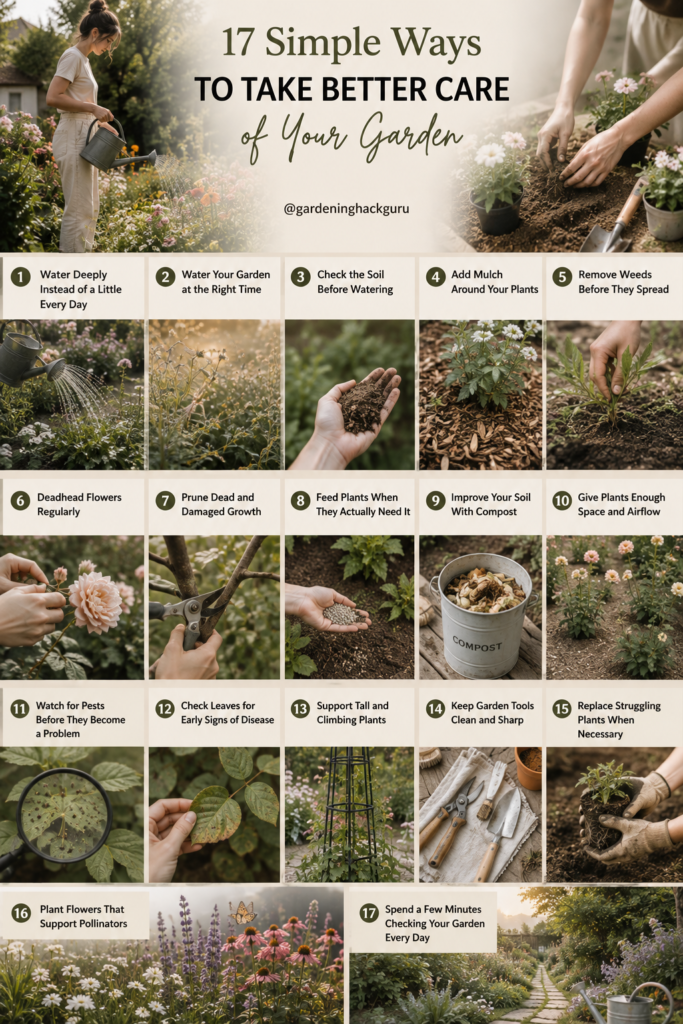
1. Water Deeply Instead of a Little Every Day
One of the easiest gardening habits to get wrong is watering.
It’s tempting to walk outside every evening and sprinkle a little water over everything. The soil looks wet, so the job feels finished.
But the surface doesn’t tell you what’s happening several inches below.
For many established garden plants, deeper watering when needed is more useful than repeatedly wetting only the surface. Moisture reaching farther into the soil encourages roots to explore deeper rather than remaining concentrated near the top.
That doesn’t mean every plant should receive the same amount of water. Newly planted seedlings, containers, established shrubs, and drought-tolerant plants can have very different requirements.
The goal is simply to water according to what the plant and soil actually need.
2. Water Your Garden at the Right Time
When possible, early morning is a convenient time to water your garden.
Temperatures are usually cooler, and plants have access to moisture before the hotter part of the day.
Try to direct water toward the soil and root zone rather than automatically showering the entire plant from above.
An occasional wet leaf isn’t a gardening disaster, of course. Rain happens.
But watering the soil directly can reduce unnecessary water loss and keep the water where it’s actually needed.
If evening is the only time you can water, don’t panic. A garden watered in the evening is better than a severely thirsty garden because somebody told you watering must happen at exactly 6:30 a.m.
3. Check the Soil Before Watering
This tiny habit can prevent a surprising number of problems.
Before reaching for your watering can, touch the soil.
Push your finger a little below the surface or use another appropriate method to check moisture around the root zone.
If the soil is still adequately moist, your plants may not need more water yet.
This is particularly important with containers because different pots can dry at dramatically different speeds.
A terracotta pot sitting in full summer sun may dry quickly, while a large glazed container in partial shade could remain moist much longer.
Don’t water because the calendar says Tuesday.
Water because the plant needs water.
4. Add Mulch Around Your Plants
Mulch is one of those garden improvements that doesn’t look particularly exciting but can make maintenance much easier.
A suitable layer of organic mulch can help reduce moisture loss, suppress many weeds, and protect the soil surface.
Depending on your garden, you might use shredded leaves, bark, straw, wood chips, or another locally appropriate material.
Avoid piling mulch directly against plant stems or tree trunks.
Instead, leave a little breathing room around the base.
And remember that mulch isn’t permanent. Organic materials gradually break down, so check the depth occasionally and replenish when necessary.
5. Remove Weeds Before They Spread
Pulling five tiny weeds takes a couple of minutes.
Removing hundreds of mature weeds that have already produced seed is a completely different Saturday afternoon.
Get into the habit of pulling weeds whenever you notice them.
You don’t necessarily need to schedule an enormous “weeding day.”
Walk around the garden with your morning coffee and remove a handful. Pull a few while you’re waiting for the hose. Take care of another patch after harvesting vegetables.
Small, regular efforts are much easier than allowing weeds to take over.
Try to remove the roots where practical, especially with perennial weeds that can regrow from underground structures.
6. Deadhead Flowers Regularly
If your garden contains flowering plants, spend a few minutes removing faded blooms from species that benefit from deadheading.
For many flowering plants, this keeps the garden looking tidy and may encourage continued flowering rather than directing energy toward seed production.
Use clean snips where appropriate, or pinch off spent flowers if the plant allows it.
Don’t automatically deadhead everything, though.
Some flowers develop attractive seed heads, provide seeds for wildlife, or are plants you intentionally want to collect seed from.
A slightly imperfect garden can also be a useful garden.
7. Prune Dead and Damaged Growth
Take a look around your plants every week or so.
You’ll occasionally find broken stems, dead branches, damaged foliage, or material that simply isn’t contributing anything useful anymore.
Removing clearly dead or damaged growth can improve the plant’s appearance and, depending on the situation, reduce places where certain problems can persist.
But pruning is one area where enthusiasm can cause trouble.
Different plants should be pruned at different times and in different ways.
Before dramatically cutting back a shrub or tree, identify it and check the appropriate pruning method.
There’s a big difference between removing one broken branch and deciding your hydrangea needs a surprise haircut.
8. Feed Plants When They Actually Need It
More fertilizer doesn’t automatically produce more flowers.
Plants need nutrients, but the amount and type depend on the plant, soil, and growing conditions.
Before reaching for fertilizer, pay attention to what you’re growing and, for garden beds, consider whether a soil test would be useful.
If fertilizer is needed, follow the product directions rather than adding an extra scoop “for luck.”
Overfertilizing can damage plants and contribute to unnecessary nutrient runoff.
Healthy soil and appropriate feeding beat excessive fertilizer every time.
9. Improve Your Soil With Compost
If I could choose only one long-term improvement for many gardens, building healthier soil would be near the top of the list.
Finished compost adds organic matter and can improve soil structure.
Work with your existing soil rather than expecting instant perfection.
Over time, adding appropriate organic material, keeping soil covered, minimizing unnecessary compaction, and allowing biological activity to do its work can make a noticeable difference.
You don’t necessarily need to produce your own compost either.
If homemade compost isn’t practical, quality finished compost can often be purchased locally.
10. Give Plants Enough Space and Airflow
This is difficult when you’re planting a new garden because young plants look so tiny.
You put one flower into the bed.
Then another.
There’s still so much empty soil.
Surely three more will fit.
Fast-forward a couple of months and every plant is fighting for the same patch of sunlight.
When planting, pay attention to the expected mature size rather than how large the plant looks today.
Good spacing can improve access to light and airflow while reducing excessive competition for water and nutrients.
Your garden may look slightly sparse at first.
Give it time.
Plants have a habit of filling spaces faster than we expect.
11. Watch for Pests Before They Become a Problem
You don’t need to inspect your garden with a magnifying glass every morning.
Just pay attention.
Look underneath leaves occasionally.
Notice new holes.
Watch for unusual clusters of insects.
Check new growth.
If you find something, identify it before deciding what to do.
Seeing an insect doesn’t automatically mean you have a pest problem. Gardens contain an enormous variety of creatures, including pollinators, predators, decomposers, and completely harmless visitors.
Treatment should start with knowing what you’re actually dealing with.
Often, catching a genuine pest problem early gives you more management options.
12. Check Leaves for Early Signs of Disease
Leaves can tell you a lot.
Unusual spotting, discoloration, wilting, distorted growth, or rapid decline can indicate that something isn’t right.
But don’t immediately assume every yellow leaf means disease.
Plants can show similar symptoms because of watering problems, nutrient issues, root stress, environmental conditions, natural aging, or other causes.
Look at the whole plant and its growing conditions.
If something seems unusual, identify the plant and symptoms before treating it.
Randomly spraying products at an unidentified problem can make gardening more complicated rather than less.
13. Support Tall and Climbing Plants
Don’t wait until a plant collapses before deciding it needs support.
Install stakes, cages, trellises, or other appropriate supports early for plants that will need them.
Tomatoes, peas, pole beans, climbing flowers, and tall ornamentals are common examples.
It’s much easier to gently guide a young plant onto a support than to untangle a mature vine that has already sprawled across three neighboring plants.
Choose supports strong enough for the plant at maturity, including the additional weight of fruit, foliage, rain, and wind.
14. Keep Garden Tools Clean and Sharp
Garden tools don’t need to look brand new.
Mine certainly wouldn’t after ten minutes outside.
But keeping frequently used tools reasonably clean and maintaining sharp cutting edges makes gardening easier.
Remove soil from tools before putting them away.
Keep pruning blades in good condition and clean them appropriately, particularly when moving between plants where disease transmission could be a concern.
Store tools somewhere dry when possible.
A good pair of pruners can last for years when cared for properly.
15. Replace Struggling Plants When Necessary
Gardeners sometimes become strangely attached to plants that clearly aren’t happy.
We move them.
Feed them.
Water them.
Stop watering them.
Talk encouragingly to them.
And three months later, they’re still sitting there looking miserable.
Sometimes the plant is simply in the wrong location.
If possible, move it somewhere that better suits its light, soil, moisture, or space requirements.
But occasionally a plant is severely declining or simply unsuitable for the site.
It’s okay to replace it.
Gardening isn’t about keeping every plant alive forever. It’s about learning what thrives in your particular space.
16. Plant Flowers That Support Pollinators
A beautiful garden can also provide useful resources for pollinating insects.
Consider adding a variety of flowering plants suited to your climate, ideally including regionally appropriate native species where possible.
Try to provide flowers across different parts of the growing season rather than having everything bloom during the same two weeks.
Different flower shapes can also serve different visitors.
Avoid assuming that one specific “pollinator plant” will work everywhere. The most useful choices depend on your location and local wildlife.
A little research into native plants for your region can go a long way.
17. Spend a Few Minutes Checking Your Garden Every Day
This might be the simplest tip in the entire list.
Go outside.
Not because you have a major gardening job to complete.
Just look around.
You might notice a container getting dry.
You may see a tomato ready to pick.
A climbing vine might need guiding onto its trellis.
There could be three weeds you can pull immediately.
Maybe a flower has opened for the first time.
Ten minutes of regular attention often prevents small problems from becoming weekend-sized jobs.
And more importantly, it gives you time to actually enjoy the garden you’ve worked so hard to create.
A Simple Garden Care Routine for Beginners
If you’re new to gardening, you don’t need a complicated maintenance calendar.
Keep it simple.
Most days: Walk through the garden, check anything growing in containers, look at the soil, and notice whether plants appear stressed.
Every few days: Harvest anything ready, pull visible weeds, check plants for unusual damage, and deadhead appropriate flowers.
Periodically: Inspect mulch, clean up damaged growth, check supports and ties, maintain tools, and assess whether plants need feeding or additional care.
Seasonal jobs such as pruning, dividing perennials, planting, composting, and preparing for winter will depend on your plants and climate.
The important part is consistency.
Stop Trying to Make Your Garden Perfect
Some of the prettiest gardens aren’t perfect at all.
A flower leans across the path.
One terracotta pot has moss growing on the side.
A sunflower planted itself somewhere nobody planned.
The lettuce has a few holes.
There’s soil on the garden table and a watering can sitting in the grass.
That’s a real garden.
Social media can make gardening look like an endless collection of perfect flowers and spotless raised beds, but living gardens are constantly changing.
Plants grow.
Flowers fade.
Leaves fall.
Insects visit.
Weather changes everything.
Taking good care of a garden isn’t about controlling every one of those things.
It’s about noticing what your plants need and responding appropriately.
The Best Garden Care Habit Is Paying Attention
You can buy fertilizers, irrigation systems, expensive tools, soil amendments, and every gardening gadget imaginable.
None of them replaces paying attention.
The gardener who regularly notices the soil becoming dry, catches a pest problem early, sees a branch beginning to break, and realizes one plant isn’t getting enough sunlight will often have an easier time than someone who waits until something has gone seriously wrong.
And you don’t need years of experience to develop that skill.
You develop it by spending time outside.
So tomorrow morning, take your coffee into the garden.
Check the soil.
Pull a weed.
Remove a faded flower.
Look underneath a few leaves.
Then, before heading back inside, spend a minute enjoying it.
Because taking care of your garden shouldn’t only be another list of chores.
The whole reason you’re caring for it is so you have somewhere beautiful to watch grow. 🌿🌸