Most of us get into the car expecting an ordinary trip. Maybe you’re driving to work, picking up groceries, taking the kids somewhere, or heading out for the weekend.
Then something unexpected happens.
The battery won’t start. A tire loses air. You get caught in heavy rain. Your phone is almost dead. Or you’re sitting on the side of the road waiting much longer than expected for help.
That’s usually when you realize how useful a few basic supplies in the trunk can be.
You don’t need to turn your vehicle into a survival bunker. A thoughtfully packed car emergency kit, along with a handful of everyday essentials, is enough for most drivers.
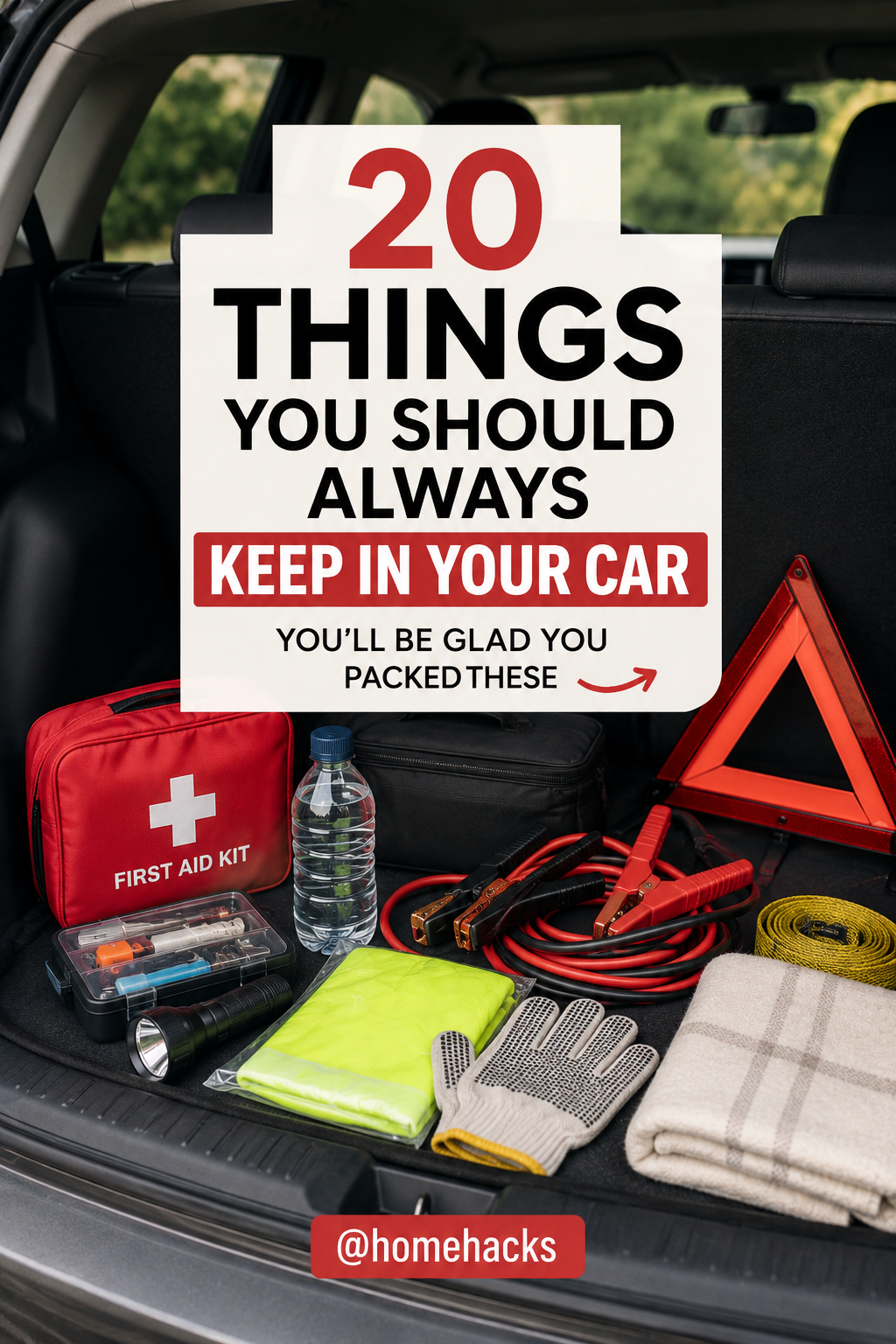
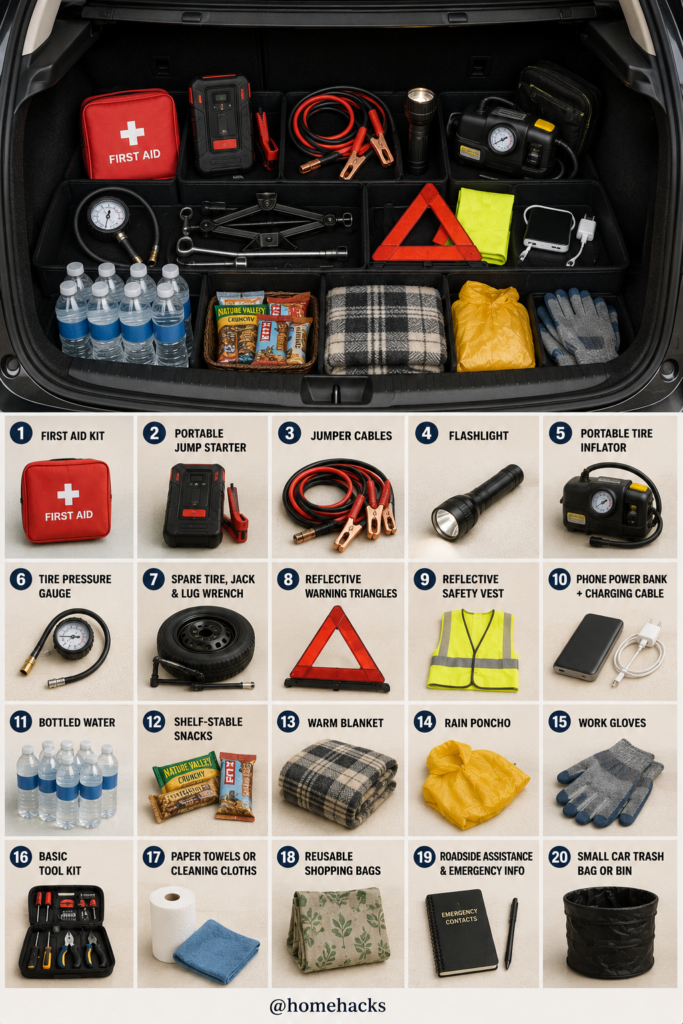
Here are 20 useful things worth keeping in your car so you’re better prepared for breakdowns, road trips, messy moments, and everyday life.
1. First Aid Kit
A basic first aid kit deserves a permanent place in your car.
You don’t need anything enormous. A compact kit with bandages, sterile gauze, adhesive tape, antiseptic wipes, disposable gloves, and other basic first-aid supplies can handle minor cuts and scrapes until you can get proper help if needed.
Check the kit occasionally and replace anything that’s expired, damaged, or already been used.
Keep it somewhere accessible rather than buried underneath everything in your trunk.
2. Portable Jump Starter
A portable jump starter is one of those things you may forget about for months—until the morning your battery is dead.
Unlike traditional jumper cables, a suitable portable jump pack can allow you to restart a battery without relying on another vehicle.
Choose one that’s appropriate for your vehicle and follow its instructions carefully.
Remember to check its charge periodically, too. A completely discharged jump starter sitting in the trunk isn’t much help.
3. Jumper Cables
Even if you own a portable jump starter, traditional jumper cables are still worth carrying as a backup.
Buy a decent set with enough length to be practical and learn how to use them correctly before you’re standing beside a dead vehicle.
Improper connections can cause damage or injury, so follow your vehicle manufacturer’s instructions rather than guessing.
4. A Reliable Flashlight
Car problems don’t conveniently happen during daylight.
A flashlight makes everything easier after dark, whether you’re checking around the vehicle, looking through the trunk, or simply making yourself more visible.
An LED flashlight is compact and easy to store.
If it uses replaceable batteries, keep suitable spares and inspect them occasionally. If it’s rechargeable, make checking its charge part of your regular car-emergency-kit routine.
5. Portable Tire Inflator
Finding a low tire doesn’t always mean you can immediately get to a gas station.
A compact portable tire inflator can be extremely useful for adding air when appropriate.
Some models plug into the vehicle’s power outlet, while others use rechargeable batteries.
An inflator isn’t a solution for every damaged tire, though. If a tire is seriously damaged or unsafe, don’t try to continue driving simply because you’ve managed to put some air into it.
6. Tire Pressure Gauge
This tiny tool takes almost no space.
Keeping your tires at the vehicle manufacturer’s recommended pressure is important for safety, tire life, and vehicle performance.
A basic tire-pressure gauge allows you to check them yourself.
Look for the recommended cold tire pressure on your vehicle’s placard or owner’s manual rather than using the maximum pressure printed on the tire as your target.
7. Spare Tire, Jack and Lug Wrench
Technically, these aren’t things you simply toss into a storage box—but they’re absolutely worth checking.
Some newer vehicles don’t come with a traditional spare tire, so find out what your car actually has.
If you do have a spare, make sure it’s properly inflated and usable. Check that the jack and lug wrench are present as well.
There’s nothing worse than discovering you’re missing an essential tool only after getting a flat.
And if you’ve never changed a tire, familiarize yourself with your vehicle’s procedure before an emergency happens.
8. Reflective Warning Triangles
Visibility is extremely important when a vehicle is stopped unexpectedly.
Reflective warning triangles can help alert approaching traffic that there’s a stopped vehicle or roadside situation ahead.
Store them somewhere you can reach without unloading your entire trunk.
How and where they should be placed can depend on the road and local rules, so follow applicable guidance and prioritize getting yourself to a safe location.
9. Reflective Safety Vest
A reflective vest takes almost no room and can make you much easier for other drivers to see.
It’s particularly useful at night, in rain, or in poor visibility.
Keep it somewhere accessible from inside the vehicle if possible.
If stopping on a busy road, however, don’t assume a reflective vest makes it safe to stand near moving traffic. Your first priority should always be getting yourself and your vehicle into the safest situation possible.
10. Phone Power Bank and Charging Cable
Your phone becomes especially important when something goes wrong.
You might need it to call roadside assistance, contact family, access directions, or make an emergency call.
That’s why I like keeping both a charging cable and a charged power bank in the car kit.
Heat and cold can affect batteries, so don’t simply leave a power bank forgotten in extreme temperatures indefinitely. Check its condition and charge regularly, and follow the manufacturer’s storage recommendations.
11. Bottled Water
A modest emergency supply of drinking water is worth having, particularly for longer drives.
Just don’t put a few bottles in the trunk and forget about them for years.
Rotate your water periodically and pay attention to the manufacturer’s storage guidance, particularly if your vehicle experiences extreme temperatures.
For longer road trips, bring fresh drinking water with you rather than relying solely on your emergency supply.
12. Shelf-Stable Snacks
Waiting for roadside assistance is much less pleasant when you’re hungry.
Keep a couple of sealed, shelf-stable snacks that tolerate your expected storage conditions reasonably well.
Check them periodically and replace anything that’s expired or damaged.
If you regularly travel with children, having a few appropriate snacks can be particularly useful during unexpected delays.
Again, think emergency backup—not a forgotten mobile pantry.
13. Warm Blanket
A simple blanket is useful for far more than emergencies.
It can keep you warmer during a winter breakdown, make an unexpected wait more comfortable, protect something fragile you’re transporting, or even become an impromptu picnic blanket.
A compact fleece or wool blanket doesn’t need to occupy much trunk space.
If you live somewhere with genuinely severe winters, your cold-weather car preparation should go beyond a single blanket and reflect local conditions.
14. Rain Poncho
Imagine having to deal with a roadside problem while it’s pouring with rain.
A compact rain poncho suddenly feels like one of the best things you’ve ever bought.
Disposable or reusable ponchos fold down incredibly small and can stay tucked inside your emergency bag.
If you frequently drive in wet weather, a lightweight waterproof jacket may be even more useful.
15. Work Gloves
Cars are dirty.
Tires, wheels, engine compartments, and roadside surfaces aren’t things you necessarily want to handle with bare hands.
A sturdy pair of work gloves can protect your hands during basic roadside tasks and keep them cleaner.
They’re inexpensive, don’t take much room, and are useful for plenty of everyday jobs too.
16. Basic Tool Kit
You don’t need to carry an entire workshop.
A small vehicle-appropriate tool kit may be enough.
What belongs in it depends on your vehicle and your own knowledge, but basic tools such as pliers and screwdrivers can sometimes be handy for simple tasks.
Avoid attempting repairs you’re not qualified to perform. Modern vehicles can be complex, and roadside improvisation isn’t always safe.
Think of your kit as a practical backup, not permission to dismantle your car beside the highway.
17. Paper Towels or Cleaning Cloths
This one isn’t exciting, but you’ll probably use it more often than half the emergency equipment.
Coffee spills.
Muddy shoes.
Wet hands.
Dusty dashboards.
Unexpected messes.
Keep a small roll of paper towels or a couple of washable cleaning cloths in your trunk organizer.
A few sealable waste bags are handy too.
Sometimes the most useful car essentials are the boring ones.
18. Reusable Shopping Bags
How many times have you arrived at the grocery store and realized every reusable bag you own is sitting at home?
Keep two or three folded inside your trunk.
They’re useful for far more than groceries.
You can use them to contain muddy shoes, organize loose purchases, carry unexpected items, or separate things inside the trunk.
After using them, make a habit of returning them to the car.
That’s the difficult part.
19. Roadside Assistance and Emergency Information
Don’t wait until you’re stranded somewhere with poor reception to start figuring out who provides your roadside assistance.
Keep the important details accessible.
You might save appropriate roadside-assistance numbers in your phone and keep a simple backup note in the vehicle.
Know where to find your vehicle’s necessary information as well.
At the same time, don’t leave unnecessary sensitive personal documents openly visible inside the car. Store required documents according to your local rules and think carefully about privacy and theft risk.
20. A Small Car Trash Bag or Bin
This won’t rescue you from a breakdown, but it may rescue your interior from becoming a disaster.
Receipts, wrappers, tissues, parking slips, and other tiny pieces of rubbish accumulate incredibly quickly.
A small washable car trash container gives everything one destination.
Empty it regularly and your vehicle instantly becomes easier to maintain.
It’s one of the simplest car organization hacks that actually works.
How to Organize Everything Without Filling Your Trunk
Twenty items sounds like a lot, but most of these things don’t need to float around individually.
Use one sturdy trunk organizer or emergency bag.
Keep your true roadside essentials together: first aid kit, flashlight, reflective equipment, gloves, basic tools, and other emergency supplies.
Then keep everyday items such as reusable bags and cleaning cloths in a separate compartment.
Frequently needed items should be easy to reach.
You don’t want to remove six suitcases and a week’s worth of groceries just to find your warning equipment.
And make sure loose items are properly secured so they don’t become hazards during sudden braking or a collision.
Check Your Car Emergency Kit Every Few Months
Packing your emergency kit once isn’t enough.
Things change.
Batteries discharge.
Food expires.
Water needs rotating.
First-aid supplies get used.
Children outgrow spare clothing.
Weather changes.
Even your spare tire can lose pressure while sitting unused.
Set a reminder every few months to spend ten minutes checking everything.
Before a long road trip is another good time to inspect the kit.
Adjust Your Kit for the Season
Not every driver needs exactly the same supplies.
Someone driving through a hot desert climate has different concerns from someone regularly driving through snow and freezing temperatures.
During winter, your vehicle may need additional cold-weather supplies appropriate to local conditions.
During summer, think carefully about anything you’re storing in extreme vehicle heat.
Long rural journeys may require more preparation than driving around a city where assistance is always nearby.
Use these 20 items as a starting point and customize the kit for where you live and where you’re going.
Don’t Forget the Car Itself
Emergency supplies are helpful, but preventing avoidable problems is even better.
Keep up with your vehicle’s recommended maintenance.
Pay attention to warning lights.
Check your tires.
Don’t ignore a weak battery for months.
Keep enough fuel—or charge, if you’re driving an EV—to comfortably complete your journey.
Before a long road trip, check your vehicle rather than assuming everything is fine because it started that morning.
A beautifully organized emergency kit doesn’t compensate for a poorly maintained car.
What Should You Keep Within Reach?
Not everything belongs at the very bottom of the trunk.
Your phone charger, emergency contacts, and other frequently needed essentials should be reasonably accessible.
Think about what you’d need first during a roadside problem.
Also consider whether opening the trunk would be safe in every situation.
Organize your car so you don’t need to stand exposed beside traffic longer than necessary.
If you’re stopped somewhere dangerous, prioritize personal safety and professional assistance over retrieving equipment or attempting repairs.
Final Thoughts
You don’t need to drive around with half your house packed into the trunk.
You just need to think ahead.
A first aid kit, portable jump starter, flashlight, tire equipment, reflective warning gear, phone charger, water, blanket, gloves, and a few everyday essentials can make unexpected situations much easier to manage.
Start with the things you’re most likely to need and build your car emergency kit gradually.
Then organize everything properly, secure loose objects, and check your supplies every few months.
Hopefully, most of these items will spend years sitting quietly in your trunk.
But when the day comes that your battery dies, your tire loses pressure, the weather suddenly changes, or you’re stuck waiting somewhere longer than expected, you’ll be very glad they’re there.