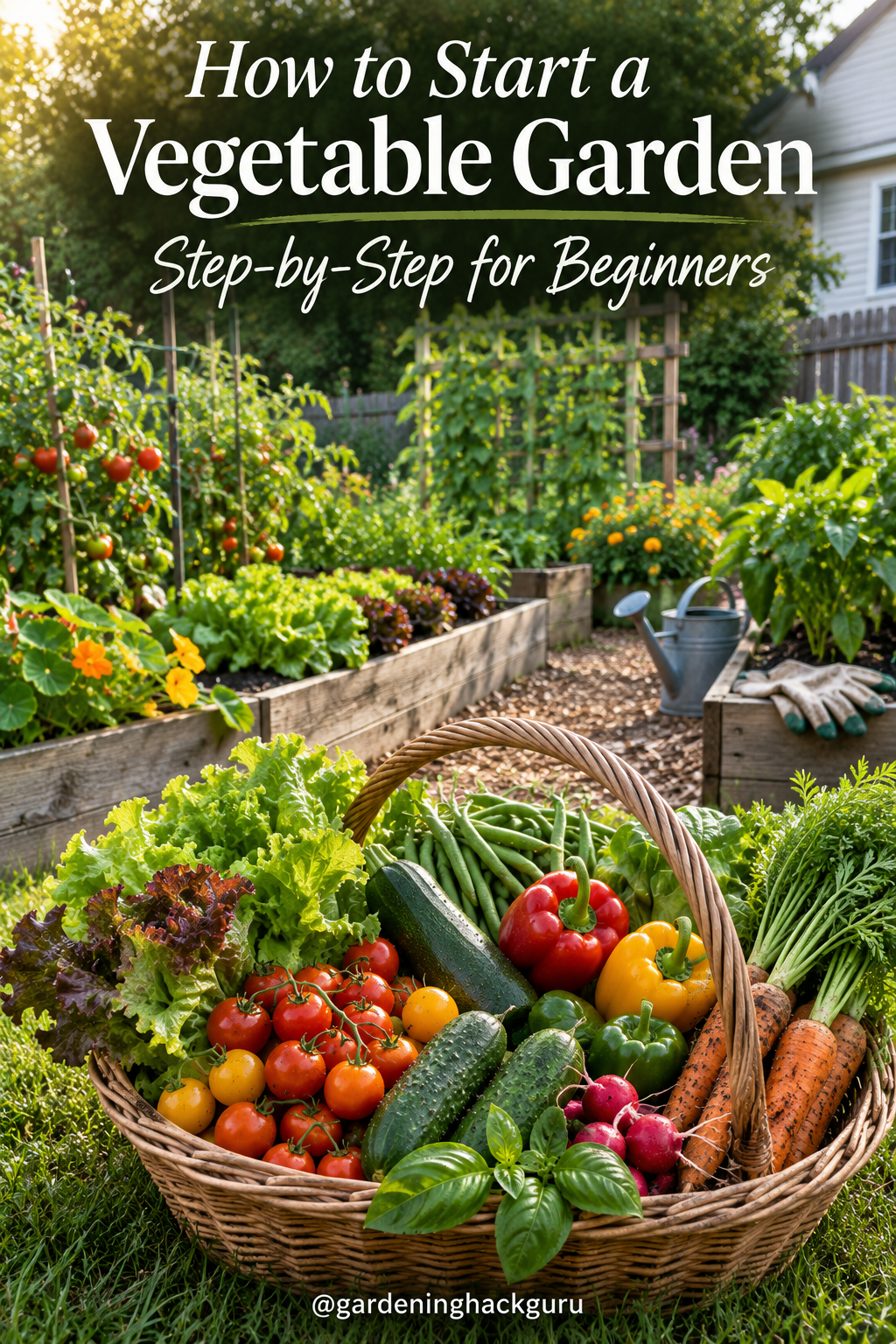
There’s something incredibly satisfying about walking into your backyard with an empty basket and coming back inside with tomatoes, cucumbers, beans, lettuce, and herbs you grew yourself.
The good news is that you don’t need a huge backyard, expensive equipment, or years of gardening experience to make that happen.
A successful vegetable garden for beginners usually starts much smaller than the beautiful gardens we see online. Maybe it’s one raised bed beside the patio. Maybe it’s a sunny patch of lawn that you finally decide to turn into a growing space. You plant a few tomatoes, some lettuce, perhaps cucumbers and beans—and learn as you go.
That is often the best way to start.
If you’ve been wondering how to start a vegetable garden from scratch, this step-by-step guide will take you through the process from choosing your location to harvesting your first homegrown vegetables.
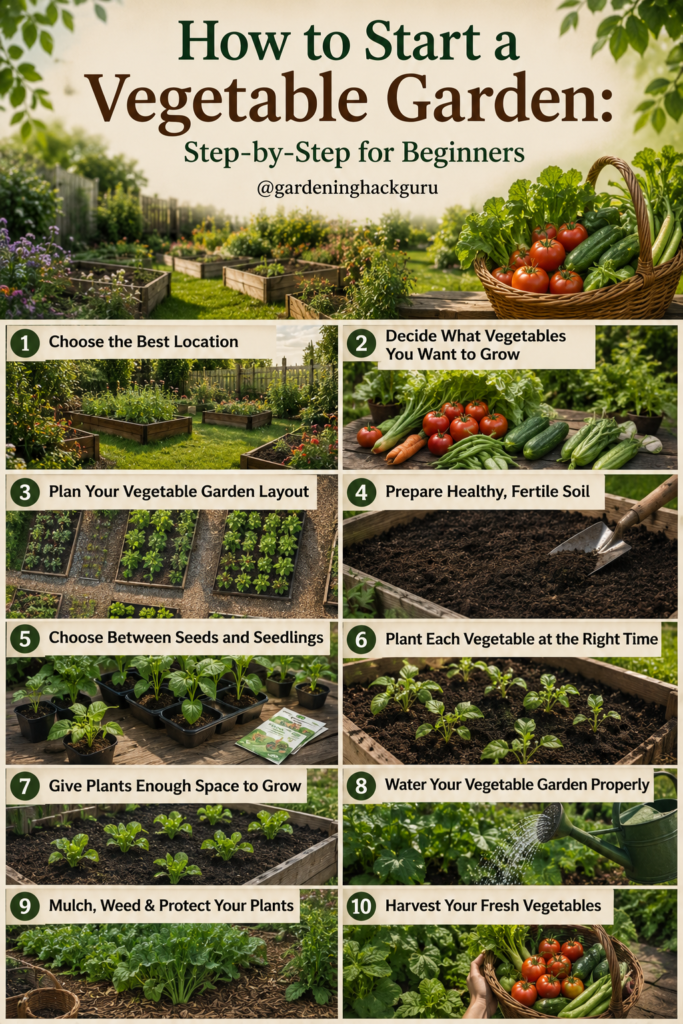
1. Choose the Best Location for Your Vegetable Garden
Before buying seeds or building raised beds, spend a few days paying attention to your yard.
Sunlight should be one of your first considerations.
Many popular vegetables, especially fruiting crops such as tomatoes, peppers, cucumbers, squash, and beans, generally perform best with plenty of direct sunlight. Leafy vegetables can often tolerate somewhat less.
Look for an area that receives roughly six or more hours of direct sunlight, ideally more for sun-loving crops.
But sunlight isn’t the only consideration.
Your vegetable garden should also be somewhere you can reach easily.
A garden tucked into the farthest corner of your property may look wonderful on paper, but you’ll appreciate having it closer when you’re carrying a watering can or harvesting vegetables for dinner.
Also look at drainage.
If water sits in a particular section of your yard for hours after heavy rain, that probably isn’t your best location without improving the drainage or using another growing approach.
2. Decide What Vegetables You Actually Want to Grow
One of the most common beginner mistakes is trying to grow everything.
You see dozens of seed packets and suddenly imagine yourself harvesting twenty different vegetables.
Start with what you genuinely eat.
If your family uses tomatoes constantly, grow tomatoes.
If you make salads several times a week, lettuce and cucumbers make sense.
If nobody in your household likes beets, you probably don’t need an entire row of them simply because they’re on somebody else’s beginner-gardening list.
Some popular choices for a first vegetable garden include tomatoes, lettuce, bush beans, cucumbers, zucchini, radishes, peas, peppers and herbs, though what’s easiest depends on your climate and season.
Starting with around five or six crops can make the first year much easier to manage.
3. Plan Your Vegetable Garden Layout
You don’t need professional landscape-design software.
A piece of paper works perfectly well.
Sketch your available space and decide where your beds, containers, pathways, and vertical supports will go.
You can grow vegetables in:
- traditional in-ground beds;
- raised garden beds;
- containers;
- grow bags;
- or a combination of these.
Raised beds are especially popular because they create clearly defined growing areas and can make soil management and access easier.
Whatever style you choose, make sure you can comfortably reach your vegetables without regularly stepping on the growing soil.
Also think about mature plant size.
That tiny zucchini seedling sitting innocently in a nursery pot can become enormous.
4. Prepare Healthy, Fertile Soil
Good soil is one of the best investments you can make in a vegetable garden.
Vegetables need more than dirt to produce well. They need suitable soil structure, drainage, moisture, and nutrients.
If you’re planting directly into existing ground, a soil test can tell you much more than guessing from appearance alone.
For raised beds, use a quality soil mix appropriate for vegetable growing rather than filling the entire bed with whatever soil happens to be cheapest.
Adding finished compost can improve organic matter and soil structure.
And don’t assume that adding enormous quantities of fertilizer automatically means enormous vegetables.
Too much fertilizer can cause its own problems.
Build healthy soil first and feed plants according to their actual needs.
5. Choose Between Seeds and Seedlings
You don’t have to start everything from seed.
For a first garden, using both seeds and nursery seedlings can make life considerably easier.
Vegetables that are commonly direct-sown include crops such as beans, peas, radishes, carrots, and other varieties that are generally straightforward to sow where they’ll grow.
For crops with a longer growing season, buying healthy seedlings may give beginners a useful head start, depending on the local climate.
Tomatoes and peppers are common examples.
When buying seedlings, look for compact, healthy plants rather than assuming the tallest one is automatically the best.
Avoid plants showing obvious signs of severe stress, disease, or pests.
6. Plant Each Vegetable at the Right Time
This is where local gardening advice becomes much more useful than generic internet advice.
The correct planting date depends heavily on where you live.
Cool-season crops and warm-season crops don’t want the same conditions.
Vegetables such as lettuce, peas, spinach, and radishes generally prefer cooler conditions than heat-loving crops such as tomatoes, peppers, cucumbers, and squash.
Instead of following one universal calendar, learn your area’s average frost dates and growing season.
Then check the seed packet or reliable local growing recommendations for each crop.
Planting tomatoes just because you get one unusually warm weekend can lead to disappointment if cold weather immediately returns.
Gardening rewards patience.
7. Give Your Vegetables Enough Space
Freshly planted vegetable gardens always look too empty.
That’s dangerous.
You’ll look at six tiny plants surrounded by soil and think:
“Surely I can fit another five in there.”
A month or two later, you may have an impenetrable jungle.
Follow recommended spacing for the specific vegetable and variety you’re growing.
Proper spacing helps plants access sunlight, water, and nutrients while improving airflow and making harvesting easier.
Use vertical space where practical too.
Pole beans, peas, and suitable cucumber varieties can grow on trellises rather than spreading across valuable ground.
A small garden doesn’t necessarily need more plants.
It needs smarter use of space.
8. Water Your Vegetable Garden Properly
New gardeners often ask exactly how many times per week they should water.
Unfortunately, there isn’t one perfect schedule.
How frequently your garden needs water depends on temperature, rainfall, soil type, plant size, wind, containers versus in-ground planting, and the stage of growth.
Instead of watering automatically because it’s Tuesday, check the soil.
Water deeply enough to encourage roots to grow downward rather than repeatedly wetting only the surface.
Early morning is often a convenient time to water because plants have moisture available before the hotter part of the day.
When possible, direct water toward the soil rather than unnecessarily soaking foliage.
As your plants mature and temperatures change, expect your watering needs to change too.
9. Mulch, Weed and Protect Your Plants
Once your garden begins growing, maintenance becomes much easier if you stay ahead of problems.
Start with weeds.
A tiny weed takes seconds to remove.
A garden full of mature weeds can consume an entire afternoon.
Adding an appropriate organic mulch around established vegetables can help suppress weeds and reduce moisture loss while protecting the soil surface.
Straw, shredded leaves, and other suitable materials may work depending on what’s locally available.
You’ll also want to check your plants regularly for pest or disease problems.
Look underneath leaves.
Notice unusual spots.
Pay attention when new growth suddenly becomes distorted or disappears.
The earlier you notice something unusual, the easier it usually is to investigate what’s happening.
Avoid automatically spraying a pesticide whenever you see an insect. Many insects in a garden are harmless or beneficial, so identify the problem first and choose an appropriate response.
10. Harvest Your Fresh Vegetables
This is the part you’ve been waiting for.
One morning, the tomatoes that have been green for weeks finally turn red.
Your cucumber suddenly looks ready.
There are enough beans for dinner.
And that tiny garden you planted months earlier starts producing actual food.
Harvesting at the right stage can encourage continued production in many vegetables.
Beans, cucumbers, zucchini, and some other crops are often best checked frequently because they can mature surprisingly quickly during warm weather.
Leafy vegetables may allow you to harvest outer leaves while leaving the rest of the plant growing, depending on the crop.
And don’t wait for everything to look supermarket-perfect.
Your carrot may be crooked.
Your cucumber might curve.
One tomato may have an odd shape.
That’s part of growing food at home.
What Does a Beginner Vegetable Garden Really Need?
You don’t need a shed filled with gardening equipment.
For a small first garden, a few basic tools can take you surprisingly far: a hand trowel, gardening gloves, watering equipment, pruning snips, and perhaps a garden fork or shovel if you’re working in the ground.
You’ll also need supports for crops that require them.
Tomato cages or stakes and simple trellises for climbing vegetables are much easier to install while plants are still small.
Beyond that, buy tools when you discover you actually need them.
Gardening stores are filled with products that look essential until you realize you’ve successfully gardened for three years without them.
How Big Should Your First Vegetable Garden Be?
Smaller than you’re imagining.
It’s easy to become ambitious in spring when everything feels exciting.
Then summer arrives.
Plants need watering. Weeds grow. Tomatoes need supporting. Cucumbers need harvesting. You’re away for a weekend. Temperatures climb.
Suddenly the enormous vegetable garden you dreamed about feels like another job.
A couple of raised beds or a modest in-ground plot can produce plenty while allowing you to learn.
You can always expand next year.
It’s much more enjoyable to finish your first season thinking, I wish I’d planted another bed, than I never want to see another zucchini again.
Don’t Forget Flowers and Herbs
A vegetable garden can be productive and beautiful at the same time.
Add some flowers around the edges of your beds or between suitable crops.
Flowers such as zinnias, calendula, cosmos, marigolds, and nasturtiums can add color and, depending on the species and location, provide resources for visiting pollinators and other insects.
Herbs are another wonderful addition.
Basil near the tomatoes, parsley beside the path, thyme in a sunny spot, and chives near the kitchen can turn a practical vegetable plot into a genuine kitchen garden.
Just make sure each plant is placed according to its growing requirements rather than relying on companion-planting claims alone.
Common Vegetable Gardening Mistakes Beginners Make
Most first-year gardening mistakes come from enthusiasm rather than neglect.
We plant too much.
We plant too closely.
We water too frequently because we’re worried the plants are thirsty.
We buy vegetables that aren’t suited to our season.
And sometimes we panic the moment a leaf develops a hole.
Try not to expect perfection.
A vegetable garden is a living system. There will be insects. Some leaves will become damaged. A plant may fail completely while the one beside it produces more food than you know what to do with.
That’s normal.
The goal of your first garden isn’t to become an expert.
It’s to learn enough that next year’s garden becomes better.
Keep a Simple Garden Journal
This might sound unnecessary during your first season, but you’ll be glad you did it.
Write down what you planted and when.
Record the varieties you liked.
Note which vegetables produced well and which struggled.
Take a few photographs every couple of weeks.
Write down where you placed things.
By next spring, you probably won’t remember whether those amazing cherry tomatoes were one variety or another.
Your notes will.
A simple gardening journal gradually becomes your own personalized growing guide—one based on your actual backyard rather than somebody else’s climate.
Your First Harvest Doesn’t Need to Be Huge
Don’t measure the success of your first vegetable garden by kilograms of produce.
Maybe you grow enough tomatoes for one incredible salad.
Maybe your bean plants produce beautifully while your peppers barely grow.
Maybe your first carrot comes out of the soil looking like it has three legs.
Eat it anyway.
The first season teaches you how sunlight moves through your backyard, how quickly your soil dries, which vegetables you enjoy growing, and how much time you realistically want to spend gardening.
Those lessons are valuable.
Next year, you’ll adjust your layout.
You’ll plant some crops earlier.
You’ll skip something you didn’t enjoy.
You’ll grow twice as many of something you loved.
And gradually, your garden becomes yours.
Start Small and Let Your Garden Grow
You don’t need the perfect backyard to start a vegetable garden.
You don’t need twenty raised beds, a greenhouse, or a beautifully organized collection of gardening tools.
Find a sunny spot.
Prepare good soil.
Choose a handful of vegetables your household actually eats.
Plant them at the right time.
Give them enough space, sunlight, and water.
Then pay attention.
That’s really where gardening begins.
A few months from now, you could be standing in the same backyard with a basket full of tomatoes, cucumbers, beans, herbs, and vegetables you grew yourself.
And I can promise you one thing: that first homegrown tomato is going to taste considerably more exciting when you remember that it started as one tiny seed. 🌱🍅🥕