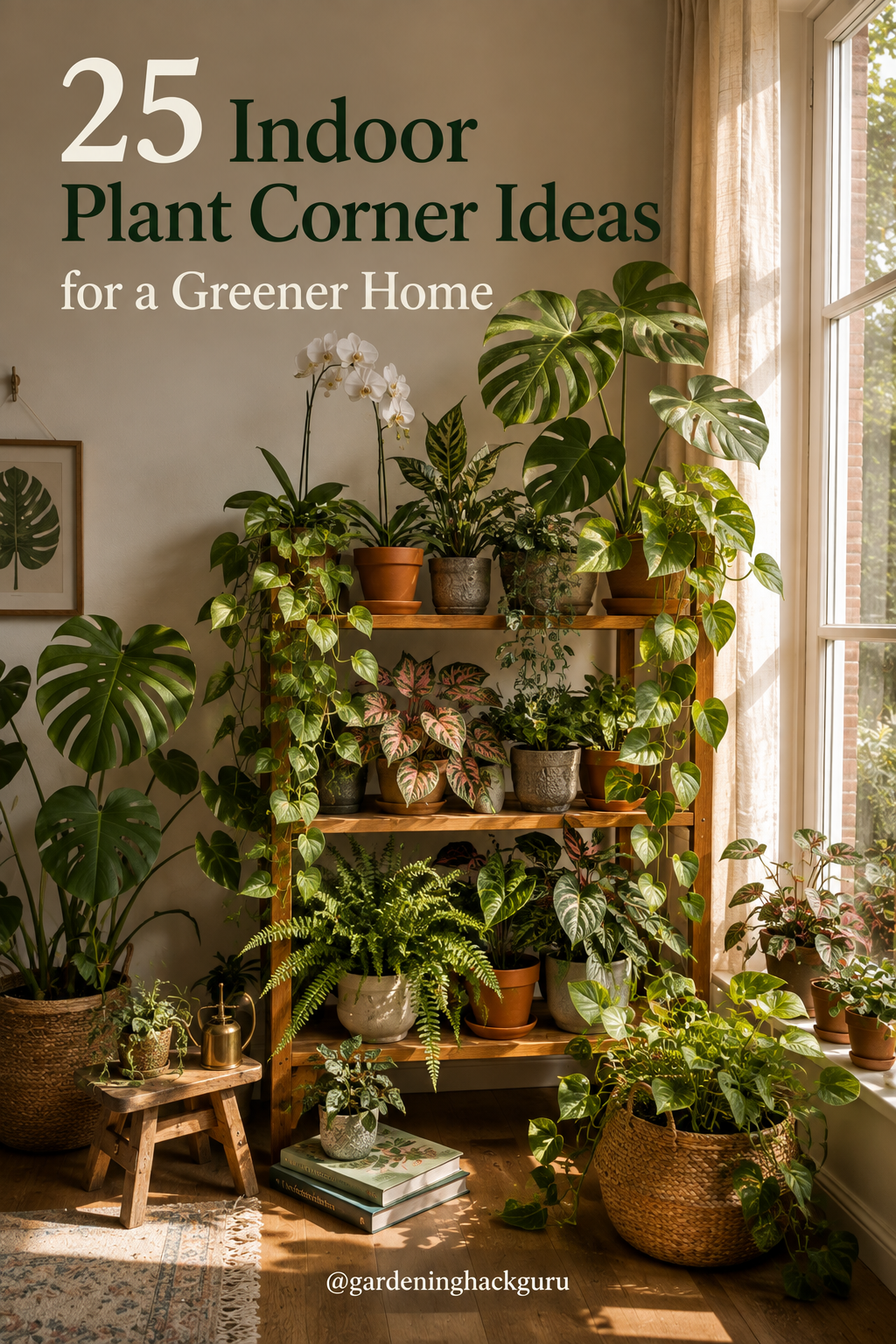
There’s something about a room filled with plants that instantly feels better.
Even the simplest corner can feel warmer when you add a trailing pothos, a few terracotta pots, or one oversized leafy plant beside a window. Plants bring color into neutral rooms, soften hard furniture lines, and make spaces feel a little more lived-in.
But creating a beautiful indoor plant corner isn’t about buying twenty plants and squeezing them onto one shelf.
The best plant corners look as though they’ve grown naturally over time. There are different heights, leaf shapes, pot styles, and textures. Some plants trail down from shelves while others stretch toward the window. There might be a slightly crooked leaf or an old terracotta pot with water marks—and that’s part of what makes the space feel real.
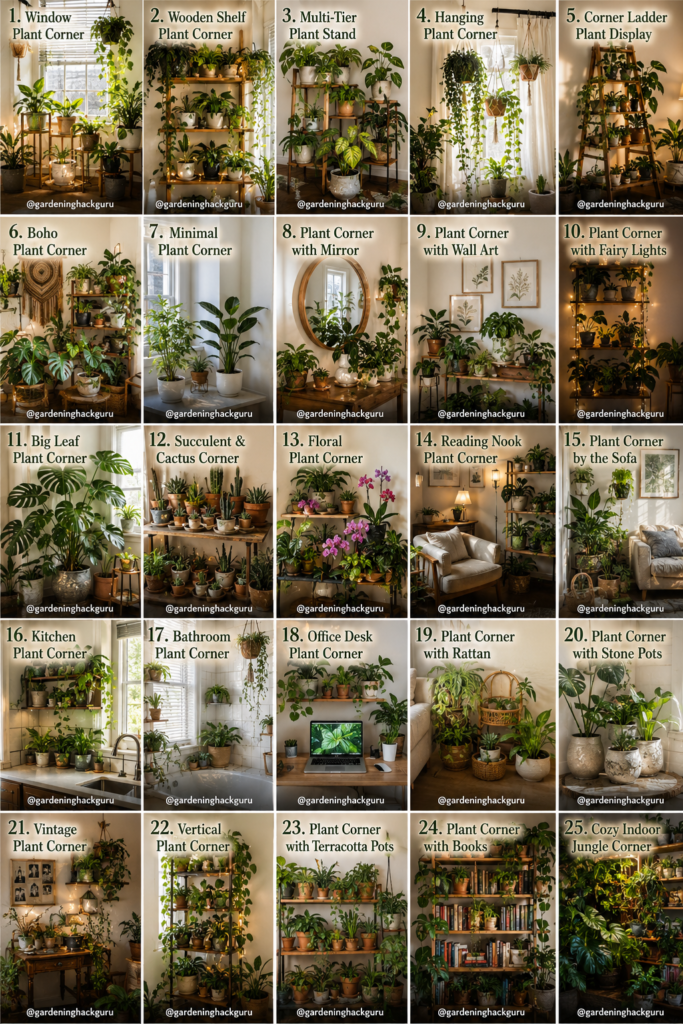
Whether you have an enormous houseplant collection or you’re starting with your first pothos, here are 25 indoor plant corner ideas to help you bring more greenery into your home.
1. Create a Window Plant Corner
If you’re wondering where to start, look at your windows.
Natural light is one of the most important considerations when deciding where your plants should live. A bright window can become a beautiful little indoor garden with surprisingly little effort.
Place taller plants on the floor and smaller ones on stools or stands. Hang a trailing plant nearby if the space allows.
Just remember that “bright window” doesn’t automatically mean every plant will love it. Some plants tolerate direct sun, while others prefer bright but indirect light.
Choose plants based on the conditions you actually have rather than where you think they’ll look prettiest.
2. Fill a Wooden Shelf With Plants
A simple wooden shelf can turn an empty wall into a gorgeous houseplant display.
The trick is not lining up identical pots like products in a store.
Mix different heights.
Place a trailing pothos or philodendron on an upper shelf, medium plants in the center, and smaller plants between books or decorative objects.
Leave a little empty space too.
As tempting as it is to fill every inch, some breathing room makes individual plants stand out.
3. Use a Multi-Tier Plant Stand
When floor space is limited, go upward.
A multi-tier plant stand lets you display several plants without sacrificing half the room.
It’s especially useful for smaller houseplants such as peperomias, fittonias, small ferns, African violets, and young philodendrons.
Arrange the largest plants toward the bottom and lighter, smaller pots higher up.
The result creates an almost cascading wall of greenery.
4. Hang Plants From Above
Trailing plants are perfect for creating that lush indoor jungle aesthetic.
Try hanging pothos, heartleaf philodendron, spider plants, or other suitable trailing varieties near a bright window.
Allow the vines to grow naturally rather than constantly trimming them into perfect shapes.
A few long stems falling from above can make even a relatively small plant collection feel abundant.
Make sure ceiling hooks and hanging hardware are properly installed for the combined weight of the pot, soil, plant, and water.
5. Turn an Old Ladder Into a Plant Display
An old wooden ladder can become an unexpectedly beautiful plant stand.
Use a ladder-style shelf or a safely positioned decorative ladder with suitable platforms for small pots.
Terracotta planters and trailing greenery work especially well with weathered wood.
It’s a lovely option if you prefer a cottage, rustic, or slightly vintage decorating style.
6. Create a Boho Plant Corner
Plants and natural textures belong together.
Combine leafy houseplants with woven baskets, rattan furniture, wood, linen, and handmade ceramics.
Instead of placing every plant inside a traditional planter, use woven baskets as decorative outer covers where appropriate.
Add a warm lamp or textured wall hanging nearby.
The result should feel relaxed rather than heavily styled.
7. Keep Your Plant Corner Minimal
You don’t need dozens of houseplants to create an impact.
Sometimes two or three carefully chosen plants look better than twenty small ones.
Try one large statement plant alongside two smaller plants in simple neutral pots.
This approach works particularly well in modern or minimalist homes where you want greenery without visual clutter.
A beautiful plant with an interesting silhouette can function almost like a piece of living sculpture.
8. Place Plants Around a Mirror
This is one of my favorite tricks for a small room.
Place a mirror behind or beside your plant collection and suddenly you get twice the greenery visually.
An arched or round wooden-framed mirror surrounded by plants can make a dark corner feel much more interesting.
Just don’t rely on the mirror to provide light. Your plants still need appropriate real light for their individual requirements.
9. Mix Plants With Botanical Wall Art
If your plant corner feels unfinished, look at the wall behind it.
A few botanical prints or simple nature-inspired artworks can visually connect the plants with the rest of the room.
Keep the artwork fairly understated.
The plants should remain the main attraction.
Vintage botanical illustrations can be particularly beautiful alongside aged terracotta pots and wooden furniture.
10. Add Soft Fairy Lights
If you want your plant corner to feel cozy after sunset, subtle lighting can completely change it.
Wrap warm decorative lights around a shelf or place a small lamp nearby.
Keep electrical lights and cords safely away from water.
And remember: decorative lights aren’t necessarily grow lights.
They create atmosphere for you, but your plants may still need natural daylight or proper supplemental plant lighting depending on the conditions.
11. Let One Big-Leaf Plant Take Over
Sometimes you need only one plant.
A large monstera, bird of paradise, philodendron, or another suitable statement plant can transform an empty corner.
Choose a substantial planter that visually balances the foliage.
Then give the plant enough space.
One of the most common styling mistakes with large houseplants is surrounding them with so many small objects that their beautiful shape disappears.
Let those dramatic leaves breathe.
12. Create a Succulent and Cactus Corner
If your home gets strong light, a collection of succulents and cacti can create a completely different plant aesthetic.
Group several shapes and sizes together on a wooden bench, shelf, or windowsill.
Terracotta works particularly well here.
More importantly, use appropriate soil and avoid treating succulents like tropical houseplants.
Constant watering is not an act of kindness when the plant wants its soil to dry.
13. Add Flowering Houseplants
Your indoor plant corner doesn’t have to be completely green.
Flowering houseplants can introduce beautiful seasonal color.
Orchids, African violets and other flowering indoor plants can work depending on your home’s conditions and the care you’re willing to provide.
Instead of filling the space with artificial-looking color everywhere, let one or two flowering plants become focal points among the foliage.
A white orchid surrounded by deep green leaves can look especially striking.
14. Build a Plant-Filled Reading Nook
If you already have a comfortable chair near a window, you’re halfway there.
Add a small side table, reading lamp, and several plants around the chair.
Use a taller plant behind it, something medium-sized beside it, and perhaps a trailing plant overhead.
Suddenly you’re not just decorating a corner.
You’re creating somewhere you actually want to spend time.
15. Bring Plants Beside the Sofa
That awkward empty space beside the sofa?
It might be perfect for plants.
Start with one floor plant and build around it with smaller pots at different heights.
A wooden stool, low plant stand, or basket can help create layers.
Be mindful of traffic through the room. Beautiful plants aren’t very relaxing if everyone keeps knocking into them.
16. Create a Kitchen Plant Corner
The kitchen is a natural place for greenery.
A bright windowsill can hold herbs, while open shelves can accommodate suitable small houseplants.
Basil, parsley, chives, mint, and other herbs can be especially useful when growing conditions are appropriate.
Keep plants away from areas where excessive heat, grease, or cooking activity could cause problems.
And resist turning every available section of the countertop into a jungle.
You still need somewhere to make dinner.
17. Add Plants to the Bathroom
Some bathrooms provide wonderful conditions for humidity-loving plants.
But humidity alone isn’t enough.
If your bathroom has little or no natural light, don’t assume a plant will thrive simply because the room gets steamy.
For a bathroom with appropriate light, certain ferns and other humidity-tolerant houseplants can work beautifully.
A trailing plant on a high shelf can soften all those hard tile surfaces.
18. Green Up Your Home Office
A home office can easily feel sterile.
A few plants around your desk can make it much more inviting.
Place one small plant near the computer, add another on a wall shelf, and use a larger floor plant to soften an empty corner.
Don’t overcrowd the actual work surface.
You want enough greenery to make the room pleasant without moving five pots every time you need a notebook.
19. Use Rattan and Woven Baskets
If your collection contains lots of plastic nursery pots, you don’t necessarily have to repot everything immediately.
Slip appropriate nursery pots inside decorative woven baskets or cachepots.
Rattan and natural fibers look particularly beautiful against green foliage and introduce another texture into the room.
Just make sure water doesn’t collect unnoticed inside decorative covers.
Remove or drain excess water after watering.
20. Use Stone and Textured Planters
Not every planter needs to be terracotta.
Stone-look, textured ceramic, concrete-style, and handmade pottery can make a plant collection feel much more collected.
Try combining several neutral textures rather than matching everything.
Cream, warm gray, earthy brown, and muted green containers allow colorful foliage to stand out.
21. Create a Vintage Plant Corner
Plants look surprisingly at home with old furniture.
Use a vintage sideboard, wooden table, antique-inspired mirror, or weathered cabinet as the foundation for your display.
Add aged terracotta, ceramic pots, books, and a small lamp.
Then let the plants spill naturally around everything.
This works beautifully if you prefer a cozy, slightly nostalgic home rather than a sleek modern interior.
22. Build a Vertical Plant Corner
When you don’t have much floor space, use the wall.
Combine tall shelving with hanging plants and wall-mounted planters where appropriate.
Arrange greenery from floor to ceiling so your eye travels upward.
This is particularly effective in apartments and small homes because you can create an impressive plant collection without losing an entire section of usable floor.
Always make sure wall-mounted shelves and planters are securely installed for their full loaded weight.
23. Go All-In on Terracotta
Few things look as naturally good with houseplants as terracotta.
The warm orange-brown color contrasts beautifully with green leaves, and older pots develop marks and patina that make a collection feel established.
Instead of buying twenty identical pots, mix several shapes and sizes.
Pair them with wooden shelving and natural sunlight for a warm, earthy indoor garden.
Keep in mind that porous terracotta can dry differently from glazed containers, so adjust watering to your plant and conditions.
24. Mix Plants With Books
Bookshelves don’t have to contain only books.
Place small plants between stacks and allow trailing plants to fall gently from upper shelves.
Keep enough separation that plants aren’t constantly damaging books with moisture.
A few plants among books can soften a large bookcase and create a wonderfully cozy library-meets-greenhouse feeling.
25. Create Your Own Indoor Jungle
If you’re someone who genuinely loves collecting plants, embrace it.
Build one lush corner with multiple layers of foliage.
Combine broad leaves, narrow leaves, trailing vines, variegated foliage, flowering plants, and different shades of green.
Place large plants on the floor, medium plants on shelves and stands, and trailing varieties higher up.
But don’t buy plants purely to fill space.
An indoor jungle is much more enjoyable when every plant has a location where it can realistically thrive.
How to Make an Indoor Plant Corner Look Aesthetic
The biggest secret is variation.
If every plant is the same height, every pot is identical, and everything sits in a straight line, the display can feel flat.
Instead, think in layers.
Start with one taller plant to anchor the corner. Add medium plants around it. Use stools, shelves, or stands to elevate smaller pots. Finally, introduce one or two trailing plants to connect the different levels.
Mix leaf shapes too.
A large monstera leaf beside a delicate fern creates much more visual interest than ten plants with similar foliage.
And don’t underestimate empty space. Plants grow. Give them somewhere to go.
Choose Plants for Your Light, Not Just Your Pinterest Board
This is probably the most important part of creating a successful indoor garden.
A Pinterest photo might show an enormous tropical plant in a dark corner because it looks fantastic in the photograph.
That doesn’t mean the plant will be happy there.
Before buying anything, watch how sunlight moves through your room.
Which windows receive direct sun? Which areas stay bright without receiving direct rays? Which corners remain genuinely dark?
Then research individual plants before deciding where they’ll live.
A slightly less “perfect” placement that keeps the plant healthy will eventually look much better than a beautifully styled plant that’s slowly declining.
Don’t Buy 25 Plants at Once
It’s tempting.
You see an incredible indoor plant corner, visit the garden center, and suddenly your cart contains enough plants to open a small nursery.
Start slowly.
Learn how plants respond to your home’s light, temperature, humidity, and watering habits.
Once the first few are thriving, add another.
This also gives your plant collection personality. Over time, you’ll end up with plants from different places, pots collected over the years, propagated cuttings, and plants that have grown alongside you.
That’s difficult to recreate in a single shopping trip.
Let Your Indoor Garden Look Lived-In
A beautiful plant corner doesn’t have to be perfect.
Leaves occasionally turn yellow. Vines grow in unexpected directions. Terracotta develops water marks. New leaves emerge at strange angles. A plant may lean toward the window.
That’s what living things do.
Take care of your plants, clean dusty foliage when needed, remove dead material, and keep an eye out for pests—but don’t try to make every leaf look identical.
The slightly imperfect corners often have the most character.
Ultimately, the best indoor plant corner ideas aren’t really about decorating with plants.
They’re about making room for them.
Start with a sunny corner, one plant you genuinely love, and somewhere beautiful to put it.
Then let the collection grow naturally.
Before long, that forgotten corner of your home might become the first place everyone notices when they walk into the room. 🌿