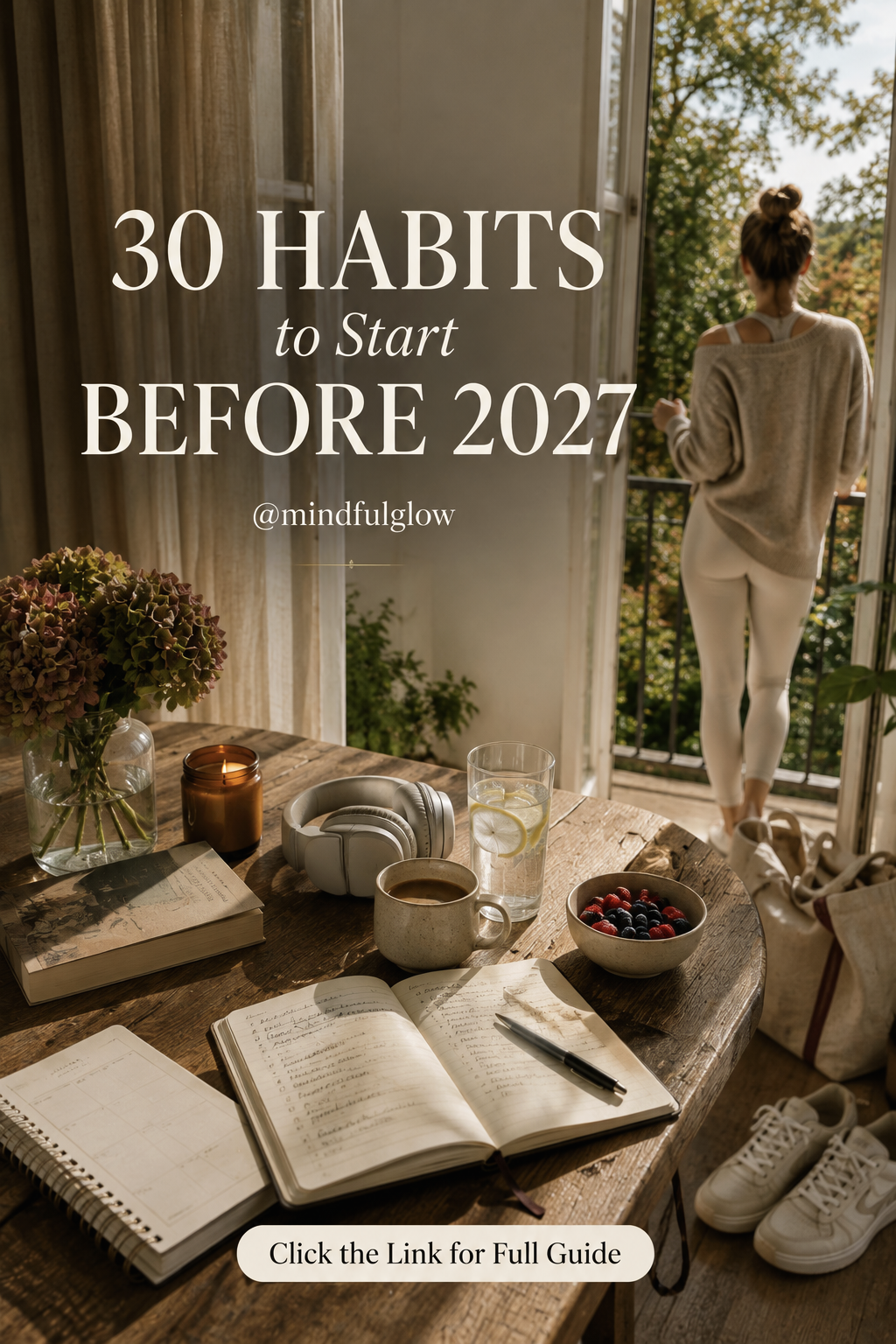
There’s something about the last few months of the year that makes you realize how quickly time moves.
January feels like it was five minutes ago, and suddenly we’re talking about fall plans, end-of-year goals, and what we want 2027 to look like.
This is usually the point where people do one of two things.
They either panic and try to completely reinvent themselves overnight, or they decide the year is basically over and say, “I’ll start in January.”
I don’t think you need to do either.
There is still plenty of time to change the way your days feel.
You don’t need a dramatic 5 a.m. routine, an expensive gym membership, a perfectly organized home, or 15 new wellness products. Most lasting changes come from much less exciting things: going to bed when you said you would, taking a walk, putting your phone down, saving a little money, keeping your kitchen clean, and actually following through on promises you’ve made to yourself.
So instead of waiting for January 1, here are 30 habits worth starting before 2027.
You certainly don’t need to start all 30 tomorrow. Pick a few that would make the biggest difference in your life and begin there.
1. Start Your Morning Without Your Phone
This one is harder than it sounds.
It’s so easy to turn off your alarm and immediately open Instagram, TikTok, email, or whatever notification is waiting.
Before you know it, you’ve spent twenty minutes inside everyone else’s life before you’ve even properly entered your own.
Try giving yourself the first 20 or 30 minutes of the morning without social media.
Open the curtains. Wash your face. Drink some water. Make coffee. Stretch.
The internet can wait.
2. Make Your Bed
Will making your bed transform your entire life?
Probably not.
But it takes two minutes, instantly makes your bedroom feel less chaotic, and gives you one tiny completed task before the day really begins.
Sometimes that’s enough reason to do it.
3. Drink More Water
You don’t need a gigantic trendy bottle with motivational times printed down the side.
Just make water convenient.
Keep a glass beside your bed. Carry a reusable bottle when you’re out. Have water with meals.
If you find plain water boring, add lemon, cucumber, mint, or fruit.
Simple habits are much easier to maintain when you remove the unnecessary rules around them.
4. Go for a Daily Walk
Walking is one of the easiest habits to underestimate.
It doesn’t look dramatic. You probably won’t post a transformation video about it.
But a regular walk gives you movement, fresh air, time away from screens, and a chance to clear your head.
Walk after dinner.
Walk while listening to a podcast.
Walk to get coffee.
Walk because the sunset looks beautiful.
It all counts.
5. Get Serious About Your Sleep
A lot of us are trying to fix our energy with coffee when what we actually need is more sleep.
Start paying attention to what time you go to bed.
Create a little nighttime routine.
Dim the lights.
Put your phone away.
Do your skincare.
Prepare tomorrow’s clothes.
Read something.
Then go to sleep at a time that allows you to get adequate rest for your needs.
Sleep isn’t wasted time. It’s part of taking care of yourself.
6. Eat Something Nourishing Every Day
Don’t turn this into an all-or-nothing diet.
Instead of asking, “What should I stop eating?” try asking, “What can I add?”
Add vegetables to dinner.
Have fruit with breakfast.
Include a useful source of protein.
Cook something at home.
Healthy eating becomes much less exhausting when you’re not constantly trying to be perfect.
7. Prepare a Few Foods Ahead
You don’t need to spend six hours meal prepping every Sunday.
Just make your future self’s life a little easier.
Wash some fruit.
Chop vegetables.
Boil eggs.
Cook rice.
Prepare a protein.
Make overnight oats.
When you’re hungry and tired on Wednesday evening, you’ll be very happy Monday-you did the work.
8. Move Your Body in a Way You Enjoy
Not everyone loves the gym.
That’s fine.
Try Pilates, swimming, strength training, cycling, yoga, hiking, dancing, running, or home workouts.
The goal is not to find the workout that looks best online.
Find movement you can realistically keep doing.
9. Stretch for Five Minutes
You don’t need a complicated flexibility routine.
Stretch after waking up.
Stretch after your workout.
Stretch after sitting at a desk all day.
Five minutes is much easier to convince yourself to do than thirty, and small habits have a funny way of becoming bigger once they’re established.
10. Keep Your Space Reasonably Tidy
Notice I said reasonably.
Your house doesn’t need to look like nobody lives there.
But putting things back, washing dishes instead of letting them pile up, clearing your desk, and doing a quick evening reset can make everyday life feel much calmer.
Try the ten-minute rule.
Set a timer and tidy whatever you can in ten minutes.
Then stop.
11. Have a Weekly Reset
Pick one day of the week to get yourself organized.
For many people, Sunday works well.
Wash your sheets.
Do laundry.
Check your calendar.
Plan a few meals.
Restock groceries.
Clean your bag.
Write your priorities.
You don’t need to spend the entire day preparing for Monday. An hour or two can make the week ahead feel dramatically less chaotic.
12. Write Tomorrow’s Priorities the Night Before
Don’t wake up and decide what matters based on whichever notification screams loudest.
Before bed, write down the three things you’d most like to accomplish tomorrow.
Not seventeen things.
Three.
You’ll wake up knowing where your attention needs to go.
13. Read Every Day
You don’t need to read a book a week.
Try ten pages.
Read with your morning coffee.
Read before bed.
Carry a book in your bag.
If you read ten pages most days, you’ll be surprised how many books you eventually finish.
And unlike endless scrolling, reading usually leaves you feeling like your attention went somewhere worthwhile.
14. Journal Without Trying to Make It Pretty
Your journal does not need perfect handwriting, stickers, matching pens, or beautiful Pinterest pages.
Write badly.
Write honestly.
Write one paragraph if that’s all you have.
What happened today?
What are you worried about?
What’s going well?
What do you want?
What are you avoiding?
Sometimes you don’t know what you’re thinking until you see it written down.
15. Spend Time Outside Every Day
Go outside even when you don’t have somewhere to go.
Have your coffee on the balcony.
Eat lunch outside.
Sit in the garden.
Walk around the block.
Take your book to a park.
We’re so used to moving from home to car to office to shop that entire days can pass without us properly being outside.
Change that.
16. Stop Taking Your Phone Everywhere
Your phone doesn’t need to accompany you into every room.
Leave it somewhere else while you shower.
Don’t bring it to the dinner table.
Charge it away from your bed if that works for you.
Go for an occasional walk without it.
Create small parts of your day where nobody can instantly reach you.
17. Unfollow Things That Make You Feel Worse
Your social media feed is partly an environment you’ve created.
If an account repeatedly makes you feel inadequate, angry, insecure, or obsessed with buying things you don’t need, you don’t have to keep following it.
Mute.
Unfollow.
Move on.
You don’t need to consume everything simply because it’s available.
18. Learn to Enjoy Your Own Company
Go somewhere alone.
Start small if it feels uncomfortable.
Have coffee.
Browse a bookstore.
Take a walk.
Eat breakfast somewhere.
Visit a museum.
Eventually, you may realize that spending time alone isn’t something you have to endure.
It can actually be lovely.
19. Create Something Instead of Always Consuming
We consume constantly.
Videos. Podcasts. Posts. Shows. News. Other people’s opinions.
Make something occasionally.
Cook.
Write.
Paint.
Garden.
Take photographs.
Bake.
Build something.
Start a little project.
You don’t have to monetize it.
You don’t even have to be good at it.
Creation is allowed to exist purely for enjoyment.
20. Track Where Your Money Goes
You don’t need an elaborate spreadsheet if that isn’t your thing.
Just start paying attention.
Look through your transactions.
How much are you spending on subscriptions?
Takeaway?
Shopping?
Things you barely remember buying?
You can’t make intentional decisions about money if you don’t know where it’s going.
21. Save Automatically
If your circumstances allow it, make saving something that happens automatically rather than something you remember to do if there’s money left at the end of the month.
Even a small amount matters.
The habit comes first.
You can increase the amount later as your circumstances change.
22. Wait Before Impulse Purchases
Try giving yourself a waiting period before buying nonessential things.
Maybe it’s 24 hours.
Maybe it’s three days.
Save the item and come back later.
You’ll be surprised how many things you desperately wanted at 11 p.m. suddenly become completely uninteresting two days later.
23. Learn One Useful Skill
Choose something that could genuinely improve your life.
Cooking.
A language.
Public speaking.
Writing.
Excel.
Photography.
Coding.
Money management.
Communication.
Spend twenty or thirty minutes learning regularly.
You don’t need to become an expert before 2027.
Just become better than you are today.
24. Do One Thing You’ve Been Avoiding
There’s usually one task quietly stealing mental energy because you keep postponing it.
Book the appointment.
Reply to the email.
Organize the drawer.
Make the phone call.
Cancel the subscription.
Submit the application.
The task itself often takes less energy than thinking about it for three weeks.
25. Start Saying No Without Writing an Essay
You don’t always need a five-paragraph explanation.
Sometimes:
“I can’t make it, but thank you for inviting me.”
is enough.
Protecting your time doesn’t make you rude.
You can be kind without making yourself available for everything.
26. Keep Small Promises to Yourself
This is one of the habits I’d prioritize above almost everything else.
If you tell yourself you’ll walk for twenty minutes, try to do it.
If you decide you’ll stop scrolling at 10 p.m., follow through.
If you say you’ll save a certain amount this month, make the effort.
Every time you keep a promise to yourself, you’re building evidence that you can trust yourself.
That’s where a lot of confidence actually comes from.
27. Make Ordinary Days Feel Special
Stop waiting for birthdays, vacations, relationships, or weekends to enjoy your life.
Light the candle at dinner.
Use your favorite mug.
Buy flowers.
Wear perfume.
Play music while cooking.
Watch the sunset.
Make pancakes on a random Wednesday.
Your life is mostly ordinary days.
Make some of them beautiful.
28. Plan Something to Look Forward To
Your calendar shouldn’t contain only responsibilities.
Give yourself something enjoyable too.
Lunch with a friend.
A hike.
A movie night.
A weekend trip.
A solo café date.
A concert.
A Sunday picnic.
Having something small to anticipate can completely change the feeling of an otherwise ordinary week.
29. Practice Gratitude Without Forcing Positivity
Gratitude doesn’t mean pretending everything is wonderful when it isn’t.
You can have a difficult day and still appreciate one good thing about it.
Maybe your coffee was excellent.
Someone checked on you.
The weather was beautiful.
You laughed.
You had a safe place to sleep.
Write down three little things occasionally.
The point isn’t to ignore what’s difficult. It’s to make sure you don’t become so focused on what’s missing that you stop seeing what’s already here.
30. Start Becoming Your 2027 Self Now
Think about the person you want to be next year.
Not what she owns.
Not how aesthetic her apartment looks.
Think about how she lives.
Does she exercise consistently?
Does she manage money better?
Does she read?
Does she protect her time?
Does she cook?
Does she sleep enough?
Does she follow through?
Does she spend less time comparing herself with strangers?
Pick one of those behaviors and start practicing it now.
You don’t suddenly become a different person when the calendar changes from December 31 to January 1.
Your future self is being built in very ordinary moments today.
You Don’t Need All 30 Habits
This is where self-improvement content often goes wrong.
You read a list like this, feel motivated for approximately twelve minutes, and decide tomorrow you’re going to wake up at 5:30, exercise, journal, meditate, read, meal prep, drink three liters of water, learn Spanish, save money, clean your house and somehow still arrive at work on time.
Then Thursday comes.
You’re exhausted.
Everything falls apart.
And you decide you’re simply “not disciplined.”
That’s not the problem.
You tried to change your entire life at once.
Instead, choose three habits.
Maybe:
Walk every day.
Put your phone away before bed.
Save a little money every payday.
Do those until they start feeling normal.
Then add something else.
A habit that lasts is much more valuable than a perfect routine you follow for six days.
Try the “Never Miss Twice” Approach
You will miss days.
That’s normal.
You’ll stay up too late.
You’ll skip the workout.
You’ll order dinner instead of cooking.
You’ll spend two hours scrolling.
You’ll forget to journal.
The mistake isn’t missing once.
The problem begins when one missed day becomes permission to quit completely.
If you miss your walk today, walk tomorrow.
If your room gets messy, reset it tomorrow evening.
If you overspend this weekend, return to your budget next week.
You don’t need to restart your entire life every Monday.
Just return to the habit.
What Could Change Before 2027?
Probably more than you think.
A few months of daily walking could make movement feel normal.
A few months of reading ten pages a day could mean finishing several books.
A few months of automatic saving could give you the beginning of an emergency fund.
A few months of going to bed earlier could change how your mornings feel.
A few months of less scrolling could give you dozens of hours back.
A few months of practicing one skill could make you noticeably better at it.
None of these transformations looks particularly dramatic on Day 3.
That’s why people underestimate small habits.
The results usually arrive quietly.
Then one day you realize the things that once required enormous effort have simply become part of your life.
Don’t Wait for January
There’s nothing wrong with loving New Year’s resolutions.
A fresh calendar can feel exciting.
But January isn’t magical.
You don’t need permission from a date to take better care of yourself.
You can start on August 22.
Or October 7.
Or a random Wednesday afternoon when you finally decide you’re tired of repeating the same pattern.
Start imperfectly.
Start with one walk.
One earlier bedtime.
One page of journaling.
One home-cooked dinner.
One hour without your phone.
One transfer into your savings account.
One promise you actually keep.
Then do it again.
By the time 2027 arrives, you don’t need to be a completely different person.
Maybe the better goal is to enter the new year feeling a little healthier, calmer, more capable, more financially aware, more present, and more trusting of yourself than you were before.
That’s a pretty meaningful glow-up.
And you don’t have to wait until January to begin.