There’s nothing quite like spending a warm summer evening outside—until the mosquitoes arrive.
One minute you’re enjoying dinner on the patio or watering the garden, and the next you’re swatting at your arms and wondering why you ever came outside.
While no plant can create a completely mosquito-proof backyard, certain strongly scented plants can make your outdoor space less inviting to mosquitoes. Many of them contain aromatic oils that are also used in commercial or homemade insect-repellent products.
The best part? Most of these plants are genuinely useful or beautiful even without the mosquito-repelling reputation. You can cook with the herbs, enjoy colorful flowers, attract pollinators, and make your patio look much more inviting.
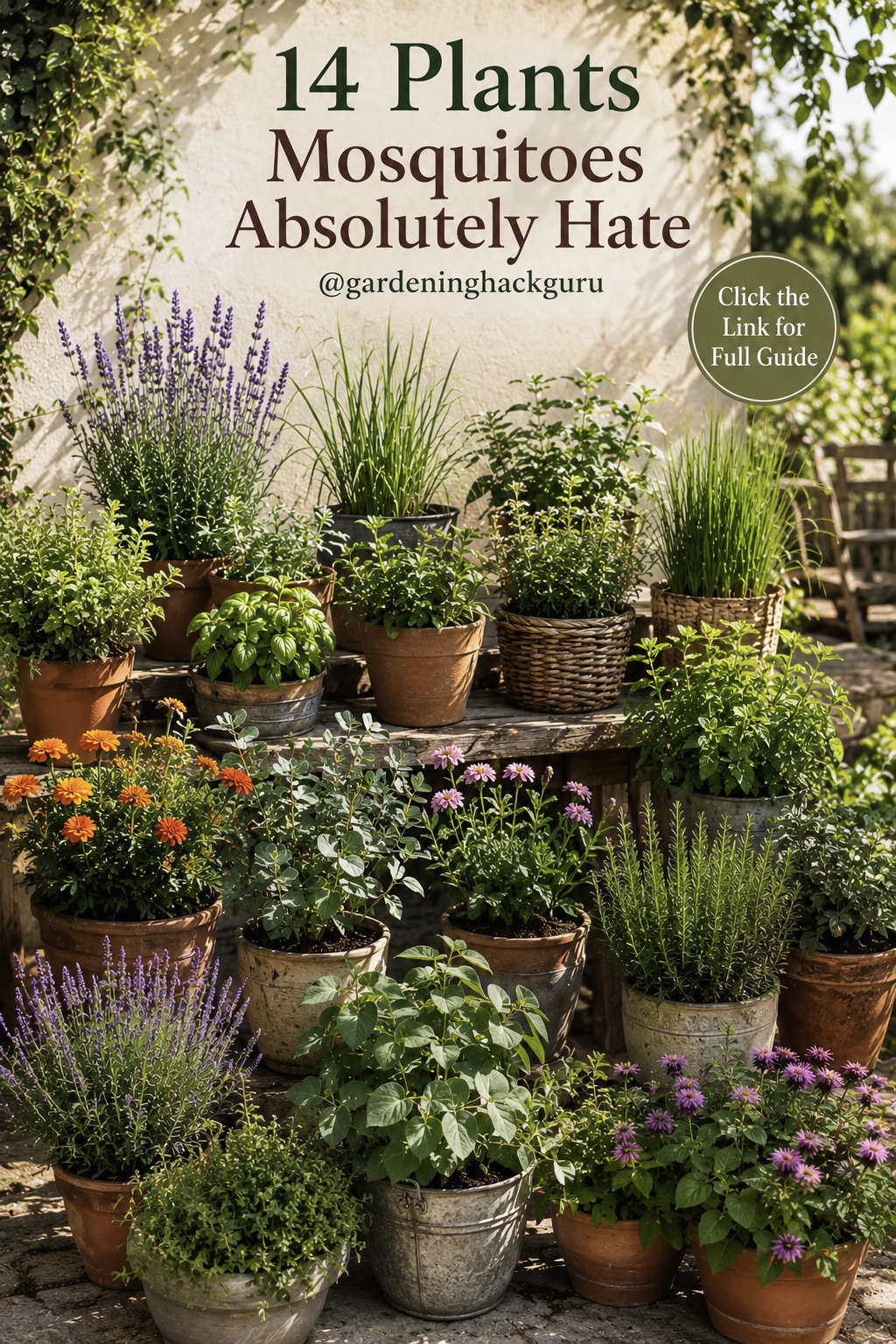
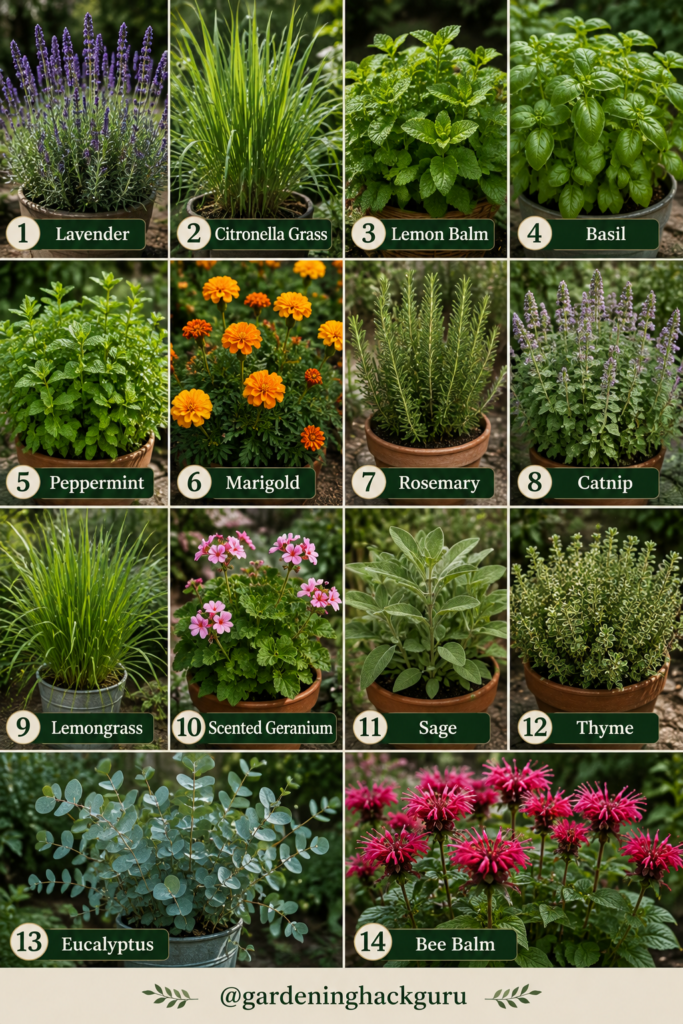
Here are 14 plants worth adding around patios, porches, balconies, garden beds, and outdoor seating areas.
1. Lavender
Lavender is one of those plants that earns its place in the garden even if mosquitoes aren’t a problem.
Its silvery-green foliage and purple flower spikes look beautiful along pathways, in raised beds, or planted in large terracotta pots. When you brush against the leaves, they release that unmistakable lavender fragrance.
Lavender contains aromatic compounds such as linalool, which are commonly associated with its strong scent.
It loves plenty of sunshine and, most importantly, well-draining soil. Lavender doesn’t appreciate constantly wet roots, so resist the temptation to water it every day.
Place pots near a sunny patio, garden entrance, or outdoor seating area where you’ll enjoy the fragrance too.
2. Citronella Grass
When people hear “citronella,” they often think of citronella candles. But citronella actually comes from aromatic grasses in the Cymbopogon family.
The plant has long, arching green leaves and can become quite large in warm conditions.
Its foliage contains fragrant oils associated with that familiar citrus-like citronella smell.
Citronella grass enjoys warmth, sunshine, and regular watering. If you live somewhere with cold winters, growing it in a large container makes it easier to move somewhere protected when temperatures drop.
It’s especially attractive in big pots around decks and patios.
3. Lemon Balm
Lemon balm looks a little like mint, but rub one of its leaves between your fingers and you’ll immediately understand the name.
It releases a fresh, lemony fragrance.
It’s also incredibly easy to grow. Sometimes, a little too easy.
Lemon balm belongs to the mint family and can spread enthusiastically once established. For a smaller garden, keeping it in a container is often the easiest option.
Put a pot near your patio or outdoor table where you can occasionally crush a leaf to release more of its citrusy aroma.
As a bonus, lemon balm leaves can also be used in teas and other recipes.
4. Basil
If you’re going to dedicate valuable patio space to a plant, you might as well grow something you can eat.
Basil is perfect for that.
The leaves naturally have a strong fragrance, and different varieties offer slightly different aromas. Classic sweet basil is an easy choice, while lemon basil can bring an extra citrus note to a container garden.
Give basil plenty of sunlight, but don’t allow the soil to become bone dry for long periods.
Keep harvesting the leaves regularly. Frequent picking encourages bushier growth and gives you a steady supply for pasta, salads, pesto, sandwiches, and summer cooking.
A few basil pots near an outdoor kitchen or dining table are both practical and pretty.
5. Peppermint
Peppermint has one of the strongest fragrances on this list.
Its leaves contain menthol and other aromatic compounds responsible for that cooling mint smell.
Peppermint is extremely forgiving and grows quickly with adequate moisture. But there’s one important thing to know before planting it:
Mint spreads. A lot.
Unless you actually want it taking over a garden bed, grow peppermint in a pot.
Place containers near doors, porches, patios, or seating areas. You can occasionally pinch or gently crush a few leaves to release more fragrance.
And, of course, you’ll have fresh mint available for tea, lemonade, fruit salads, and summer drinks.
6. Marigold
Not every mosquito-associated plant needs to be green and leafy.
Marigolds bring gorgeous shades of yellow, orange, and gold to summer gardens. Their foliage and flowers also have a distinctive smell.
They’re wonderfully easy annuals for sunny areas and work particularly well around vegetable gardens, patio containers, window boxes, and borders.
Deadhead the faded flowers throughout summer and the plants will usually keep producing more blooms.
If your mosquito-repelling garden is starting to look like one giant collection of herbs, marigolds are an easy way to add some cheerful color.
7. Rosemary
Rosemary might be one of the best patio plants you can grow.
It looks elegant, smells wonderful, handles sunny conditions well once established, and gives you fresh herbs whenever you’re cooking.
Its narrow, needle-like leaves contain strongly aromatic oils. Simply brushing against an established rosemary plant releases its familiar woody fragrance.
Rosemary prefers lots of sunlight and excellent drainage. Avoid leaving its roots sitting in soggy soil.
A large rosemary plant in an aged terracotta pot looks particularly beautiful beside an outdoor dining area or kitchen.
8. Catnip
Your cat may have a completely different reason for loving this plant.
Catnip belongs to the mint family and contains an aromatic compound called nepetalactone. Research has examined this compound for insect-repelling properties, which is one reason catnip frequently appears on mosquito-repellent plant lists.
The plant itself is relatively easy to grow and produces small flowers that can attract pollinators.
Like other members of the mint family, however, it can spread.
Growing catnip in containers gives you much more control.
And yes—if neighborhood cats discover it, you may suddenly have some very enthusiastic garden visitors.
9. Lemongrass
Lemongrass is beautiful even when you’re growing it purely as an ornamental plant.
Its tall, arching leaves add height and movement to container arrangements, particularly when surrounded by shorter flowering plants.
Crush a leaf and you’ll notice its strong lemon fragrance.
Lemongrass loves warmth and sunshine. Give it a generous container because mature plants can become surprisingly substantial.
It’s also useful in the kitchen, particularly in soups, curries, marinades, teas, and Southeast Asian dishes.
10. Scented Geranium
Scented geraniums are particularly fun because different varieties can have surprisingly different fragrances.
You’ll find varieties with lemon, rose, mint, citrus, and other aromatic notes.
The fragrance is often strongest in the foliage rather than the flowers, especially when the leaves are touched.
These plants look lovely in decorative patio pots and window boxes. Give them bright light and soil that drains well.
Lemon-scented varieties are especially popular for mosquito-themed container gardens.
11. Sage
Sage deserves more attention as an ornamental garden plant.
Its soft, gray-green leaves look beautiful alongside lavender, rosemary, and flowering plants, especially if you like a relaxed cottage-garden appearance.
The foliage contains aromatic oils that create sage’s unmistakable earthy fragrance.
Sage generally prefers plenty of sunshine and soil that doesn’t remain constantly wet.
Plant it near your kitchen garden and you’ll also have fresh leaves ready for roasted vegetables, sauces, stuffing, and autumn recipes.
12. Thyme
Thyme might be small, but don’t underestimate it.
The tiny leaves release a surprisingly strong herbal fragrance when rubbed or crushed. Thyme contains aromatic compounds including thymol.
It’s also an excellent choice if you’re short on space.
Grow it along the edge of raised beds, between stepping stones where appropriate, or in small containers mixed with other Mediterranean herbs.
Most thyme varieties prefer full sun and well-draining soil.
Once established, many types don’t need nearly as much attention as thirstier garden plants.
13. Eucalyptus
Eucalyptus brings a completely different look to the collection.
Its blue-green or silvery foliage feels modern and elegant, and the leaves have a distinctive fragrance caused by their aromatic oils.
Some eucalyptus species eventually become enormous trees, so don’t casually plant one in a tiny backyard without checking the mature size of the variety.
For patios and small spaces, suitable varieties can be grown in large containers and maintained through pruning, depending on your climate.
A potted eucalyptus also looks beautiful paired with terracotta containers and softer flowering plants.
14. Bee Balm
Finish the garden with some color.
Bee balm produces eye-catching flowers that can appear in shades of red, pink, purple, and white depending on the variety.
Its aromatic foliage belongs to the mint family, while its flowers are popular with bees, butterflies, and hummingbirds.
Bee balm generally appreciates good sunlight, although some varieties can tolerate a little partial shade. Good airflow around the plants can also help reduce common problems such as powdery mildew.
It’s an especially good addition if you’re trying to create a garden that’s useful for you while still supporting pollinators.
Where Should You Put Mosquito-Repelling Plants?
Instead of planting everything in one forgotten corner of the yard, concentrate aromatic plants around the places where you actually spend time.
Try arranging containers around your patio, deck, porch, outdoor dining area, garden bench, barbecue area, or near frequently used doors.
You could create a large mixed container with lemongrass in the center for height, lavender or rosemary around it, and thyme spilling gently around the edge. Add a few pots of marigolds nearby for color.
Another simple idea is to create a little “scent garden” beside your outdoor seating area with rosemary, lavender, basil, mint, and lemon balm.
Just remember that having these plants nearby doesn’t guarantee that mosquitoes will disappear.
Do Mosquito-Repelling Plants Actually Work?
This is where it’s worth separating a pretty Pinterest idea from what actually happens in a garden.
Many plants on this list contain compounds that have demonstrated insect-repellent properties when extracted, concentrated, crushed, or formulated appropriately. That doesn’t necessarily mean a living plant sitting quietly in a flowerpot creates a protective mosquito-free bubble around your patio.
The scent released naturally by an untouched plant may not be concentrated enough to provide reliable protection.
So think of these plants as one part of your mosquito-management strategy, rather than a replacement for proven repellents when mosquito-borne illness or heavy mosquito exposure is a concern.
They still make wonderful garden plants—and gently brushing or handling aromatic foliage can release more of their natural fragrance.
One Backyard Habit That Matters Even More
If you really want fewer mosquitoes, pay attention to standing water.
Mosquitoes need water for their immature stages, and surprisingly small collections of water can become breeding sites.
Walk around your yard regularly and check:
- Flowerpot saucers
- Buckets
- Children’s toys
- Clogged gutters
- Wheelbarrows
- Birdbaths
- Tarps
- Watering cans
- Outdoor containers
Empty unnecessary standing water and refresh water features appropriately.
This simple habit can often make a much bigger practical difference than adding another scented plant.
Create a Garden You’ll Actually Want to Sit In
The nicest thing about these 14 plants is that mosquito control doesn’t have to be the only reason you grow them.
Lavender gives you beautiful purple flowers. Rosemary, basil, thyme, sage, mint, and lemongrass can head straight into the kitchen. Marigolds bring months of cheerful color. Bee balm supports visiting pollinators. Eucalyptus provides gorgeous foliage.
Together, they can turn a plain patio into a lush, fragrant little garden.
So rather than thinking of them as fourteen magical mosquito blockers, think of them as fourteen beautiful, aromatic plants that can become part of a smarter, more enjoyable outdoor space.
And if mosquitoes hate hanging around your garden as much as you love spending time there, that’s a pretty nice bonus.