
There’s something about opening a fridge full of fresh, colorful food that makes you feel like you have your life together.
But a “glow-up fridge” isn’t about lining up expensive juices in matching bottles or buying every wellness product you see online. Most of us don’t need that.
What actually helps is having food in the fridge that makes the healthier choice the easy choice.
When berries are already washed, yogurt is sitting there for breakfast, vegetables are ready to chop, and you have something prepared for dinner, you’re much less likely to reach 7 p.m. starving with absolutely no idea what to eat.
And if you’re working on your glow-up, food deserves a place in the conversation. Your body needs protein, carbohydrates, fats, vitamins, minerals, fiber, and enough overall food to support everyday health.
So, instead of chasing a perfect “clean girl” diet, start with a fridge you actually enjoy eating from.
Here are 25 foods I’d keep stocked for an easy, realistic inside-out glow-up.
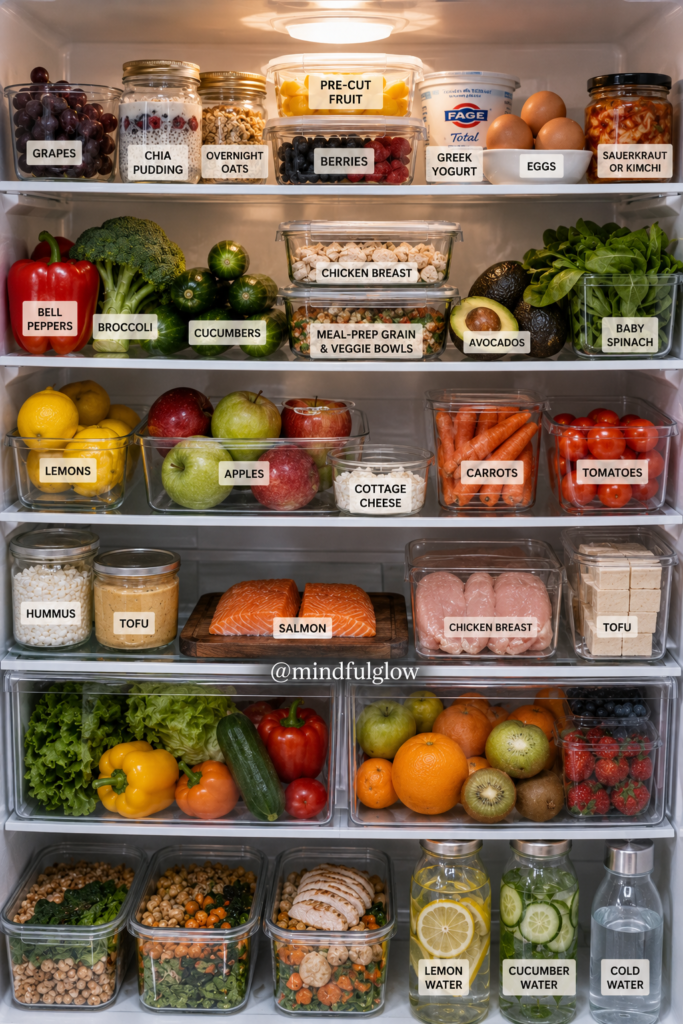
1. Greek Yogurt
Greek yogurt is one of those foods that’s useful at almost any time of day.
Add berries and nuts for breakfast, blend it into a smoothie, or use plain Greek yogurt as the base for dips and sauces.
It’s also an easy way to add protein to a meal or snack without having to cook anything.
I like keeping plain yogurt around and adding my own fruit rather than relying entirely on flavored varieties.
2. Eggs
If I had to choose one fridge staple that saves me on busy mornings, it would probably be eggs.
Scrambled eggs take minutes. You can make an omelet with leftover vegetables, add a boiled egg to a salad, or eat eggs with avocado toast.
Boil a few ahead of time and suddenly you’ve got a convenient snack waiting for you.
Simple, affordable and incredibly versatile.
3. Berries
Strawberries, blueberries, raspberries, blackberries—whatever is fresh and affordable.
Berries make an ordinary breakfast look and taste so much better.
Add them to yogurt, oatmeal, smoothies or chia pudding, or just grab a handful from the fridge.
One little trick that helps: wash and prep them when you know you’ll actually eat them soon. Food that’s easy to grab tends to disappear much faster than food hidden in the back of the fridge.
4. Avocados
Avocado toast might be a wellness cliché at this point, but there’s a reason people love it.
Avocados are creamy, satisfying and easy to add to meals.
Slice one over eggs, put it in a grain bowl, mash it onto toast or add it to a salad.
Just don’t buy six rock-hard avocados at once unless you’re prepared for all six to somehow become ripe on exactly the same afternoon.
We’ve all been there.
5. Baby Spinach
Baby spinach is one of my favorite “throw it into whatever you’re making” ingredients.
A handful can go into:
smoothies, scrambled eggs, pasta, soup, sandwiches, wraps and grain bowls.
You don’t necessarily need to sit down with an enormous bowl of raw spinach every day. Sometimes the easiest way to eat more vegetables is simply adding them to meals you’re already making.
6. Cucumbers
Few things make a fridge feel fresher than cold cucumber.
Slice it into salads, dip it into hummus, add it to sandwiches or put a few slices into cold water with lemon.
For an easy snack, chop cucumber and carrots at the beginning of the week and keep them somewhere visible.
Visibility matters more than you’d think.
If the vegetables are buried behind three takeaway containers, there’s a good chance they’re staying there.
7. Bell Peppers
Red, yellow and orange peppers instantly make meals more colorful.
Slice them for hummus, cook them with eggs, roast them for dinner, put them into wraps or toss them into stir-fries.
They’re also naturally sweet and crunchy, which makes them much easier to snack on than some vegetables.
8. Carrots
Carrots aren’t glamorous, but that’s exactly why they belong on this list.
They’re inexpensive, last relatively well in the fridge and require almost no effort.
Keep whole carrots for cooking and a container of chopped carrots for snacking.
Pair them with hummus when you want something crunchy.
9. Broccoli
Roasted broccoli is one of those side dishes I could happily make several times a week.
Add olive oil and whatever seasoning you like, roast it until the edges get slightly crispy, and suddenly broccoli feels much less like the vegetable you were forced to eat as a child.
It’s also easy to add to pasta, stir-fries and meal-prep bowls.
10. Tomatoes
Tomatoes can rescue a surprisingly boring meal.
Add cherry tomatoes to salads and grain bowls, put sliced tomato onto toast or sandwiches, or cook them with eggs.
In summer, good tomatoes barely need anything—maybe a little olive oil, salt and something fresh like basil.
11. Lemons
Lemons aren’t exactly something you’re going to sit down and eat for lunch, but I always like having a few around.
A squeeze of lemon can brighten vegetables, fish, salads, sauces and marinades.
You can also add slices to water if that makes drinking water more enjoyable for you.
Think of lemons as one of those small ingredients that makes simple food taste less boring.
12. Apples
Apples are the kind of snack that requires almost zero planning.
Wash one and you’re done.
Eat an apple on its own, slice it alongside nut butter, chop it into oatmeal or add thin slices to a salad.
Keeping a few easy grab-and-go fruits around is especially useful when you’re busy.
13. Grapes
Cold grapes straight from the refrigerator are seriously underrated.
Wash a bunch, keep them in a clear container, and you’ve got an easy sweet snack ready whenever you open the fridge.
And yes, frozen grapes are surprisingly good too.
14. Kiwi
Kiwi is another easy way to keep your fruit rotation interesting.
Slice it into yogurt bowls, serve it with breakfast or simply cut one in half and eat it with a spoon.
Eating well gets much easier when you stop forcing yourself to eat the exact same “healthy” foods every day.
Variety makes things enjoyable.
15. Cottage Cheese
Cottage cheese has become popular again, and it’s actually incredibly versatile.
You can pair it with fruit for something sweet or tomatoes, cucumber and seasoning for something savory.
It can also be blended into certain sauces and dips if you don’t love the texture on its own.
It’s another convenient protein-rich option to have ready in the fridge.
16. Chicken Breast
Having a cooked protein waiting in the fridge can make weekday meals dramatically easier.
Grill or roast a few portions of chicken and use them throughout the next few days in salads, wraps, sandwiches or grain bowls.
The trick is seasoning it properly.
Healthy food does not need to taste like sadness.
Use herbs, spices, garlic, lemon, marinades—whatever makes you genuinely want to eat it.
17. Salmon
Salmon makes an easy dinner when you want something that feels a little more special without spending hours cooking.
Pair it with rice and vegetables, add it to a bowl, or serve it with roasted potatoes and greens.
Salmon is also known for providing omega-3 fats, along with protein and other nutrients.
Keep fresh salmon only as long as recommended for safe refrigeration, or freeze portions you won’t use promptly.
18. Tofu
Even if you aren’t vegetarian, tofu is worth having in your rotation.
It absorbs flavors beautifully and works in stir-fries, curries, noodle dishes and grain bowls.
The secret is usually texture and seasoning.
Press out excess moisture when appropriate, season it properly, and cook it until the outside develops some color.
Plain, unseasoned tofu straight from the package isn’t exactly its best advertisement.
19. Hummus
Hummus makes vegetables much more exciting.
Keep a container alongside chopped carrots, cucumber and bell peppers and you have an instant snack.
It’s also great in wraps, sandwiches and bowls.
Sometimes improving your diet isn’t about removing foods.
It’s about having dips, sauces and seasonings that make nutritious foods genuinely enjoyable.
20. Sauerkraut or Kimchi
Fermented vegetables like sauerkraut and kimchi can add a lot of flavor to otherwise simple meals.
Try a small serving alongside rice bowls, eggs, sandwiches or savory breakfasts.
If you’re new to fermented foods, you don’t need to suddenly eat enormous portions because social media told you they’re magical.
Start with foods and amounts you genuinely enjoy.
21. Chia Pudding
Chia pudding is perfect for mornings when you’re already running late.
Make it the night before and refrigerate it.
In the morning, add berries, banana, nuts, seeds or whatever toppings you like.
You can prepare a couple of jars at once so breakfast is already handled for the next few days.
That’s the kind of meal prep I actually like—minimal effort, noticeable payoff.
22. Overnight Oats
Another breakfast worth preparing ahead.
Combine oats with milk or your preferred alternative, then customize from there.
Add yogurt, chia seeds, cinnamon, berries, banana or nut butter.
Leave it in the fridge overnight and breakfast is waiting when you wake up.
No 6 a.m. cooking required.
23. Pre-Cut Fruit
Yes, whole fruit is usually cheaper.
But sometimes convenience wins.
If buying or preparing a container of cut pineapple, melon, mango or mixed fruit means you’ll actually eat fruit instead of letting it sit untouched, that’s useful.
You can also prep your own after grocery shopping.
The point isn’t having an Instagram-worthy fridge.
It’s making the foods you want to eat easy to eat.
24. Meal-Prepped Grain & Veggie Bowls
This is one of the best things you can do for your future hungry self.
Prepare a few components rather than seven identical meals.
For example:
Cook rice or quinoa.
Roast vegetables.
Prepare chicken, tofu or another protein.
Wash greens.
Make a simple dressing.
Then mix and match everything throughout the week.
One day it becomes a grain bowl. Another day it goes into a wrap. Another night you add an egg and completely change it.
Meal prep doesn’t have to mean eating the exact same lunch five days in a row.
25. Cold Water or Unsweetened Infused Water
This might sound ridiculously obvious, but keeping cold water ready makes hydration more convenient.
If plain water isn’t appealing, try adding lemon, cucumber, mint, berries or citrus slices for flavor.
You don’t need a cabinet full of expensive wellness drinks to have a “healthy fridge.”
Sometimes the least exciting option is also the one you’ll use every day.
How I’d Actually Organize a Glow-Up Fridge
You don’t need to transfer every grocery item into an aesthetically pleasing glass container.
That’s Pinterest talking.
Instead, organize your fridge according to what you’ll actually use.
Put ready-to-eat fruit and vegetables somewhere visible.
Keep yogurt, boiled eggs, hummus and easy snacks together.
Store prepared meal components where you can see them.
Keep raw foods appropriately contained and separated to reduce cross-contamination.
And don’t overbuy just because a completely full fridge looks pretty.
A fridge full of vegetables that end up in the trash isn’t healthier—or cheaper—than buying exactly what you’ll eat.
The Sunday Fridge Reset I Actually Recommend
Before grocery shopping, spend ten minutes looking through your refrigerator.
Throw away anything that’s spoiled.
Check what needs to be eaten soon.
Wipe obvious spills.
Then plan a few meals around what you already have.
After shopping, do a small amount of prep.
Wash or portion foods where appropriate.
Chop a few vegetables.
Prepare one protein.
Cook one grain.
Make overnight oats.
Boil some eggs.
That’s enough.
You don’t need to spend your entire Sunday cooking 21 perfectly portioned meals.
The goal is simply to make Monday easier.
Your Glow-Up Doesn’t Come From One “Perfect” Food
This is worth saying because wellness content can make nutrition unnecessarily complicated.
No single food is going to give you perfect skin, endless energy, amazing hair and a completely transformed body.
And eating one dessert isn’t going to ruin your progress either.
Your overall habits matter much more.
Eat a varied diet.
Move your body.
Drink enough fluids.
Sleep.
Manage stress where you can.
Take care of yourself.
Enjoy your food.
And if you have specific nutritional or medical needs, get individualized advice from an appropriate healthcare professional rather than building your diet around whatever happens to be trending online.
A real glow-up shouldn’t make you afraid of food.
It should help you feel better cared for.
The Ultimate Glow-Up Fridge Is Actually Pretty Simple
When you strip away all the aesthetic packaging, expensive juices and perfectly organized containers, the idea is incredibly ordinary.
Keep foods around that make it easier to feed yourself well.
Berries you can grab.
Vegetables you actually enjoy.
Eggs for rushed mornings.
Yogurt for easy breakfasts.
Protein ready for dinner.
Fruit when you want something sweet.
Meal-prepped ingredients when you don’t feel like cooking.
Cold water waiting for you.
That’s it.
Your fridge doesn’t need to look like an influencer’s fridge.
It needs to work for your life.
And perhaps that’s the best kind of glow-up: not creating a lifestyle that photographs beautifully for one afternoon, but building little systems that quietly take better care of you every single day.