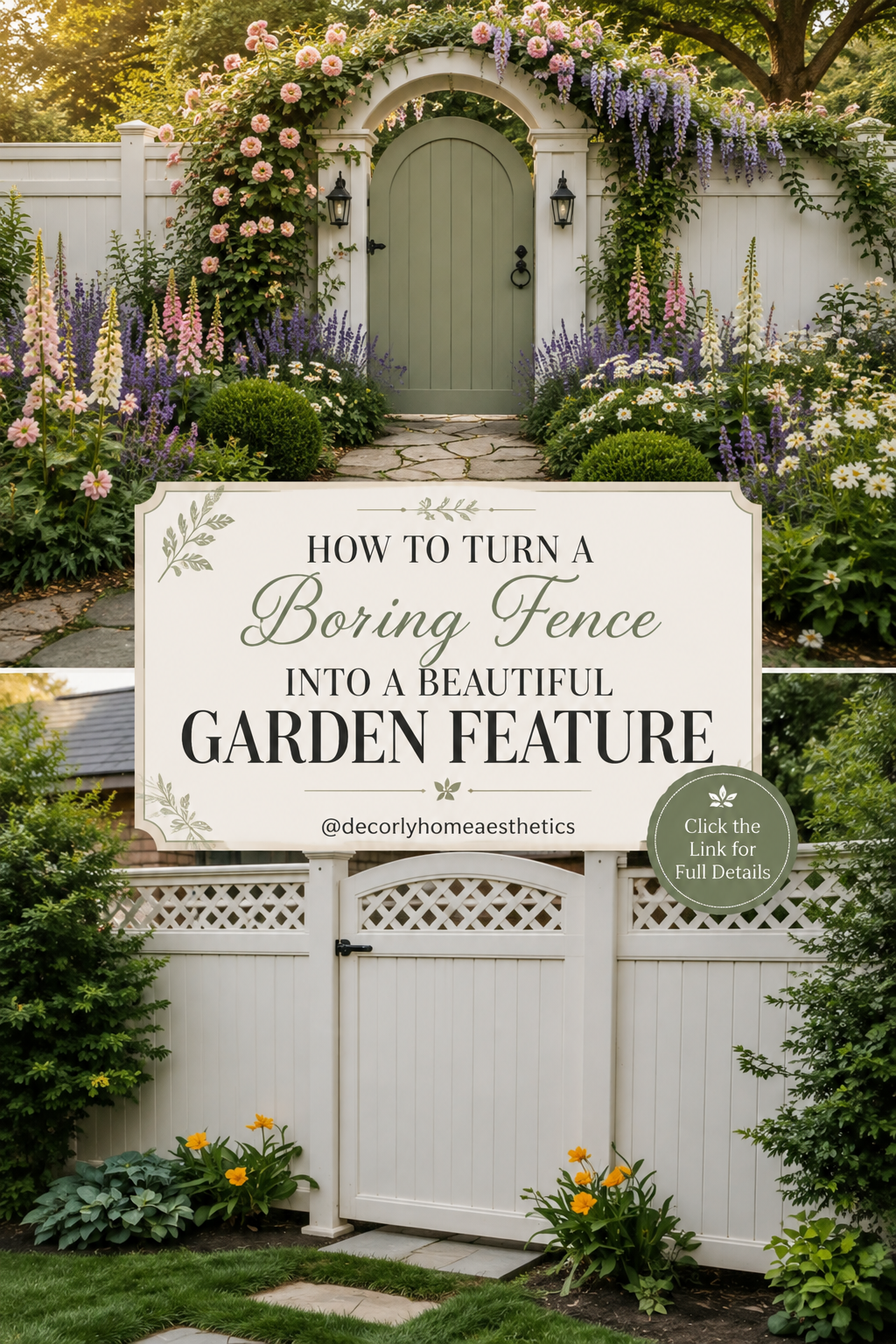
A backyard fence is practical—it provides privacy, defines your property, and creates a backdrop for outdoor living. But a large stretch of plain wood or vinyl can also make an otherwise beautiful garden feel unfinished.
The good news is that your fence doesn’t have to remain a boring boundary.
With thoughtful landscaping, climbing plants, a beautiful gate, subtle lighting, and a few architectural details, an ordinary fence can become one of the most attractive features in your backyard. You don’t necessarily need to replace it, either. Many of the most effective transformations involve working with the fence you already have.
Whether you love romantic English gardens, modern landscaping, or relaxed cottage style, here are 12 beautiful ways to turn a plain fence into something worth looking at.
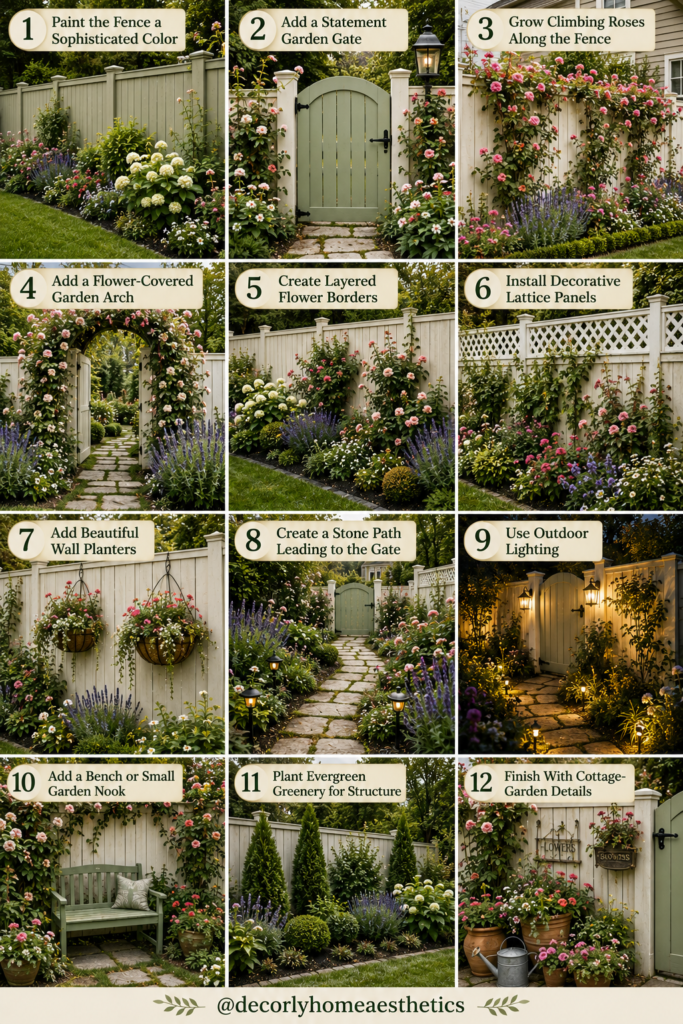
1. Paint the Fence a Sophisticated Color
Sometimes the simplest transformation is also the most dramatic.
If your wooden fence is structurally sound but looks tired, a new finish can completely change its appearance.
For a romantic cottage garden, consider soft sage green, muted olive, warm white, or creamy beige. These colors blend beautifully with flowers and foliage.
For something more contemporary, charcoal or deep green can create a dramatic backdrop that visually pushes the fence into the landscape.
Before painting or staining, properly clean and prepare the surface and choose an exterior product appropriate for the fence material and your climate.
The goal isn’t necessarily to make the fence the star. Often, the best color allows the landscaping in front of it to shine.
2. Add a Statement Garden Gate
If your fence includes an entrance, turn the gate into a focal point.
Instead of a basic rectangular gate, consider a softly arched design with vertical wood boards and traditional black hardware.
A sage-green garden gate surrounded by a warm-white fence is particularly beautiful for an English-inspired backyard.
Add a substantial handle, decorative hinges, or simple architectural trim.
Then frame the entrance with flowers and greenery.
The gate becomes more than something you walk through—it creates anticipation about the garden beyond.
3. Grow Climbing Roses Along the Fence
Climbing roses can soften a hard fence beautifully.
Rather than allowing plants to grow without support, install an appropriate trellis or wire system slightly away from the fence so the plants can be trained properly and air can circulate.
Blush pink, creamy white, pale peach, and soft apricot roses are especially beautiful against sage, white, or natural timber.
You don’t need to cover the entire fence.
A few carefully positioned climbers can break up large expanses of plain fencing while leaving enough visible structure to keep the garden from feeling overwhelmed.
Always choose rose varieties suitable for your climate, available sunlight, and growing conditions.
4. Frame the Gate With a Flower-Covered Arch
Want to make an ordinary backyard entrance feel like something from a secret garden?
Add an arch.
Position a simple wooden or metal garden arch around the gate and train suitable climbing plants over it.
Roses are a classic choice, while clematis and other locally appropriate flowering climbers can provide additional color and texture.
Allow the planting to feel slightly informal rather than trimming everything into perfect symmetry.
Then create a stone pathway leading toward the arch.
Suddenly, the fence isn’t just defining the backyard—it’s creating an architectural destination.
5. Create Deep, Layered Flower Borders
One of the best ways to make a fence disappear into the landscape is to plant in front of it.
Instead of creating one narrow row of identical flowers, make the bed deeper and use plants of several heights.
Place taller shrubs and climbers toward the back.
Use medium-height flowering plants through the center, then finish the front with smaller perennials and groundcovers.
Depending on your climate, an English-inspired palette might include roses, hydrangeas, lavender, salvia, daisies, ornamental grasses, foxgloves, and other cottage-style plants.
Choose species appropriate for your local conditions rather than relying solely on appearance.
The goal is to create layers so your eye sees a garden first and the fence second.
6. Install Decorative Lattice Panels
If your fence feels heavy or visually flat, lattice can introduce architectural interest.
A narrow lattice section across the top of a privacy fence makes the structure feel lighter while preserving much of its screening function.
You can also install decorative trellis panels on selected sections rather than changing the entire fence.
Train climbing plants across them or leave some panels exposed as architectural details.
For a cohesive appearance, paint the lattice the same color as the fence.
White and cream feel classic, sage creates a softer cottage look, and dark charcoal can look especially sophisticated in a contemporary garden.
7. Add Beautiful Wall Planters
Not every backyard has room for deep flower borders.
If your fence runs alongside a narrow patio or pathway, vertical planters can introduce greenery without using much ground space.
Choose understated containers rather than covering every inch of fencing.
Terracotta pots, weathered metal planters, simple wooden boxes, or matte neutral containers can all work beautifully.
Fill them with trailing greenery, herbs, or flowers appropriate for the available sunlight.
Position them at slightly different heights for a relaxed composition.
Remember that containers attached to fences need secure mounting, appropriate drainage, and manageable weight—especially after watering.
8. Create a Stone Path Leading Toward the Gate
A beautiful gate becomes even more effective when the landscaping guides your eye toward it.
Instead of a perfectly straight concrete walkway, consider a gently curving path made from flagstone, stepping stones, brick, or gravel.
Plant lavender, low-growing flowers, ornamental grasses, or other soft greenery along the edges.
Allow a few plants to overlap the pathway slightly for a more established appearance while keeping the walking surface safe and accessible.
The combination of stone pathway + flower borders + statement gate can make a very ordinary fence look like part of a professionally designed garden.
9. Transform the Fence With Outdoor Lighting
Don’t design your fence only for daylight.
Thoughtful lighting can make it beautiful after sunset too.
Install warm outdoor-rated sconces near a gate or entertaining area, or use subtle landscape lights to illuminate plants growing along the fence.
You can also uplight a particularly beautiful climbing rose, ornamental tree, or architectural trellis.
Avoid lining the entire fence with extremely bright fixtures.
A few carefully positioned pools of warm light usually look much more sophisticated.
Outdoor electrical fixtures should always be suitable for their location and installed according to applicable electrical requirements.
10. Create a Cozy Fence-Side Garden Nook
If you have an unused stretch of fencing, turn it into somewhere you actually want to spend time.
Place a simple weathered-wood or wrought-iron garden bench against it.
Add a trellis behind the bench and train roses or greenery upward.
Surround the seating area with lavender, hydrangeas, roses, ornamental grasses, and large terracotta pots.
A small side table or lantern can complete the space.
For additional character, create a small gravel or flagstone area beneath the seating.
Instead of being a forgotten boundary, the fence now becomes the backdrop for a peaceful garden retreat.
11. Use Evergreen Greenery for Year-Round Structure
Flowers are beautiful, but many disappear during colder months.
Evergreen planting helps your fence transformation continue looking intentional throughout the year.
Use clipped shrubs, small evergreen trees, or other locally appropriate structural plants between flowering varieties.
Rounded boxwood-style forms can provide classic English-garden character, while looser evergreen shrubs can create a more natural appearance.
Think of evergreen plants as the garden’s framework.
During spring and summer, flowers become the stars. When those blooms fade, the structural greenery keeps the border from looking completely empty.
12. Finish With Cottage-Garden Details
Once the major landscaping is complete, add a few carefully chosen finishing touches.
This might include an aged terracotta pot beside the gate, traditional black gate hardware, a vintage-inspired lantern, a small birdbath, or natural stone edging.
The important word is few.
Trying to decorate every section of the fence can quickly make the backyard feel cluttered.
Instead, choose details that look as though they belong naturally in the garden.
For an English cottage aesthetic, materials such as terracotta, weathered wood, aged metal, natural stone, and woven textures work particularly well.
A Beautiful Color Palette to Try
If you want a romantic but sophisticated backyard, try building your fence transformation around:
Soft Sage + Warm White + Blush Pink + Lavender + Cream + Fresh Green + Weathered Stone
Use sage for the gate, warm white for the fence or arch, and let the flowers provide most of the color.
Natural stone pathways and aged terracotta containers prevent the palette from becoming too sweet.
The result feels fresh and romantic while remaining timeless.
How to Make a Fence Look Expensive Without Replacing It
You don’t necessarily need an expensive custom fence.
Focus your budget on the details people notice most.
Refresh the existing finish first. Then upgrade the gate hardware or create one beautiful entrance.
Instead of landscaping the entire fence immediately, start with one focal area—perhaps the gate and the first few feet on either side.
Add a deeper flower border and one climbing plant.
Then introduce a pathway or simple lighting.
A relatively plain fence surrounded by mature, thoughtfully layered landscaping can often look more impressive than an expensive fence standing alone.
Avoid Making Everything Too Perfect
If you’re creating an English cottage or romantic garden aesthetic, a little imperfection actually helps.
Let roses spill slightly beyond their supports.
Mix flower heights.
Allow stone to weather naturally.
Use terracotta pots that develop character over time.
A backyard where every shrub is identical and every plant is perfectly spaced can feel more formal than romantic.
The goal is controlled abundance—a garden that looks established and natural while still being thoughtfully maintained.
Think Beyond the Fence
The best transformations don’t treat the fence as an isolated object.
Connect it visually to the rest of your backyard.
If your patio uses natural stone, repeat that stone in the path toward the gate.
If your outdoor furniture contains sage-green cushions, consider using a similar shade on the gate.
Repeat plants from other garden beds along the fence.
These small connections make the entire backyard feel intentionally designed rather than like several unrelated projects.
Final Thoughts
A boring fence can become much more than a privacy screen.
With the right combination of paint, planting, pathways, architecture, and lighting, it can become the backdrop that brings your entire garden together.
Start with a sophisticated fence or gate color. Introduce climbing roses and layered planting. Add a beautiful arch or trellis, create a stone pathway, and use warm lighting to bring everything to life in the evening.
You don’t have to do everything at once.
Even transforming one section—such as creating a sage-green gate beneath a rose-covered arch surrounded by lavender and cottage flowers—can dramatically change how your backyard feels.
Instead of trying to hide your fence, make it part of the garden.
Over time, as plants mature and flowers begin climbing across it, that once-boring boundary may become one of your favorite features in the entire backyard.