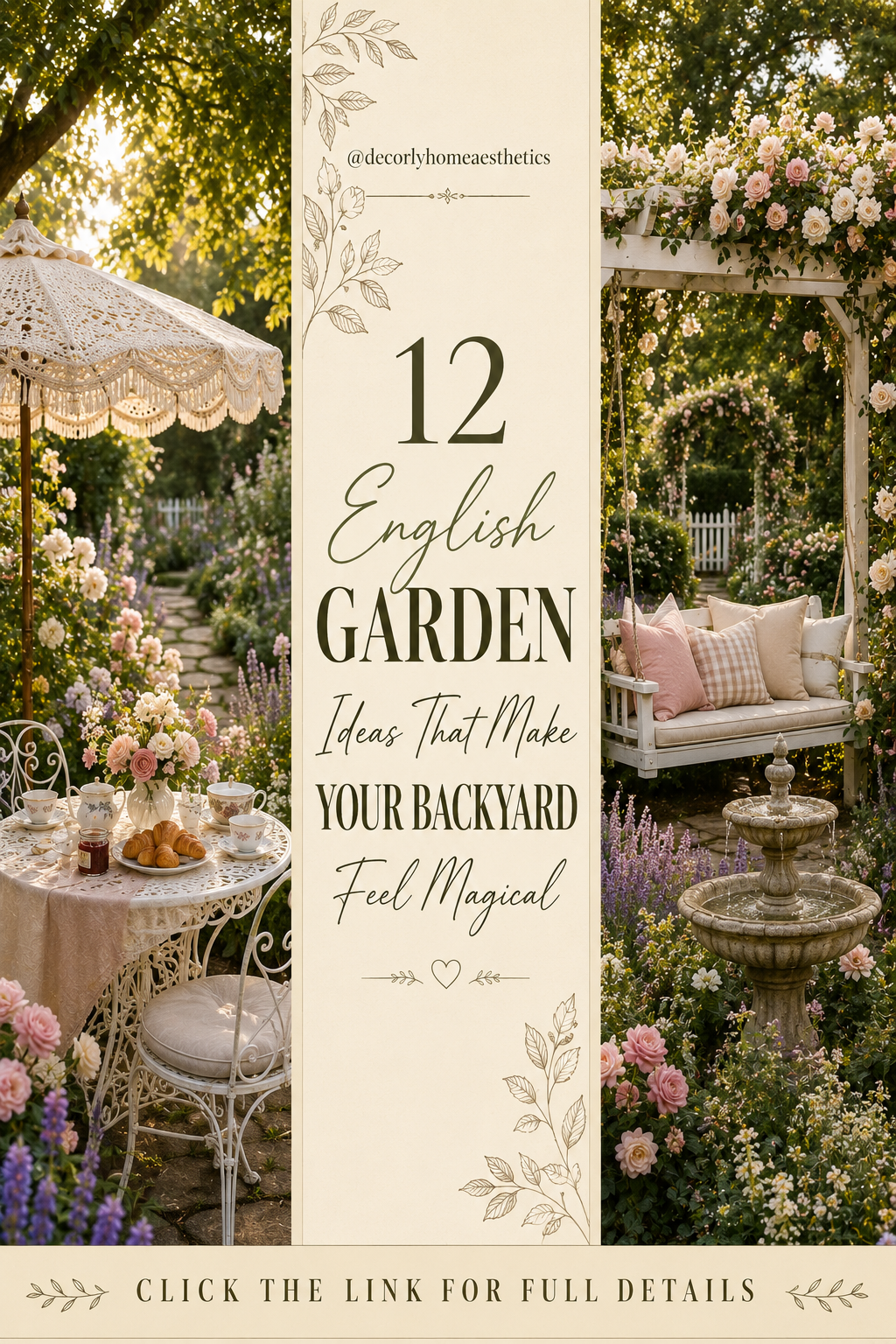
There is something unforgettable about an English garden. Unlike landscapes that depend on perfect symmetry and carefully separated plants, English gardens feel romantic, abundant, and wonderfully lived-in. Roses spill over fences, stone paths disappear between flowers, and quiet seating areas invite you to stay outside just a little longer.
The best part is that you don’t need a huge countryside property to recreate the feeling. Many English garden elements work beautifully in American backyards, including smaller suburban spaces. The secret is combining layers of flowers, natural materials, winding pathways, vintage-inspired furniture, and a few architectural features that make the garden feel established.
If you want your backyard to feel like a peaceful retreat from another world, these 12 English garden ideas are a beautiful place to start.
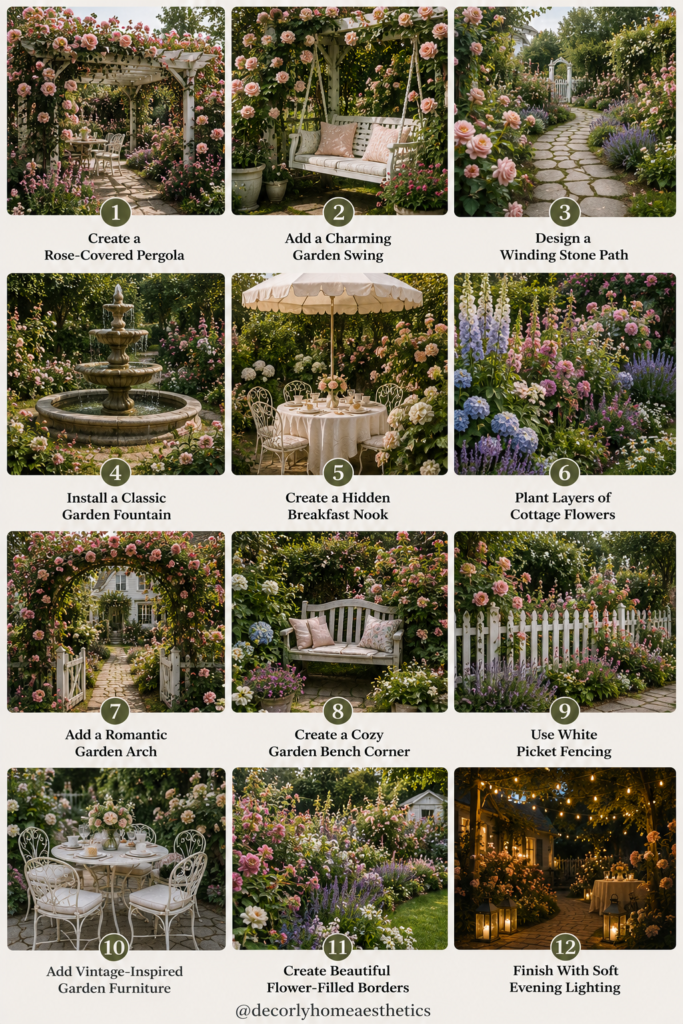
1. Create a Rose-Covered Pergola
Few garden features feel as romantic as a pergola covered in climbing roses.
A simple white-painted or natural-wood pergola immediately gives a backyard architectural character. Once climbing plants begin growing across the posts and overhead beams, the structure starts to blend beautifully into the landscape.
Choose climbing roses in soft shades such as blush pink, creamy white, or pale peach for a classic English-country appearance.
Underneath the pergola, create a comfortable seating area with a garden bench, small dining table, or outdoor sofa.
You don’t need to completely cover the structure with flowers. In fact, allowing some of the timber to remain visible often makes the garden look more natural.
2. Add a Charming Garden Swing
A garden swing creates the kind of hidden destination that makes a backyard feel special.
Suspend one beneath a sturdy, appropriately designed structure such as a pergola, or choose a freestanding garden swing positioned among flowering plants.
Use neutral outdoor cushions as your foundation and introduce subtle patterns through gingham, stripes, or small florals.
Then surround the area with roses, hydrangeas, lavender, and lush greenery.
The goal is to make the swing look as though the garden has slowly grown around it over many seasons.
Add a small side table nearby for tea, coffee, or a book, and you’ll have a cozy retreat you’ll actually use.
3. Design a Winding Stone Path
Perfectly straight pathways can make a backyard feel formal. English gardens often benefit from something softer.
Create a gently curving path using irregular flagstone, reclaimed-style brick, gravel, or natural stepping stones.
Rather than revealing the entire garden at once, allow the pathway to disappear slightly behind plants or curve around a tree.
That little sense of mystery makes even a relatively small backyard feel more interesting.
Plant flowers close to the edges so they soften the hard landscaping. Creeping thyme and other suitable low-growing plants can help create the impression of an older, established pathway.
4. Install a Classic Garden Fountain
Water introduces both movement and sound into a garden.
A traditional tiered stone fountain works particularly well with English-inspired landscaping because it provides a formal focal point that contrasts beautifully with informal cottage planting.
Position the fountain where it can be enjoyed from a patio, kitchen window, or garden bench.
Surround it with roses, ornamental grasses, lavender, and lower-growing greenery rather than leaving it isolated in the middle of an empty lawn.
Weathered or aged-looking stone tends to feel more natural than an extremely glossy finish.
You can also use a smaller wall fountain or simple stone basin if your backyard doesn’t have room for a large centerpiece.
5. Create a Hidden Breakfast Nook
One of the most charming ways to enjoy a garden is to create a tiny destination specifically for slow mornings.
Place a small round bistro table in a quiet corner beneath a tree or elegant garden parasol.
White or softly weathered wrought-iron furniture works beautifully for this look.
Surround the table with flowering shrubs and cottage flowers so the seating feels tucked into the landscape rather than sitting on an exposed lawn.
For styling, keep things simple: a linen tablecloth, ceramic cups, a small vase of fresh flowers, and perhaps a basket for breakfast.
A fringed or scalloped ivory parasol can add an especially romantic finishing touch.
6. Plant Layers of Cottage Flowers
The flowers are what truly bring an English garden to life.
Instead of planting one flower variety in rigid rows, create layered beds with different heights, textures, and bloom shapes.
Roses can provide structure, while plants such as foxgloves and delphiniums introduce height. Lavender, salvia, daisies, and other suitable flowering perennials can fill the middle and lower layers.
Hydrangeas can add large clouds of color in locations where their growing requirements are met.
Choose plants appropriate for your USDA hardiness zone, sunlight, soil, and local climate rather than selecting them purely for appearance.
A successful cottage border should feel abundant, but it still needs thoughtful planning behind the scenes.
7. Add a Romantic Garden Arch
A garden arch instantly creates the feeling that you’re entering another part of the yard.
Position one over the beginning of a pathway, between two garden areas, or near a gate.
Train climbing roses or another suitable flowering vine around the structure.
A white-painted wooden arch creates a classic cottage look, while black metal or weathered iron feels slightly more traditional.
Allow plants to grow naturally around the arch rather than keeping every branch perfectly trimmed.
Beyond the arch, place something worth discovering—a bench, fountain, breakfast table, or another flower-filled pathway.
This creates depth and encourages people to explore the garden.
8. Create a Cozy Garden Bench Corner
Not every seating area needs to be large.
Sometimes one carefully positioned bench can be more charming than an entire outdoor furniture set.
Tuck a classic wooden or wrought-iron bench beneath a mature tree or between flowering shrubs.
Place it where you can enjoy a particularly beautiful view of the garden.
A neutral outdoor cushion can make the seat more comfortable, while a small lantern or side table adds functionality.
Surrounding the bench with flowers helps it feel integrated into the landscape.
If the area receives afternoon shade, it can become one of the most relaxing places in the backyard during summer.
9. Use White Picket Fencing
White fencing and cottage gardens are a timeless combination.
A picket fence can define a garden without visually closing it off. It’s particularly beautiful when roses and other flowering plants grow alongside it.
Use fencing to frame a vegetable garden, separate the lawn from flower beds, or create a charming entrance with a small gate.
You don’t necessarily need to fence the entire backyard.
Even one short decorative section behind a flower border can introduce the cottage aesthetic.
Allow plants to overlap the fence slightly rather than keeping everything perfectly separated. That softness is part of the English garden character.
10. Bring in Vintage-Inspired Garden Furniture
Furniture can completely change the personality of an outdoor space.
For an English-inspired garden, look for pieces that feel timeless rather than ultra-contemporary.
Wrought-iron bistro sets, wooden benches, woven garden chairs, and softly weathered tables are excellent options.
Keep cushions primarily neutral and add small amounts of dusty pink, sage, pale blue, or subtle floral patterns.
Avoid buying too many matching pieces.
A garden often feels more authentic when furniture looks thoughtfully collected rather than purchased as one complete set.
Vintage-inspired doesn’t have to mean old or fragile, either. Many modern outdoor pieces recreate traditional shapes using more weather-resistant materials.
11. Create Abundant Flower-Filled Borders
One of the easiest ways to capture the English garden aesthetic is to reduce large empty areas and create deeper planting beds.
Instead of lining a fence with one narrow row of identical shrubs, layer several types of plants.
Place taller shrubs and climbers toward the back, medium-height flowers through the middle, and smaller plants near pathways.
Repeat certain plants and colors throughout the border so the garden still feels cohesive.
Soft pink, lavender, creamy white, muted blue, and fresh green make a particularly romantic combination.
Remember to consider bloom times too. Combining plants that flower at different points in the season helps prevent the garden from looking spectacular for two weeks and empty afterward.
12. Finish With Soft Evening Lighting
An English garden shouldn’t disappear when the sun goes down.
Thoughtful lighting can create an entirely different atmosphere in the evening.
Use warm, subtle illumination rather than extremely bright outdoor lights.
Small pathway lights can make winding paths easier to navigate, while lanterns around seating areas create a cozy glow.
String lights can work beautifully around a pergola or outdoor dining area when used sparingly.
You can also highlight one or two special features, such as a mature tree, fountain, or rose-covered arch.
The objective isn’t to illuminate every plant. Leave some areas darker so the garden retains its depth and mystery.
How to Get the English Garden Look in an American Backyard
You don’t need to copy a historic British garden exactly.
Instead, borrow its most recognizable design principles and adapt them to your property.
Start with a simple structure: perhaps a curved pathway leading toward a bench or pergola. Then gradually build flower borders around it.
Choose plants based on your local growing conditions. A flower that thrives in an English climate may struggle in a hot, dry, or humid part of the United States, so look for locally suitable alternatives that provide a similar color, shape, or texture.
Natural materials are another important element.
Stone, gravel, brick, timber, iron, terracotta, and woven materials generally blend into a garden more gracefully than excessive plastic or brightly colored décor.
Let the Garden Feel Slightly Imperfect
Perhaps the most important lesson from English gardens is that everything doesn’t need to look perfectly controlled.
Allow roses to lean slightly over pathways.
Let flowers overlap one another.
Mix different heights rather than arranging every plant in perfect rows.
Allow some natural patina to develop on terracotta pots, stone, and outdoor furniture.
Of course, an abundant garden still requires maintenance. Plants need pruning, weeds need managing, pathways need care, and aggressive species should be controlled.
The aim is intentional informality, not neglect.
Create Little Destinations
A magical garden gives you reasons to move through it.
Instead of placing every feature around one central patio, create several small destinations.
Perhaps the path first passes a fountain, then reaches a rose-covered arch. Beyond it might be a hidden bench, and farther away could be a small breakfast table beneath a parasol.
These areas don’t have to be large.
Creating visual layers and partially hiding certain features can make a modest backyard seem significantly more expansive.
It also turns the garden into somewhere you experience rather than simply look at from the house.
Final Thoughts
Creating an English-inspired backyard isn’t about achieving perfection. It’s about building a garden with romance, character, layers, and places to linger.
Start with one or two structural elements—a winding stone path, rose-covered pergola, fountain, or garden arch—and gradually surround them with abundant planting.
Add a breakfast nook for quiet mornings, a bench hidden among flowers, or a comfortable swing beneath climbing roses.
Then let nature soften everything over time.
With beautiful flowers, natural materials, vintage-inspired furniture, and warm evening lighting, even an ordinary backyard can begin to feel like an enchanting countryside escape.
The result should feel as though the garden has always been there—and like there’s always another beautiful corner waiting just around the bend.