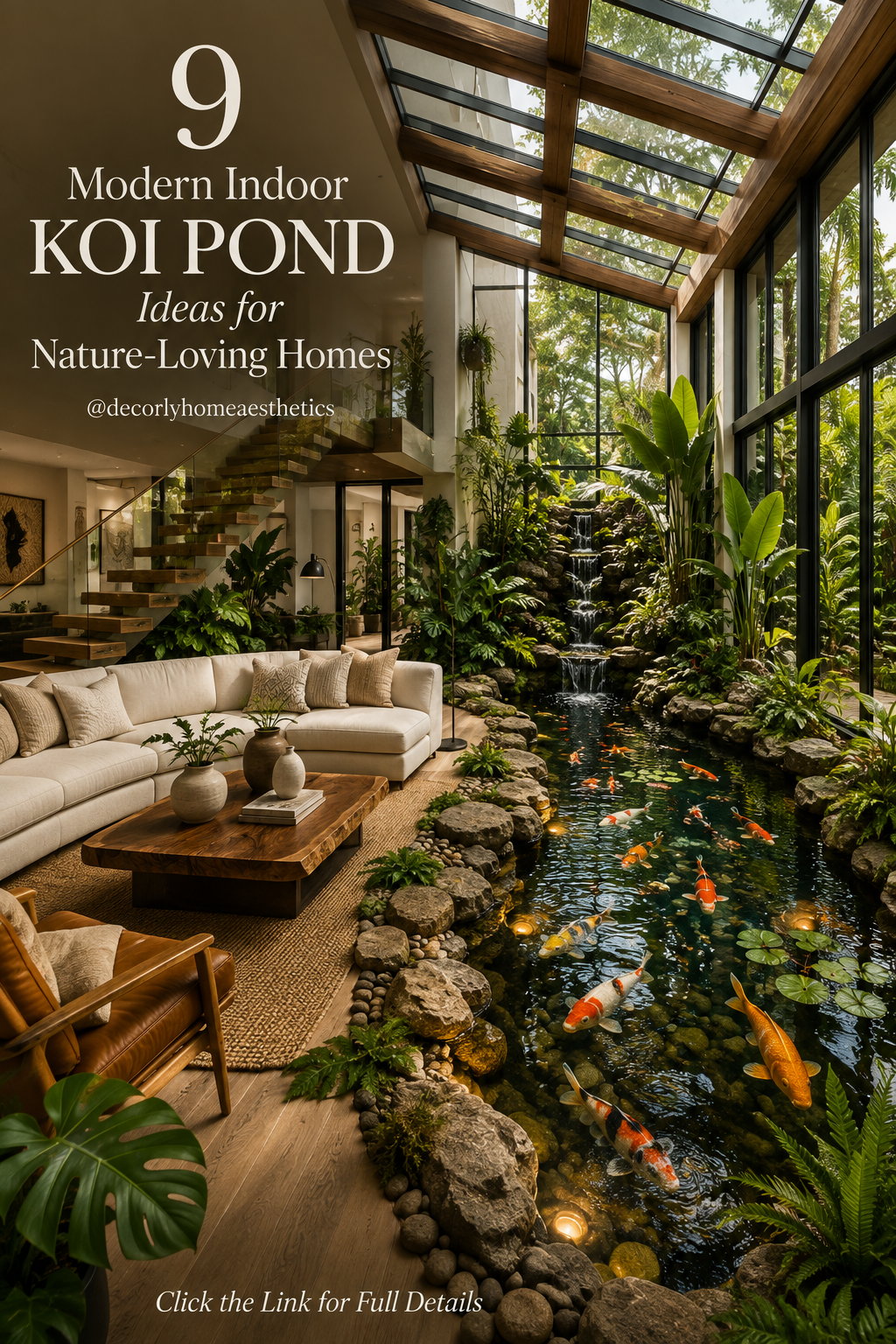
Bringing nature indoors has become one of the most beautiful ways to make a home feel peaceful, restorative, and unique. While houseplants and natural materials can transform a room, an indoor koi pond takes biophilic design to an entirely different level.
Imagine relaxing in your living room beside gently moving water, surrounded by lush greenery while colorful koi glide beneath the surface. The combination of water, plants, natural stone, wood, and sunlight can make an ordinary interior feel more like a private botanical retreat.
Modern indoor koi ponds can also become extraordinary architectural features. From ponds beneath floating staircases to dramatic glass walkways and tropical indoor gardens, there are many ways to incorporate water into contemporary homes.
However, koi are living animals rather than decoration. A beautiful indoor pond must also provide adequate swimming space, filtration, oxygenation, water quality, and long-term maintenance access.
Here are nine modern indoor koi pond ideas for nature-loving homes.
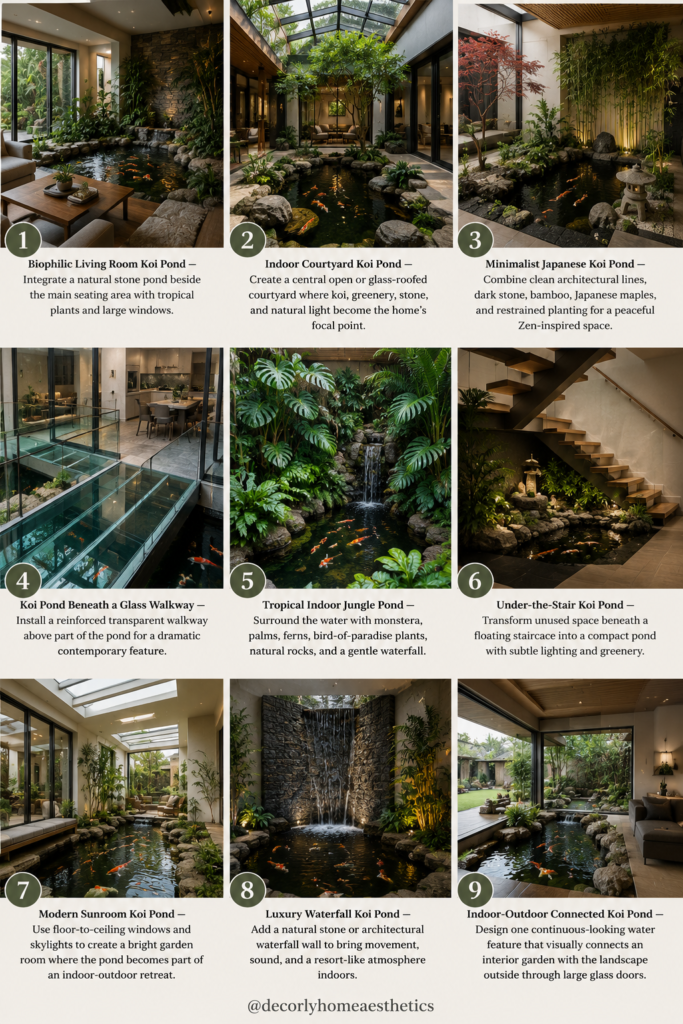
1. Create a Biophilic Living Room Koi Pond
One of the most impressive approaches is integrating the pond directly into the main living space.
Instead of placing a small decorative water feature in the corner, design a long pond beside the sofa or seating area. A gently curved shape can make it resemble a natural stream flowing through the house.
Use irregular stone edges, smooth river rocks, ferns, monstera, palms, and other architectural plants to soften the transition between water and living space.
Keep the furniture relatively neutral. Cream sofas, natural oak flooring, walnut tables, linen fabrics, and woven rugs allow the water and greenery to become the stars of the room.
Large windows make this concept even more spectacular because the indoor plants can visually connect with the landscape outside.
2. Design an Indoor Courtyard Around the Pond
If your home’s layout allows it, consider making the koi pond the centerpiece of an indoor courtyard.
A central courtyard surrounded by glass can provide beautiful views of the water from multiple rooms while keeping the pond physically separated from primary walking areas.
Introduce a skylight or glass ceiling above the courtyard to bring in natural daylight.
Combine the pond with carefully selected plants, natural stone, one sculptural tree, and perhaps a simple bench.
The result can feel like a peaceful private garden hidden within the architecture of the home.
3. Go Minimal With a Japanese-Inspired Pond
Indoor koi ponds don’t have to be surrounded by dense tropical plants.
For a calmer, more minimalist aesthetic, take inspiration from Japanese gardens. Use dark natural stone, restrained planting, clean architectural lines, and carefully positioned rocks.
Rather than filling every corner, leave intentional negative space.
Bamboo accents, Japanese-inspired maples where indoor conditions permit, moss-like textures, timber screens, and simple ceramic pieces can complement the design.
The contrast between minimalist architecture and brightly patterned koi makes the fish especially striking.
Soft lighting is important here. Instead of illuminating the entire room intensely, use subtle accent lighting around architectural features and gentle underwater illumination where appropriate.
4. Add a Glass Walkway Over the Water
For a dramatic contemporary statement, incorporate a professionally engineered glass walkway over part of the pond.
This creates the impression of walking above the water while koi swim underneath.
A glass bridge works especially well between two areas of an open-plan home or across a narrow section of a larger pond.
Keep the surrounding architecture clean and sophisticated so the feature doesn’t become visually overwhelming. Natural stone, walnut, black steel, and glass work beautifully together.
Safety and engineering are critical with this concept. Any walkable glass structure must be properly designed and installed for its intended load, grip, drainage, and environment.
5. Create a Tropical Indoor Jungle Pond
For nature lovers who prefer lush spaces, transform the pond area into a sophisticated indoor tropical garden.
Surround the water with monstera, bird-of-paradise, palms, ferns, philodendrons, and other plants suited to the home’s actual light and humidity conditions.
Add large natural stones and a small waterfall to introduce movement.
The key is making the planting look organic rather than overly staged. Combine different leaf sizes and plant heights, and allow some greenery to soften the edges of the pond.
Floor-to-ceiling windows or skylights can make this design especially beautiful.
The final space should feel like a luxury tropical resort—but still function as a comfortable home.
6. Transform the Space Beneath the Stairs
The area beneath a staircase is often underused, making it an interesting location for a compact indoor pond.
A floating timber staircase with glass railings works particularly well because it maintains visual openness and allows the water feature to remain visible.
Use stone around the pond and add a few carefully positioned plants rather than overcrowding the limited area.
Subtle lighting beneath the staircase can create beautiful reflections across the water after dark.
For koi specifically, however, the available water volume and dimensions need to be suitable for their adult size. If the under-stair footprint is too small, it’s better used as a planted water garden rather than an undersized koi habitat.
7. Build a Bright Sunroom Koi Pond
A sunroom can provide an ideal visual setting for an indoor pond because it already connects the house with nature.
Imagine a bright room surrounded by windows, with comfortable lounge furniture on one side and a peaceful pond running along the other.
Use natural materials such as limestone, oak, rattan, linen, and ceramic throughout the room.
Add greenery around the pond and allow the landscape outside the windows to become part of the design.
One practical consideration is direct sunlight. Strong sun can contribute to excessive heat and algae growth, so shading, ventilation, pond temperature, and water management should be considered during planning.
8. Incorporate a Natural Waterfall
Movement can make an indoor pond even more captivating.
A small waterfall built from natural stone creates visual interest while adding the relaxing sound of flowing water. In a contemporary interior, you could instead use a restrained architectural spillway for a cleaner look.
Keep the waterfall proportional to the room. An indoor water feature doesn’t need to be enormous to create an impact.
It’s also worth considering acoustics. Running water that sounds peaceful for ten minutes may feel very different when heard throughout the day, so design the flow to create a gentle sound rather than excessive noise.
Splashes should also remain inside the pond to protect surrounding floors and walls from persistent moisture.
9. Blur the Boundary Between Indoor and Outdoor Water
One of the most spectacular contemporary approaches is creating the visual impression that an indoor koi pond continues into the landscape outside.
Large floor-to-ceiling windows or sliding glass doors can make two separate water areas appear connected.
Repeat similar materials on both sides of the glass—such as matching stone, plants, and water-edge treatments—to strengthen the illusion.
This concept works beautifully in modern homes surrounded by gardens.
At night, subtle landscape lighting outside combined with warm interior lighting can make the entire water feature feel like one continuous private resort.
How to Make an Indoor Koi Pond Look Luxurious
Luxury comes from restraint and material quality rather than adding more decorations.
Choose a limited collection of materials and repeat them throughout the space. Natural stone around the pond might coordinate with a fireplace wall, while walnut ceiling beams can connect visually with the coffee table or staircase.
A sophisticated palette might combine warm cream, walnut brown, charcoal, natural stone gray, deep green, and subtle brass.
Avoid artificial-looking decorations around the pond. Real rocks, thoughtfully selected plants, and simple architectural finishes tend to age more gracefully.
Most importantly, give the water enough visual breathing room. You should still be able to appreciate the movement and beauty of the koi.
Don’t Forget the Practical Side
An indoor koi pond needs much more planning than an ordinary decorative fountain.
Koi can grow surprisingly large and produce significant waste, so filtration should be designed around the actual pond volume, fish load, feeding, and long-term growth rather than appearance alone.
Good circulation and oxygenation are essential. The pond also needs convenient access for cleaning, filter servicing, water changes, and fish inspection.
Think carefully about waterproofing, drainage, humidity, ventilation, electrical safety around water, and slip-resistant flooring.
A dedicated mechanical area can hide pumps, filters, and other equipment while keeping them accessible for maintenance.
Before construction, working with experienced pond professionals and appropriate building specialists can prevent expensive problems later.
Choosing Plants Around an Indoor Koi Pond
Plants are what make an indoor pond feel truly biophilic.
Large-leaf tropical plants create drama, while ferns and trailing plants soften hard stone edges. Smaller plants can fill gaps without overwhelming the design.
However, select plants according to the actual light, temperature, and humidity of the room.
Also consider placement carefully. Soil, fertilizer, fallen leaves, and other debris shouldn’t constantly enter the koi water.
A thoughtfully designed planting bed beside the pond can provide the lush appearance you want while remaining separate from the aquatic system.
Final Thoughts
A modern indoor koi pond can transform a home into something extraordinary.
Whether you choose a lush tropical pond beside the living room, a serene Japanese-inspired courtyard, a pond beneath a floating staircase, or a dramatic indoor-outdoor design, the most successful spaces balance architecture with nature.
Natural stone, warm timber, abundant greenery, large windows, and gently moving water can create an environment that feels peaceful and deeply connected to the outdoors.
But the most beautiful koi pond is also one that works properly for the fish. Plan the filtration, water quality, space, maintenance, humidity, and safety just as carefully as the furniture and landscaping.
Do that successfully, and an indoor koi pond becomes much more than a decorative feature—it becomes a living centerpiece that can completely change the experience of your home.