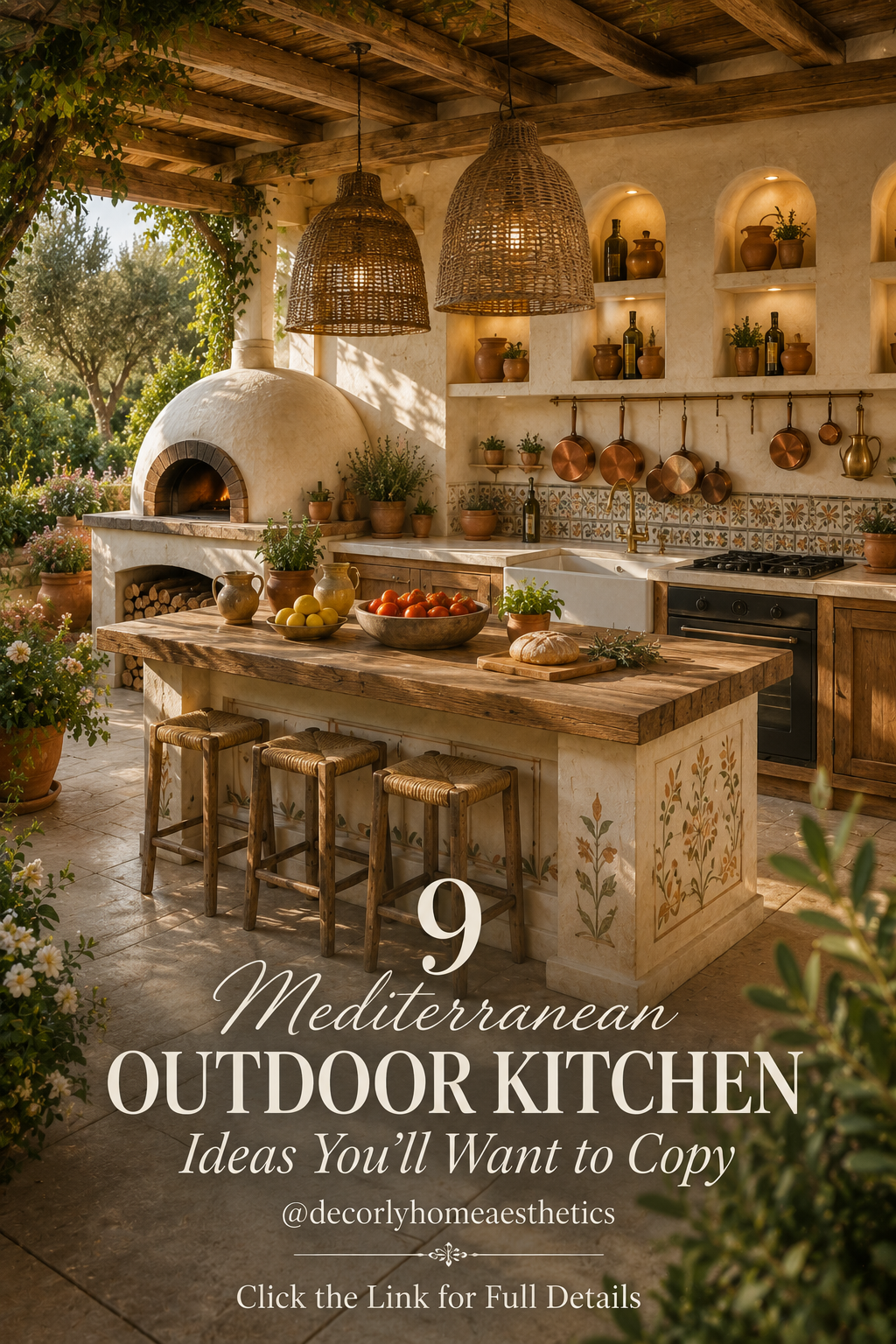
There’s something irresistible about a Mediterranean outdoor kitchen. Warm sunlight, weathered wood, textured plaster, terracotta pots, fresh herbs, and the smell of food cooking outdoors can make an ordinary backyard feel like a relaxing European escape.
Unlike sleek outdoor kitchens dominated by stainless steel and perfectly polished surfaces, Mediterranean spaces celebrate natural materials, handcrafted details, warmth, and a little imperfection. They’re designed to feel comfortable and welcoming—somewhere family and friends can gather around the table, share food, and spend long evenings outside.
The good news is that you don’t need a villa overlooking the Mediterranean to achieve the look. Whether you’re planning an entire backyard renovation or simply updating an existing patio kitchen, these nine Mediterranean outdoor kitchen ideas can help you create a beautiful space you’ll want to use all summer.
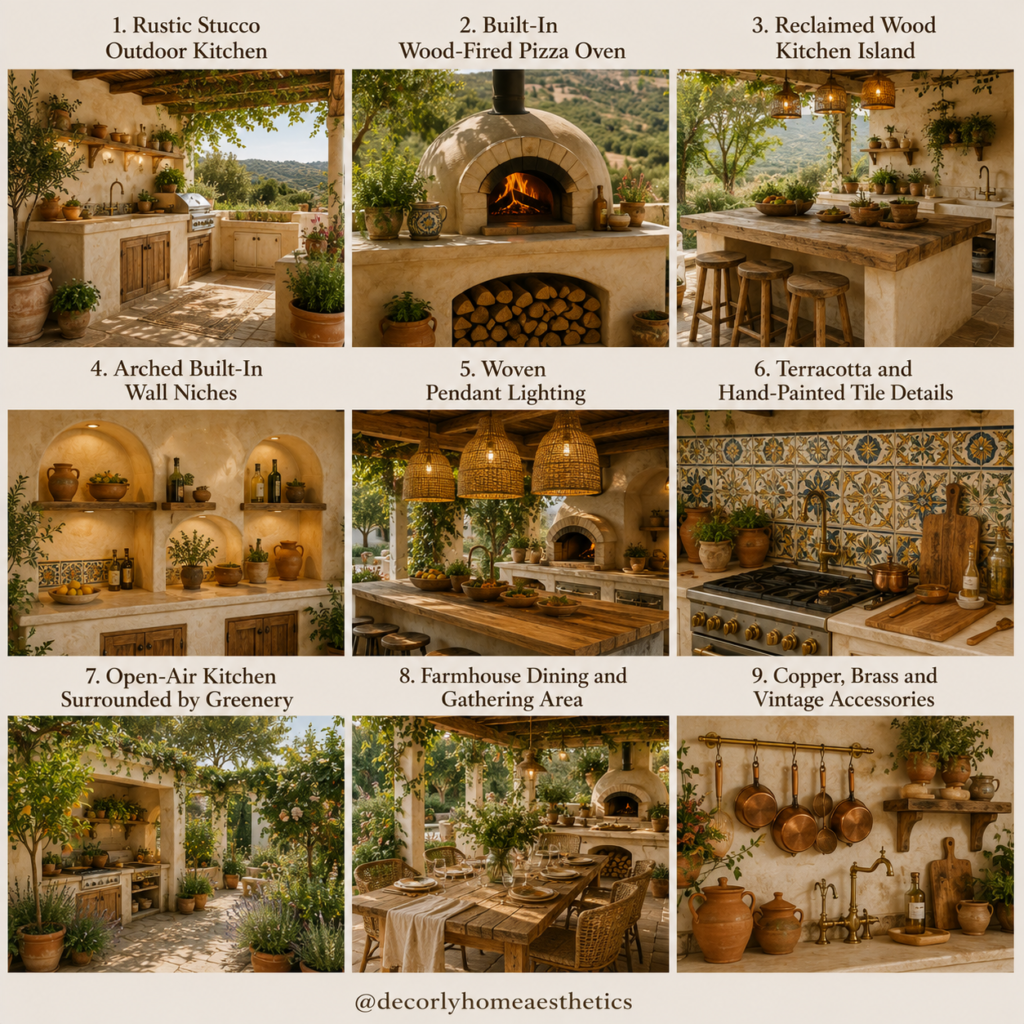
1. Start With a Rustic Stucco Outdoor Kitchen
The foundation of a Mediterranean outdoor kitchen is often surprisingly simple.
Instead of perfectly smooth contemporary walls, use warm-toned stucco, limewash-inspired finishes, or textured plaster to introduce the character associated with old European homes.
Cream, warm white, sandy beige, and pale earthy tones work particularly well because they create a beautiful backdrop for wood, terracotta, greenery, and metal accents.
The slight variation in a textured finish is part of its charm.
Pair plaster-style surfaces with weathered wooden cabinet doors and natural stone flooring for an outdoor kitchen that immediately feels more established.
If your existing outdoor kitchen is modern, you may not need to rebuild it completely. Changing the surrounding finishes and introducing natural materials can dramatically shift its appearance.
2. Make a Wood-Fired Pizza Oven the Star
Few features capture Mediterranean outdoor living quite like a traditional pizza oven.
A dome-shaped wood-fired oven can become both a practical cooking feature and a dramatic architectural focal point.
For an old-world appearance, surround it with warm plaster, stone, or brick. Add a recessed area underneath for neatly stacked firewood.
Keep the design relatively simple rather than covering every surface with decoration.
The oven itself provides plenty of visual character.
And pizza isn’t the only reason to consider one. Depending on the oven and manufacturer’s directions, suitable models can be used for foods such as breads and roasted dishes as well.
Always follow the oven manufacturer’s installation requirements, clearances, ventilation guidance, and local building or fire regulations when incorporating any wood-burning appliance.
3. Build a Reclaimed-Wood Kitchen Island
The kitchen island is often where everyone naturally gathers, so give it plenty of personality.
A chunky reclaimed-wood or weathered-oak countertop looks beautiful against a warm plaster or masonry base.
Instead of making the island look perfectly new, embrace visible grain, knots, and subtle variations in the wood.
Add a row of rustic wooden stools with woven seats to create an informal dining area.
You can also introduce a small amount of decorative detail to the island base. Hand-painted floral motifs or a few traditional-style tiles can add Mediterranean character without overwhelming the design.
Style the countertop with things you’d naturally use while cooking: a bowl of tomatoes, fresh lemons, a cutting board, herbs, or artisan bread.
The result should feel inviting rather than staged.
4. Add Arched Built-In Wall Niches
Arches are one of the easiest architectural details for creating a Mediterranean mood.
If you’re designing the kitchen from scratch, consider incorporating several shallow arched niches into a plaster wall.
Use them to display terracotta vessels, ceramic bowls, herbs, olive-oil bottles, or a few antique-inspired accessories.
Small integrated lights can make the niches particularly beautiful after sunset.
Just don’t fill every available space.
Leaving some niches minimally styled gives individual objects more impact and keeps the kitchen from feeling cluttered.
If structural niches aren’t practical, you can achieve a similar effect with arched shelving or recessed-look decorative features.
5. Hang Oversized Woven Pendant Lights
Lighting is one of the quickest ways to transform an outdoor kitchen.
Large woven pendants introduce natural texture and immediately soften stone, plaster, and wood surfaces.
Hang one or two statement fixtures above the kitchen island or outdoor dining table.
Rattan-inspired, wicker, bamboo-look, or other woven designs can complement the Mediterranean aesthetic beautifully, but any fixture used outdoors should be appropriately rated for its location and exposure.
During the daytime, the woven shades become decorative features.
At night, warm illumination creates an intimate atmosphere that’s perfect for outdoor dinners.
Combine pendant lighting with discreet wall lights or illumination inside shelving niches rather than relying on one extremely bright overhead fixture.
Layered lighting usually feels warmer and more sophisticated.
6. Introduce Terracotta and Hand-Painted Tiles
Mediterranean interiors are famous for beautiful patterned tiles, but you don’t need to cover the entire outdoor kitchen in them.
Often, a small amount makes a bigger statement.
Consider installing a narrow decorative tile strip along the backsplash or using patterned tiles behind the cooktop.
Look for designs featuring muted combinations of terracotta, dusty blue, olive green, cream, or soft ochre.
Terracotta floor tiles can also create warmth, although outdoor flooring needs to be selected for the local climate, slip resistance, and exposure conditions.
Another option is using decorative tile sparingly on the kitchen island.
The key is balance.
If your tiles are colorful or patterned, keep the surrounding plaster, cabinetry, and countertops relatively quiet.
7. Surround the Kitchen With Greenery
A Mediterranean outdoor kitchen shouldn’t feel separated from the landscape.
Plants help blur the boundary between cooking space and garden.
Place large terracotta pots around the kitchen filled with herbs such as rosemary, thyme, oregano, or basil where climate and growing conditions allow.
Olive trees and citrus can provide a Mediterranean feel in suitable climates, while gardeners in colder areas can use containers that can be protected seasonally or choose locally appropriate plants with a similar visual character.
Climbing vines can soften pergola posts and walls.
You can also position the kitchen near existing mature trees to benefit from the natural backdrop.
Rather than lining up identical pots, mix several shapes and sizes for a more relaxed appearance.
The planting should look as though it has developed gradually over time.
8. Create a Farmhouse-Style Gathering Area
Mediterranean outdoor living is ultimately about gathering around food.
If space allows, include a generous dining table close to the kitchen.
A long weathered-wood farmhouse table works beautifully, particularly when paired with simple woven or wooden chairs.
Keep textiles relaxed.
Natural-looking linen table runners, neutral cushions, and simple napkins are enough. You don’t need elaborate table settings to create atmosphere.
A few ceramic plates, a bowl of lemons, fresh herbs, and candles can make the dining area feel effortlessly beautiful.
If your backyard is small, allow the kitchen island to serve double duty.
Extend the countertop slightly and add several stools so guests can sit near the person cooking.
This creates a social kitchen without requiring a separate dining zone.
9. Finish With Copper, Brass and Vintage Accessories
Small details are what make a Mediterranean kitchen feel collected rather than newly installed.
Hang several copper pans from a simple rail.
Use aged-brass cabinet hardware or a warm metal faucet.
Display a few terracotta vessels, woven baskets, ceramic pitchers, and wooden cutting boards.
Vintage-inspired lanterns can introduce another layer of character.
The important thing is restraint.
You don’t need every Mediterranean accessory you can find.
Choose a handful of pieces with different textures and allow plenty of space around them.
Natural patina can actually make the kitchen more beautiful over time.
The Perfect Mediterranean Color Palette
One reason Mediterranean outdoor kitchens feel so inviting is their warm, nature-inspired palette.
Begin with a neutral foundation of warm ivory, sandy beige, creamy stone, or soft plaster white.
Then introduce rich natural wood.
Terracotta provides earthy warmth, while olive green connects the kitchen to surrounding landscaping.
Finally, small amounts of antique brass, aged copper, dusty blue, or muted red can create visual interest.
Try something like:
Warm plaster + aged oak + terracotta + olive green + antique brass
It’s simple, timeless, and easy to build upon.
Avoid using too many strong colors at once. Mediterranean design can certainly be colorful, but a restrained palette often creates a more sophisticated result.
Don’t Forget the Pergola
A pergola can completely change how an outdoor kitchen feels.
Heavy timber beams provide shade, architectural definition, and somewhere to position pendant lighting.
Over time, suitable climbing plants can soften the structure even further.
A pergola also makes an outdoor kitchen feel more like a genuine room rather than a collection of appliances sitting on a patio.
Before constructing one, consider your climate carefully. Some locations require greater protection from heavy rain, snow, intense sun, or wind than a traditional open pergola provides.
Keep Modern Appliances Understated
You don’t have to sacrifice modern convenience to create an old-world kitchen.
A contemporary oven, cooktop, refrigerator, or sink can work perfectly well within Mediterranean-inspired surroundings.
The trick is allowing the architecture and materials to remain visually dominant.
Integrate appliances into rustic cabinetry where practical rather than making stainless steel the main feature.
A simple dark cooktop can virtually disappear against warm plaster and wood.
This balance gives you the atmosphere of an old Mediterranean villa without giving up the functionality of a modern outdoor kitchen.
Let It Feel Lived-In
Perhaps the biggest mistake when creating this aesthetic is making everything too perfect.
Mediterranean-inspired spaces are especially beautiful when they have texture and personality.
Allow wood grain to show.
Let terracotta develop character.
Mix pottery rather than buying twelve identical pieces.
Keep fresh herbs near the cooking area.
Leave a wooden board on the counter because you actually use it.
The kitchen should feel like somewhere people genuinely cook, eat, talk, and spend time together—not a showroom that nobody is allowed to touch.
Final Thoughts
The most beautiful Mediterranean outdoor kitchens aren’t defined by one expensive feature. They’re created through layers of natural materials, warm colors, traditional shapes, greenery, and thoughtful details.
Start with textured plaster and warm wood. Add a statement feature such as a pizza oven or rustic island. Introduce arches, terracotta, woven lighting, and handmade-looking tiles.
Then surround everything with herbs and greenery.
Finish with a few aged copper or brass accessories and a comfortable place where everyone can gather.
Whether you’re renovating an entire backyard or simply updating a small covered patio, these ideas can help create an outdoor kitchen that feels warm, timeless, and wonderfully relaxed.
And once the evening lights come on, the pizza oven is warm, and everyone gathers around the table, your backyard may start feeling a little less like home—and a little more like a summer evening somewhere along the Mediterranean coast.