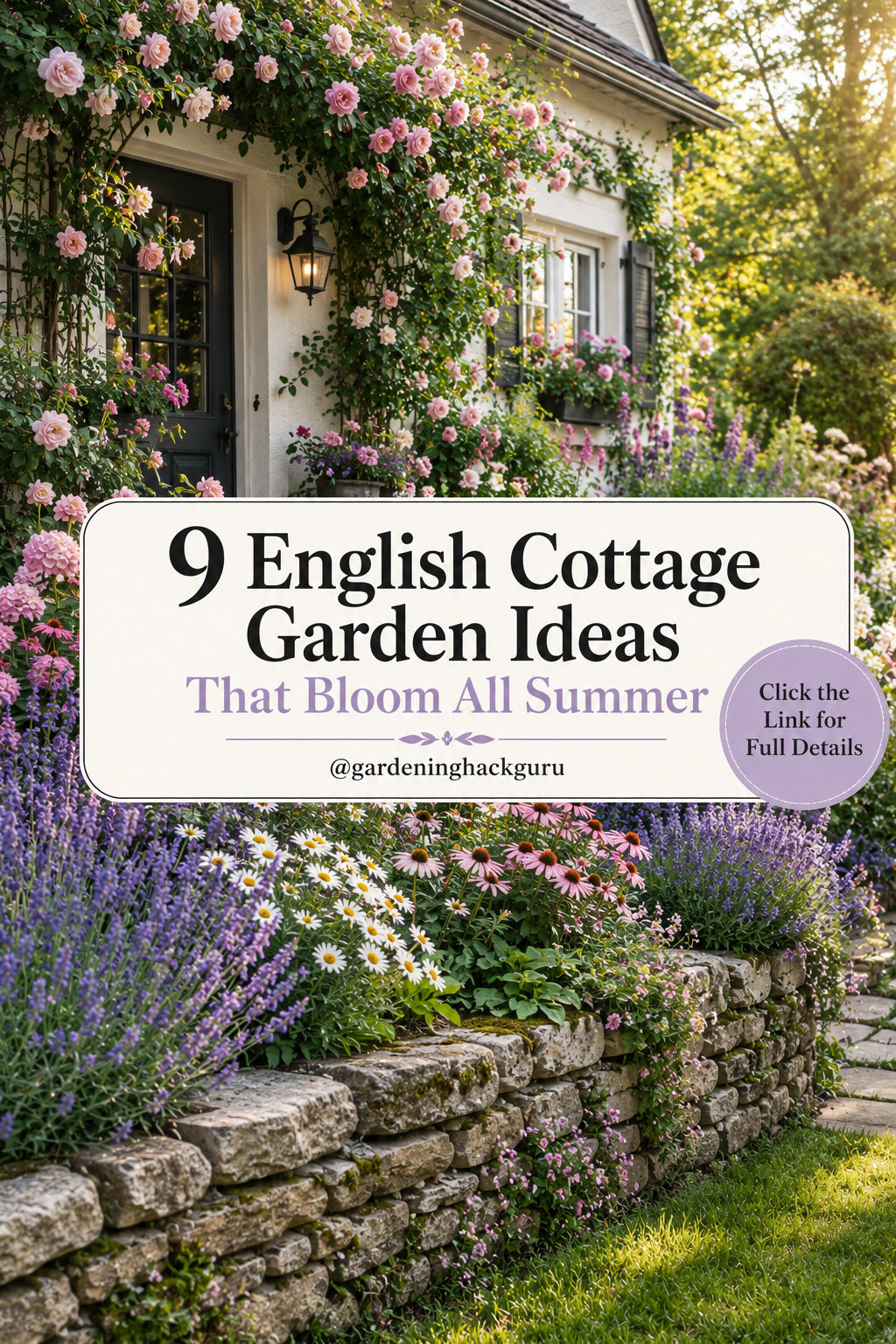
Few garden styles are as timeless and enchanting as the English cottage garden. Overflowing flower beds, climbing roses, fragrant lavender, and winding stone pathways create a landscape that feels effortlessly romantic. Unlike formal gardens with perfectly trimmed lines, cottage gardens celebrate abundance, allowing flowers to spill over borders and blend naturally into one another.
The best part? You don’t need to live in the English countryside to enjoy this classic style. With the right mix of flowers, textures, and thoughtful design, you can transform any American backyard into a charming cottage-inspired retreat that blooms from late spring through summer.
Here are nine beautiful English cottage garden ideas that will fill your outdoor space with color, fragrance, and timeless charm.
1. Frame Your Entrance with Climbing Roses
Nothing captures the essence of an English cottage garden better than climbing roses cascading over a front door, porch, or arbor.
Choose repeat-blooming varieties in soft shades of pink, white, peach, or cream to enjoy flowers throughout the season. A sturdy wooden trellis or pergola provides support while creating an inviting entrance that instantly becomes the focal point of your home.
The combination of fragrant blooms and lush greenery creates a warm welcome every time you arrive home.
2. Plant Layered Flower Borders
English cottage gardens are known for their full, layered planting style.
Place taller plants like foxgloves, hollyhocks, and delphiniums toward the back of the border. Medium-height flowers such as coneflowers, salvias, and Shasta daisies fill the center, while lower-growing lavender, catmint, alyssum, and creeping thyme soften the front edge.
This layered approach creates depth, texture, and continuous color from spring through late summer.
3. Add Lavender Along Stone Paths
Lavender is one of the signature plants of an English cottage garden.
Plant it along walkways or beside natural stone edging where visitors can enjoy its soothing fragrance as they stroll through the garden.
Besides its beauty, lavender attracts bees, butterflies, and other pollinators while requiring relatively little maintenance once established.
The silvery foliage also provides year-round structure even after the flowers fade.
4. Create a Rustic Stone Garden Border
Natural stone borders bring timeless character to cottage gardens.
Instead of perfectly cut edging, use stacked fieldstones or weathered limestone to create informal retaining walls and flower bed borders.
Allow flowers to spill gently over the stones for a relaxed, lived-in appearance that feels like it has evolved naturally over many years.
The contrast between rugged stone and delicate blooms creates one of the most beautiful features of traditional cottage landscapes.
5. Mix Flowers for Continuous Bloom
A successful cottage garden never relies on just one type of flower.
Combine early, mid-season, and late-blooming perennials to ensure your garden stays colorful for months.
Excellent choices include:
- Roses
- Peonies
- Foxgloves
- Delphiniums
- Coneflowers
- Salvia
- Shasta daisies
- Black-eyed Susans
- Hydrangeas
- Catmint
Mixing bloom times ensures there’s always something beautiful to enjoy.
6. Add Charming Window Boxes
Window boxes overflowing with flowers instantly enhance cottage-style charm.
Plant petunias, calibrachoa, lobelia, trailing ivy, and geraniums in coordinated color palettes that complement your surrounding flower beds.
Window boxes connect your home to the landscape, creating a seamless blend of architecture and nature.
Regular watering and occasional fertilizing will keep them blooming all season long.
7. Include Cozy Garden Seating
Every beautiful garden deserves a place to sit and enjoy the view.
A weathered wooden bench, wrought-iron chair, or rustic bistro set tucked among flowering borders creates the perfect reading nook or morning coffee spot.
Surround the seating area with fragrant plants like lavender, roses, and jasmine to make the space feel peaceful and inviting.
Simple seating often becomes one of the most loved features of the garden.
8. Welcome Pollinators
English cottage gardens are naturally full of life.
Plant nectar-rich flowers that attract bees, butterflies, and hummingbirds while supporting local pollinators.
Excellent options include:
- Lavender
- Bee balm
- Echinacea
- Salvia
- Yarrow
- Cosmos
- Zinnias
A thriving pollinator garden also improves flowering and fruit production throughout the landscape.
9. Let Nature Take the Lead
One of the biggest secrets to a beautiful cottage garden is resisting the urge to make everything perfectly symmetrical.
Allow flowers to self-seed, let plants gently spill over pathways, and embrace a slightly relaxed appearance.
Instead of rigid rows, create flowing borders that blend colors and textures naturally.
This effortless style is what gives English cottage gardens their romantic personality and timeless appeal.
Essential Plants for an English Cottage Garden
If you’re starting from scratch, these classic plants will help create an authentic look:
- Climbing Roses
- Lavender
- Foxgloves
- Delphiniums
- Hollyhocks
- Shasta Daisies
- Coneflowers
- Hydrangeas
- Salvia
- Catmint
- Peonies
- Bee Balm
- Clematis
- Sweet Peas
- Garden Phlox
Combining these plants provides months of colorful blooms while attracting beneficial pollinators.
Tips for Keeping Your Cottage Garden Blooming
To enjoy flowers all summer long:
- Deadhead spent blooms regularly.
- Water deeply during dry periods.
- Add compost every spring.
- Mulch to retain moisture and suppress weeds.
- Divide overcrowded perennials every few years.
- Feed flowering plants with a balanced fertilizer during the growing season.
Consistent care rewards you with healthier plants and longer-lasting blooms.
Final Thoughts
An English cottage garden is more than just a collection of flowers—it’s a place filled with beauty, fragrance, and timeless charm. Whether you’re framing your front porch with climbing roses, lining pathways with lavender, or creating overflowing perennial borders, each detail contributes to a landscape that feels welcoming and full of life.
The beauty of this gardening style lies in its relaxed elegance. Rather than striving for perfection, embrace abundance, mix colors and textures, and allow nature to shape the garden over time. With thoughtful planning and a little patience, you can create a stunning outdoor retreat that blooms beautifully all summer and brings joy year after year.