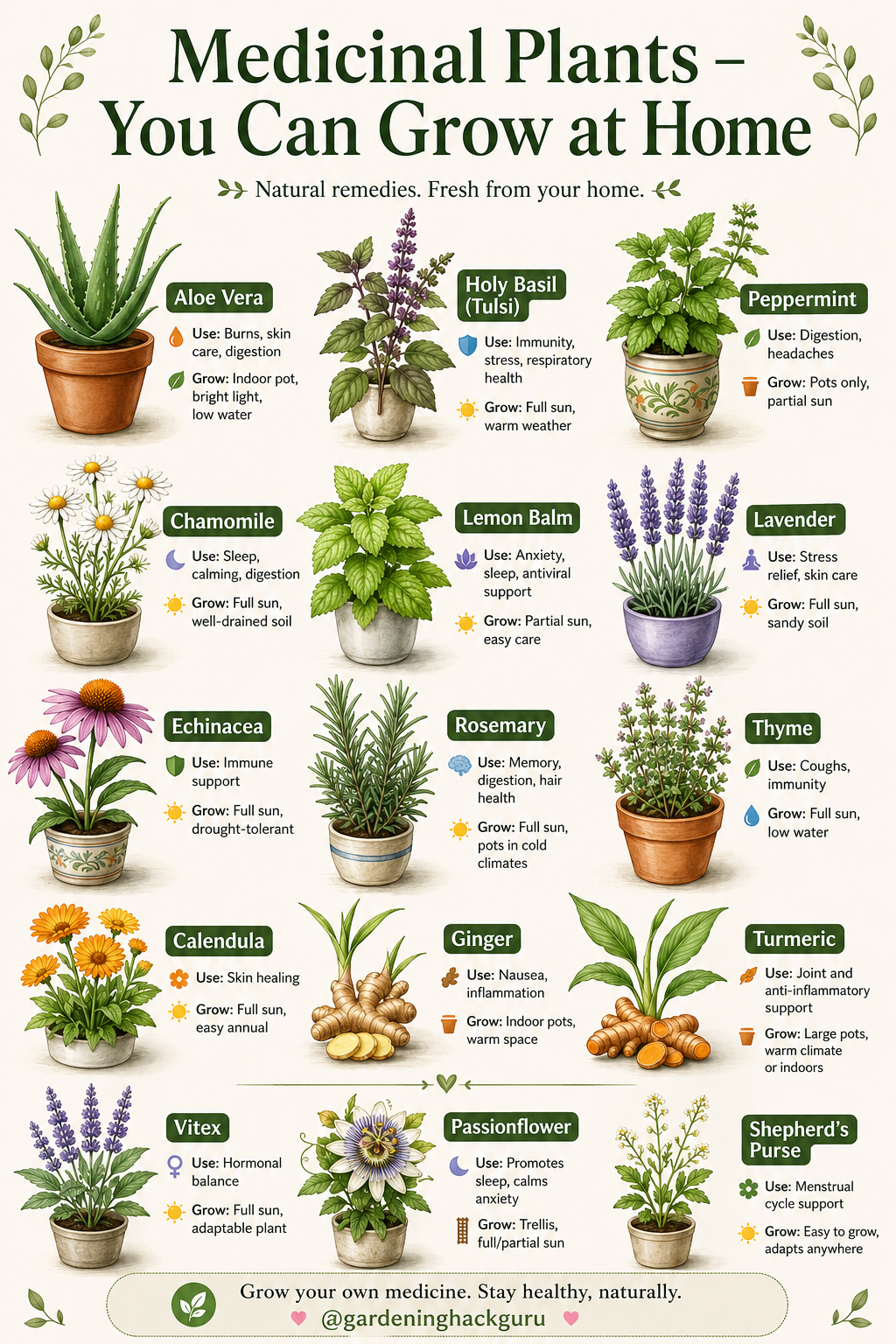
Growing medicinal plants at home is a beautiful way to bring wellness, greenery, and natural healing into your daily life. Many herbs and plants not only look aesthetic in a garden or balcony but also offer soothing, calming, and health-supporting benefits. From stress relief teas to skin-soothing remedies, these plants can turn your home into a peaceful herbal sanctuary.
Here are 15 medicinal plants you can easily grow at home and how they may support your well-being naturally.
1. Aloe Vera
Aloe vera is one of the easiest medicinal plants to grow indoors. Its gel is widely used for soothing burns, hydrating skin, and calming irritation. It thrives in bright sunlight and requires very little water.
Best for: Skin care, burns, digestion support
2. Holy Basil (Tulsi)
Tulsi is considered sacred in many cultures and is known for its calming and immunity-supporting properties. The leaves can be used in teas or herbal drinks.
Best for: Stress relief, immunity, respiratory wellness
3. Peppermint
Peppermint grows quickly in pots and adds a refreshing scent to your space. It’s often used to ease headaches, digestion issues, and fatigue.
Best for: Digestion, headaches, fresh herbal tea
4. Chamomile
Chamomile flowers are gentle, beautiful, and calming. They are commonly dried for relaxing bedtime teas.
Best for: Sleep support, relaxation, calming anxiety
5. Lavender
Lavender adds soft purple beauty to any garden while offering a calming fragrance. Its scent is known to promote relaxation and peaceful sleep.
Best for: Stress relief, aromatherapy, sleep support
6. Lemon Balm
Lemon balm has a fresh citrus scent and is part of the mint family. It’s easy to grow and wonderful for soothing teas.
Best for: Anxiety support, mood balance, relaxation
7. Rosemary
Rosemary is both a culinary and medicinal herb. Its woody aroma can help refresh the mind and add warmth to home gardens.
Best for: Memory support, hair care, digestion
8. Thyme
Thyme is a hardy herb that loves sunlight and needs little maintenance. It has long been used in herbal remedies for wellness.
Best for: Cough support, immunity, herbal cooking
9. Calendula
Calendula’s bright orange flowers instantly brighten a garden. The petals are often used in soothing oils and skin products.
Best for: Skin healing, inflammation support
10. Ginger
Ginger can be grown indoors in containers and harvested from the root. It’s a warming plant commonly used in teas and wellness drinks.
Best for: Nausea relief, inflammation, digestion
11. Turmeric
Turmeric is known for its vibrant golden root and wellness benefits. It grows well in warm conditions and large pots.
Best for: Joint support, anti-inflammatory wellness
12. Echinacea
This stunning purple flower attracts pollinators while supporting immune wellness naturally.
Best for: Immune support, seasonal wellness
13. Passionflower
Passionflower vines produce unique blooms and are often used in calming herbal teas.
Best for: Relaxation, stress reduction, sleep support
14. Vitex
Vitex, also called chaste tree berry, is often associated with women’s wellness and hormone balance.
Best for: Hormonal support, wellness balance
15. Shepherd’s Purse
This delicate herb grows easily and has traditionally been used in herbal wellness practices.
Best for: Menstrual wellness support
Tips for Growing Medicinal Plants at Home
Place sun-loving herbs near bright windows or balconies
Use pots with good drainage
Avoid overwatering most herbs
Harvest gently to encourage healthy growth
Grow herbs in small groups for a cozy aesthetic garden look
Why Homegrown Medicinal Plants Are So Popular
Medicinal gardens are becoming popular because they combine beauty, wellness, and sustainability. Fresh herbs make homes feel peaceful and cozy while encouraging a slower, more mindful lifestyle. Whether you have a large backyard or a tiny apartment balcony, even a few herbal pots can create a calming green corner.
A Gentle Reminder
Natural herbs may support wellness, but they are not a replacement for professional medical care. Always research plants carefully and consult a healthcare professional before using herbs regularly, especially during pregnancy or while taking medications.
A Natural Way to Feel More Connected
Growing medicinal plants at home is more than gardening — it’s about creating a healthier, calmer lifestyle. Watching herbs grow, caring for them daily, and using them in teas or home remedies can make your home feel peaceful, cozy, and connected to nature.