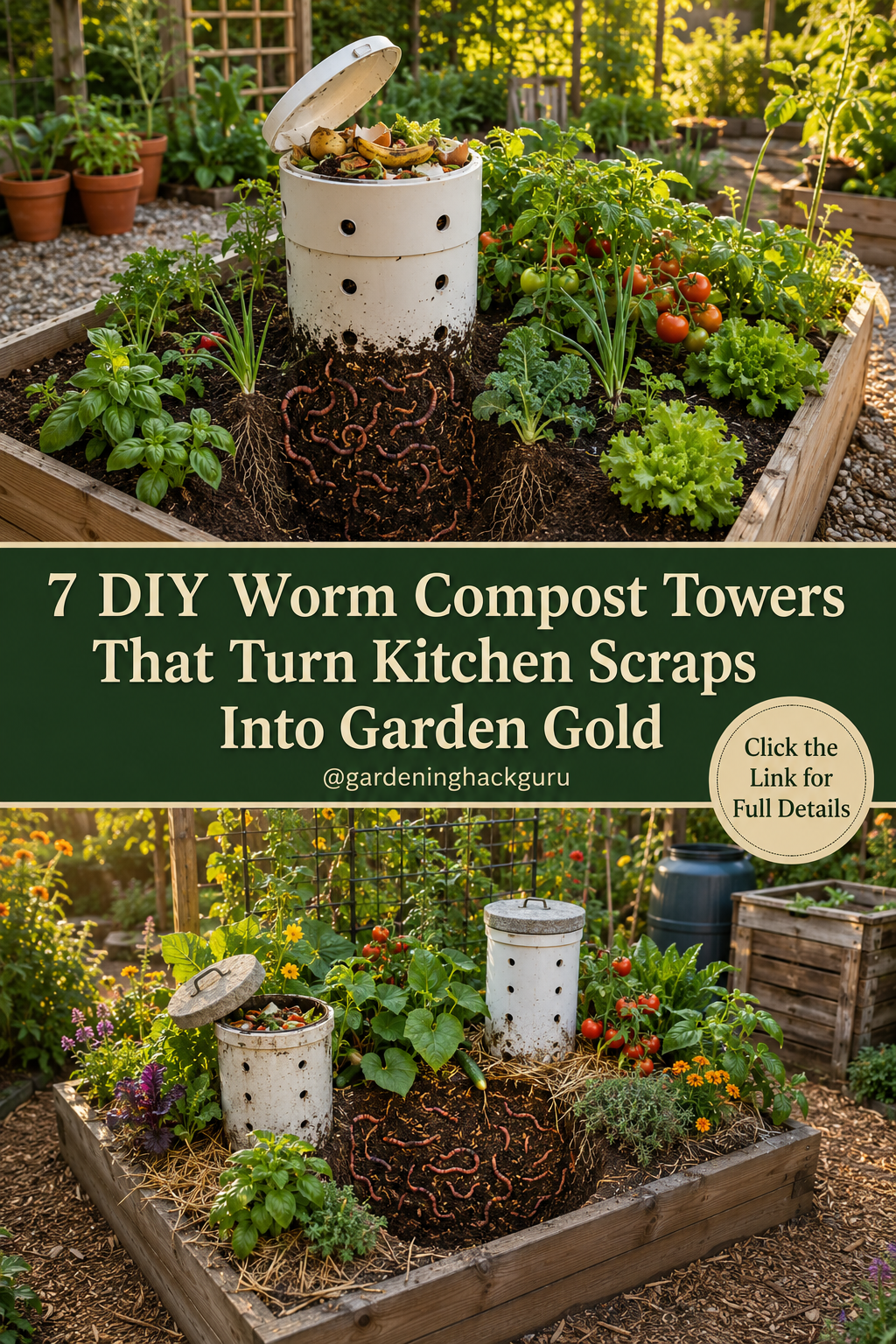
Every day, countless banana peels, coffee grounds, eggshells, and vegetable scraps end up in the trash. But what if those leftovers could become one of the best fertilizers your garden will ever receive?
A DIY worm compost tower is one of the easiest and most effective ways to recycle kitchen scraps directly in your garden. Instead of maintaining a separate compost pile, you bury a simple perforated PVC pipe in your raised bed or vegetable garden. Composting worms enter through the holes, break down food scraps, and leave behind nutrient-rich worm castings—often called “garden gold” because of their incredible ability to improve soil health.
Whether you’re growing vegetables, herbs, flowers, or fruit, these seven DIY worm compost tower ideas will help you create healthier soil, stronger plants, and larger harvests while reducing household waste.
1. Classic PVC Worm Compost Tower
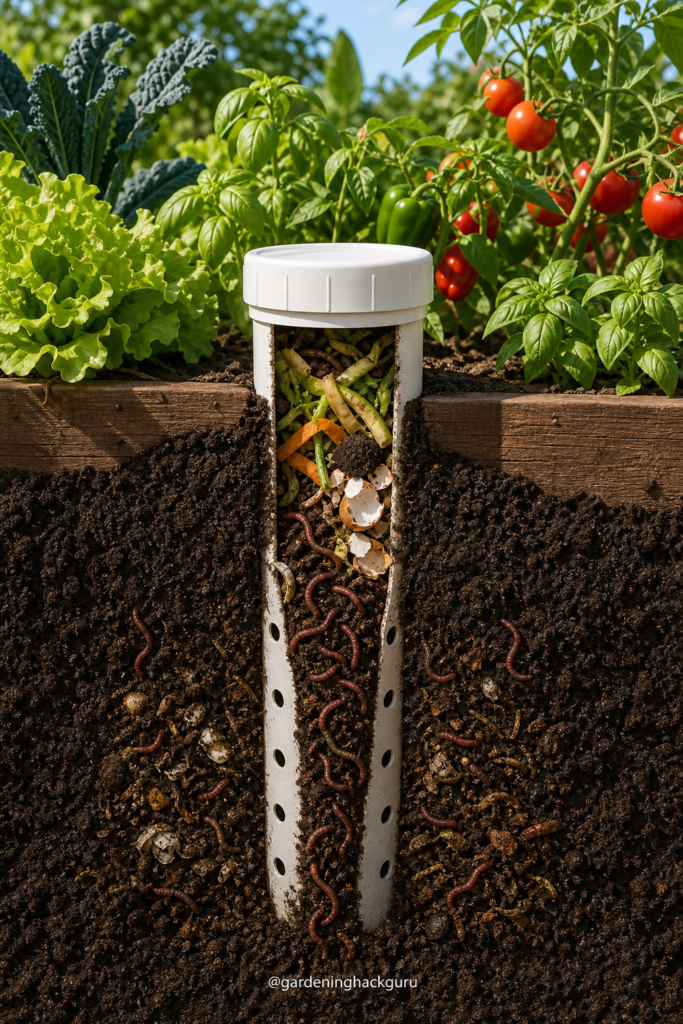
The most popular design uses a length of 4- to 6-inch PVC pipe drilled with evenly spaced holes. The pipe is buried vertically into a raised garden bed, leaving several inches above the soil for easy access.
Simply add kitchen scraps, cover the opening with a removable cap, and let composting worms do the work. As food decomposes, worms carry nutrients into the surrounding soil, naturally feeding nearby plants.
This simple project is inexpensive, beginner-friendly, and can be completed in less than an hour.
2. Cedar Raised Bed Worm Tower
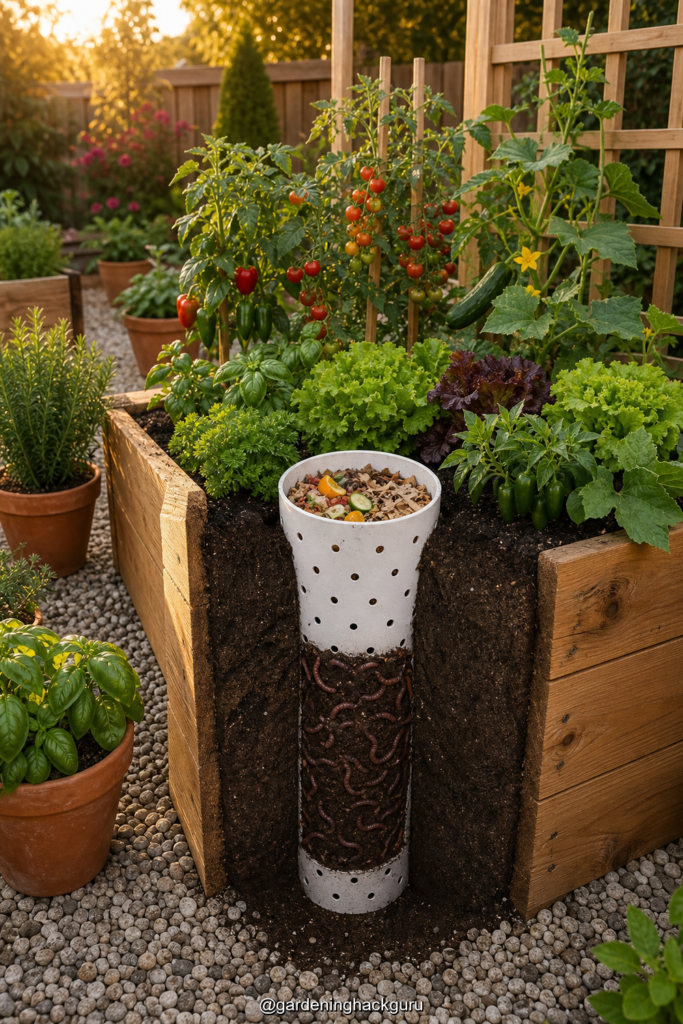
If you already have cedar raised beds, adding a worm compost tower makes them even more productive.
Install one tower near the center of each bed so nutrients spread evenly through the soil. Fill the tower with fruit and vegetable scraps, coffee grounds, crushed eggshells, and shredded paper.
Vegetables like tomatoes, peppers, cucumbers, lettuce, and basil benefit from the steady supply of organic nutrients, resulting in healthier growth and improved harvests throughout the season.
3. Decorative Worm Tower with Stone Cover
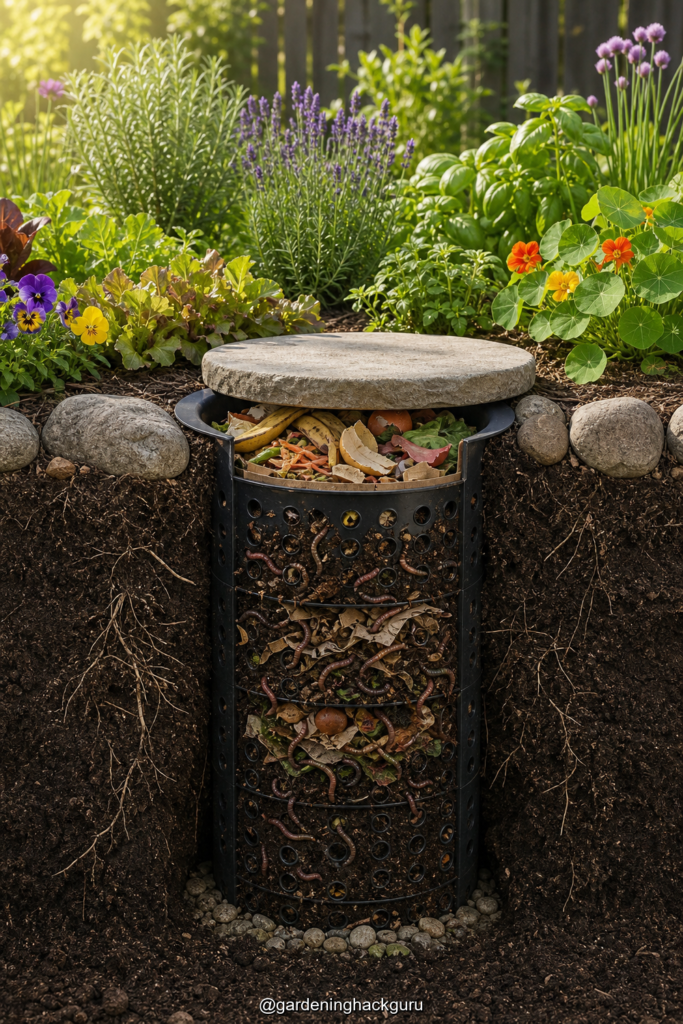
A compost tower doesn’t have to look industrial.
Instead of using a visible plastic cap, hide the opening beneath a decorative stone, terracotta pot, wooden lid, or small garden ornament.
The tower blends naturally into the landscape while continuing to recycle food waste beneath the surface.
This design works beautifully in ornamental gardens where appearance matters just as much as functionality.
4. Double Worm Tower for Large Garden Beds
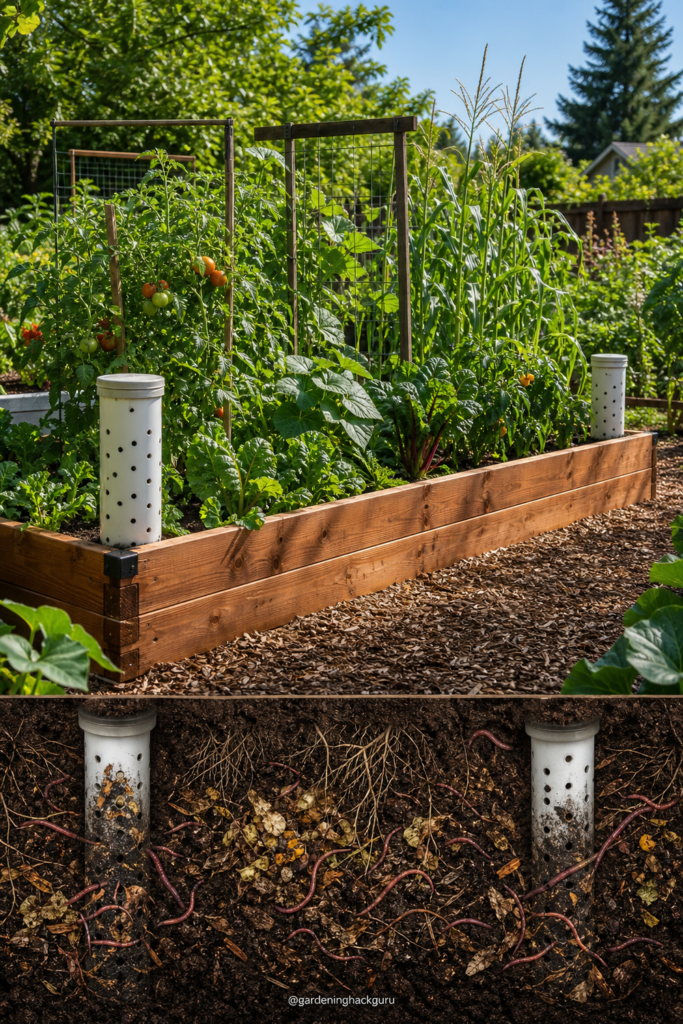
Larger raised beds often benefit from two compost towers instead of one.
Position one tower at each end of the bed to distribute nutrients more evenly throughout the soil. This system works especially well for beds growing heavy feeders like tomatoes, squash, pumpkins, corn, or melons.
By spreading compost across a wider area, plants receive more consistent nourishment all season long.
5. Kitchen Herb Garden Worm Tower
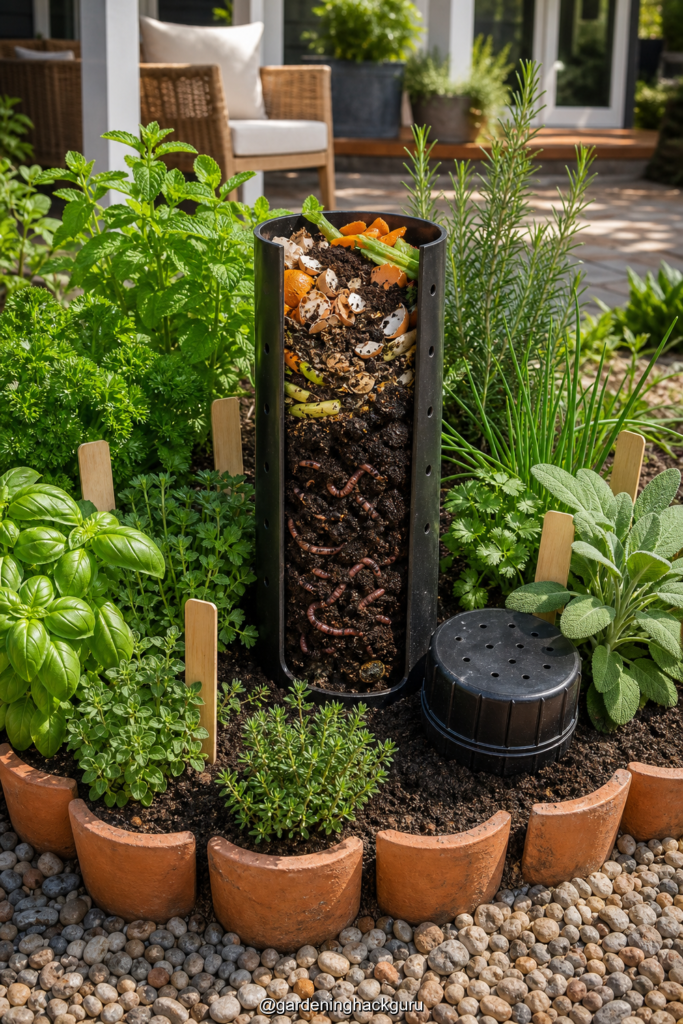
Herbs thrive in nutrient-rich soil.
Install a compact worm tower in the center of an herb garden filled with basil, parsley, rosemary, oregano, thyme, mint, sage, and cilantro.
Small amounts of compost added regularly provide gentle feeding without relying on synthetic fertilizers, keeping herbs lush, fragrant, and productive for months.
It’s one of the easiest ways to maintain an attractive and highly productive kitchen garden.
6. Hidden Worm Tower Beneath Mulch
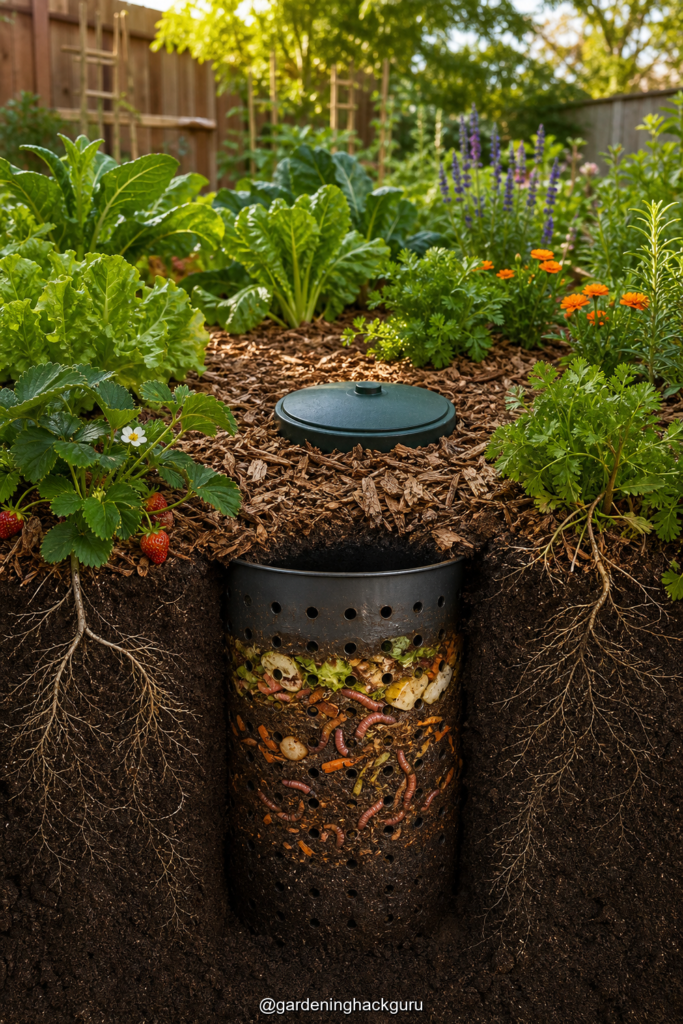
For a cleaner, more natural appearance, surround your compost tower with wood chips, bark mulch, straw, or decorative gravel.
The mulch helps retain moisture, encourages beneficial microorganisms, and makes the tower blend seamlessly into the garden.
Visitors may never notice it’s there—but your plants certainly will.
7. Complete Living Soil Compost System
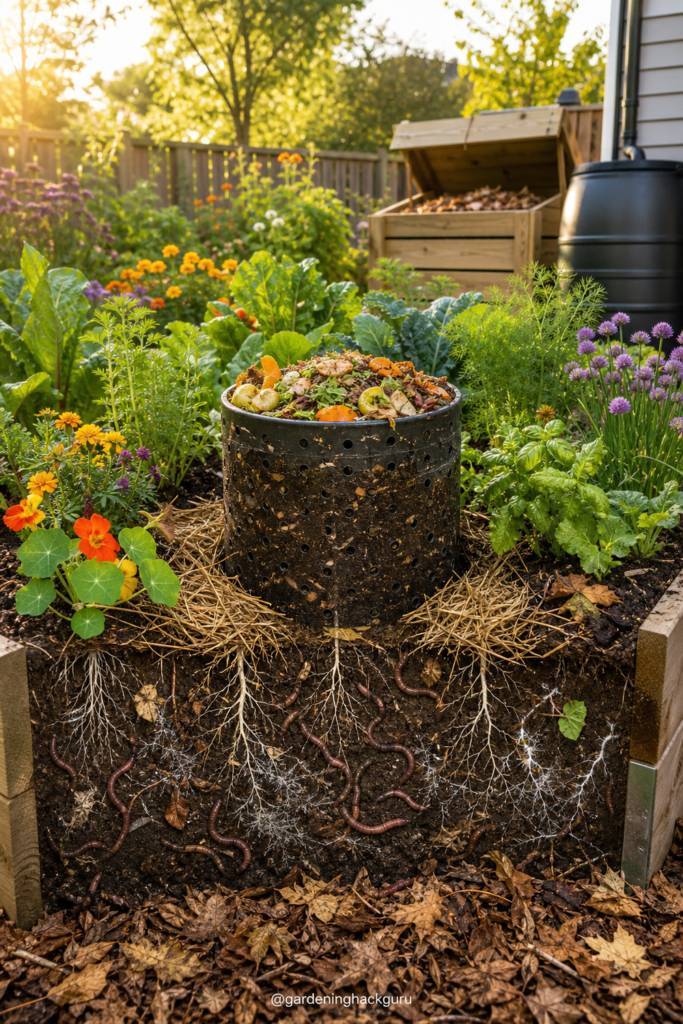
Take your garden to the next level by combining a worm compost tower with other soil-building techniques.
Add compost around your plants, mulch heavily, rotate crops each season, and grow cover crops during the off-season. Together, these practices create rich living soil filled with earthworms, fungi, beneficial bacteria, and microorganisms.
The result is healthier plants, fewer pests, improved moisture retention, and consistently larger harvests year after year.
What Can You Put Inside a Worm Compost Tower?
Most fruit and vegetable scraps work wonderfully inside a worm tower.
Great choices include:
- Banana peels
- Apple cores
- Carrot peels
- Lettuce leaves
- Vegetable trimmings
- Coffee grounds
- Tea leaves
- Crushed eggshells
- Small amounts of shredded newspaper
- Wilted herbs
- Melon rinds
- Pumpkin scraps
These materials decompose quickly and provide valuable nutrients for worms and soil microbes.
What Should You Avoid?
Certain items can attract pests or create unpleasant odors.
Avoid placing these inside your worm tower:
- Meat
- Fish
- Dairy products
- Greasy foods
- Cooking oils
- Pet waste
- Large amounts of citrus
- Large amounts of onions
- Glossy or plastic-coated paper
Keeping the right balance of compostable materials helps maintain a healthy environment for composting worms.
Why Worm Castings Are Called “Garden Gold”
Worm castings are among the most valuable natural soil amendments available.
They improve soil structure, increase moisture retention, encourage beneficial microbes, and slowly release nutrients that plants can absorb over time. Unlike many synthetic fertilizers, worm castings are gentle on roots and won’t burn plants when used properly.
Gardeners often notice stronger root systems, greener foliage, improved flowering, and larger harvests after introducing worm composting into their gardens.
Tips for a Successful Worm Compost Tower
To get the best results:
- Drill plenty of holes around the buried section of the pipe.
- Use a removable cap to keep rodents and insects out.
- Add food scraps in small amounts rather than overfilling the tower.
- Keep the surrounding soil lightly moist so worms stay active.
- Chop larger scraps into smaller pieces for faster decomposition.
- Add crushed eggshells occasionally to provide calcium.
- Cover fresh scraps with shredded paper or dry leaves to reduce odors.
- Harvest nutrient-rich soil around the tower once or twice each year.
With just a little maintenance, your worm tower can continue enriching your garden for many seasons.
Final Thoughts
A DIY worm compost tower is one of the smartest upgrades you can make to any vegetable garden or raised bed. It transforms everyday kitchen scraps into nutrient-rich worm castings that naturally feed your plants, improve soil health, and reduce household waste—all with very little effort.
Whether you’re building your first raised bed or looking for ways to grow healthier vegetables without relying on chemical fertilizers, a worm compost tower is an affordable, eco-friendly solution that delivers impressive results. Build one this weekend, and you’ll soon discover why gardeners proudly call worm castings “garden gold.”