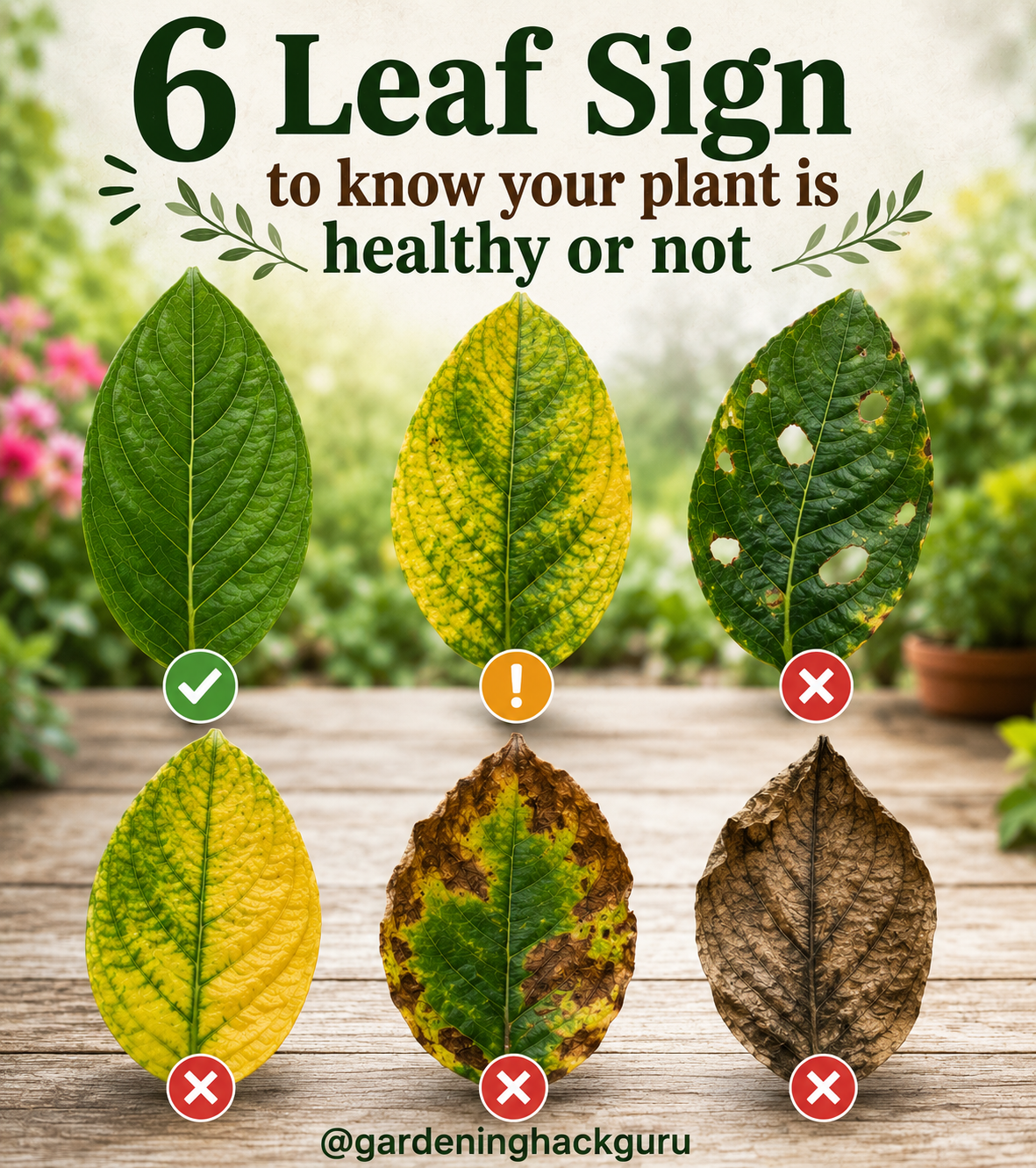
Plants may not speak, but their leaves can tell you almost everything you need to know. By paying attention to changes in color, texture, and shape, you can identify problems early and keep your plants healthy and thriving.
Learning to read your plant’s leaves is one of the most valuable gardening skills. Here are six common leaf signs and what they may indicate.
1. Deep Green Leaves ✅
Healthy plants usually produce vibrant green leaves.
Signs of a healthy plant:
Rich green color
Firm texture
No spots or damage
Strong new growth
If your plant has lush green foliage, you’re likely providing the right balance of light, water, and nutrients.
2. Yellowing Leaves ⚠️
Yellow leaves are one of the most common warning signs.
Possible causes:
Overwatering
Poor drainage
Nutrient deficiencies
Root stress
A few older yellow leaves can be normal, but widespread yellowing deserves attention.
3. Brown Crispy Edges 🍂
When leaf edges turn brown and dry, it often signals stress.
Possible reasons:
Underwatering
Low humidity
Excess fertilizer
Heat stress
Checking soil moisture and humidity levels can help solve the problem.
4. Brown or Black Spots 🦠
Dark spots on leaves may indicate disease or environmental stress.
Common causes:
Fungal infections
Bacterial diseases
Poor airflow
Excess moisture on leaves
Removing affected foliage early can help prevent further spread.
5. Holes or Chewed Leaves 🐛
Missing pieces or holes in leaves often point to insect activity.
Common culprits:
Caterpillars
Beetles
Slugs
Grasshoppers
Regular inspections can help catch pests before they cause major damage.
6. Wilted or Dried Leaves 🌱
Leaves that droop, curl, or become dry are often signs that the plant is struggling.
Possible causes:
Lack of water
Root problems
Extreme temperatures
Transplant shock
The sooner you identify the cause, the faster your plant can recover.
How to Keep Leaves Healthy 🌿
Simple habits make a huge difference:
Water properly
Use well-draining soil
Provide the right amount of sunlight
Check for pests regularly
Avoid over-fertilizing
Remove damaged leaves
Healthy leaves are usually a sign of a healthy plant.
Final Thoughts 🌱
Your plant’s leaves act like a natural health report. By paying attention to changes in color, shape, and texture, you can spot problems early and give your plants exactly what they need.
The more you observe your plants, the better you’ll become at understanding their language—and the healthier your garden will be.
🌿 Happy Gardening!
@gardeninghackguru