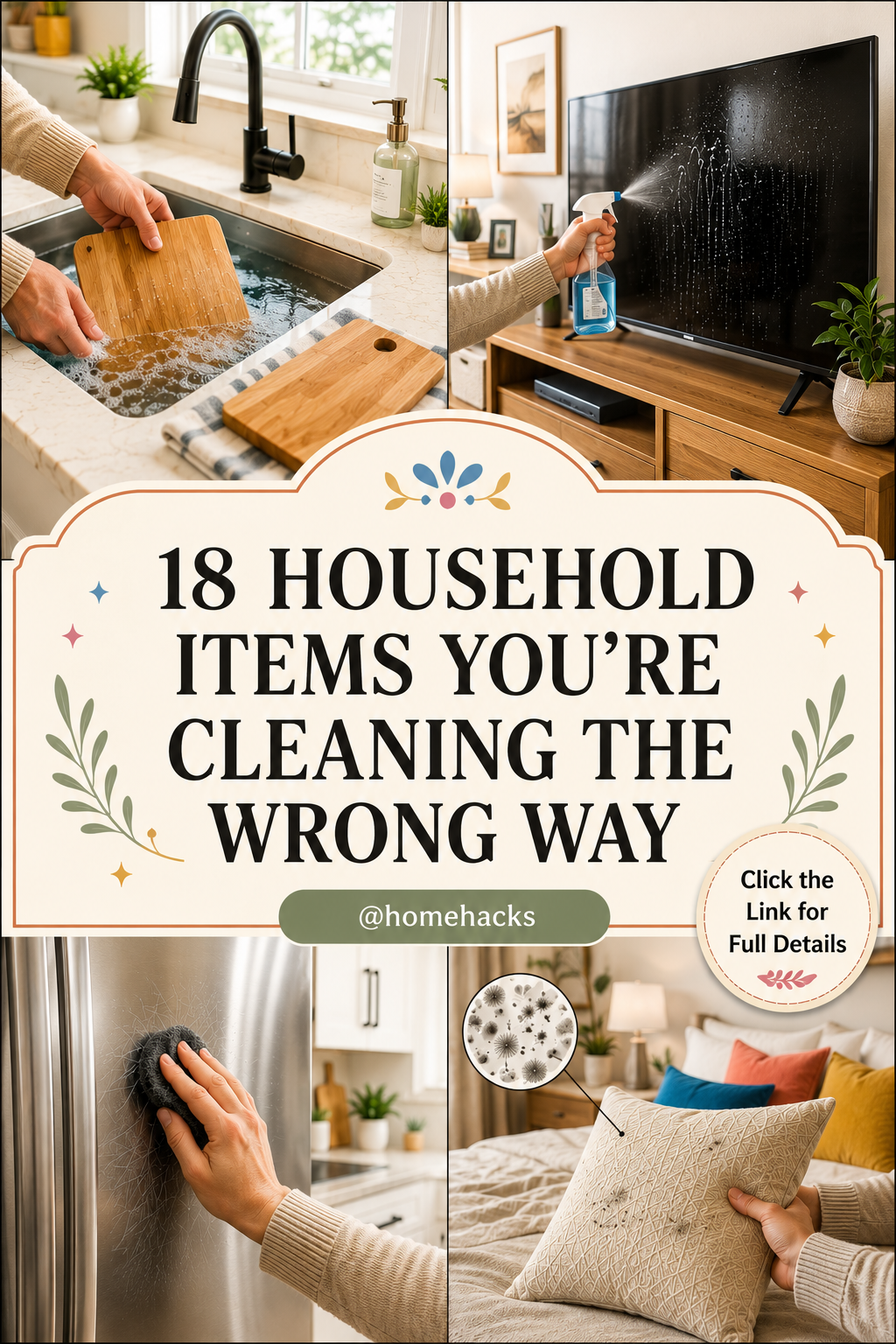
Cleaning your home regularly is one of the best ways to keep it looking fresh and inviting. But what if your cleaning routine is actually doing more harm than good? Many everyday household items require specific cleaning methods, and using the wrong products or techniques can shorten their lifespan, damage surfaces, or even spread more germs.
The good news is that most cleaning mistakes are easy to fix. By making a few simple changes, you’ll protect your belongings, save money on replacements, and make your home even cleaner.
Here are 18 household items you might be cleaning the wrong way—and the best way to clean them instead.
1. Wooden Cutting Boards
Many people soak wooden cutting boards in water after cooking.
Unfortunately, wood absorbs moisture, causing it to warp, crack, and split over time.
Clean Them the Right Way
- Wash immediately with warm water and mild dish soap.
- Dry thoroughly with a towel.
- Stand upright until completely dry.
- Oil the board regularly with food-grade mineral oil.
2. Stainless Steel Appliances
Using rough scrubbing pads or cleaning against the grain can leave permanent scratches.
Better Method
- Use a microfiber cloth.
- Wipe in the direction of the steel grain.
- Finish with a stainless steel cleaner or a damp cloth followed by drying.
3. TV and Computer Screens
Spraying glass cleaner directly onto screens can damage protective coatings.
Proper Cleaning
- Turn the screen off.
- Use a dry microfiber cloth.
- For stubborn marks, lightly dampen the cloth with distilled water—never spray directly on the screen.
4. Throw Pillows
Many people wash pillowcases regularly but forget about the pillows themselves.
Dust, sweat, and allergens build up inside over time.
Clean Them
Wash according to the care label every few months and dry thoroughly before use.
5. Ceiling Fans
Dusting fan blades while they’re dry simply spreads dust throughout the room.
Better Way
Use a damp microfiber cloth or a pillowcase to trap dust before it falls.
6. Kitchen Sponges
A dirty sponge can spread bacteria instead of removing it.
Keep It Fresh
- Rinse thoroughly after each use.
- Allow it to dry completely.
- Replace it regularly.
- Consider sanitizing it according to the manufacturer’s instructions.
7. Coffee Makers
Coffee residue and mineral buildup affect both taste and performance.
Proper Care
Run a descaling solution according to the manufacturer’s recommendations, then rinse with fresh water.
8. Washing Machines
Many people assume washing machines clean themselves.
Soap residue, lint, and moisture create odors over time.
Monthly Maintenance
- Run the machine’s cleaning cycle if available.
- Wipe the rubber door seal.
- Leave the door open after use to help it dry.
9. Dishwashers
Food particles collect in filters and spray arms.
Ignoring them reduces cleaning performance.
Clean Regularly
- Remove and rinse the filter.
- Wipe door seals.
- Check spray arms for debris.
10. Vacuum Filters
A clogged filter reduces suction and spreads dust.
Best Practice
Clean or replace filters according to the vacuum manufacturer’s instructions.
11. Shower Heads
Hard water leaves mineral deposits that reduce water flow.
Easy Solution
Soak the shower head in a suitable descaling solution following the manufacturer’s guidance, then rinse thoroughly.
12. Refrigerator Shelves
Wiping around food containers isn’t enough.
Sticky spills underneath often go unnoticed.
Clean Thoroughly
Remove shelves and drawers periodically, wash them with warm soapy water, dry completely, and replace them.
13. Remote Controls
Remote controls are handled every day but rarely cleaned.
Safe Cleaning
Remove the batteries if appropriate, wipe the surface with a lightly dampened disinfecting cloth, and avoid excess moisture around buttons.
14. Light Switches and Door Handles
These high-touch surfaces collect fingerprints, dirt, and germs quickly.
Weekly Routine
Wipe switches, knobs, and handles with a suitable household disinfecting cleaner according to product directions.
15. Window Blinds
Dust builds up quickly between each slat.
Better Method
Use a microfiber duster or wipe each slat with a damp cloth rather than simply blowing dust around.
16. Mattresses
Many people change sheets regularly but never clean the mattress itself.
Dust and allergens accumulate over time.
Keep It Fresh
Vacuum the surface every few months and rotate the mattress if recommended by the manufacturer.
17. Reusable Water Bottles
A quick rinse isn’t enough.
Moisture encourages bacteria and odor buildup.
Proper Cleaning
Wash bottles with warm soapy water, paying special attention to lids, seals, and straws.
18. Trash Cans
Replacing the trash bag doesn’t clean the bin itself.
Food residue and spills eventually create unpleasant odors.
Deep Clean
Wash the inside with warm soapy water, rinse thoroughly, let it dry completely, and use a deodorizer if desired.
Common Cleaning Mistakes to Avoid
Even with the right techniques, these habits can reduce cleaning effectiveness:
- Using too much cleaning product.
- Mixing household cleaners unless the labels specifically say it’s safe.
- Forgetting to read care labels.
- Cleaning from the floor upward instead of top to bottom.
- Using dirty cloths and mops.
- Skipping regular maintenance on appliances.
Simple Tips for Smarter Cleaning
Keeping your home clean doesn’t have to be difficult.
Try these habits:
- Use microfiber cloths whenever possible.
- Clean spills immediately.
- Wash cleaning tools regularly.
- Label reusable spray bottles.
- Follow manufacturer care instructions.
- Create a weekly cleaning schedule.
- Declutter before cleaning.
- Replace worn-out cleaning tools.
Final Thoughts
Cleaning isn’t just about making your home look nice—it’s also about protecting your belongings and helping them last longer. Using the right techniques for each household item prevents unnecessary damage, improves hygiene, and can even save money by avoiding costly replacements.
Take a fresh look at your cleaning routine and see if you’re making any of these common mistakes. Small changes can have a big impact on the cleanliness, appearance, and longevity of everything in your home.
By cleaning smarter instead of harder, you’ll enjoy a healthier, more organized, and better-maintained home every day.