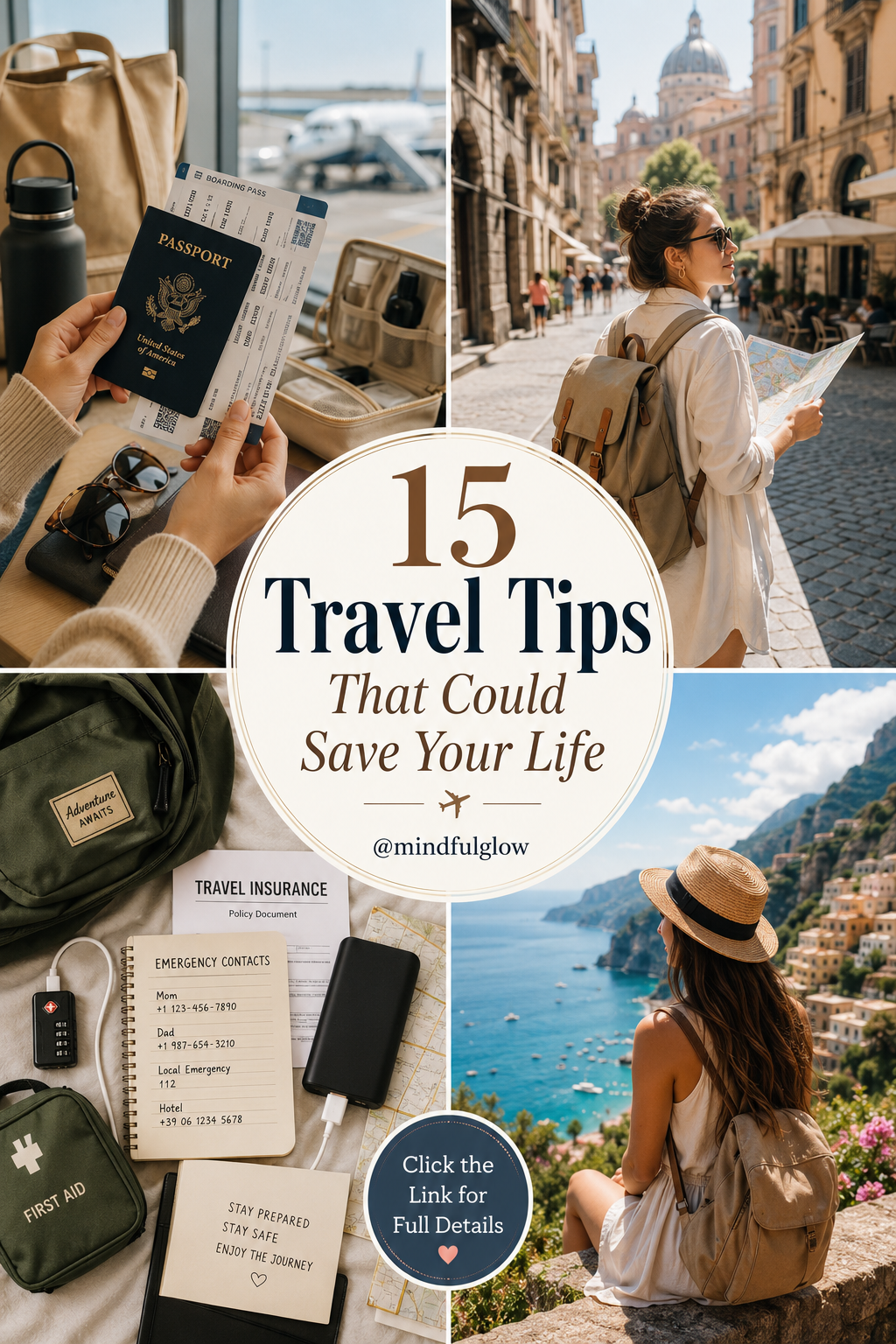
Traveling is one of life’s greatest experiences.
It allows us to explore new cultures, meet incredible people, and create memories that last forever.
But no matter where you’re traveling, unexpected situations can happen.
From lost passports and medical emergencies to scams and safety concerns, being prepared can make a huge difference.
While most trips go smoothly, these travel tips could potentially save your life, your money, or your entire vacation.
Here are 15 travel tips every traveler should know before their next trip.
1. Always Share Your Itinerary
Before leaving, share your flight details, hotel information, and travel plans with someone you trust.
If something unexpected happens, someone will know where you’re supposed to be.
This simple habit can be incredibly important during emergencies.
2. Keep Digital Copies of Important Documents
Take photos or scans of:
- Passport
- Visa
- Travel insurance
- Flight tickets
- Hotel bookings
- Emergency contacts
Store them securely online so you can access them from anywhere.
3. Never Keep All Your Money in One Place
Divide your cash, cards, and emergency funds.
Keep some in your wallet, some in your luggage, and some in a hidden location.
If your wallet is lost or stolen, you’ll still have access to money.
4. Buy Travel Insurance
Many travelers skip travel insurance to save money.
Unfortunately, a medical emergency abroad can cost thousands of dollars.
Travel insurance can protect you from unexpected expenses and provide peace of mind.
5. Learn Basic Emergency Phrases
If you’re visiting a country where you don’t speak the language, learn phrases such as:
- Help
- Emergency
- Hospital
- Police
- I need a doctor
- Where is the nearest pharmacy?
In an emergency, these words can be invaluable.
6. Trust Your Instincts
If a situation feels unsafe, leave.
If a person seems suspicious, create distance.
If a location doesn’t feel right, move somewhere safer.
Your instincts exist for a reason.
7. Avoid Oversharing Your Location
Be cautious about sharing your real-time location publicly on social media.
It’s often safer to post photos after you’ve left a location.
Protect your privacy while traveling.
8. Research Common Scams Before You Arrive
Every destination has its own common tourist scams.
Spend a few minutes researching what to watch out for.
Awareness can help you avoid losing money or becoming vulnerable.
9. Carry Emergency Contact Information
Keep a written list of:
- Emergency contacts
- Embassy information
- Hotel address
- Medical information
Don’t rely entirely on your phone.
10. Stay Aware of Your Surroundings
Many travel problems happen because people become distracted.
Avoid walking while staring at your phone.
Pay attention to people, exits, transportation routes, and your surroundings.
Awareness is one of the best safety tools you have.
11. Keep Your Phone Charged
Your phone may be your map, translator, emergency contact device, and navigation tool.
Carry a power bank whenever possible.
A dead phone can quickly become a serious inconvenience.
12. Know the Local Emergency Numbers
Emergency numbers vary from country to country.
Learn them before you arrive.
In an emergency, every second matters.
13. Be Careful With Public Wi-Fi
Avoid accessing sensitive information such as banking apps or financial accounts on unsecured public networks.
Protect your personal information while traveling.
14. Stay Hydrated and Rested
Many travel problems happen because people push themselves too hard.
Jet lag, dehydration, exhaustion, and heat can affect judgment and health.
Take care of your body.
15. Know Where Your Embassy Is
If your passport is lost, stolen, or you face a serious emergency abroad, your embassy can be a critical source of assistance.
Save the address and contact information before your trip.
Bonus Tip: Always Have a Backup Plan
Flights get canceled.
Weather changes.
Plans fall apart.
Experienced travelers know that flexibility is one of the most valuable travel skills.
A backup plan can turn a stressful situation into a manageable one.
Final Thoughts
Traveling should be exciting, not stressful.
Most trips are filled with amazing experiences and unforgettable memories.
But being prepared for the unexpected can make all the difference when things don’t go according to plan.
You don’t need to travel in fear.
You simply need to travel smart.
Before your next adventure, review these tips and make safety part of your travel routine.
Because the best trips are the ones where you return home safely with incredible stories to tell.