Starting seeds is one of those gardening jobs that looks incredibly simple—put a seed in soil, add water, wait.
Sometimes that’s exactly what happens.
Other times, you check the pot every morning for a week and wonder if anything is happening underneath the soil.
One simple trick gardeners have used for generations is soaking certain seeds before planting. It doesn’t magically guarantee germination, but for many larger or harder-coated seeds, a short soak can soften the outer seed coat and allow moisture to reach the inside more quickly.
Think of it as giving the seed a little head start.
That said, not every seed needs soaking, and longer isn’t necessarily better. Tiny seeds are generally better sown directly, while many of the seeds that benefit most from soaking are larger seeds with relatively tough outer coatings.
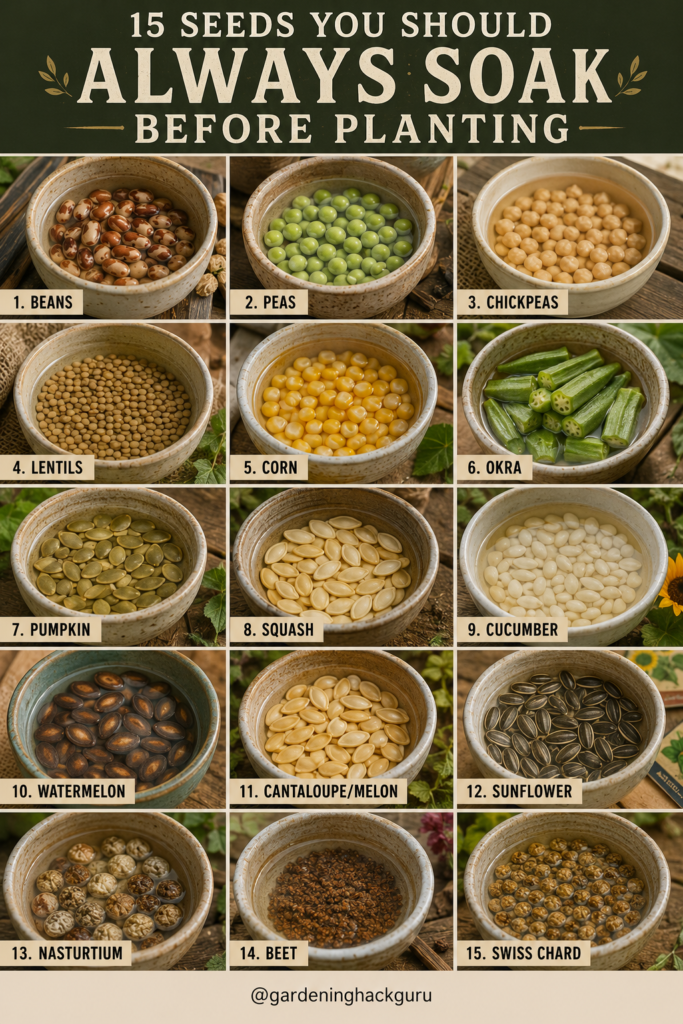
Here are 15 seeds you can soak before planting, along with practical tips for doing it without accidentally damaging them.
Why Soak Seeds Before Planting?
Seeds are designed to survive.
Their outer coating protects the embryo inside until moisture, temperature, and other conditions are right for germination. Some seed coats absorb water quickly, while others take considerably longer.
Pre-soaking essentially begins that hydration process before the seed enters the soil.
For suitable seeds, this may help:
- soften a hard outer seed coat;
- encourage more uniform germination;
- reduce the time some seeds take to emerge;
- make it easier to identify seeds that have begun absorbing moisture.
But soaking is an optional seed-starting technique, not a requirement for successful gardening.
If you’ve been planting beans or cucumbers dry for years and getting excellent results, there’s no reason to think you’ve been doing it wrong.
How to Soak Seeds Properly
The basic method couldn’t be much easier.
Place the seeds in a clean bowl or jar and cover them with room-temperature or slightly warm water. Leave enough water for the seeds to remain submerged as they absorb moisture.
For most seeds on this list, a few hours to overnight is plenty.
Avoid leaving seeds sitting in water for days. Seeds need oxygen as well as moisture, and excessive soaking can encourage deterioration rather than healthy germination.
Once they’re soaked, drain them and plant promptly into moist, well-prepared soil or seed-starting mix.
Now, let’s look at the seeds.
1. Beans
Beans are probably the classic example people think of when discussing soaked seeds.
Their relatively large seeds can absorb a surprising amount of water. A short pre-soak can hydrate them before planting and may speed up emergence under suitable conditions.
You don’t need to leave them submerged for an entire day. A few hours or an overnight soak is generally enough.
Be gentle after soaking because hydrated bean seeds can become more fragile.
Plant them soon afterward rather than allowing them to dry completely again.
And remember that beans are also perfectly capable of germinating when planted dry into appropriately warm, moist soil.
2. Peas
Peas are another large seed that can benefit from pre-soaking.
If you’ve ever handled dried peas, you know how firm they are. After several hours in water, they swell noticeably as they absorb moisture.
An overnight soak can be useful, particularly when you’re trying to get an early pea planting established.
Once soaked, sow them into suitable soil promptly.
One important consideration is temperature: peas generally prefer cooler growing conditions, but extremely cold, saturated soil can still cause problems. Good drainage matters just as much as hydration.
3. Chickpeas
Chickpeas absorb water readily, which is exactly why dried chickpeas become dramatically larger when soaked for cooking.
The same principle applies when preparing viable chickpea seed for planting.
Soak planting seed for several hours or overnight, then sow it while it’s hydrated.
Make sure you’re using seed intended for growing, rather than assuming every dried chickpea from the kitchen will necessarily be suitable for planting.
4. Lentils
Lentils don’t have the massive seed coat of some beans, so soaking isn’t always necessary.
However, a relatively short soak can begin hydration before planting.
Keep this one shorter rather than leaving the seeds submerged for an excessive period.
After soaking, drain and sow them promptly into appropriate soil.
This is also a good reminder that seed soaking isn’t about following one universal “12-hour rule.” Different seeds behave differently.
5. Corn
Those hard, dry corn kernels contain everything needed to produce surprisingly large plants.
Corn can absolutely be planted without soaking, but some gardeners pre-soak kernels to begin hydration before sowing.
If you choose to do it, keep the soak relatively brief—several hours or overnight is enough.
Then plant into warm soil.
That’s particularly important because corn loves warmth. Pre-soaking a seed won’t compensate for planting into conditions that are too cold and wet.
6. Okra
If there’s one seed on this list where soaking can be especially useful, it’s okra.
Okra seeds have a relatively hard outer coat. Soaking them overnight can help soften that coating and encourage water uptake.
Some gardeners use warm water and leave the seeds soaking for roughly 12 hours or overnight before planting.
Afterward, sow them in warm conditions.
Okra loves heat, so patience may still be necessary if temperatures are low.
7. Pumpkin
Pumpkin seeds are large and fairly easy to handle, which makes them ideal for beginner gardeners.
They don’t require soaking to germinate, but a short pre-soak can begin the hydration process.
Soak them for several hours, then plant them into warm, moist soil.
Avoid waterlogged conditions.
Pumpkins grow quickly once established, so make sure you’ve considered where those tiny seedlings are eventually going. A little pumpkin seed can turn into an enormous vine surprisingly fast.
8. Squash
Squash seeds behave similarly to pumpkin seeds.
Zucchini, summer squash, and many winter squash varieties generally germinate readily when conditions are warm, so soaking isn’t essential.
Still, gardeners sometimes soak them for a few hours before planting to get hydration underway.
Plant soaked seeds immediately and keep the growing medium moist but not saturated.
Warmth will usually matter more than whether you soaked the seed.
9. Cucumber
Cucumber is another seed that usually germinates quite readily on its own.
If you want to pre-soak it, keep things simple.
Give cucumber seeds a short soak of a few hours, drain them, and plant them soon afterward.
Don’t leave them forgotten in a glass of water overnight and then another day because you got busy.
Cucumbers want warmth, moisture, and good growing conditions—not an extended swimming lesson.
10. Watermelon
Watermelon seeds can also be soaked briefly before planting.
A few hours of soaking can begin softening and hydrating the seed before it goes into the soil.
Afterward, sow into warm growing medium and provide plenty of light once seedlings emerge.
Watermelons are heat-loving plants, so don’t rush them outdoors simply because your soaked seeds germinated quickly.
Wait until conditions are appropriate for your climate.
11. Cantaloupe and Other Melons
Cantaloupe and many other melon seeds can be treated much like watermelon.
A short soak is plenty if you decide to pre-soak them.
Melons generally germinate well in warm conditions anyway, so consider this an optional head start rather than a necessary step.
The bigger challenge usually comes later: providing enough warmth, sunlight, nutrients, water, and growing space for productive vines.
12. Sunflower
Sunflower seeds are another popular candidate for pre-soaking.
Soaking planting seeds for several hours can begin hydration and may help them get started more quickly.
After soaking, place them directly into prepared soil.
Sunflowers generally dislike having their roots disturbed once established, so many gardeners prefer sowing them where they’ll grow or handling transplants carefully.
And don’t worry if you aren’t soaking them—sunflowers usually germinate very successfully without it too.
13. Nasturtium
Nasturtium seeds are one of the better examples of seeds with a noticeably hard exterior.
An overnight soak can soften the seed coat before planting.
Some gardeners also gently nick or scarify the outer coating, but you don’t need to combine every germination technique at once.
A simple soak followed by prompt planting is an easy place to start.
Once growing, nasturtiums produce beautiful leaves and flowers and can be a wonderfully cheerful addition to containers and garden beds.
14. Beet
Here’s something interesting about what we commonly call a beet “seed.”
That rough little structure you plant can actually contain more than one seed, which is why several beet seedlings sometimes emerge very close together.
Pre-soaking beet seed clusters for a few hours can help hydrate them before sowing.
Plant them afterward and don’t be surprised if thinning becomes necessary once seedlings emerge.
Give the strongest plants enough room to develop their roots.
15. Swiss Chard
Swiss chard is closely related to beets, and its seed structures have a similar rough appearance.
A short soak can help begin hydration before planting.
Several hours is generally plenty.
Sow afterward and keep the soil consistently moist while germination takes place.
Like beets, you may see multiple seedlings emerging from what looked like a single “seed,” so thin or separate them appropriately as they grow.
Which Seeds Should You NOT Soak?
This is just as important as knowing which ones you can soak.
Tiny seeds generally aren’t good candidates for soaking.
Seeds such as lettuce, carrots and many very small flower or herb seeds can become frustratingly difficult to handle once wet. Some may stick together, and you gain little from the extra step.
For small seeds, it’s usually easier to sow them according to their normal planting requirements and keep the growing medium appropriately moist.
When in doubt, check the instructions for the particular species and variety you’re growing.
Don’t Make This Common Seed-Soaking Mistake
The biggest mistake is assuming:
If soaking for 8 hours is good, soaking for 48 hours must be even better.
It isn’t.
Seeds need oxygen.
Leaving seeds submerged for excessive periods can create conditions that damage them or encourage decay.
You’re trying to hydrate the seed, not store it underwater.
When you’re unsure, err on the side of a shorter soak.
What About Seeds That Float?
You may have heard that any seed floating after soaking is dead and should automatically be discarded.
Don’t rely on that as a universal rule.
Whether a seed floats can be influenced by its structure, trapped air, seed condition, and other factors. While soaking can sometimes reveal obvious differences between seeds, the “float = bad, sink = good” rule isn’t reliable enough for every species.
If you’re unsure, plant the questionable seeds separately and see what germinates.
Gardening experiments are cheap when the experiment is a handful of seeds.
Is Soaking Seeds Really Worth It?
Sometimes.
And that’s probably the most useful answer.
For hard-coated or larger seeds such as okra, nasturtium, peas, beans, and certain other crops, pre-soaking can be a useful part of your seed-starting routine.
For naturally quick-germinating crops such as cucumbers and squash, the difference may be less dramatic when soil conditions are already ideal.
Your soil temperature, moisture, seed freshness, planting depth, and overall growing conditions still matter enormously.
A soaked seed planted too deeply into cold, soggy soil can fail.
A dry seed planted correctly into excellent conditions may germinate beautifully.
A Simple Gardening Habit Worth Trying
One of the best things about gardening is that small experiments teach you more than endlessly searching for the “perfect” method.
Next time you’re planting beans, sunflowers, nasturtiums, or okra, try a simple experiment.
Soak half of the seeds.
Plant the other half dry.
Put them in the same growing conditions and mark each group.
Then watch what happens.
You may discover that soaking makes a noticeable difference in your garden—or that a particular crop doesn’t need your help at all.
Either way, you’ll know from experience.
And that’s far more useful than blindly following another gardening rule you found online.
So grab a small bowl, choose the right seeds, give them a short drink, and get planting. 🌱