When decorating a home, most people naturally focus on the obvious spaces—the living room, bedroom, kitchen, and dining area. But what about all the overlooked corners and transitional spaces that quietly shape the overall feel of your home?
Interior designers know that these forgotten areas often make the biggest difference. A beautifully styled hallway, an inviting staircase landing, or a thoughtfully decorated under-the-stairs nook can instantly make a home feel more polished, welcoming, and custom-designed.
The good news is that these spaces usually don’t require expensive renovations. With a few intentional design choices, you can transform neglected corners into beautiful features that add personality, warmth, and functionality.
Here are twelve forgotten spaces you should start decorating today.
1. Transform the Space Above Your Kitchen Cabinets with Elegant Styling
The area above kitchen cabinets often becomes a place where dust collects or random items are stored.
Instead, turn it into a design feature by decorating with woven baskets, ceramic vases, vintage pitchers, cutting boards, or faux greenery. The key is to keep everything cohesive by using similar colors and materials.
Avoid overcrowding the space. A few carefully selected pieces create a curated look that feels intentional rather than cluttered.
This small update can make your entire kitchen feel more finished.
2. Turn the Area Under the Stairs into a Beautiful Design Feature
The space beneath your staircase offers endless possibilities.
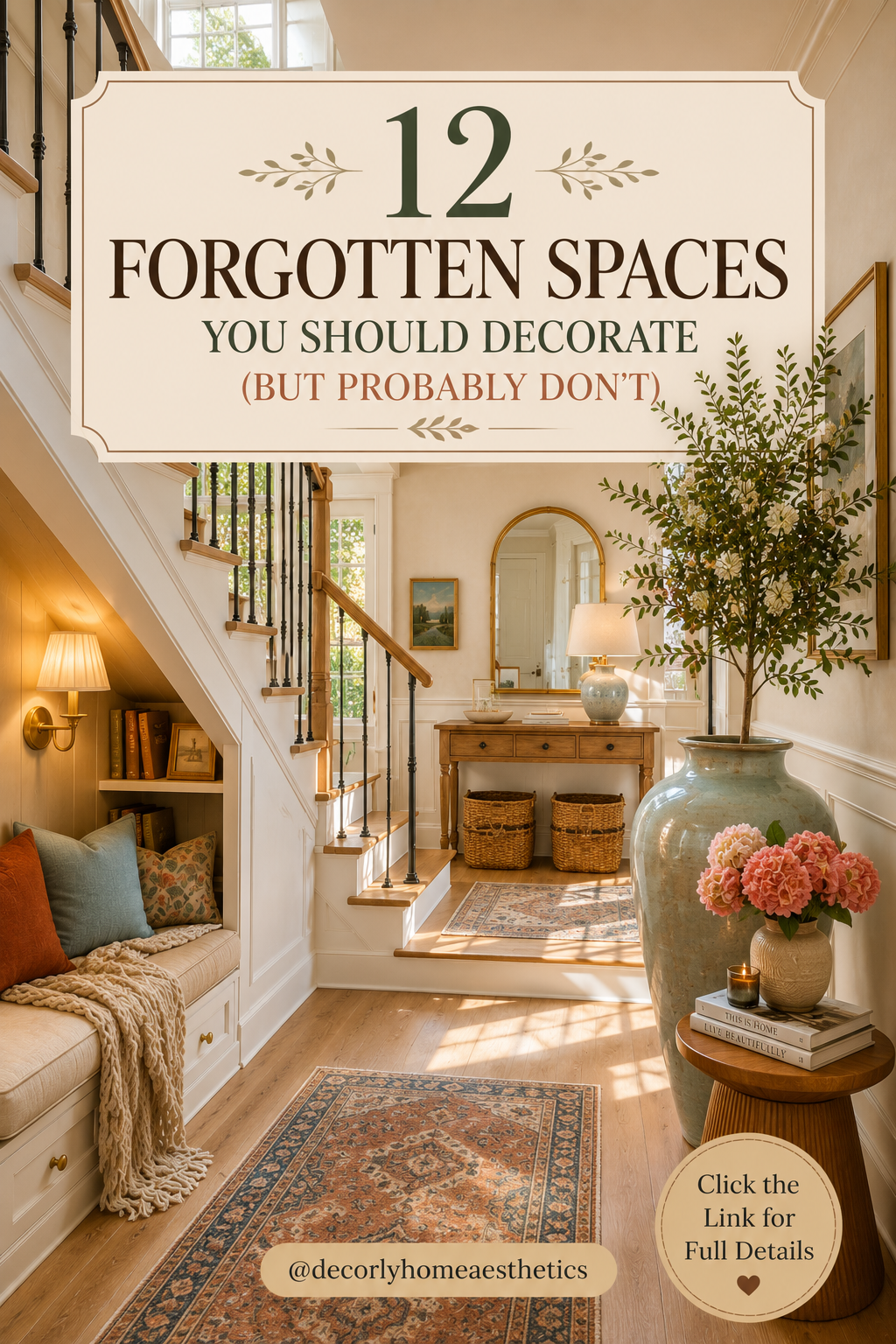
Instead of leaving it empty, transform it into a cozy reading nook complete with a built-in bench, soft cushions, warm lighting, and floating bookshelves.
If space is limited, consider adding a console table with artwork, decorative baskets, or indoor plants.
In larger homes, this area can even become a stylish home office, mini library, or coffee station.
Making use of this forgotten space adds both function and character.
3. Style Your Hallway Corners with Statement Decor and Greenery
Empty hallway corners are often ignored, yet they provide the perfect opportunity to introduce personality.
A large indoor plant placed inside a beautiful ceramic planter instantly softens the space.
Add a sculptural wooden stool, a stone vase filled with eucalyptus branches, or a floor lamp to create a welcoming atmosphere.
These simple additions make hallways feel thoughtfully designed rather than merely connecting rooms.
4. Give Your Laundry Room a Cozy, Boutique Feel
Laundry rooms don’t have to feel cold and purely functional.
Upgrade the space with open wooden shelving, woven storage baskets, glass jars for laundry supplies, framed artwork, and warm lighting.
Replacing plastic containers with matching glass or ceramic storage instantly elevates the room.
Adding a small indoor plant or fresh flowers creates a surprisingly inviting atmosphere, making everyday chores far more enjoyable.
5. Decorate the Empty Wall at the End of Your Hallway
Long hallways often end with a blank wall that serves no purpose.
Instead of leaving it empty, create a striking focal point using oversized artwork, a large round mirror, or a gallery wall featuring black-and-white photography.
A narrow console table with a ceramic lamp, stacked books, and a vase of seasonal branches can make the hallway feel complete.
This simple styling trick draws the eye forward while making narrow spaces appear more intentional.
6. Create a Beautiful Landing Area at the Top of Your Stairs
Many staircase landings become forgotten spaces where nothing happens.
With just a few thoughtful additions, this area can become one of the most charming spots in your home.
Place a vintage console table beneath an arched mirror, add a linen table lamp, woven baskets for storage, and a small arrangement of fresh greenery.
The result is a welcoming transition between floors that feels warm and elegant.
7. Upgrade the Space Around Your Interior Doors with Elegant Trim and Decor
Doors naturally draw attention, yet they’re rarely considered part of the decorating plan.
Installing decorative trim, painting doors in soft neutral shades, or replacing standard hardware with modern brass or matte black handles can dramatically improve the look of your home.
Add small framed artwork or sconces beside wider doorways for an even more custom appearance.
These subtle details create the feeling of a professionally designed interior.
8. Turn an Empty Window Corner into a Cozy Reading Spot
Natural light makes every home feel happier.
If you have an unused window corner, transform it into a peaceful retreat with a comfortable armchair, a side table, a cozy throw blanket, and a floor lamp.
Add a basket of books and a small plant to complete the look.
This inviting corner quickly becomes the perfect place to enjoy coffee, read a book, or simply relax after a busy day.
9. Style the Area Beneath Floating Stairs with Decorative Accents
Modern floating staircases often leave open space underneath that feels unfinished.
Decorate the area with sculptural vases, indoor plants, a sleek bench, or custom shelving that displays books and artwork.
Minimal styling works best so the architecture remains the star of the space.
When thoughtfully designed, this overlooked area becomes a beautiful conversation piece.
10. Decorate Your Mudroom or Entry Drop Zone Like a Designer
Your home’s entryway creates the first impression for every guest.
Instead of allowing shoes, coats, and bags to pile up, organize the area with built-in benches, woven baskets, wall hooks, and matching storage bins.
A round mirror, fresh flowers, and warm lighting instantly make the space feel more welcoming.
A functional entryway can also be incredibly stylish.
11. Bring Life to Empty Niches, Alcoves, and Built-In Shelves
Architectural niches and recessed shelves often go unnoticed.
Highlight these areas with carefully styled décor such as handmade pottery, stacked design books, candles, sculptures, or botanical artwork.
Adding subtle LED lighting inside shelves creates even more visual impact.
Keeping displays minimal allows each object to stand out while maintaining an uncluttered appearance.
12. Create a Welcoming Porch Entry That Feels Like Home
Your front porch sets the tone before anyone even walks inside.
Add comfortable seating, oversized planters, seasonal flowers, layered doormats, outdoor lanterns, and a beautiful wreath to create an inviting entrance.
Warm lighting in the evening makes your home feel even more welcoming.
Small updates to your porch dramatically improve curb appeal while making everyday arrivals feel special.
Designer Tips for Decorating Forgotten Spaces
Professional designers often say that beautiful homes are created through attention to detail.
Rather than focusing only on large furniture pieces, they style transition areas that many homeowners overlook.
Use consistent materials throughout your home, such as warm oak wood, natural stone, linen fabrics, woven baskets, and handmade ceramics. This creates visual flow from one space to the next.
Greenery is another designer favorite. Even one large indoor plant can completely transform an empty corner while adding warmth and life.
Finally, resist the temptation to fill every empty space. Carefully selected décor almost always looks more elegant than overcrowded displays.
Budget-Friendly Ways to Refresh Overlooked Spaces
Decorating forgotten spaces doesn’t require a large budget.
Shop your own home first by moving artwork, mirrors, lamps, or decorative accessories into overlooked areas.
Visit thrift stores for vintage consoles, stools, and baskets that add character without costing much.
Simple upgrades like replacing outdated hardware, painting trim, adding peel-and-stick wallpaper to alcoves, or introducing fresh plants can dramatically change how a space feels.
Small improvements often have the biggest visual impact.
Common Mistakes to Avoid
One of the most common mistakes is treating transitional spaces as purely functional.
Hallways, staircases, landings, and entryways deserve the same attention as major rooms.
Another mistake is overcrowding small areas with too many decorative objects. Keep styling simple and intentional.
Finally, don’t forget lighting. Soft table lamps, sconces, and warm accent lighting help overlooked spaces feel cozy and inviting rather than forgotten.
Final Thoughts
Sometimes the most beautiful transformations happen in the places we rarely notice. By decorating overlooked corners, hallway landings, under-the-stairs spaces, entryways, and empty niches, you create a home that feels complete from every angle.
These forgotten spaces may be small, but they have the power to add warmth, personality, and designer-worthy style throughout your home. Instead of focusing only on the main rooms, give these hidden areas the attention they deserve—and you’ll be surprised by how much more beautiful and welcoming your entire home becomes.