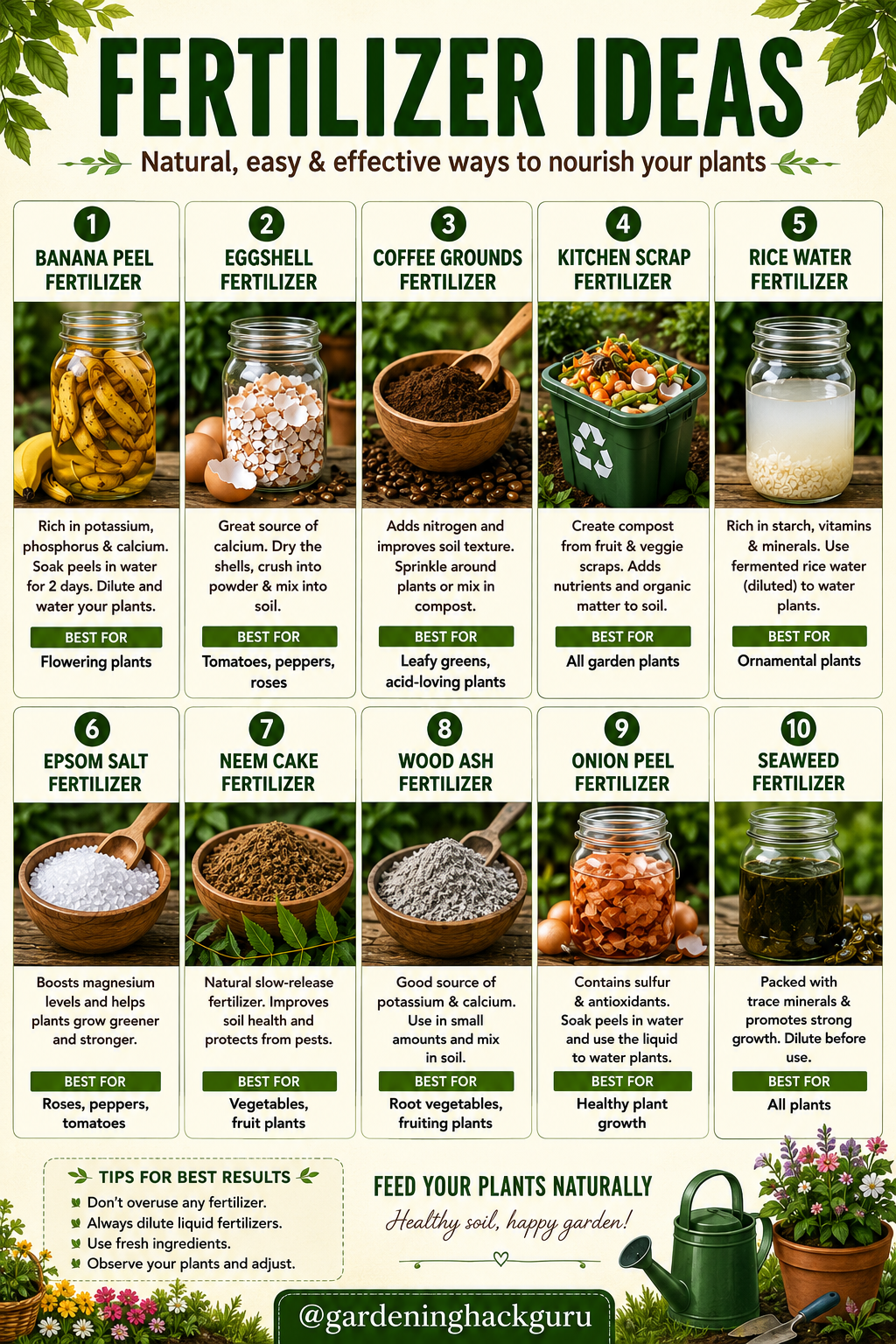
A beautiful garden starts with healthy soil. The good news is that you don’t always need expensive chemical fertilizers to help your plants grow. Many powerful natural fertilizers can be made from simple kitchen scraps and everyday household ingredients.
Natural fertilizers are eco-friendly, budget-friendly, and safe for your plants. They improve soil health, encourage strong roots, and help flowers, vegetables, and indoor plants thrive naturally.
Here are 10 easy and effective fertilizer ideas you can try at home.
1. Banana Peel Fertilizer
Banana peels are rich in:
Potassium
Phosphorus
Calcium
These nutrients help plants grow stronger and produce healthier flowers and fruits.
How to use:
Soak banana peels in water for 2 days
Dilute the liquid with water
Pour around the base of plants
Best for:
Roses
Tomatoes
Peppers
Flowering plants
2. Eggshell Fertilizer
Eggshells are packed with calcium, which strengthens plant roots and prevents nutrient deficiencies.
How to use:
Wash and dry eggshells
Crush them into powder
Mix into the soil
Best for:
Tomatoes
Peppers
Indoor plants
3. Coffee Grounds Fertilizer
Used coffee grounds add nitrogen to the soil and improve texture.
How to use:
Sprinkle lightly around plants
Mix into compost
Avoid using too much
Best for:
Leafy greens
Acid-loving plants
Hydrangeas
4. Kitchen Scrap Compost
Fruit and vegetable scraps can become rich natural compost.
Use:
Vegetable peels
Fruit scraps
Tea bags
Coffee grounds
Avoid:
Meat
Dairy
Oily food
Compost improves soil fertility naturally over time.
5. Rice Water Fertilizer
Rice water contains vitamins, starch, and minerals that help plant growth.
How to use:
Save leftover rice water
Let it cool
Dilute slightly before watering plants
Best for:
Indoor plants
Herbs
Decorative plants
6. Epsom Salt Fertilizer
Epsom salt provides magnesium, which helps plants grow greener and healthier.
How to use:
Mix 1 tablespoon with water
Spray or water plants monthly
Best for:
Roses
Tomatoes
Peppers
7. Neem Cake Fertilizer
Neem cake is a natural organic fertilizer that also protects plants from pests.
Benefits:
Improves soil quality
Slow nutrient release
Natural pest protection
Best for:
Vegetable gardens
Fruit plants
Outdoor flowers
8. Wood Ash Fertilizer
Wood ash contains potassium and calcium that support plant growth.
How to use:
Sprinkle small amounts into soil
Avoid overuse
Best for:
Root vegetables
Fruiting plants
Do not use on acid-loving plants.
9. Onion Peel Fertilizer
Onion peels contain antioxidants and sulfur that help strengthen plants.
How to use:
Soak peels in water overnight
Strain the liquid
Use it to water plants
Best for:
Healthy leaf growth
Garden vegetables
10. Seaweed Fertilizer
Seaweed is rich in trace minerals and natural growth boosters.
How to use:
Soak seaweed in water
Dilute before use
Benefits:
Stronger roots
Better flowering
Improved soil health
Benefits of Natural Fertilizers
Eco-Friendly
They reduce waste and avoid harmful chemicals.
Budget-Friendly
Most ingredients come directly from your kitchen.
Better Soil Health
Natural fertilizers improve long-term soil quality.
Safer for Plants
Gentler than strong chemical fertilizers.
Tips for Using Natural Fertilizers
Don’t Overuse
Too much fertilizer can harm plants.
Dilute Liquid Fertilizers
Always mix with water before applying.
Use Fresh Ingredients
Fresh organic materials work best.
Observe Your Plants
Different plants react differently, so monitor growth carefully.
Final Thoughts
Healthy gardens don’t need expensive products. Many of the best fertilizers are already in your kitchen. Banana peels, eggshells, coffee grounds, rice water, and compost can naturally nourish your plants while reducing waste at the same time.
With a little creativity and consistency, you can grow greener, healthier, and more beautiful plants naturally.
Your garden — and the planet — will thank you.