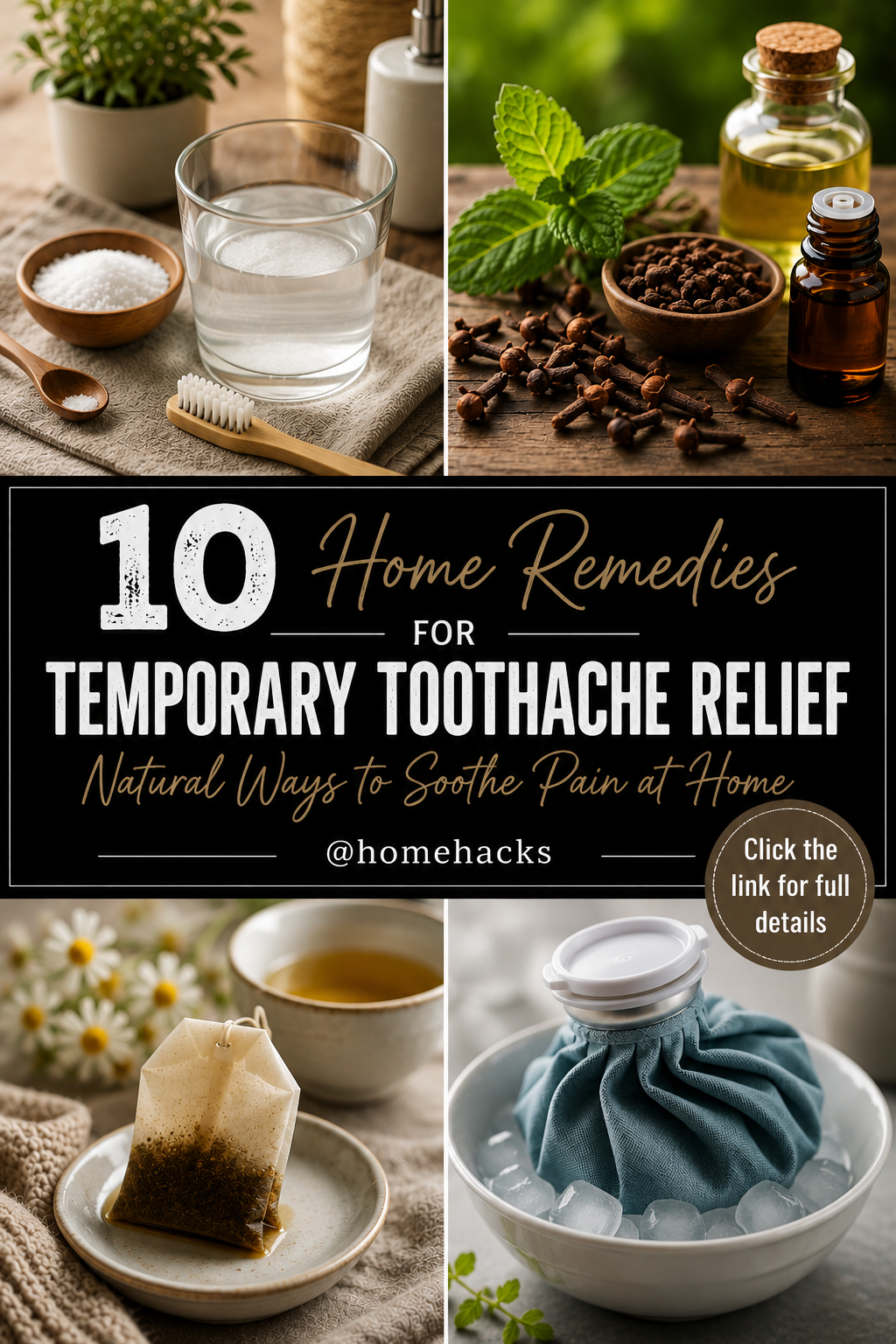
Few things can disrupt your day like a toothache. Whether it’s a dull ache or a sharp, throbbing pain, tooth discomfort can make it difficult to eat, sleep, or concentrate. While a toothache usually requires treatment from a dentist, there are several home remedies that may help provide temporary relief until you can be seen by a dental professional.
It’s important to remember that these remedies are not cures. Tooth pain is often caused by cavities, infections, cracked teeth, exposed nerves, gum disease, or other dental issues that need proper diagnosis and treatment. However, if you’re waiting for a dental appointment, these simple home remedies may help reduce discomfort.
Why Toothaches Happen
Before treating a toothache, it’s helpful to understand what might be causing it. Common causes include:
- Tooth decay (cavities)
- Gum inflammation
- Cracked or chipped teeth
- Food trapped between teeth
- Tooth abscess
- Worn enamel
- Sensitive teeth
- Wisdom teeth problems
- Loose fillings or crowns
- Teeth grinding
If your toothache is severe, lasts more than two days, or is accompanied by swelling, fever, or difficulty swallowing, seek dental care immediately.
1. Warm Salt Water Rinse
A salt water rinse is one of the easiest and most effective ways to temporarily relieve tooth discomfort.
Salt water helps clean the mouth, reduce bacteria, and soothe irritated gums.
How to Use
- Mix ½ teaspoon of salt into one glass of warm water.
- Swish the solution around your mouth for 30 seconds.
- Spit it out.
- Repeat 2–3 times daily.
This remedy is especially helpful if food is trapped around the painful tooth.
2. Cold Compress
If your toothache is caused by injury or swelling, a cold compress may help numb the area and reduce inflammation.
How to Use
- Wrap an ice pack or a bag of frozen vegetables in a clean towel.
- Hold it against the outside of your cheek for 15–20 minutes.
- Repeat every few hours as needed.
Never place ice directly against your tooth or skin.
3. Clove Oil
Clove oil contains eugenol, a natural compound that has been traditionally used to temporarily numb tooth pain.
How to Use
- Place one drop of clove oil on a cotton swab.
- Gently dab it around the sore tooth and nearby gum.
- Avoid using excessive amounts.
If you have sensitive gums, dilute the clove oil with a small amount of carrier oil before use.
4. Peppermint Tea Bag
Peppermint has soothing properties and may help calm irritated tissues.
How to Use
- Brew a peppermint tea bag.
- Allow it to cool until it’s comfortably warm or chill it in the refrigerator.
- Place it gently against the painful area for 10–15 minutes.
5. Keep Your Mouth Clean
Food particles trapped around a painful tooth can make discomfort worse.
What to Do
- Brush gently with a soft-bristled toothbrush.
- Floss carefully around the sore tooth.
- Rinse with warm water afterward.
Keeping the area clean may reduce irritation while you wait to see your dentist.
6. Elevate Your Head While Sleeping
Lying flat increases blood flow to the head, which may make tooth pain feel more intense.
Simple Solution
Sleep with an extra pillow to keep your head elevated. Many people find this helps reduce nighttime throbbing.
7. Avoid Trigger Foods
Certain foods and drinks can worsen tooth pain.
Try to avoid:
- Very hot foods
- Ice-cold drinks
- Sugary snacks
- Hard candies
- Crunchy chips
- Sticky sweets
Instead, choose soft foods like yogurt, soup, mashed potatoes, or scrambled eggs until your tooth feels better.
8. Hydrogen Peroxide Rinse (Only If Appropriate)
Some people use a diluted hydrogen peroxide rinse to help reduce bacteria in the mouth. However, it should never be swallowed and isn’t suitable for young children.
How to Use
- Mix equal parts 3% hydrogen peroxide and water.
- Swish gently for about 30 seconds.
- Spit it out completely.
- Rinse your mouth with plain water afterward.
If you’re unsure whether this is appropriate for you, skip this remedy and use a salt water rinse instead.
9. Over-the-Counter Pain Relief
If appropriate for you, over-the-counter pain relievers may help reduce discomfort until you can visit a dentist.
Always:
- Follow the dosage instructions on the label.
- Avoid placing aspirin directly on the gums, as it can damage the tissue.
- Ask a healthcare professional if you have questions about which medication is suitable for you.
10. See a Dentist as Soon as Possible
Home remedies are only temporary solutions.
A dentist can identify the real cause of the pain and recommend the proper treatment, which may include:
- Filling a cavity
- Treating gum disease
- Repairing a cracked tooth
- Root canal treatment
- Tooth extraction when necessary
Ignoring persistent tooth pain can allow the problem to become more serious.
Common Toothache Mistakes to Avoid
When dealing with tooth pain, avoid these common mistakes:
- Don’t ignore swelling or fever.
- Don’t place aspirin directly on your gums.
- Don’t chew on the painful side of your mouth.
- Don’t delay seeing a dentist if the pain continues.
- Don’t use extremely hot or cold foods if they trigger pain.
Tips to Prevent Future Toothaches
Preventing toothaches is much easier than treating them.
Here are a few simple habits that can help:
Brush Twice Daily
Use a fluoride toothpaste and brush for at least two minutes.
Floss Every Day
Floss removes food and plaque from areas your toothbrush can’t reach.
Limit Sugary Foods
Frequent sugary snacks increase the risk of cavities.
Drink More Water
Water helps wash away food particles and supports saliva production.
Replace Your Toothbrush
Change your toothbrush every three to four months or sooner if the bristles become worn.
Visit Your Dentist Regularly
Routine dental checkups can catch small problems before they become painful emergencies.
Frequently Asked Questions
Can a toothache go away on its own?
Sometimes mild irritation may improve, but persistent tooth pain usually means there’s an underlying problem that should be evaluated by a dentist.
When should I see a dentist?
Schedule an appointment as soon as possible if your toothache lasts longer than one or two days. Seek urgent care if you have severe swelling, fever, difficulty breathing, or trouble swallowing.
Can home remedies cure a cavity?
No. Home remedies may temporarily ease discomfort, but they cannot repair cavities, infections, or damaged teeth.
Final Thoughts
A toothache can be frustrating and painful, but these simple home remedies may help make you more comfortable while you wait for professional dental care. Salt water rinses, cold compresses, clove oil, and keeping your mouth clean are all easy steps that may provide temporary relief.
Remember, these remedies do not treat the underlying cause of a toothache. If your pain persists, worsens, or is accompanied by swelling or fever, don’t delay seeking care from a dentist. Prompt treatment can prevent more serious dental problems and help restore your healthy smile.