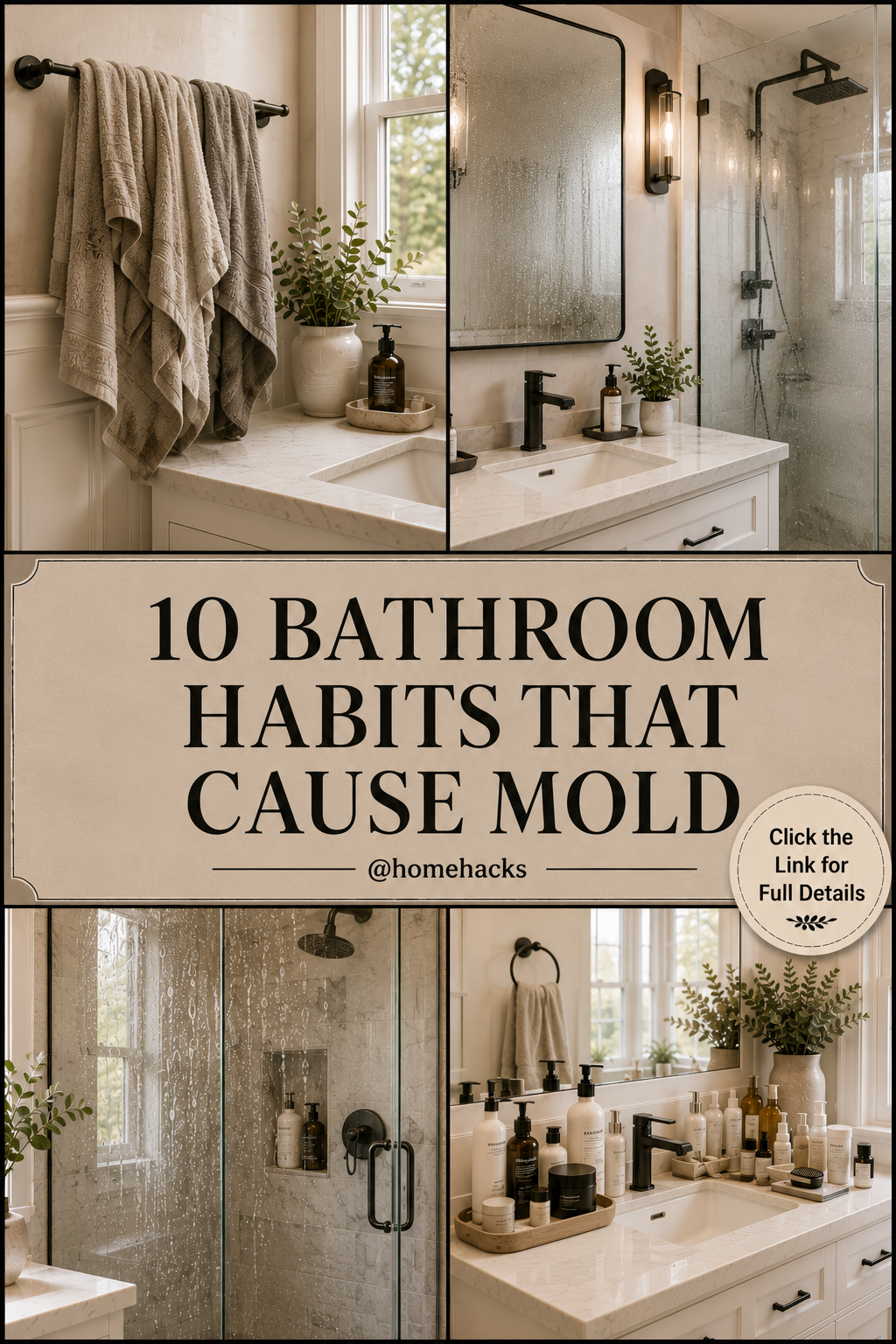
1Bathrooms are one of the most moisture-prone areas in any home. Between hot showers, running sinks, damp towels, and limited ventilation, it’s the perfect environment for mold to grow. While a small amount of moisture is unavoidable, certain everyday habits can create the ideal conditions for mold to spread, leading to unpleasant odors, damaged surfaces, and even costly repairs.
The good news is that preventing mold doesn’t require expensive products or major renovations. A few simple changes to your daily routine can help keep your bathroom clean, fresh, and mold-free.
Here are 10 common bathroom habits that cause mold—and what you should do instead.
1. Leaving Wet Towels Hanging in a Pile
After a shower, many people leave damp towels folded over themselves or tossed into a corner. Unfortunately, wet fabric traps moisture, creating the perfect breeding ground for mold and mildew.
Instead of drying, the towel stays damp for hours, leading to unpleasant odors and bacteria.
How to Prevent It
- Hang towels fully spread out on a towel bar.
- Wash bath towels every three to four uses.
- Make sure towels dry completely between uses.
Proper airflow helps towels dry faster and prevents mold from developing.
2. Not Using the Exhaust Fan
One of the biggest causes of bathroom mold is trapped humidity.
Every hot shower releases a large amount of moisture into the air. Without proper ventilation, that moisture settles on walls, ceilings, mirrors, and grout.
Better Habit
Turn on the exhaust fan before your shower and leave it running for at least 20 minutes afterward.
If your bathroom doesn’t have an exhaust fan, open a window whenever possible to improve airflow.
3. Skipping the Shower Wipe-Down
After every shower, water droplets remain on tile, glass, and fixtures.
When moisture sits for long periods, mold spores have the opportunity to grow.
Quick Fix
Keep a small squeegee or microfiber cloth inside the shower.
Spend one minute wiping:
- Glass doors
- Tile walls
- Shower fixtures
This simple habit dramatically reduces moisture buildup.
4. Letting Water Pool Around the Sink
Small puddles around faucets and countertops may seem harmless, but constant moisture encourages mold around caulk, backsplashes, and vanity edges.
What to Do
After using the sink:
- Wipe the countertop dry.
- Dry around the faucet base.
- Keep standing water from collecting.
These small steps help protect both the vanity and surrounding surfaces.
5. Ignoring Grout and Caulk
Grout and silicone caulk naturally absorb moisture over time.
When cracks appear, water can seep behind tiles, allowing hidden mold to develop.
Maintenance Tips
Inspect grout and caulk every few months.
Replace damaged caulk and repair cracked grout before water causes bigger problems.
6. Keeping Too Many Products in the Shower
Rows of shampoo bottles, body washes, razors, and skincare products may look convenient, but they trap moisture underneath.
Water becomes trapped behind bottles, making it difficult for surfaces to dry.
Declutter Your Shower
Only keep products you use regularly.
Store extras inside a cabinet or closet.
The fewer items sitting in wet areas, the easier it is to keep everything clean.
7. Forgetting to Wash Bath Mats
Bath mats absorb water every single day.
Without regular washing, they become damp, develop mildew, and create unpleasant odors.
Best Practice
- Wash fabric bath mats every one to two weeks.
- Allow rubber-backed mats to dry completely between uses.
- Hang mats after showers whenever possible.
8. Closing the Shower Curtain Immediately
Many people close the shower curtain tightly after bathing.
While this seems tidy, it actually traps moisture inside the folds.
Better Solution
Spread the curtain completely open after every shower.
This allows both sides to dry faster and reduces mildew growth.
Wash shower curtains regularly according to the manufacturer’s instructions.
9. Neglecting Bathroom Cleaning
Soap residue, toothpaste splashes, dust, and body oils provide food for mold and mildew.
Even beautiful bathrooms can develop mold if they’re rarely cleaned.
Weekly Cleaning Routine
Clean:
- Shower walls
- Bathtub
- Sink
- Toilet
- Mirrors
- Countertops
- Floor
Regular cleaning prevents buildup before it becomes difficult to remove.
10. Ignoring Small Mold Spots
Tiny black spots on grout, ceilings, or corners often seem harmless.
Unfortunately, mold spreads quickly when left untreated.
Act Early
As soon as you notice mold:
- Clean the affected area with an appropriate bathroom cleaner.
- Dry the surface completely.
- Improve ventilation to reduce future growth.
Small problems are much easier to fix than widespread mold damage.
Bonus Tips to Keep Your Bathroom Mold-Free
Simple daily habits can make a huge difference.
Keep the Door Open
After showering, leave the bathroom door open to improve airflow.
Add Moisture-Loving Plants
Certain houseplants thrive in bathrooms and can tolerate humid environments.
Popular options include:
- Boston Fern
- Peace Lily
- Spider Plant
They add beauty while enjoying the bathroom’s natural humidity.
Repair Leaks Quickly
Even a slow drip under the sink can create hidden mold behind cabinets.
Inspect plumbing regularly and repair leaks as soon as possible.
Wash Shower Curtains Regularly
Fabric or plastic shower curtains should be cleaned every month to prevent mildew buildup.
Reduce Bathroom Clutter
The fewer items sitting on counters and shelves, the easier it is to clean and dry surfaces properly.
Signs Your Bathroom May Already Have Mold
Watch for these warning signs:
- Musty odors
- Black or green spots on grout
- Peeling paint
- Stained ceilings
- Persistent dampness
- Discolored caulk
- Mold around windows
If mold covers a large area or keeps returning despite cleaning, consider contacting a professional to identify the source of excess moisture.
Final Thoughts
Preventing bathroom mold isn’t about cleaning harder—it’s about controlling moisture every day. Small habits like using the exhaust fan, drying wet surfaces, washing bath mats, and keeping your shower organized can dramatically reduce the chances of mold developing.
By making these simple changes part of your routine, you’ll enjoy a cleaner, healthier, and fresher bathroom while protecting your home from expensive repairs in the future.
Start with just one or two of these habits today, and you’ll be surprised how much of a difference they make over time.