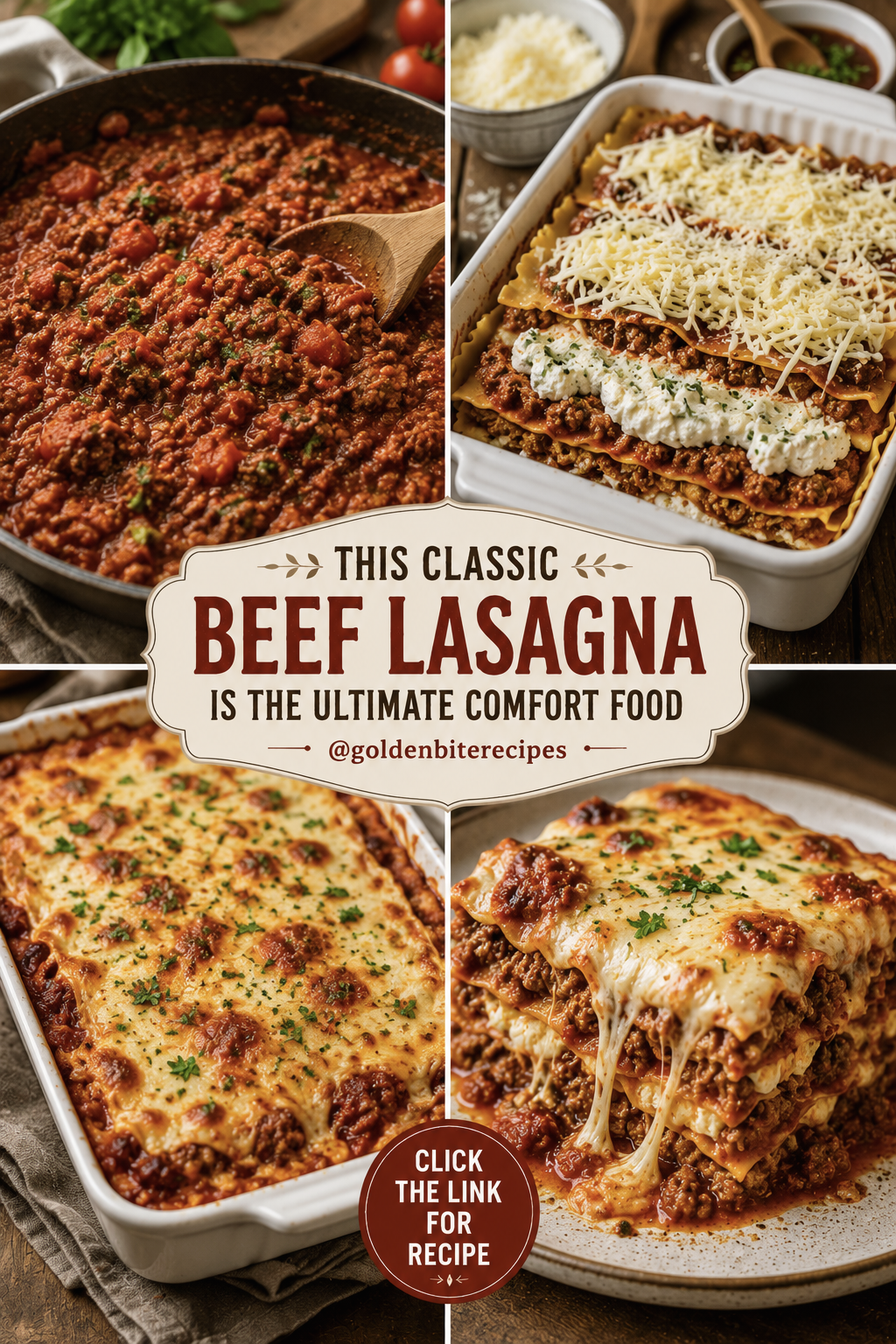
There are some dinners that instantly make a house feel warmer, and a bubbling pan of homemade lasagna is definitely one of them.
The smell of rich beef and tomato sauce simmering on the stove, layers of pasta covered with creamy ricotta, and mozzarella turning golden in the oven—it’s hard to beat.
This Classic Beef Lasagna is everything I want from comfort food. It’s hearty without being complicated, wonderfully cheesy, packed with a rich homemade meat sauce, and sturdy enough to give you those beautiful layers when you cut into it.
It’s also the kind of recipe that brings everyone to the table.
Whether you’re making Sunday dinner, feeding a hungry family, preparing something special for guests, or simply craving a cozy meal, this is one of those recipes worth keeping.
Why You’ll Love This Classic Beef Lasagna
Homemade lasagna takes a little longer than throwing together a quick pasta dinner, but most of that time is simple simmering, layering, and baking.
And the result is absolutely worth it.
You’ll love this recipe because it’s:
- Rich, cheesy, and incredibly comforting
- Packed with flavorful homemade beef sauce
- Easy to prepare ahead of time
- Perfect for feeding a family
- Freezer-friendly
- Great for holidays and gatherings
- Delicious as leftovers
- Made with simple, familiar ingredients
And, of course, there are all those layers.
You get tender pasta, savory beef sauce, creamy ricotta, stretchy mozzarella, and salty Parmesan in almost every forkful.
Ingredients You’ll Need
For the Beef Sauce
- 1 lb ground beef
- 1 tablespoon olive oil
- 1 medium yellow onion, finely diced
- 4 garlic cloves, minced
- 2 tablespoons tomato paste
- 1 can (28 oz) crushed tomatoes
- 1 can (15 oz) tomato sauce
- 1 teaspoon dried oregano
- 1 teaspoon dried basil
- ½ teaspoon Italian seasoning
- ½ teaspoon red pepper flakes, optional
- 1 teaspoon sugar, optional
- Salt and black pepper to taste
- 2 tablespoons chopped fresh parsley or basil
For the Ricotta Layer
- 15 oz whole-milk ricotta cheese
- 1 large egg
- ½ cup grated Parmesan
- 2 tablespoons chopped fresh parsley
- ½ teaspoon salt
- ¼ teaspoon black pepper
For the Lasagna
- 12 lasagna noodles
- 3 cups shredded mozzarella cheese
- ½ cup freshly grated Parmesan
- Fresh parsley or basil for serving
Start With the Homemade Beef Sauce
The sauce is really the heart of a good beef lasagna.
Heat the olive oil in a large skillet or saucepan over medium heat.
Add the diced onion and cook for about 4–5 minutes, until it begins to soften.
Add the garlic and cook for another 30 seconds.
You want the garlic fragrant but not browned.
Now add the ground beef.
Break it apart with a wooden spoon and cook until browned throughout. If there’s a large amount of excess grease in the pan, carefully drain some of it.
Season the beef with salt and pepper.
Build That Rich Tomato Flavor
Add the tomato paste directly to the beef.
Cook it for about a minute or two before adding the other tomato ingredients.
This small step gives the sauce a deeper flavor than simply stirring everything together at once.
Add the crushed tomatoes and tomato sauce.
Then stir in oregano, dried basil, Italian seasoning, red pepper flakes, and a small amount of sugar if your tomatoes taste particularly acidic.
Bring everything to a gentle simmer.
Reduce the heat and allow the sauce to cook uncovered for approximately 25–30 minutes, stirring occasionally.
If you have extra time, you can let it simmer a little longer.
You want the finished sauce rich and thick rather than watery. A sauce that’s too thin can make your finished lasagna difficult to slice.
Finish with fresh parsley or basil.
Prepare the Lasagna Noodles
Bring a large pot of generously salted water to a boil.
Cook the lasagna noodles according to the package directions until just al dente.
Don’t overcook them.
Remember, they’re going into the oven for another 40 minutes or so.
Drain the noodles and lay them flat on parchment paper or a clean kitchen towel so they don’t stick together.
If you’re using oven-ready noodles, follow the directions on the package instead.
Make the Creamy Ricotta Filling
While the sauce simmers, combine the ricotta, egg, Parmesan, parsley, salt, and black pepper in a medium bowl.
Stir until everything is evenly incorporated.
The egg helps the ricotta layer stay together once the lasagna is sliced, while Parmesan adds extra savory flavor.
Now comes the fun part.
How to Layer Beef Lasagna
Preheat your oven to 375°F (190°C).
Lightly grease a 9 × 13-inch baking dish.
Spread a thin layer of beef sauce across the bottom.
This prevents the noodles from sticking and gives the bottom layer plenty of moisture.
Then begin layering.
Layer 1
Add:
Lasagna noodles → ricotta mixture → beef sauce → mozzarella
Repeat.
Layer 2
Again:
Lasagna noodles → ricotta mixture → beef sauce → mozzarella
Final Layer
Finish with another layer of noodles, plenty of beef sauce, mozzarella, and grated Parmesan.
Don’t be shy with the cheese on top.
That’s how you get the bubbling, beautifully browned surface that makes baked lasagna so irresistible.
Bake Until Golden and Bubbling
Cover the baking dish loosely with aluminum foil.
One helpful trick is to lightly grease the underside of the foil so melted cheese doesn’t stick to it.
Bake covered for approximately 25 minutes.
Then remove the foil and continue baking for another 15–20 minutes, or until the sauce is bubbling around the edges and the cheese on top is melted and beautifully golden.
If you want deeper browning, you can briefly place the lasagna under the broiler at the end.
Watch it carefully—it can go from golden to burnt very quickly.
The Most Important Step: Let It Rest
This might be the hardest part of the entire recipe.
When the lasagna comes out of the oven looking bubbly, cheesy, and perfect, you’ll want to cut into it immediately.
Don’t.
Let it rest for approximately 15–20 minutes.
Fresh-from-the-oven lasagna contains extremely hot sauce and melted cheese that haven’t had time to settle. Cutting it immediately often causes all those beautiful layers to slide apart.
Resting gives the lasagna time to firm up slightly.
You’ll get much cleaner slices while still having wonderfully melted cheese inside.
How to Get Perfect Lasagna Layers
If you’ve ever made lasagna that turned into a delicious but messy pile on the plate, there are a few things that help.
Keep the Meat Sauce Thick
Watery tomato sauce creates watery lasagna.
Let your sauce simmer uncovered until it thickens.
Don’t Overcook Your Noodles
Slightly firm noodles hold their structure better during baking.
Don’t Use Too Much Ricotta
You want a creamy layer—not a giant wall of cheese separating the pasta and sauce.
Spread Everything Evenly
Try to get some meat sauce and cheese into every corner.
Let the Lasagna Rest
Yes, I’m mentioning this twice because it really does make that much difference.
What Cheese Is Best for Beef Lasagna?
For classic homemade lasagna, I love the combination of ricotta, mozzarella, and Parmesan.
Each cheese does something different.
Ricotta gives you that creamy middle layer.
Mozzarella provides the gooey melted cheese and beautiful golden top.
Parmesan adds salty, nutty depth.
Whole-milk mozzarella tends to melt beautifully, but part-skim mozzarella works perfectly well too.
If possible, grate your mozzarella yourself. Pre-shredded cheese often contains anti-caking ingredients that can slightly affect how smoothly it melts.
Can I Use Cottage Cheese Instead of Ricotta?
Absolutely.
This is one of those lasagna debates that can get surprisingly serious!
If you prefer cottage cheese—or simply have it in your refrigerator—you can substitute it for the ricotta.
Small-curd cottage cheese works especially well.
The texture will be slightly different, but the lasagna will still be delicious.
Easy Lasagna Variations
Once you’ve mastered classic beef lasagna, there are plenty of ways to make it your own.
Beef and Sausage Lasagna
Replace half the ground beef with Italian sausage.
This creates an even richer, more savory meat sauce.
Spicy Beef Lasagna
Increase the red pepper flakes or add spicy Italian sausage.
Extra-Cheesy Lasagna
Add provolone between a couple of the layers.
Vegetable Beef Lasagna
Add sautéed mushrooms, spinach, zucchini, or bell peppers to the meat sauce.
Just make sure vegetables with lots of moisture are cooked first so they don’t make your lasagna watery.
Spinach Ricotta Lasagna
Stir cooked, thoroughly drained spinach into the ricotta mixture.
What to Serve With Beef Lasagna
Lasagna is already a substantial meal, so I like keeping the sides fairly simple.
A crisp green salad with a bright vinaigrette is perfect because the acidity cuts through all that rich cheese.
You could also serve it with:
- Garlic bread
- Caesar salad
- Roasted broccoli
- Roasted asparagus
- Sautéed green beans
- Caprese salad
- Simple arugula salad
- Garlic knots
And if you’re feeding a crowd, warm garlic bread is almost mandatory for soaking up the extra meat sauce left on the plate.
Make-Ahead Beef Lasagna
This is an excellent recipe when you want to prepare dinner ahead.
Assemble the entire lasagna but don’t bake it.
Cover the dish tightly and refrigerate it for up to 24 hours.
When you’re ready to cook, take it out of the refrigerator while the oven preheats.
Because it’s starting cold, it may need a little additional baking time.
This makes homemade lasagna especially useful for holidays, entertaining, and busy weekends.
Can You Freeze Lasagna?
Yes, lasagna is one of my favorite freezer meals.
You can freeze it either before or after baking.
For meal prep, assemble the lasagna in a freezer-safe dish, wrap it tightly, and freeze.
For individual meals, bake the lasagna first, allow it to cool, and cut it into portions before freezing.
Individual slices are incredibly convenient because you can reheat only what you need.
For best quality, use frozen lasagna within about 2–3 months.
How to Store Leftovers
Let leftover lasagna cool before transferring it to an airtight container.
Refrigerate for up to 3–4 days.
And here’s something I genuinely love about lasagna:
It might be even better the next day.
The layers settle, the sauce has more time to mingle with the pasta, and individual portions become incredibly easy to reheat.
How to Reheat Lasagna Without Drying It Out
For individual slices, place the lasagna in a baking dish and add a tiny splash of water around—not directly over—the slice.
Cover with foil and warm in the oven until heated through.
The foil traps moisture and prevents the cheese and pasta from drying out.
For a faster option, microwave an individual serving loosely covered until thoroughly heated.
Frequently Asked Questions
Why does my lasagna turn out watery?
The most common causes are thin meat sauce, watery vegetables, overly wet ricotta, or cutting the lasagna immediately after baking.
Do I have to boil lasagna noodles first?
Not necessarily. Oven-ready noodles can be layered directly into the dish, but follow the specific instructions on their package because they require enough sauce to soften properly.
Can I make lasagna the night before?
Yes. Assemble it, cover tightly, and refrigerate overnight. Bake it the following day.
How many layers should lasagna have?
There’s no strict rule, but three layers of noodles works nicely in a standard 9 × 13-inch baking dish.
Can I use ground turkey instead of beef?
Yes. Ground turkey works, although the finished sauce will be leaner and have a slightly lighter flavor.
How do I know when lasagna is done?
The sauce should be bubbling around the edges, the cheese should be completely melted, and the center should be thoroughly heated.
The Kind of Dinner Everyone Remembers
Some recipes become favorites because they’re fast.
Lasagna becomes a favorite for a different reason.
It’s the kind of meal that makes you slow down a little.
You simmer the sauce, build the layers, wait while the cheese bubbles in the oven, and then somehow find the patience to let everything rest before cutting that first thick slice.
And then you get to the good part.
Tender pasta. Rich beef sauce. Creamy ricotta. Gooey mozzarella. Salty Parmesan. Crispy golden cheese around the edges.
It’s familiar, comforting, and incredibly satisfying.
So whether you’re cooking for Sunday dinner, bringing a dish to a gathering, stocking your freezer, or simply craving something cozy, this Classic Beef Lasagna deserves a spot in your recipe collection.
Sometimes the classics really are the best.