
There’s something special about lifting the lid from a bamboo steamer and seeing a basket full of hot, freshly steamed shumai. The wrappers are tender, the filling is juicy, and that first dip into a savory soy sauce makes it difficult to stop at just one.
These homemade Pork Shumai bring that dim sum experience straight into your kitchen.
Shumai—also written as siu mai or shaomai—are open-topped steamed dumplings commonly associated with Chinese dim sum. Unlike dumplings that are completely sealed, shumai leave the filling visible at the top, giving them their recognizable little basket shape.
This version combines juicy ground pork with shrimp, ginger, green onion, soy sauce, and sesame oil. Everything is wrapped in thin shumai wrappers and steamed until tender.
They look impressive enough for a dinner party, but once you get comfortable shaping the first couple, they’re surprisingly easy to make.
Why You’ll Love This Pork Shumai Recipe
There are plenty of reasons these little dumplings disappear so quickly.
- Juicy and flavorful filling
- Tender, delicate wrappers
- Steamed instead of deep-fried
- Easy to prepare ahead
- Freezer-friendly
- Perfect for appetizers or dim sum
- Delicious with a simple dipping sauce
- Easier to shape than many sealed dumplings
The pork provides richness while the shrimp adds a little sweetness and a pleasantly springy texture.
Ingredients
For the Pork Shumai
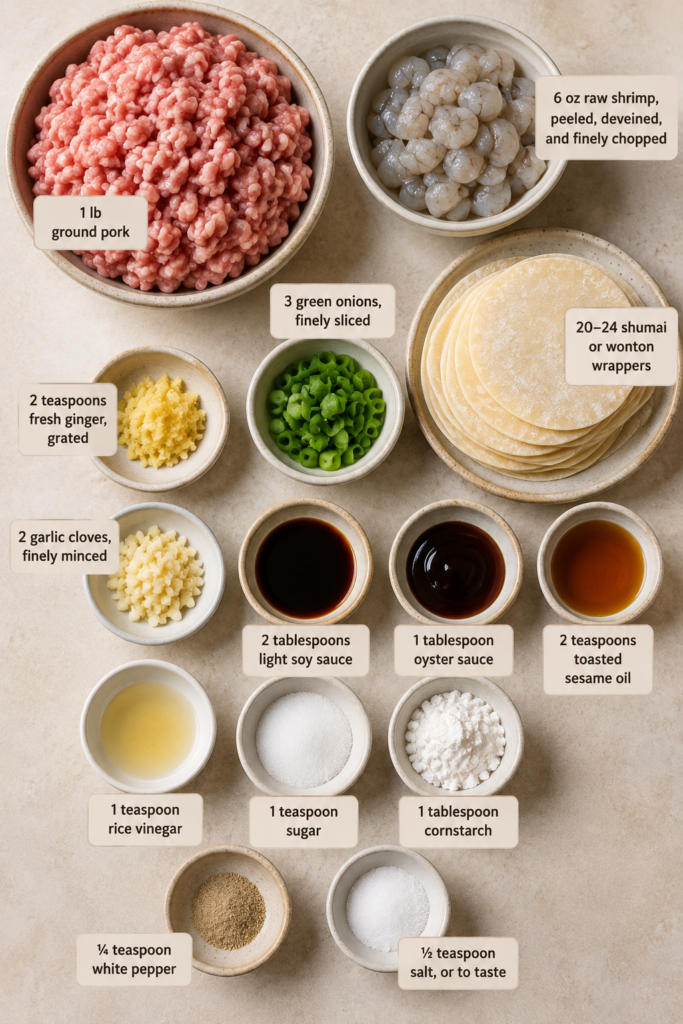
- 1 lb ground pork
- 6 oz raw shrimp, peeled, deveined, and finely chopped
- 20–24 shumai or wonton wrappers
- 3 green onions, finely sliced
- 2 teaspoons fresh ginger, grated
- 2 garlic cloves, finely minced
- 2 tablespoons light soy sauce
- 1 tablespoon oyster sauce
- 2 teaspoons toasted sesame oil
- 1 teaspoon rice vinegar
- 1 teaspoon sugar
- 1 tablespoon cornstarch
- ¼ teaspoon white pepper
- ½ teaspoon salt, or to taste
For Garnishing
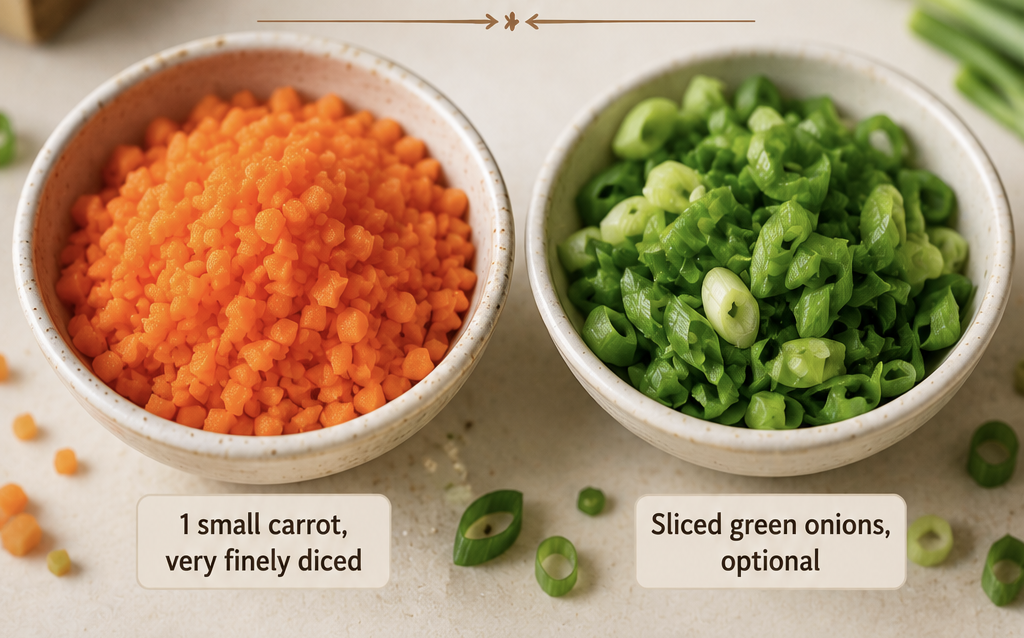
- 1 small carrot, very finely diced
- Sliced green onions, optional
For the Dipping Sauce
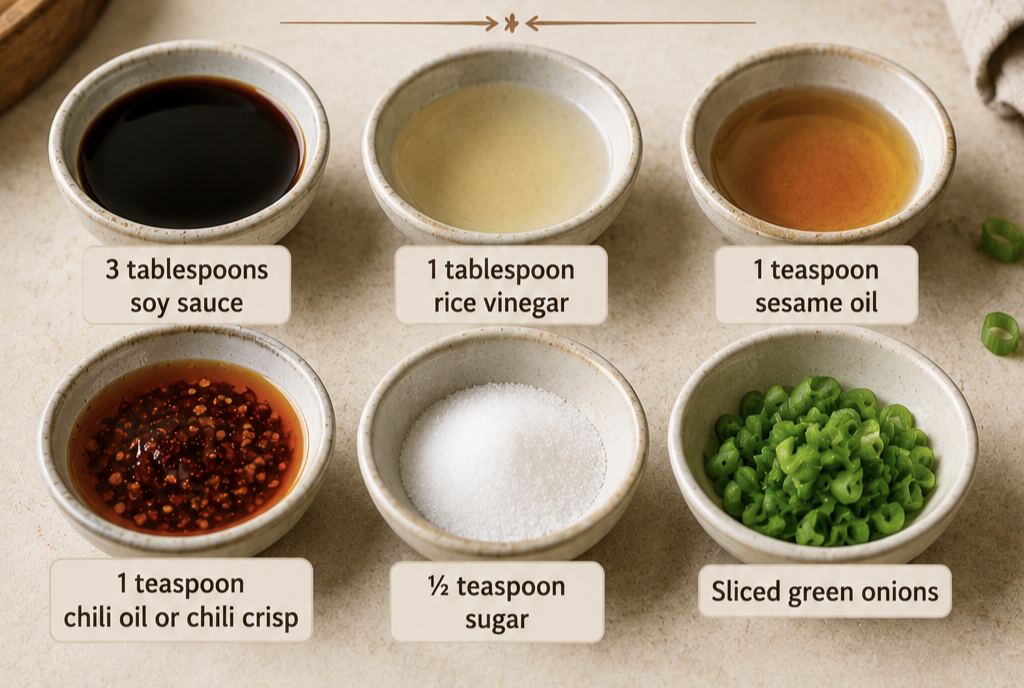
- 3 tablespoons soy sauce
- 1 tablespoon rice vinegar
- 1 teaspoon sesame oil
- 1 teaspoon chili oil or chili crisp
- ½ teaspoon sugar
- Sliced green onions
Start With the Filling
Add the ground pork and finely chopped shrimp to a large bowl.
Add the green onion, ginger, garlic, soy sauce, oyster sauce, sesame oil, rice vinegar, sugar, cornstarch, white pepper, and salt.
Now mix everything together thoroughly.
Rather than simply stirring until the ingredients are combined, continue mixing the filling in one direction for a couple of minutes.
You’ll notice that it gradually becomes stickier and more cohesive.
That texture is exactly what you want. It helps the filling stay juicy while giving cooked shumai their characteristic springy bite.
Why Add Shrimp?
You can make shumai entirely from pork, but I really like adding shrimp.
It brings subtle sweetness to the filling and creates a lighter texture.
Don’t blend the shrimp into a completely smooth paste. Finely chopping it with a knife leaves little pieces throughout the pork, which gives the finished shumai a much more interesting texture.
If you don’t eat shrimp, you can simply replace it with additional ground pork.
Let the Filling Rest
Once mixed, cover the bowl and refrigerate the filling for about 20–30 minutes.
This isn’t absolutely essential, but it makes the filling easier to work with and gives the seasonings a little time to come together.
You can also prepare the filling several hours ahead and keep it refrigerated until you’re ready to assemble the shumai.
How to Fold Shumai
Shumai may look complicated, but they’re actually easier to shape than many other dumplings because you don’t have to seal the top.
Place one wrapper over your hand.
Spoon approximately 1 tablespoon of filling into the center.
Gently bring the wrapper upward around the filling.
Use your thumb and index finger to form a loose circle around the dumpling while pressing the filling down with a spoon.
The wrapper should naturally form little pleats around the sides.
Flatten the bottom gently against your work surface so the shumai can stand upright.
Leave the filling exposed at the top.
That’s it.
Don’t worry about making every shumai identical. Slightly uneven folds make homemade dumplings look more natural.
Add the Classic Garnish
Place a tiny amount of finely diced carrot in the center of each shumai.
You don’t need much—a few little orange pieces are enough to give them that familiar dim sum appearance.
You could also use finely chopped green onion.
Prepare Your Steamer
A traditional bamboo steamer works beautifully, but a metal steaming basket will also do the job.
The most important thing is preventing the dumplings from sticking.
Line the bottom with perforated parchment paper, cabbage leaves, or lightly greased parchment.
Arrange the shumai inside, leaving a little space between each one.
They’ll expand slightly as they cook.
Steam the Pork Shumai
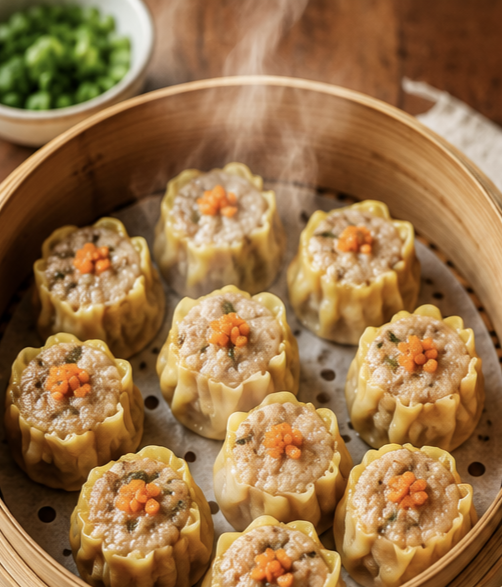
Bring water to a steady simmer beneath the steamer.
Place the basket over the water, making sure the water itself doesn’t touch the dumplings.
Cover and steam the shumai for approximately 8–10 minutes, depending on their size.
Because the filling contains raw pork and shrimp, make sure they’re fully cooked before serving. The pork mixture should reach a safe internal temperature of 160°F (71°C).
When you lift the lid, the wrappers should look tender and slightly translucent, and the filling should appear juicy and cooked through.
Serve them while they’re hot.
Make the Dipping Sauce
While the shumai steam, combine soy sauce, rice vinegar, sesame oil, chili oil, and sugar in a small bowl.
Add a few sliced green onions.
That’s all you really need.
Shumai already have plenty of flavor, so I prefer a dipping sauce that complements them rather than completely covering the filling.
If you love spicy food, add more chili crisp.
Tips for Really Juicy Shumai
Choose Pork With Some Fat
Very lean pork can make dry dumplings.
Ground pork with a reasonable amount of fat produces a much juicier filling.
Don’t Skip the Cornstarch
Cornstarch helps bind the filling while holding onto some of its moisture during steaming.
Mix the Filling Thoroughly
That sticky texture you create while mixing is important. It gives the filling a cohesive, pleasantly springy texture.
Don’t Overfill the Wrappers
It’s tempting to make giant shumai, but overfilling makes them harder to shape and can increase the cooking time.
Don’t Pack the Steamer Too Tightly
Leave a little space between the dumplings so steam can circulate.
Serve Them Fresh
Shumai are at their best when they’re piping hot from the steamer.
Can I Make Pork Shumai Without Shrimp?
Absolutely.
Replace the shrimp with the same amount of additional ground pork.
You could also experiment with finely chopped shiitake mushrooms or water chestnuts for additional texture.
The flavor will be different, but you’ll still have delicious homemade pork shumai.
Pork and Mushroom Shumai
Finely chopped shiitake mushrooms are one of my favorite additions.
Soak dried shiitakes until soft, squeeze out the excess water, chop them finely, and mix them into the pork filling.
They add an earthy, savory depth without overpowering the other ingredients.
Spicy Pork Shumai
If you want something with more heat, add a teaspoon of chili crisp or finely chopped fresh chili to the filling.
You can also keep the dumplings mild and serve plenty of chili oil alongside them, which is especially convenient when serving a group.
Can You Make Shumai Ahead?
Yes, and that’s one reason they’re such a useful party recipe.
You can prepare and shape the shumai several hours before cooking.
Arrange them on a lined tray, cover them well, and refrigerate until you’re ready to steam.
Then simply transfer them into your steamer and cook shortly before serving.
How to Freeze Homemade Shumai
Shumai freeze surprisingly well.
Arrange the uncooked dumplings on a parchment-lined tray, making sure they aren’t touching.
Freeze until solid.
Once frozen, transfer them to a freezer-safe container or bag.
Freezing them individually first prevents them from sticking together.
You can steam them directly from frozen—just allow a few additional minutes of cooking time and verify that the centers are fully cooked.
This means you can make a big batch once and have homemade dumplings waiting in the freezer whenever a craving hits.
What to Serve With Pork Shumai
If you’re making these as part of a larger Asian-inspired meal, there are plenty of delicious options.
Try serving them with:
- Fried rice
- Chili garlic noodles
- Steamed bok choy
- Cucumber salad
- Hot and sour soup
- Egg drop soup
- Spring rolls
- Fried wontons
- Vegetable dumplings
- Chili oil noodles
Or keep things simple and serve a bamboo basket of shumai with several small dipping sauces.
Turn It Into a Dim Sum Night
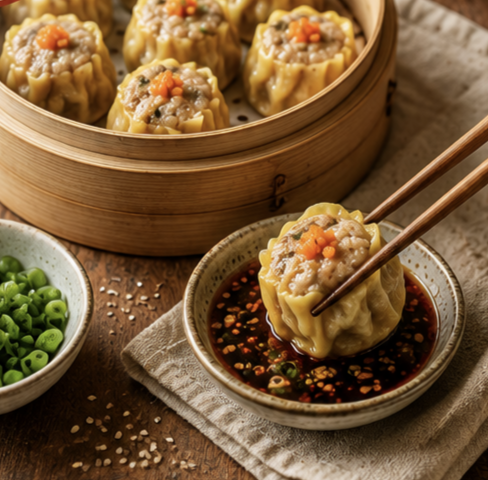
One of my favorite ways to serve shumai is to make them part of a relaxed homemade dim sum spread.
You don’t need ten different dishes.
Make the shumai the centerpiece, then add cucumber salad, spring rolls, steamed vegetables, another type of dumpling, and a pot of hot tea.
Put everything in the middle of the table and let everyone share.
It feels much more special than an ordinary weeknight dinner without actually requiring restaurant-level cooking skills.
How to Store Leftover Shumai
Allow cooked shumai to cool before placing them in an airtight container.
Keep them refrigerated for up to 3 days.
The best way to reheat them is by steaming them again for a few minutes until piping hot.
You can also microwave them, although steaming does a better job of restoring the soft wrapper without drying out the filling.
Frequently Asked Questions
What is shumai?
Shumai is an open-topped steamed dumpling found in several Asian cuisines, with different regional versions. The Cantonese dim sum version is commonly made with pork and shrimp wrapped in a thin yellow wrapper.
Is shumai the same as a regular dumpling?
It’s a type of dumpling, but unlike many dumplings, shumai isn’t completely sealed. The filling remains visible at the top.
Can I use wonton wrappers?
Yes. Thin square wonton wrappers are an easy substitute when dedicated shumai wrappers aren’t available.
Why are my shumai dry?
The pork may have been too lean, the filling may have been overcooked, or there may not have been enough moisture and fat in the mixture.
Do I need a bamboo steamer?
No. A metal steamer basket or another suitable steaming setup works perfectly well.
Can I fry shumai?
Shumai are traditionally steamed, and steaming gives them their signature tender wrapper and juicy filling.
Final Thoughts
Making Pork Shumai at home might sound like the kind of project you save for a weekend, but once you make your first few dumplings, the process becomes surprisingly relaxing.
There’s no complicated pleating pattern to master. Just fill, gently shape, garnish, and steam.
And when you open that steamer to find a basket filled with plump golden dumplings, you’ll understand why they’re worth making from scratch.
Tender wrappers, juicy pork and shrimp, fresh ginger, sesame, and a little chili dipping sauce on the side—sometimes homemade really does taste better than takeout.