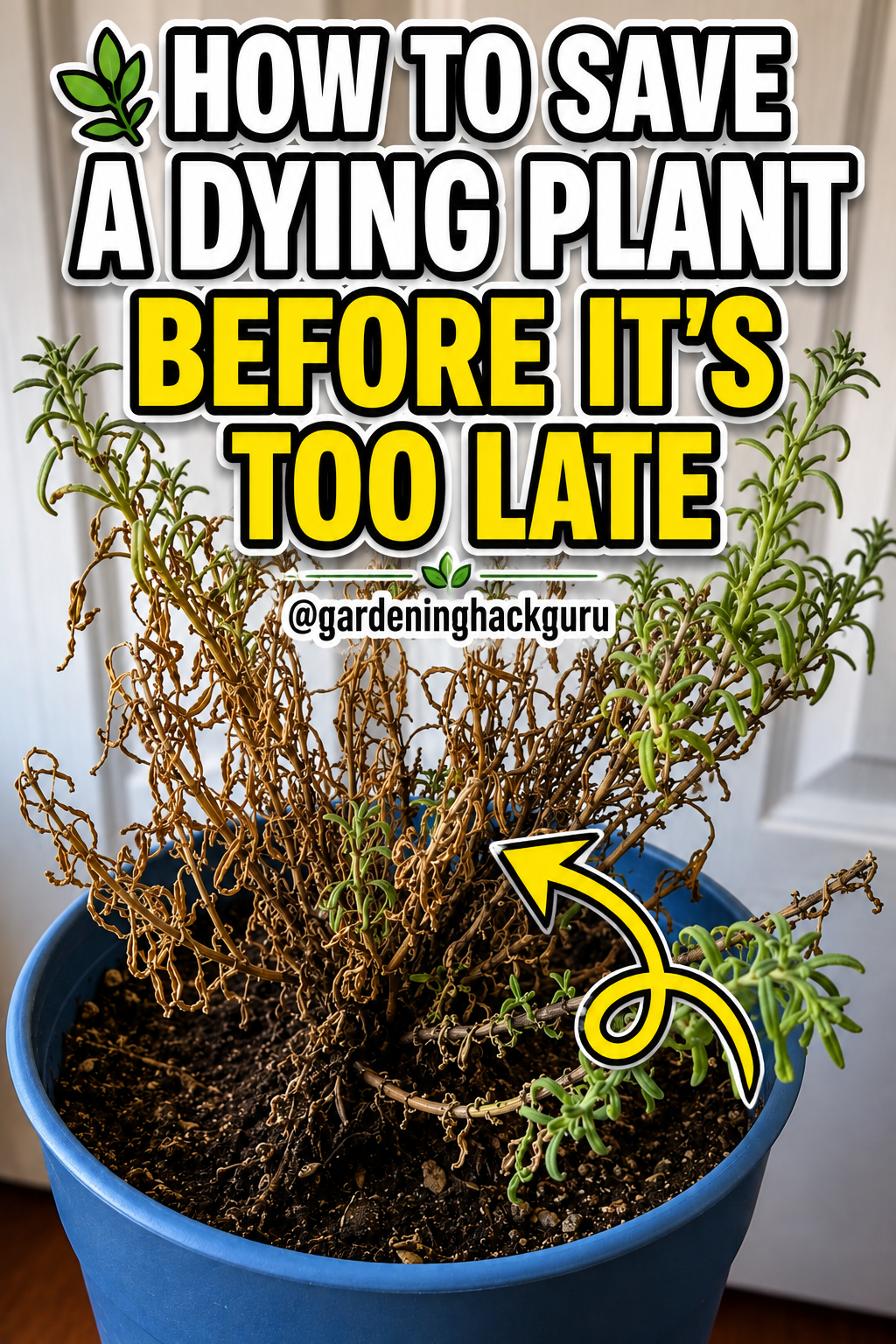
There’s nothing more discouraging than watching a once-thriving plant slowly wilt, turn yellow, or lose its leaves. Whether it’s a favorite houseplant, a flowering plant on your patio, or an herb growing in your kitchen, a struggling plant doesn’t always mean it’s beyond saving.
In many cases, plants show warning signs long before they die. By identifying the problem early and making a few simple adjustments, you can often bring them back to life. From correcting watering habits to improving light conditions and pruning damaged growth, small changes can make a remarkable difference.
If your plant looks like it’s on its last legs, don’t give up just yet. Follow these proven steps to help revive it before it’s too late.
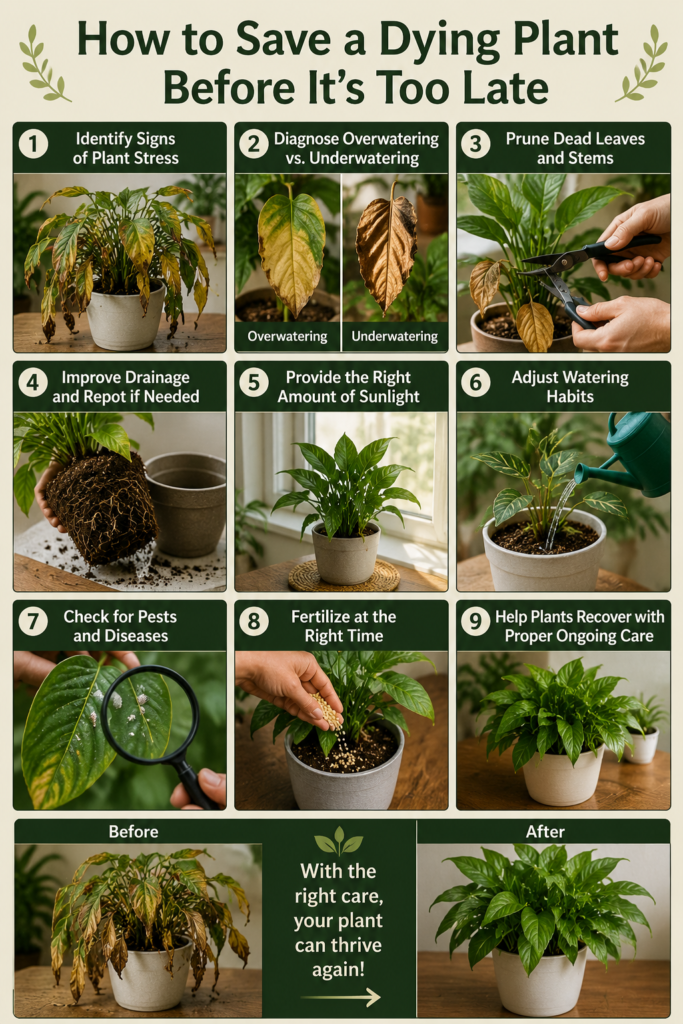
1. Identify the Warning Signs
The first step is recognizing that your plant needs help.
Common signs include:
- Yellow or brown leaves
- Drooping stems
- Dry, crispy leaf edges
- Soft, mushy stems
- Slow or stunted growth
- Leaf drop
- Wilting even after watering
Different symptoms point to different problems, so observe your plant carefully before making changes.
2. Check the Soil Moisture
One of the most common reasons plants decline is incorrect watering.
Insert your finger about an inch into the soil.
- If the soil feels dry, your plant may need water.
- If the soil feels soggy or smells unpleasant, it may be overwatered.
Adjust your watering schedule based on the plant’s needs rather than watering on a fixed routine.
3. Remove Dead or Damaged Growth
Use clean, sharp pruning scissors to trim away:
- Brown leaves
- Dead flowers
- Broken stems
- Diseased branches
Removing damaged growth allows the plant to direct its energy toward producing healthy new leaves and stems.
Always disinfect pruning tools before and after use.
4. Make Sure the Pot Drains Properly
Poor drainage is one of the biggest causes of root problems.
Check that:
- The pot has drainage holes.
- Excess water drains freely.
- The soil isn’t compacted.
If water collects at the bottom of the pot, roots can begin to rot.
Healthy roots need both moisture and oxygen.
5. Repot if Necessary
Sometimes the problem isn’t the plant—it’s the container.
Repot your plant if:
- Roots circle around the pot.
- Water runs straight through without soaking in.
- Soil has become hard or compacted.
- The plant has outgrown its container.
Choose fresh, well-draining potting mix and a pot that’s only slightly larger than the previous one.
6. Give It the Right Amount of Light
Too much or too little sunlight can quickly weaken a plant.
Observe where your plant is growing.
- Bright indirect light suits many houseplants.
- Full sun benefits herbs, succulents, and many flowering plants.
- Shade-loving plants should be protected from harsh afternoon sun.
If necessary, move the plant gradually to a better location.
7. Check for Pests
Tiny insects often hide underneath leaves or along stems.
Look for:
- Aphids
- Spider mites
- Mealybugs
- Whiteflies
- Scale insects
If pests are present:
- Rinse leaves gently.
- Remove heavily infested foliage.
- Treat with insecticidal soap or neem oil according to the product directions.
Catching pests early prevents serious damage.
8. Feed Your Plant Carefully
Plants recovering from stress often benefit from nutrients—but too much fertilizer can do more harm than good.
Use a balanced fertilizer at the recommended rate during the active growing season.
Avoid fertilizing severely stressed plants until you see signs of new growth.
Healthy soil and proper watering are more important than heavy feeding.
9. Increase Humidity When Needed
Many tropical plants prefer humid environments.
If indoor air is very dry:
- Group plants together.
- Use a pebble tray filled with water beneath the pot (without the pot sitting directly in the water).
- Use a room humidifier if appropriate.
Higher humidity can reduce leaf browning and encourage healthier growth for humidity-loving plants.
10. Be Patient
Plant recovery takes time.
Even after correcting the problem, new leaves may take several weeks to appear.
Continue providing:
- Consistent watering
- Proper light
- Good airflow
- Regular observation
Avoid making too many changes at once, as this can add more stress.
Common Plant Care Mistakes to Avoid
Many struggling plants suffer because of simple care mistakes.
Avoid:
- Watering on a schedule instead of checking the soil.
- Leaving plants in standing water.
- Using pots without drainage holes.
- Giving too much fertilizer.
- Ignoring early signs of pests.
- Moving plants constantly between locations.
- Placing plants in the wrong light conditions.
Correcting these habits often leads to healthier plants.
How to Keep Your Plants Healthy
Prevention is easier than rescue.
To keep your plants thriving:
- Check soil moisture regularly.
- Remove dead leaves promptly.
- Clean dusty leaves occasionally.
- Rotate indoor plants for even growth.
- Repot every few years when needed.
- Inspect plants for pests every week.
- Learn the specific needs of each plant species.
Consistent care helps plants stay strong and resilient.
Final Thoughts
A struggling plant doesn’t always mean a lost cause. Most plants give clear warning signs before serious damage occurs, and by acting quickly, you can often reverse the problem. Whether the issue is watering, lighting, drainage, pests, or poor soil, taking the time to identify the cause is the key to successful recovery.
With patience, proper care, and a few simple adjustments, your plant can return to healthy growth and continue bringing beauty to your home or garden. The next time a favorite plant starts to decline, don’t throw it away—give it the care it needs, and you may be surprised at how well it recovers.