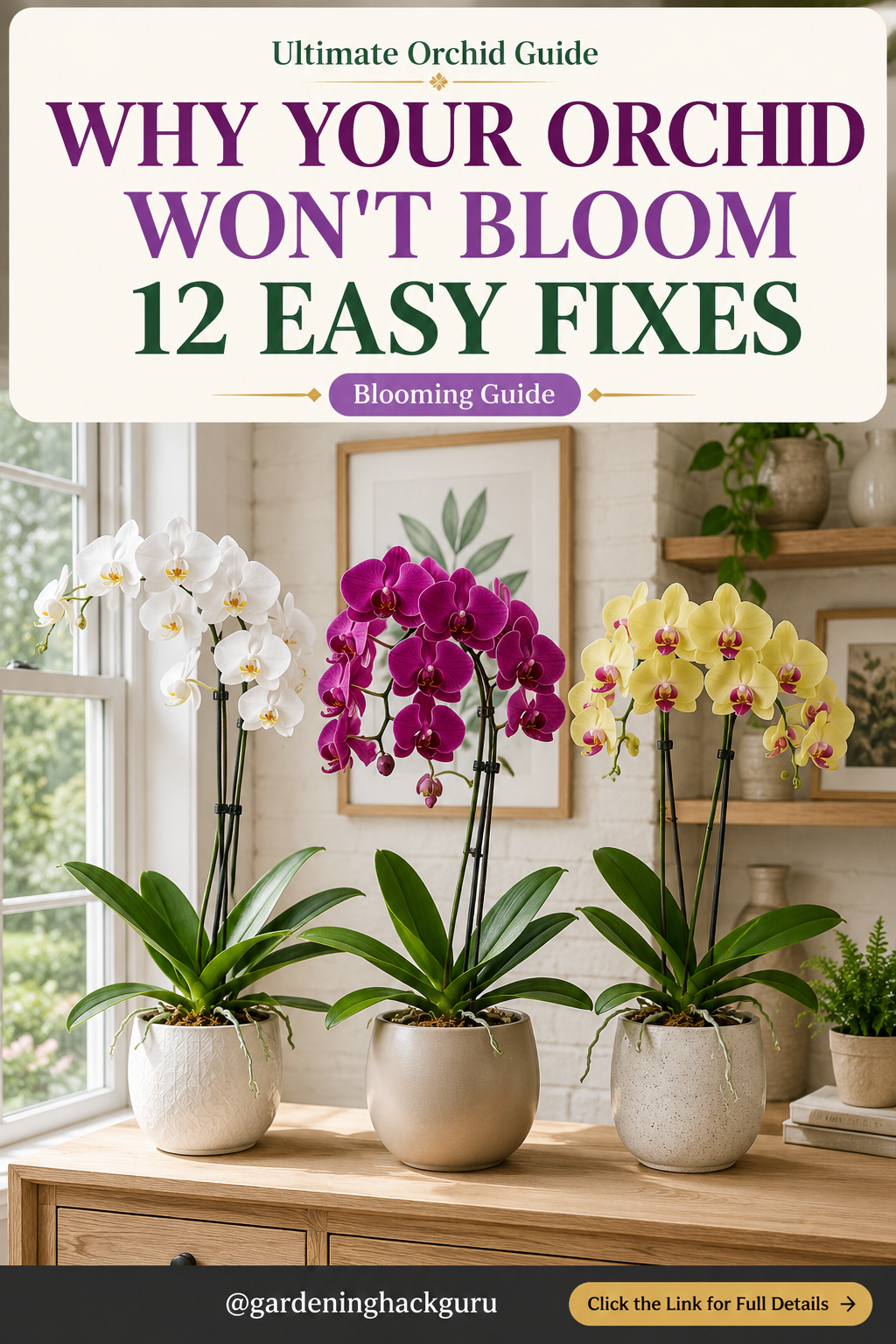
Orchids are among the most beautiful and rewarding houseplants, but one of the biggest frustrations for plant lovers is waiting for blooms that never appear. Your orchid may have healthy green leaves and strong roots, yet refuse to produce a single flower spike.
The good news is that a non-blooming orchid usually isn’t a dying orchid. In most cases, it’s simply missing one or two important growing conditions. By making a few adjustments to light, watering, temperature, and feeding, you can encourage your orchid to bloom again and enjoy stunning flowers that last for months.
If your orchid hasn’t bloomed in a while, these 12 easy fixes can help bring it back to life.
1. Give It Brighter Indirect Light
The number one reason orchids refuse to bloom is insufficient light.
Place your orchid near an east-facing window or a bright south or west window with a sheer curtain to protect it from harsh afternoon sun.
Healthy leaves should be medium green. Very dark green leaves often indicate the plant isn’t receiving enough light to bloom.
2. Water Only When Needed
Overwatering is one of the most common orchid care mistakes.
Instead of watering on a schedule:
- Check the potting mix.
- Water only when it’s almost dry.
- Let excess water drain completely.
Never allow orchids to sit in standing water.
Healthy roots should appear firm and green or silvery—not brown or mushy.
3. Use Orchid Potting Mix
Unlike most houseplants, orchids don’t grow well in regular potting soil.
Instead, use a chunky orchid mix made from materials such as:
- Bark
- Coconut husk
- Charcoal
- Perlite
These materials allow excellent airflow around the roots.
4. Feed Your Orchid Regularly
Orchids need nutrients to produce flowers.
Apply a balanced orchid fertilizer every two to four weeks during active growth, following the label directions.
Many growers follow the simple rule:
“Weakly, weekly.”
Using a diluted fertilizer more frequently often works better than occasional heavy feeding.
5. Give It Cooler Nights
Many Phalaenopsis orchids need a slight temperature drop to trigger flower spikes.
Aim for:
- Daytime: 70–80°F (21–27°C)
- Nighttime: 60–65°F (16–18°C)
A difference of about 10°F (5–6°C) between day and night temperatures can encourage blooming.
6. Increase Humidity
Orchids naturally grow in humid tropical environments.
Increase humidity by:
- Using a pebble tray filled with water.
- Running a humidifier nearby.
- Grouping plants together.
Avoid misting the flowers directly, as prolonged moisture on blooms can cause damage.
7. Repot Every Few Years
Old potting mix eventually breaks down and holds too much moisture.
Repot your orchid every 2–3 years, or sooner if:
- The bark has decomposed.
- Roots are overcrowded.
- The plant has become unstable.
Fresh orchid mix encourages healthier roots and stronger blooms.
8. Trim the Flower Spike Correctly
After the flowers fade, don’t immediately remove the entire flower spike.
For many Phalaenopsis orchids:
- Cut just above a healthy node if the spike is still green.
- Remove the entire spike only if it has turned brown and dry.
Proper pruning can sometimes encourage a secondary bloom.
9. Keep Leaves Clean
Dust can reduce the amount of light reaching the leaves.
Every few weeks, gently wipe the leaves with a soft damp cloth.
Clean leaves absorb light more efficiently, helping the plant produce energy for flowering.
10. Don’t Move It Too Often
Orchids prefer consistency.
Constantly changing locations can stress the plant and interrupt blooming.
Once you’ve found a bright location with suitable temperatures, leave your orchid there whenever possible.
11. Be Patient
Many orchids naturally bloom only once or twice each year.
Even healthy orchids often spend several months producing leaves and roots before sending up a new flower spike.
Patience is an important part of successful orchid care.
12. Inspect the Roots Regularly
Healthy roots are the foundation of healthy flowers.
Check your orchid every few months.
Healthy roots should be:
- Firm
- Green after watering
- Silvery-gray when dry
Remove dead or rotten roots during repotting to encourage vigorous new growth.
Common Reasons Orchids Don’t Bloom
If your orchid refuses to flower, one or more of these factors may be responsible:
- Not enough light
- Overwatering
- Poor drainage
- Old potting mix
- Lack of fertilizer
- No temperature difference between day and night
- Low humidity
- Plant stress after moving
- Natural resting period
Correcting even one of these issues can often encourage blooming.
Bonus Tips for More Flowers
Want even bigger displays?
Try these additional tips:
- Rotate the plant occasionally for even growth.
- Use clear orchid pots to monitor root health.
- Avoid placing orchids near heating or cooling vents.
- Water early in the day.
- Protect flower buds from cold drafts.
- Give the plant plenty of bright, indirect light year-round.
Healthy orchids reward consistent care with spectacular blooms.
Final Thoughts
If your orchid isn’t blooming, don’t assume it’s beyond saving. Most orchids simply need the right balance of light, water, temperature, humidity, and nutrition before they’re ready to flower again. By following these 12 easy fixes, you can create the ideal environment for your orchid to thrive and produce beautiful blooms year after year.
With a little patience and consistent care, your orchid can become one of the most rewarding plants in your home, filling your space with elegant flowers that last for weeks or even months.