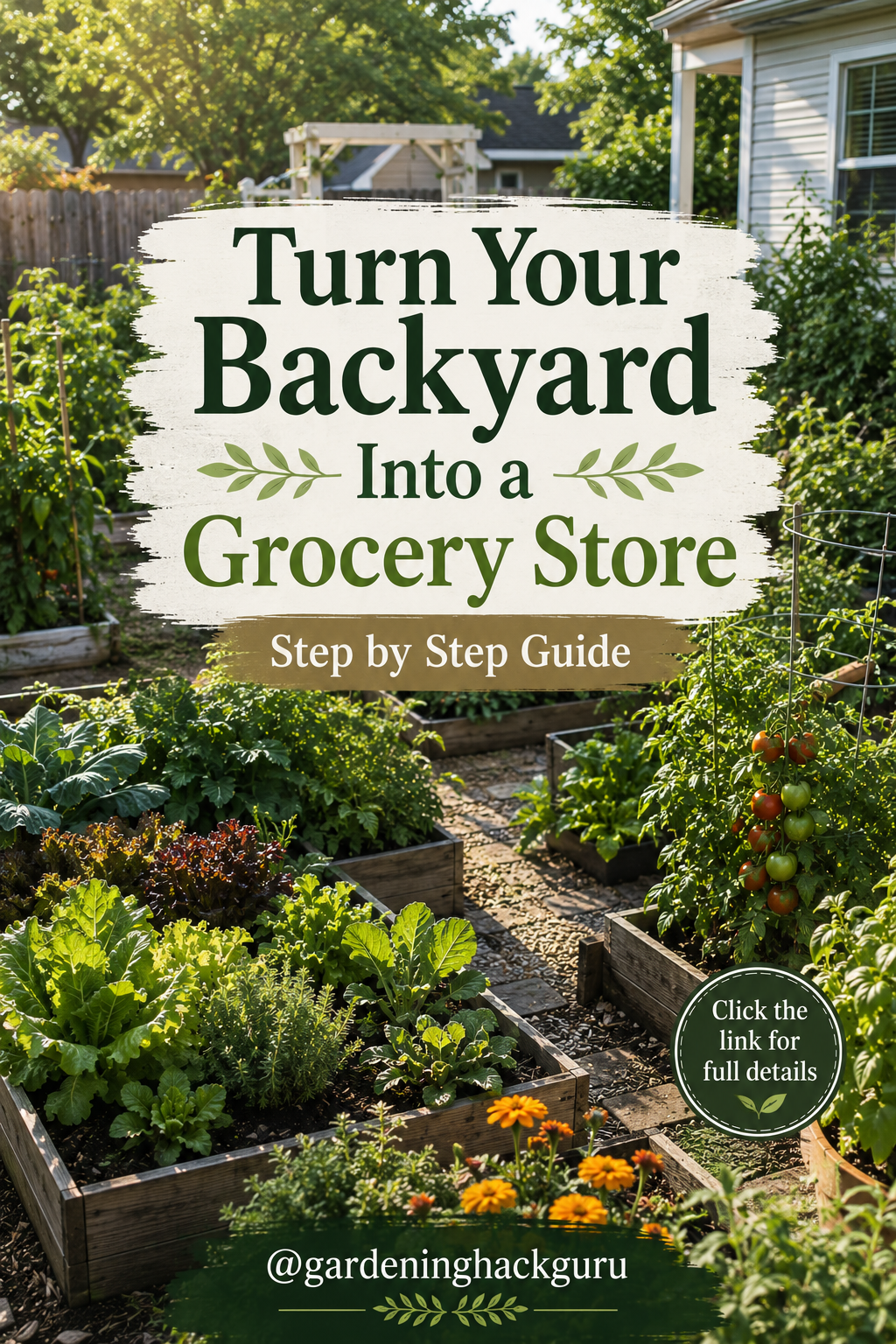
Imagine walking into your backyard and picking fresh tomatoes, lettuce, cucumbers, peppers, and herbs whenever you need them. No grocery store trips. No expensive produce. Just fresh, healthy food growing steps from your kitchen.
The good news is that you don’t need a huge property or years of gardening experience to create a productive backyard garden. With the right plan, almost anyone can turn their backyard into a personal grocery store.
Here’s how to do it.
Why Grow Your Own Food?
A backyard food garden offers incredible benefits:
🌱 Fresh produce at your fingertips
💰 Lower grocery bills
🥗 Healthier meals for your family
🌿 Better flavor than store-bought vegetables
🏡 A beautiful and productive outdoor space
Many gardeners are surprised by how much food even a small garden can produce.
Step 1: Choose the Sunniest Spot
Most vegetables need:
☀️ 6–8 hours of direct sunlight daily
Before planting anything, observe your yard and identify the area that receives the most sunlight throughout the day.
Good sunlight is one of the biggest factors in gardening success.
Step 2: Start with Raised Beds
Raised beds are one of the easiest ways to grow vegetables.
Benefits include:
- Better drainage
- Easier maintenance
- Fewer weeds
- Higher yields
A few raised beds can produce a surprising amount of food.
Step 3: Build Healthy Soil
Healthy soil grows healthy plants.
Improve your soil by adding:
- Compost
- Organic matter
- A quality garden soil mix
Think of soil as the foundation of your entire garden.
Step 4: Grow the Right Vegetables
Focus on crops that are productive and easy to grow.
Some of the best options include:
🍅 Tomatoes
🥒 Cucumbers
🥬 Lettuce
🌶 Peppers
🧄 Garlic
🥕 Carrots
🧅 Green onions
🌿 Basil
🌿 Parsley
🫛 Green beans
These vegetables provide excellent harvests for beginners.
Step 5: Use Vertical Growing Space
Many vegetables can grow upward instead of outward.
Great crops for vertical gardening:
- Cucumbers
- Pole beans
- Tomatoes
- Peas
Using trellises helps maximize harvests while saving space.
Step 6: Plant Herbs Everywhere
Herbs are among the most valuable plants you can grow.
Easy options include:
🌿 Basil
🌿 Mint
🌿 Chives
🌿 Oregano
🌿 Thyme
They grow well in containers, raised beds, and garden borders.
Step 7: Water Consistently
Vegetables need regular moisture.
Tips:
- Water deeply
- Water early in the morning
- Avoid overwatering
Consistent watering leads to healthier plants and larger harvests.
Step 8: Mulch Your Garden
Mulch is one of the simplest ways to improve garden success.
Benefits:
✔ Reduces weeds
✔ Retains moisture
✔ Improves soil health
✔ Reduces maintenance
Straw, shredded leaves, and wood chips all work well.
Step 9: Harvest Often
Many vegetables produce more when harvested regularly.
Examples include:
- Lettuce
- Beans
- Cucumbers
- Tomatoes
The more you harvest, the more some plants continue producing.
Step 10: Expand Gradually
Don’t try to grow everything at once.
Start with:
- 3–5 vegetables
- A few herbs
- One or two raised beds
Once you gain confidence, expand your garden each season.
Must-Have Gardening Products
These tools can make gardening easier and more productive:
Raised Garden Beds
Perfect for organized vegetable growing.
Fabric Grow Bags
Excellent for tomatoes, potatoes, and peppers.
Garden Tool Set
Useful for planting, weeding, and harvesting.
Premium Garden Soil
Supports healthy root development.
Self-Watering Planters
Ideal for busy gardeners.
Trellises and Plant Supports
Great for vertical growing.
Watering Wand or Hose Nozzle
Makes watering easier and more efficient.
These products are widely available online and can help maximize your harvests.
How Much Food Can a Backyard Garden Produce?
A well-planned backyard garden can provide:
🥬 Fresh salads for months
🍅 Hundreds of tomatoes
🥒 Dozens of cucumbers
🌿 Fresh herbs all season
🫑 Continuous pepper harvests
Many families save hundreds of dollars per year by growing their own produce.
Common Beginner Mistakes to Avoid
❌ Planting too much too soon
❌ Overwatering plants
❌ Ignoring sunlight requirements
❌ Using poor-quality soil
❌ Harvesting too late
Avoiding these mistakes will dramatically improve your results.
Final Thoughts
Turning your backyard into a grocery store isn’t just a dream—it’s a realistic goal for almost any homeowner. With a few raised beds, healthy soil, and easy-to-grow vegetables, you can enjoy fresh, delicious produce right outside your door.
Start small, stay consistent, and before long you’ll be harvesting more food than you ever thought possible.
Your future grocery store might just be your backyard.
🌱 Happy Gardening!
@gardeninghackguru