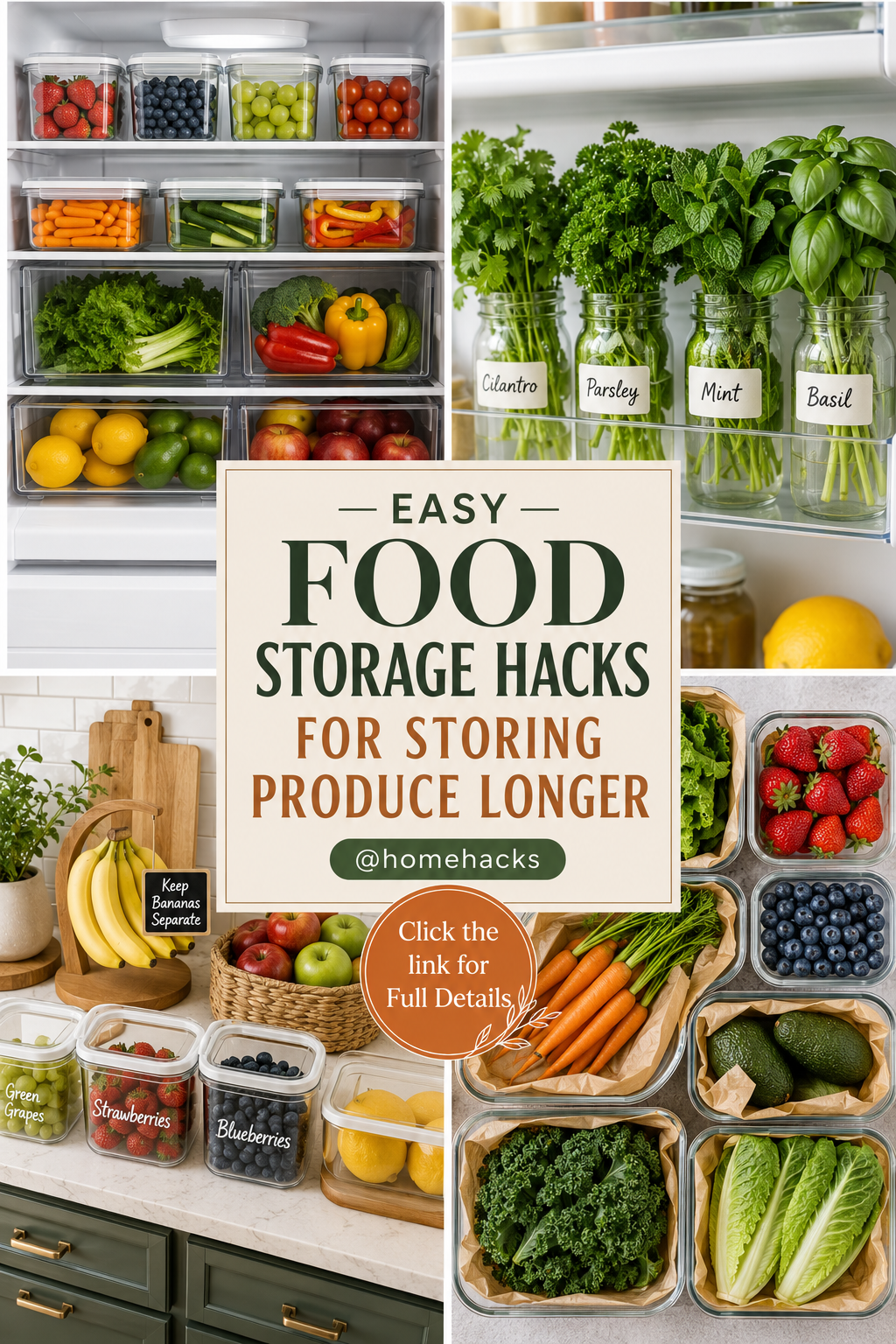
Have you ever bought fresh fruits and vegetables with the best intentions, only to find them wilted, mushy, or moldy a few days later? You’re not alone. Food waste is a common household problem, and much of it comes from storing produce incorrectly.
The good news is that a few simple storage tricks can dramatically extend the life of your fruits and vegetables, saving you money and reducing waste.
Here are some easy food storage hacks that help produce stay fresh longer.
1. Store Herbs Like Fresh Flowers
Fresh herbs often wilt within days when stored in plastic bags.
Instead:
- Trim the stems
- Place them in a jar with water
- Cover loosely with a plastic bag
- Store in the refrigerator
This method can keep herbs fresh for up to two weeks or more.
2. Keep Berries Dry Until You’re Ready to Eat Them
Moisture is the enemy of berries.
Avoid washing strawberries, blueberries, raspberries, or blackberries until you’re ready to use them.
Store them in their original container or a breathable container lined with paper towels.
This helps prevent mold and extends freshness.
3. Wrap Leafy Greens in Paper Towels
Lettuce, spinach, and kale often become soggy due to excess moisture.
To keep them crisp:
- Place paper towels in the storage container
- Replace the towels if they become damp
The towels absorb excess moisture and help greens last significantly longer.
4. Separate Bananas from Other Fruits
Bananas produce ethylene gas, which speeds up ripening.
Keep bananas away from:
- Apples
- Avocados
- Pears
- Tomatoes
Separating them can extend the life of nearby produce.
5. Store Potatoes and Onions Separately
Many people store potatoes and onions together, but this actually causes both to spoil faster.
Store them:
- In separate baskets
- In a cool, dark place
- With good airflow
This helps maximize shelf life.
6. Use Glass Containers for Cut Produce
Once fruits or vegetables are cut, transfer them to airtight glass containers.
Glass containers:
- Reduce odors
- Help maintain freshness
- Allow you to see what’s inside
This encourages you to use produce before it spoils.
7. Keep Mushrooms in Paper Bags
Plastic bags trap moisture and make mushrooms slimy.
Instead:
- Store mushrooms in a paper bag
- Keep them in the refrigerator
The paper absorbs moisture while allowing airflow.
8. Store Apples in the Refrigerator
Apples can stay fresh for weeks when refrigerated.
Keep them:
- In the crisper drawer
- Away from sensitive produce
Cold temperatures slow down the ripening process.
9. Don’t Refrigerate Tomatoes Too Soon
Tomatoes lose flavor and texture when refrigerated prematurely.
For best results:
- Store at room temperature until fully ripe
- Refrigerate only if they become overly ripe
This preserves their taste and quality.
10. Freeze Produce Before It Goes Bad
If you notice produce nearing the end of its life, freeze it before it spoils.
Great options include:
- Bananas
- Berries
- Spinach
- Peppers
- Broccoli
Frozen produce works perfectly in smoothies, soups, and cooked dishes.
11. Keep Carrots in Water
Carrots often become soft after a few days.
To keep them crisp:
- Place them in a container of water
- Store in the refrigerator
- Change the water every few days
This helps maintain their crunch.
12. Use the Crisper Drawers Correctly
Many people ignore the humidity settings on their refrigerator drawers.
Generally:
- High humidity for leafy greens
- Low humidity for fruits
Using the correct setting can significantly extend freshness.
13. Store Avocados Based on Ripeness
Unripe avocados should stay on the counter.
Once ripe:
- Move them to the refrigerator
- Enjoy several extra days of freshness
This prevents them from becoming overripe too quickly.
14. Label and Rotate Produce
Place older produce at the front of your refrigerator.
This simple habit:
- Prevents forgotten food
- Reduces waste
- Encourages meal planning
The first-in, first-out method works surprisingly well.
15. Create a “Use First” Bin
Dedicate one container in your refrigerator to produce that should be used soon.
Whenever you’re preparing meals, check this bin first.
This simple trick can dramatically reduce food waste.
Final Thoughts
Keeping produce fresh longer doesn’t require expensive gadgets or complicated systems. Small storage changes can make a huge difference in how long fruits and vegetables last.
By controlling moisture, separating certain produce items, and storing everything properly, you’ll waste less food, save money, and always have fresh ingredients ready for meals.
Start with just a few of these hacks and you’ll quickly notice the difference in both your refrigerator and your grocery budget.