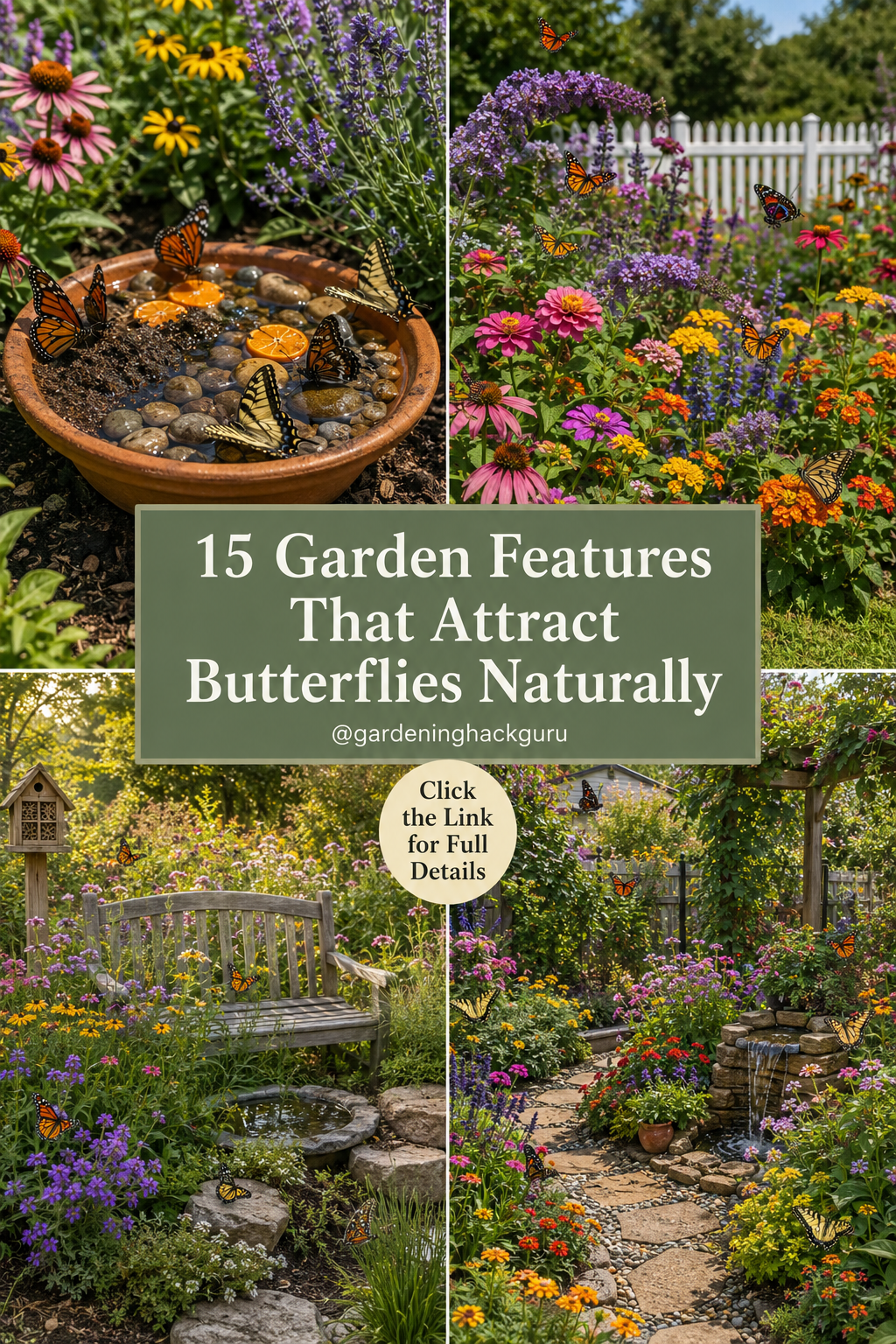
There’s something magical about watching butterflies flutter through a garden. Their colorful wings bring movement, beauty, and life to outdoor spaces while also playing an important role as pollinators. If you want to attract more butterflies naturally, creating the right garden environment is the key.
Butterflies aren’t just looking for flowers—they also need water, shelter, warmth, and safe places to lay their eggs. By adding a few thoughtful features to your garden, you can transform your backyard into a thriving butterfly paradise that supports local wildlife and blooms with color all season long.
Here are 15 garden features that naturally attract butterflies.
1. Build a Butterfly Puddling Station
Butterflies don’t just drink nectar—they also need minerals found in damp soil. Create a simple puddling station using a shallow terracotta saucer filled with pebbles, moist garden soil, and a little water.
For extra attraction, add slices of overripe oranges or bananas nearby.
2. Plant Nectar-Rich Flowers
Butterflies love flowers filled with nectar.
Some excellent choices include:
- Zinnias
- Coneflowers
- Lantana
- Verbena
- Black-Eyed Susan
- Cosmos
- Salvia
- Bee Balm
Plant several varieties so butterflies have food from spring through fall.
3. Grow Native Plants
Native plants are naturally adapted to your local butterfly species.
Many butterflies lay eggs only on specific native plants, making them essential for supporting the entire butterfly life cycle.
4. Include Milkweed
Milkweed is one of the most important plants for Monarch butterflies.
It provides food for caterpillars and nectar for adult butterflies, making it an essential feature in any butterfly-friendly garden.
5. Add Flat Sun-Warming Rocks
Butterflies are cold-blooded and rely on sunlight to warm their bodies before flying.
Place several flat stones in sunny locations where butterflies can rest and bask.
6. Create Sunny Garden Spaces
Butterflies thrive in warm, sunny environments.
Choose open garden areas that receive at least six hours of sunlight each day to encourage frequent butterfly visits.
7. Grow Flowering Herbs
Many herbs produce tiny flowers packed with nectar.
Excellent butterfly-friendly herbs include:
- Lavender
- Thyme
- Oregano
- Mint
- Basil
- Dill
- Fennel
You’ll enjoy fresh herbs while helping pollinators at the same time.
8. Plant Flowers in Large Groups
Instead of scattering flowers throughout your yard, plant them in clusters.
Large patches of color are much easier for butterflies to spot from a distance.
9. Add a Shallow Water Source
A shallow birdbath with stones or a decorative water dish gives butterflies a safe place to drink.
Avoid deep water where they may become trapped.
10. Create Natural Shelter
Butterflies need protection from strong winds and heavy rain.
Plant shrubs, ornamental grasses, hedges, or climbing vines that provide natural shelter throughout the garden.
11. Avoid Chemical Pesticides
Many pesticides harm butterflies, caterpillars, and other beneficial insects.
Choose natural gardening methods whenever possible to create a healthy habitat for pollinators.
12. Grow Flowers That Bloom All Season
Select plants with different bloom times so butterflies always have a reliable food source.
Continuous blooms keep your garden colorful while supporting butterflies for months.
13. Add a Butterfly House
Although butterflies don’t live inside butterfly houses like birds use birdhouses, decorative butterfly shelters can provide temporary protection during poor weather and add charm to your garden.
14. Include Colorful Garden Borders
Butterflies are especially attracted to bright flowers in shades of:
- Purple
- Pink
- Orange
- Yellow
- Red
Colorful borders create beautiful visual appeal while drawing more pollinators.
15. Leave a Wild Garden Corner
Allow one small section of your garden to grow naturally.
Native grasses, wildflowers, and leaf litter provide habitat for caterpillars, butterflies, and many beneficial insects.
Best Butterfly-Friendly Plants
If you’re starting a butterfly garden, consider planting:
- Milkweed
- Butterfly Bush
- Coneflower
- Lantana
- Verbena
- Zinnias
- Lavender
- Black-Eyed Susan
- Bee Balm
- Joe-Pye Weed
- Aster
- Goldenrod
- Salvia
- Cosmos
- Phlox
These plants provide nectar throughout the growing season while supporting many butterfly species.
Tips for Creating a Butterfly Garden
To attract more butterflies naturally:
- Plant in full sunlight.
- Use a variety of flower colors.
- Grow native plants whenever possible.
- Avoid pesticides and herbicides.
- Keep a shallow water source available.
- Include both nectar plants and caterpillar host plants.
- Add rocks for basking.
- Leave some areas slightly wild.
Small changes can make a big difference for local butterfly populations.
Why Butterflies Matter
Butterflies are more than just beautiful visitors. They help pollinate flowers, fruits, and vegetables while serving as indicators of a healthy ecosystem. A butterfly-friendly garden also attracts bees, hummingbirds, and other beneficial wildlife, creating a balanced and thriving outdoor environment.
By supporting butterflies, you’re helping protect biodiversity while enjoying a garden filled with color and life.
Final Thoughts
Creating a butterfly-friendly garden is one of the easiest and most rewarding ways to improve your outdoor space. By adding features like nectar-rich flowers, puddling stations, sunny resting spots, native plants, and natural shelter, you can turn your backyard into a haven for butterflies and other important pollinators.
Whether you have a large landscape or a small flower bed, every butterfly-friendly feature makes a difference. With a little planning, you’ll soon enjoy a vibrant garden filled with fluttering wings, colorful blooms, and the peaceful beauty that only nature can provide.