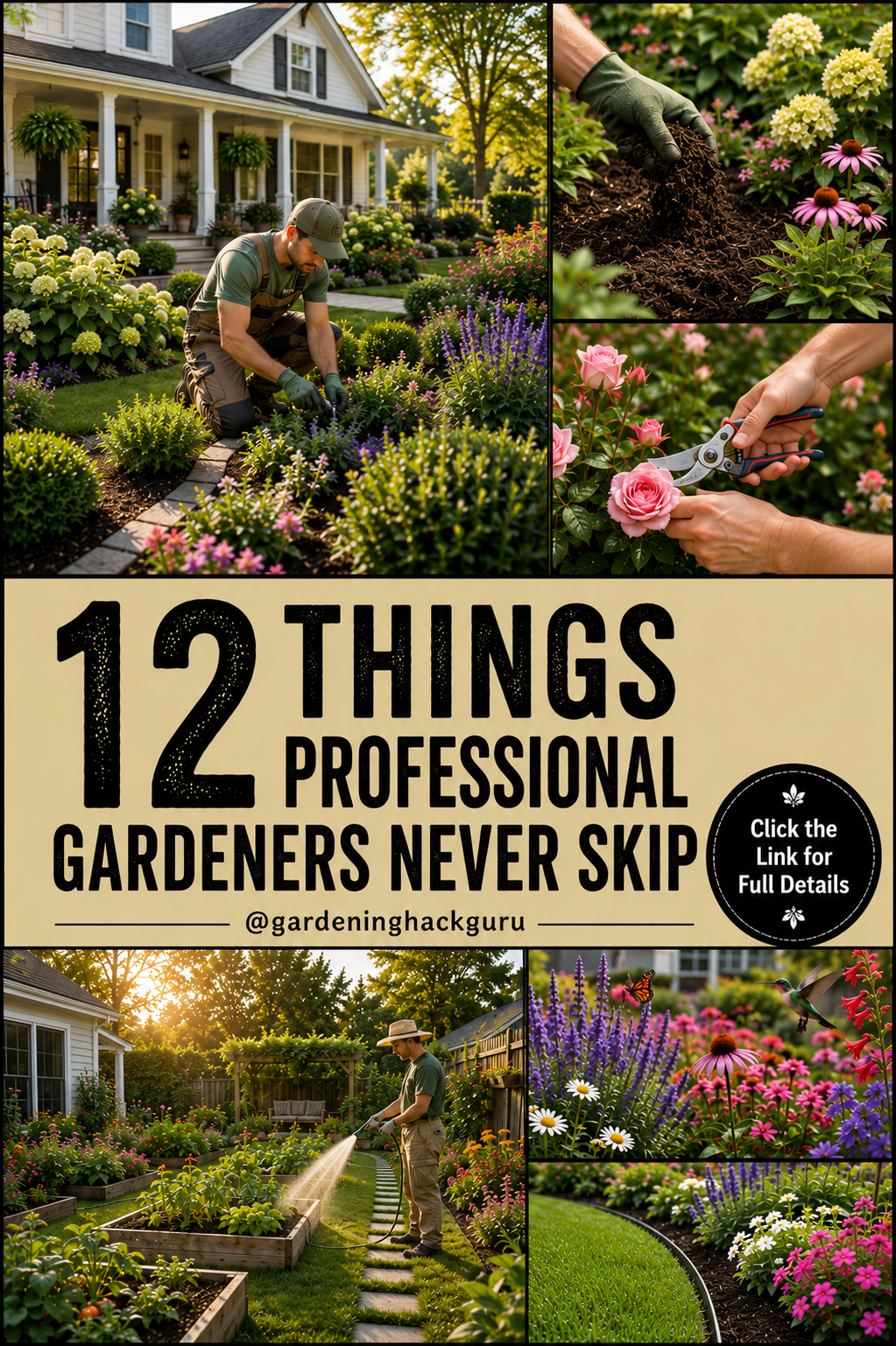
Beautiful gardens don’t happen by accident. Every lush lawn, vibrant flower bed, and thriving vegetable patch is the result of consistent care and smart gardening habits. While professional gardeners may have years of experience, many of their best practices are surprisingly simple—and anyone can use them.
The difference between an average garden and a stunning one often comes down to small tasks that professionals never overlook. These habits keep plants healthier, reduce problems before they start, and make every outdoor space look well-maintained.
If you want your garden to look like it was designed by an expert, start with these 12 things professional gardeners never skip.
1. Checking Their Garden Every Day
Professional gardeners spend a few minutes walking through their gardens daily.
They look for:
- Yellowing leaves
- Wilting plants
- Early signs of pests
- Weeds beginning to grow
- Broken branches
Finding problems early prevents them from becoming expensive or difficult to fix.
2. Improving the Soil Regularly
Healthy plants always begin with healthy soil.
Instead of relying only on fertilizers, professionals regularly add:
- Compost
- Leaf mold
- Aged manure
- Organic matter
- Worm castings
Healthy soil produces healthier roots, stronger plants, and better harvests.
3. Watering the Right Way
Professional gardeners don’t water every day.
Instead they:
- Water deeply
- Water early in the morning
- Avoid wetting leaves
- Allow soil to dry slightly between watering
Deep watering encourages stronger root systems and healthier plants.
4. Applying Mulch
Fresh mulch is one of the easiest ways to improve any garden.
Professionals use mulch because it:
- Reduces weeds
- Holds moisture
- Protects roots
- Improves soil over time
- Gives flower beds a clean, finished appearance
A two- to three-inch layer of mulch is usually ideal.
5. Pruning at the Right Time
Regular pruning encourages healthier growth.
Professionals remove:
- Dead branches
- Damaged stems
- Spent flowers
- Diseased leaves
This helps plants focus their energy on producing new growth and blooms.
6. Feeding Plants Properly
Rather than over-fertilizing, professionals feed plants according to their specific needs.
Some plants require:
- Slow-release fertilizer
- Compost
- Organic plant food
- Seasonal feeding
Balanced nutrition leads to stronger, healthier gardens.
7. Controlling Weeds Early
Professionals never allow weeds to take over.
Pulling weeds while they’re still small prevents them from spreading seeds and competing with desirable plants for nutrients and water.
A few minutes each week saves hours later.
8. Planting for Every Season
Beautiful gardens don’t rely on one season alone.
Professional landscapes combine:
- Spring bulbs
- Summer flowers
- Autumn foliage
- Evergreen shrubs
This creates year-round interest.
9. Encouraging Pollinators
Experienced gardeners know that bees, butterflies, and hummingbirds are essential.
They grow nectar-rich plants like:
- Lavender
- Bee balm
- Coneflowers
- Salvia
- Milkweed
More pollinators mean healthier flowers and better vegetable harvests.
10. Keeping Lawn Edges Sharp
One of the biggest secrets to a professional-looking landscape is crisp edging.
Clean borders between:
- Lawns
- Flower beds
- Walkways
- Driveways
instantly make the entire garden appear neat and organized.
11. Choosing the Right Plant for the Right Place
Professionals never force plants to grow where they don’t belong.
Before planting, they consider:
- Sunlight
- Soil type
- Drainage
- Climate
- Mature size
Choosing the right location leads to healthier, lower-maintenance gardens.
12. Staying Consistent
Perhaps the biggest secret of all is consistency.
Professional gardeners don’t wait until the garden looks neglected.
Instead, they spend a little time each week:
- Watering
- Deadheading flowers
- Cleaning pathways
- Trimming plants
- Checking for pests
- Harvesting vegetables
Small, regular efforts create beautiful gardens all year long.
Bonus Professional Gardening Tips
Want even better results?
- Rotate vegetable crops every season.
- Clean gardening tools regularly.
- Group plants with similar watering needs.
- Leave grass clippings on the lawn.
- Plant native flowers whenever possible.
- Refresh mulch each spring.
These simple habits make maintenance easier while keeping your garden healthier.
Final Thoughts
Professional gardeners aren’t successful because they have expensive tools or secret products—they’re successful because they consistently follow good gardening habits.
By checking your garden regularly, improving your soil, watering correctly, pruning, mulching, and staying on top of maintenance, you’ll create a healthier, more beautiful outdoor space that looks professionally cared for.
Start with just a few of these habits today, and you’ll soon notice healthier plants, fewer problems, and a garden that neighbors admire.