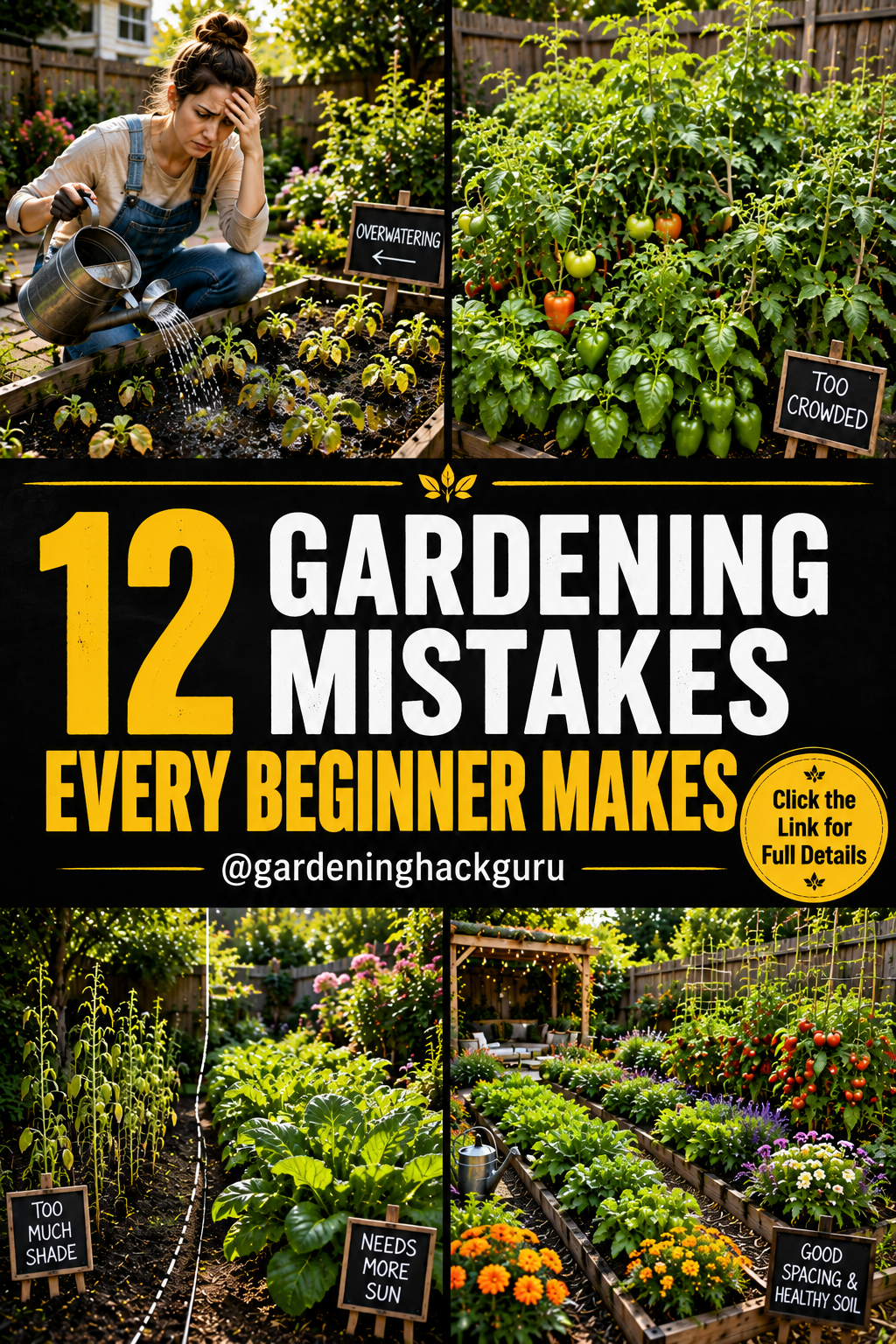
Starting your first garden is exciting. You imagine colorful flowers, baskets full of fresh vegetables, and thriving plants that make your outdoor space look beautiful. But many beginner gardeners quickly discover that gardening isn’t just about planting seeds and watering occasionally. Small mistakes can slow growth, attract pests, and even kill healthy plants.
The good news is that every experienced gardener has made these same mistakes at some point. Gardening is a learning process, and once you understand what to avoid, you’ll enjoy healthier plants and bigger harvests.
Here are 12 gardening mistakes every beginner makes—and how to avoid them.
1. Planting in the Wrong Location
One of the biggest beginner mistakes is planting without considering sunlight.
Most vegetables and flowering plants require at least six to eight hours of direct sunlight every day. Planting tomatoes or peppers in heavy shade will result in weak plants and poor harvests.
Before planting anything, observe your garden throughout the day to see where the sun shines the longest.
Pro Tip: Always check the sunlight requirements on the plant label before planting.
2. Overwatering Plants
Many beginners believe that more water equals healthier plants. In reality, overwatering is one of the fastest ways to kill them.
Too much water causes roots to suffocate, encourages root rot, and attracts fungal diseases.
Instead of watering every day, check the soil first. If the top inch of soil feels dry, it’s usually time to water.
Deep watering once or twice a week is often better than shallow daily watering.
3. Planting Too Close Together
Young plants look tiny, making it tempting to squeeze many into a small space.
Unfortunately, overcrowded plants compete for sunlight, water, and nutrients. Poor airflow also increases the risk of diseases and pest problems.
Always follow the recommended spacing instructions. Your plants will grow larger than you expect.
4. Ignoring Soil Quality
Healthy plants begin with healthy soil.
Many beginners spend money on beautiful plants but forget to improve the soil first.
Adding compost, aged manure, or organic matter improves drainage, boosts nutrients, and helps roots grow stronger.
Think of soil as the foundation of your entire garden.
5. Using Too Much Fertilizer
More fertilizer doesn’t mean faster growth.
Applying too much fertilizer can burn plant roots, encourage excessive leaf growth, and reduce flowering or fruit production.
Use fertilizer according to the instructions and choose organic options whenever possible.
Remember—plants need balanced nutrition, not excessive feeding.
6. Forgetting to Mulch
Mulch is one of the easiest ways to improve any garden.
Without mulch, soil dries out faster, weeds grow more aggressively, and temperature fluctuations stress plant roots.
Apply two to three inches of organic mulch around plants while keeping it away from stems and tree trunks.
Mulch also gives your garden a clean, professional appearance.
7. Choosing the Wrong Plants
Every region has different temperatures, rainfall, and growing conditions.
Beginners often buy plants simply because they look attractive without checking whether they’re suitable for their climate.
Research your USDA Hardiness Zone or local growing conditions before purchasing plants.
Native plants are often the easiest to grow successfully.
8. Forgetting About Pests
Many new gardeners don’t inspect their plants until serious damage appears.
Check leaves regularly for:
- Aphids
- Caterpillars
- Whiteflies
- Spider mites
- Slugs
Early detection makes pest control much easier.
Encourage beneficial insects like ladybugs and lacewings instead of relying on harsh chemical pesticides.
9. Mowing the Lawn Too Short
If your garden includes a lawn, avoid cutting grass too low.
Short grass develops shallow roots, dries out quickly, and allows weeds to spread.
Keep your lawn slightly taller to encourage healthier growth and stronger roots.
A healthy lawn also enhances the beauty of your flower beds and landscaping.
10. Giving Up Too Soon
Gardening teaches patience.
Seeds don’t sprout overnight, flowers bloom in their own time, and fruit plants often take months before producing a harvest.
Many beginners become discouraged after a few setbacks.
Every successful gardener has experienced failures. The difference is that they kept learning and trying again.
11. Skipping Regular Maintenance
Beautiful gardens aren’t created through occasional work.
Spending just 10 to 15 minutes a few times each week can make a huge difference.
Simple tasks include:
- Pulling weeds
- Deadheading flowers
- Pruning damaged leaves
- Harvesting ripe vegetables
- Cleaning fallen debris
Small efforts prevent bigger problems later.
12. Trying to Grow Everything at Once
It’s easy to get excited and plant dozens of different flowers, vegetables, and herbs.
However, managing too many plants can quickly become overwhelming.
Start with a few easy varieties such as:
- Tomatoes
- Lettuce
- Basil
- Marigolds
- Zinnias
- Green onions
As your confidence grows, gradually expand your garden each season.
Bonus Beginner Gardening Tips
If you’re just getting started, these habits will help you succeed:
- Water early in the morning.
- Label your plants.
- Keep gardening tools clean.
- Rotate vegetable crops every year.
- Add compost regularly.
- Observe your plants every day.
- Learn from every season.
Gardening is one of the few hobbies where experience becomes your greatest teacher.
Final Thoughts
Every gardener starts as a beginner, and mistakes are simply part of the journey. The key isn’t avoiding every mistake—it’s learning from them and improving each season.
By choosing the right plants, improving your soil, watering correctly, using mulch, and maintaining your garden regularly, you’ll create a thriving outdoor space that becomes more beautiful every year.
Don’t aim for perfection. Aim for progress.
Your first garden may not be perfect, but it will teach you everything you need to grow an even better one next season. With patience, practice, and a little care, you’ll soon enjoy healthier plants, colorful flowers, and harvests you can truly be proud of.