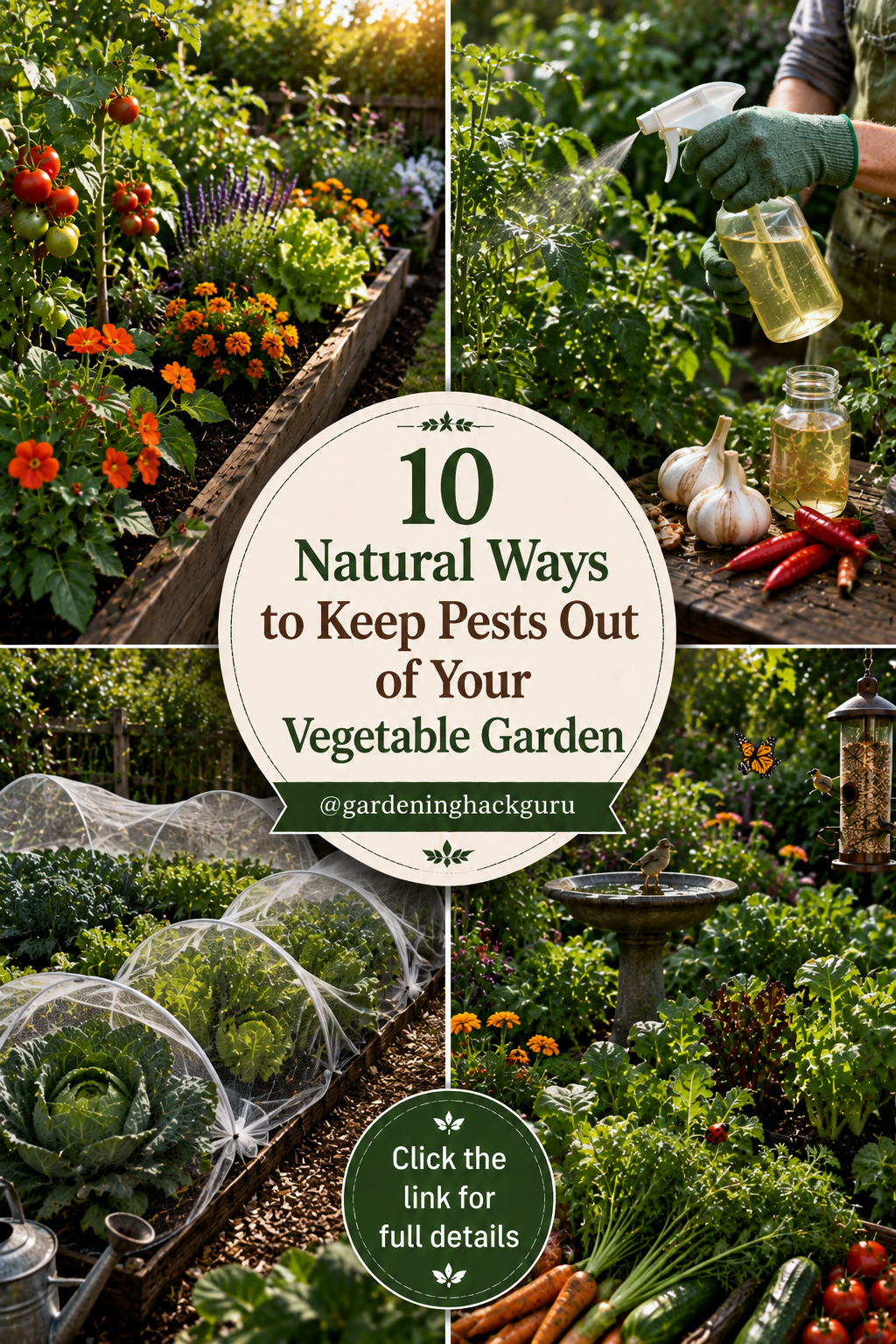
Nothing is more frustrating than watching healthy vegetables become a meal for insects. While chemical pesticides may seem like a quick solution, they can harm beneficial insects, contaminate your harvest, and affect the environment. Fortunately, nature offers plenty of safe and effective ways to protect your vegetable garden.
With a few simple gardening techniques, you can keep pests under control while growing healthier, chemical-free vegetables your family can enjoy.
Here are 10 natural ways to keep pests out of your vegetable garden.
1. Plant Companion Flowers
Some flowers naturally repel harmful insects while attracting beneficial pollinators.
Excellent companion flowers include:
- Marigolds
- Nasturtiums
- Calendula
- Lavender
- Alyssum
These flowers help reduce pest problems while making your garden more colorful.
2. Encourage Beneficial Insects
Not every bug is your enemy.
Invite helpful insects like:
- Ladybugs
- Lacewings
- Praying mantises
- Hoverflies
These beneficial insects feed on aphids, mites, whiteflies, and other common garden pests.
3. Use Neem Oil
Neem oil is a natural plant-based solution that helps control many common garden pests.
It works well against:
- Aphids
- Whiteflies
- Spider mites
- Mealybugs
Always spray in the early morning or evening to protect pollinators.
4. Keep Your Garden Clean
Dead leaves, fallen vegetables, and weeds create hiding places for insects.
Regularly:
- Remove plant debris.
- Pull weeds.
- Harvest ripe vegetables.
- Clean up fallen fruit.
A tidy garden naturally attracts fewer pests.
5. Grow Strong, Healthy Plants
Healthy plants are much more resistant to insect damage.
Support plant health by:
- Watering deeply.
- Adding compost.
- Using mulch.
- Providing enough sunlight.
Strong plants recover from minor pest damage much faster.
6. Rotate Your Crops
Growing the same vegetables in the same spot every year allows pests to build up in the soil.
Rotate crops each season to interrupt pest life cycles and reduce infestations naturally.
7. Hand-Pick Larger Pests
Large insects like caterpillars, beetles, and hornworms can simply be removed by hand.
Check plants every few days, especially early in the morning, and remove pests before they multiply.
8. Cover Crops with Garden Netting
Lightweight insect netting keeps many pests away without blocking sunlight or airflow.
It’s especially effective for:
- Cabbage
- Broccoli
- Kale
- Lettuce
- Carrots
9. Make a Garlic & Chili Spray
A homemade spray made from garlic, chili peppers, and water can discourage many chewing insects.
Spray lightly on leaves during cool parts of the day and reapply after rain.
10. Attract Birds to Your Garden
Many birds naturally feed on caterpillars, beetles, and other harmful insects.
Encourage birds by adding:
- Bird feeders
- Bird baths
- Native shrubs
- Small trees
They’ll help keep your vegetable garden balanced naturally.
Bonus Tips
For an even healthier vegetable garden:
- Water in the morning.
- Avoid overcrowding plants.
- Inspect leaves every week.
- Remove damaged foliage promptly.
- Add compost every season.
- Plant diverse crops together.
Healthy gardens naturally experience fewer pest problems.
Final Thoughts
Growing vegetables without harsh chemicals is easier than many gardeners think. By encouraging beneficial insects, planting companion flowers, rotating crops, and using natural remedies like neem oil and homemade sprays, you can protect your harvest while keeping your garden healthy and environmentally friendly.
Nature has its own pest control system—you simply need to work with it. With these natural methods, you’ll enjoy fresher vegetables, healthier soil, and a thriving garden all season long.